








Mobil 1 Question

Thread Starter
Teching In
Joined: Aug 2003
Posts: 25
Likes: 0
From: Peoria, IL
 Mobil 1 Question
 Ok. I just changed my oil and this time I switched to mobil 1 with 10w 30. I talked to an engineer for Caterpillar in the oils department and he had been the leader of oil viscosity testing there and said that if I do switch I should use the Mobil 1 filter or else its like throwing the money for synthetic oil down the drain. The first time just change the filter at 2,000 miles and then after that just change it for another 8,000. Then change both oil and filter and let it run 8,000 to 10,000 miles everytime after. He has done research himself at a very reputable busisness that is known worldwide for their engines. Anyway
jON
jON
Re: Mobil 1 Question No, you can use synthetics just fine without using a synthetic filter.In fact that is probably what 80%or more of the people using synthetic oil do. However I use a Mobil 1 oil filter because they seem to work very well.From the tests I know of synthetic filters consistently outperform standard paper media filters. Check AMSOIL,MOBIL 1, and Hard Driver filters out. I don't really care for Amsoil(mostly because of their salesman and their hype)and I cannot find Hard Driver filters so I use Mobil 1 filters and Redline oil.I won't use Mobil 1 oil anymore.
As far as changing the oil filter at 2,000 that would be a waste of money. The Mobil filters have worked effectively in my cars for over 4,000miles. At $11and up a piece you'd be throwing more money away like that.If you wanted to use extended drain intervals I would suggest you fill up with synth oil and use the mobil 1(or equivalent) filter.Change the filter only every 3-4k miles and then do a complete oil/filter change every 9-12k miles.That is what a Redline oil rep suggested I do. I personally just change oil and filter at 3-4k miles.
As far as changing the oil filter at 2,000 that would be a waste of money. The Mobil filters have worked effectively in my cars for over 4,000miles. At $11and up a piece you'd be throwing more money away like that.If you wanted to use extended drain intervals I would suggest you fill up with synth oil and use the mobil 1(or equivalent) filter.Change the filter only every 3-4k miles and then do a complete oil/filter change every 9-12k miles.That is what a Redline oil rep suggested I do. I personally just change oil and filter at 3-4k miles.
Re: Mobil 1 Question If you know Catapilar you should know Waukesha Engines as well. I worked for Waukesha as a lead field tech. These engines are large Industrial engines that drive Generators, ships, and gas compressoin systems. When I am talking large engines our larges engine had a 11 inch bore and a 10.5 inch stroke with a total of 16 cylenders producing up to 5000 hp at 1000 rpm. This engine is called a Waukesha AT27V16. Any way, they run 365 days a year 7 days a week and 24 hours a day. The only time they are shut down is for oil changes. They run for as long as 10 years with no Overhauls and with 110% load on them. All Waukesha engines that are being developed is using Mobile oils. Not the synthetic ones but petroliem based Mobile oil. I would go out in the field on warrenty work and overhauls. I could defenitly tell the difference in an engine that was using Mobile oil or another brand. It did not matter which brand they used. The engines that ran Mobile oil always had less wear on all the engine componets. So I have not used anything but Mobile one oils ever since I worked for Waukesha. I saw into hundreds if not thousands of engines with 10's of thousands of run hours on them. Lots of engines that were abused. I know what I saw in them and I am convinced Mobile makes the best oil on the planet. Funny how when an oil company puts lots of money into advertising their oil, thier oil never matches up to the ones that put their money more into the product then the advertising. Well thats my .02 . Oh and as for oil filters, We have several different kinds availible to use in the oil field. We do oil analisis all the time. The engines who's mechanics change the oil and filters religously seem to always have better long term preformance from their equipment. I personaly would not go 8 or 10k on my oil. The oil still gets hydrocarbins and non combustables in it. No matter what oil you use it will not slow that down. I change my oil in all my vehicals every 4k miles. And I use our oil analisis program at work to have my oil checked every month. I could ectend it and change it when they recomend, but by the time they tell me it is too late. So I use the analisis not for when to change the oil but to tell me the condition of the engine itself. Change your oil like your life depends on it. Because your vehicals life sure does. 

TECH Fanatic
Joined: Feb 2003
Posts: 1,586
Likes: 0
From: Columbus, OH
Re: Mobil 1 Question
... Change your oil like your life depends on it. Because your vehicals life sure does.

On a side note, I use Mobile 1 myself and I think it's a good oil.
lerajie -- Why don't you use mobile 1 anymore?

TECH Senior Member
Joined: Nov 2001
Posts: 7,234
Likes: 1
From: Mississauga, Ontario
Re: Mobil 1 Question Mobil 1 filters are too restrictive for hard use, you're better off choosing something like the K&N or the NAPA Gold/Wix, which flow much better.
Mobil 1 is good oil, but too thin for the LS1, unless you mix 2qts of 15w50 with it. A much better choice would be Redline or Amsoil, both of which are thicker oils with better HTHS numbers (for better bearing protection under hard usage)
Mobil 1 is good oil, but too thin for the LS1, unless you mix 2qts of 15w50 with it. A much better choice would be Redline or Amsoil, both of which are thicker oils with better HTHS numbers (for better bearing protection under hard usage)
Trending Topics
TECH Senior Member
Joined: Nov 2001
Posts: 7,234
Likes: 1
From: Mississauga, Ontario
Re: Mobil 1 Question
Opinions of Royal Purple?
Anyways, back to Royal Purple. I'm going to be switching my wife's car over to their 10w30 in a couple of months. I want to see if it thins out as easily as their 5w30 does.
So if you do run Royal Purple, don't run their 5w30, run their 10w30 or even their 10w40.
The LS1 engine tends to show it's best wear numbers when using a slightly thicker oil, like Amsoil's 5w30 or Redline 5w30. This new German 0w30 is also thicker than most 30wt oils too, like Amsoil and Redline, it's almost a 40wt oil. Mobil 1 on the other hand, is on the very thin side of the 30wt range. Which is why if you're stuck on using M1, you need to mix in a quart or two of 15w50 to beef it up.
LS1 Tech Stories
The Best V8 Stories One Small Block at Time

Top 10 Greatest Cadillac V Series Performance Models Ever, Ranked
Pouria Savadkouei
Top 10 Most Powerful Chevy Trucks Ever Made!

Hennessey's New Supercharged Silverado ZR2 Has 700 HP
Verdad Gallardo
Coachbuilt N2A Anteros Is an LS2-Powered C6 Corvette In Italian Clothes
Verdad Gallardo
Awesome K5 Blazer Restomod Comes With C7 Corvette Power
Verdad Gallardo
10 Camaros You Should Never Buy

10 LS Engine Myths That Refuse to Die
Verdad Gallardo
Five Reasons the Camaro Was the Most Pivotal Player in the Pony Car Wars 2.0
Brett Foote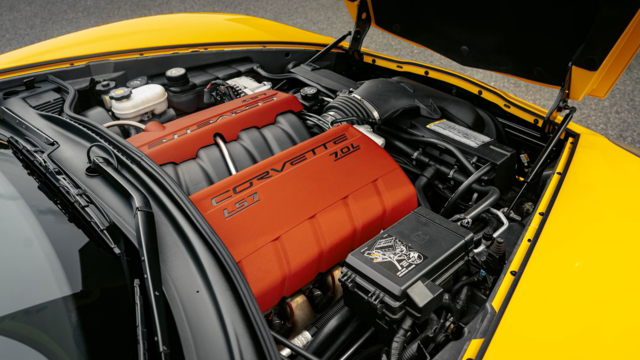
10 Reasons the LS7 Is GM's Most Extreme Naturally Aspirated V8 Engine Ever
Verdad Gallardo Re: Mobil 1 Question PIMPMARO:I don't use Mobil1 anymore for a couple of reasons. Neither of them are exactly scientific. I used to use Mobil 1 exclusively in all of my vehicles until for the hell of it I decided to try Redline. I found that when I used Redline(same listed viscosity) in my GTP I got another 1.5MPG with very similar types of driving. I won't say exact same because I wasn't trying to do a scientific study.
I pulled the valve covers on the SBC in my Chevelle to run the valves.There was a noticable amount of "gunk".I had only used two oils in this engine since I built it.Havoline for the first 2k miles and then Mobil 1 for about 9k.I started using Redline in that engine and pulled the covers to run the valves and there was none of the deposits I had seen before.My conclusion that Redline is better than Mobil could be based as much on perception as fact when it comes to these events but it was enough for me to stop using Mobil 1 and switch to Redline.Besides that I was impressed with the technical data I have seen on Redline and by the people who know alot more than I do choosing to use it.
Redline seems to put more money into their product than they do marketing which I appreciate.Companies like Castrol seem to do the exact opposite.
Did you guys know Mobil sued Castrol for calling their "synthetic" oils synthetic when they are technically just reformulated dino oil?
I pulled the valve covers on the SBC in my Chevelle to run the valves.There was a noticable amount of "gunk".I had only used two oils in this engine since I built it.Havoline for the first 2k miles and then Mobil 1 for about 9k.I started using Redline in that engine and pulled the covers to run the valves and there was none of the deposits I had seen before.My conclusion that Redline is better than Mobil could be based as much on perception as fact when it comes to these events but it was enough for me to stop using Mobil 1 and switch to Redline.Besides that I was impressed with the technical data I have seen on Redline and by the people who know alot more than I do choosing to use it.
Redline seems to put more money into their product than they do marketing which I appreciate.Companies like Castrol seem to do the exact opposite.
Did you guys know Mobil sued Castrol for calling their "synthetic" oils synthetic when they are technically just reformulated dino oil?
TECH Senior Member
Joined: Nov 2001
Posts: 7,234
Likes: 1
From: Mississauga, Ontario
Re: Mobil 1 Question What you saw with Redline is the superior cleaning abilities of the polyol ester base oil they use. Often when people switch to Redline and do oil analysis, they see a dramatic rise in wear metals on the first run, but then it levels off on the second run. What happens is the Redline is cleaning off the stuff left behind by other oils, including Mobil 1!
As far as the Castrol thing, it's true, their Syntec lineup is hydrocracked petroleum, not a true synthetic, however the one exception is that German made 0w30, which is a true synthetic. In Europe they aren't allowed to label an oil as synthetic if it's using the group 3 hydrocracked base oil. Only in North America have they allowed this type of deception to occur.
As far as the Castrol thing, it's true, their Syntec lineup is hydrocracked petroleum, not a true synthetic, however the one exception is that German made 0w30, which is a true synthetic. In Europe they aren't allowed to label an oil as synthetic if it's using the group 3 hydrocracked base oil. Only in North America have they allowed this type of deception to occur.
TECH Fanatic
Joined: Feb 2003
Posts: 1,586
Likes: 0
From: Columbus, OH
Re: Mobil 1 Question It is discussions like these that keep me coming back to LS1Tech. I'd like to give Redline a try, where is the best place to pick it up? As far as Mobil 1 filters, I understand the part about them being more restrictive and so forth, but I'm a bit leery on switching to something such as a K&N since I've heard they let some of the larger particles go through. Pulling out of my shallow pool of knowledge, I understand the advertising to say what the smallest possible particle is to trap instead of the smallest particle that is guaranteed to be trapped... if any of that makes sense. What other decent flowing filters are out there? I saw one on the new sponsor, Upfront Technologies, website. Anyone have a clue as to how that is?
On a side note, Patman, why exactly is the Mobil 1 too thin for the LS1? Not trying to doubt you, just trying to understand how certain oils are matched to certain engines and conditions on a more scientific note instead of the old, "that there sounds perdy good" way.
On a side note, Patman, why exactly is the Mobil 1 too thin for the LS1? Not trying to doubt you, just trying to understand how certain oils are matched to certain engines and conditions on a more scientific note instead of the old, "that there sounds perdy good" way.
TECH Senior Member
Joined: Nov 2001
Posts: 7,234
Likes: 1
From: Mississauga, Ontario
Re: Mobil 1 Question Don't worry so much about finding an oil filter which traps out super small 10 micron particles, because the clearances in these engines are large enough that even a 20 micron particle will pass through the engine without causing any wear. The K&N stops enough 20 micron particles to protect the engine while still allowing for excellent flow.
Other good flowing filters are the NAPA Gold/Wix filters, and the Amsoil ones. Walmart Supertech is also pretty good, it's made by the same people that make the K&N, and it's actually an STP oil filter.
As far as Mobil 1 and the LS1, if you look at the specs on Mobil 1, it's viscosity at 100C (which is the typical operating temperature of your oil) is only 10cst at 100c. In order for an oil to be a 0w30, 5w30 or 10w30 oil, it's viscosity at 100c must be between 9.3cst to 12.5 cst. As you can see, M1 is formulated on the very thin end of that range. This works very well for the tighter clearance engines out there, which is the majority of new cars. But for the LS1 and LT1, and most American V8s and V6s, they are typically built with looser clearances, so it helps if they run an oil that is formulated a bit thicker, closer to 12cst will work much better. As an engine puts on more mileage, it's clearances also open up slightly, so the need for thicker oils becomes greater. This is why the high mileage oils work so well for many people, because they are typically formulated on the higher end of their viscosity range.
Other good flowing filters are the NAPA Gold/Wix filters, and the Amsoil ones. Walmart Supertech is also pretty good, it's made by the same people that make the K&N, and it's actually an STP oil filter.
As far as Mobil 1 and the LS1, if you look at the specs on Mobil 1, it's viscosity at 100C (which is the typical operating temperature of your oil) is only 10cst at 100c. In order for an oil to be a 0w30, 5w30 or 10w30 oil, it's viscosity at 100c must be between 9.3cst to 12.5 cst. As you can see, M1 is formulated on the very thin end of that range. This works very well for the tighter clearance engines out there, which is the majority of new cars. But for the LS1 and LT1, and most American V8s and V6s, they are typically built with looser clearances, so it helps if they run an oil that is formulated a bit thicker, closer to 12cst will work much better. As an engine puts on more mileage, it's clearances also open up slightly, so the need for thicker oils becomes greater. This is why the high mileage oils work so well for many people, because they are typically formulated on the higher end of their viscosity range.
TECH Fanatic
Joined: Feb 2003
Posts: 1,586
Likes: 0
From: Columbus, OH
Re: Mobil 1 Question That's some great info. Just a couple more questions on the subject. What exactly is 1cst? I gather that it is a viscosity reading similar to a timed drip test or at least along those lines. Secondly, how is it determined what weight oil an engine should run? I understand it is based on clearances, but what says that an LS1 should run on the high end of a 30 weight instead of on the low end of a 50 weight? Is it generally an estimate? You're just gettin me curious now. 
TECH Senior Member
Joined: Nov 2001
Posts: 7,234
Likes: 1
From: Mississauga, Ontario
Re: Mobil 1 Question A cst is a centistoke, it's simply a unit of measurement that determines the viscosity of an oil. In order to calculate it, they basically pour the oil from one container to another and time how long it takes (I'm sure it's more precise than this, but generally speaking this is how viscosity is measured)
As far as what viscosity an engine likes, it's basically a general estimate I'm giving, based on my observations on various oil analysis results. Of course it could be slightly different for each particular person, depending on their driving style and climate too. Oil temperature also plays a big part of it, as someone who road races and sees consistently higher oil temps would want to run an even thicker oil, unless they install an oil cooler.
The best advice I can give someone who wants to choose an oil is to get an oil analysis done on your oil after you've put 3 to 5k on it. See how the wear numbers look and then if you don't like them, try something different.
As far as what viscosity an engine likes, it's basically a general estimate I'm giving, based on my observations on various oil analysis results. Of course it could be slightly different for each particular person, depending on their driving style and climate too. Oil temperature also plays a big part of it, as someone who road races and sees consistently higher oil temps would want to run an even thicker oil, unless they install an oil cooler.
The best advice I can give someone who wants to choose an oil is to get an oil analysis done on your oil after you've put 3 to 5k on it. See how the wear numbers look and then if you don't like them, try something different.

TECH Fanatic
Joined: Feb 2002
Posts: 1,640
Likes: 0
From: Austin, Tx.
Re: Mobil 1 Question
The best advice I can give someone who wants to choose an oil is to get an oil analysis done on your oil after you've put 3 to 5k on it. See how the wear numbers look and then if you don't like them, try something different.
www.blackstone-labs.com

TECH Senior Member
Joined: Nov 2001
Posts: 7,234
Likes: 1
From: Mississauga, Ontario
Re: Mobil 1 Question Blackstone Labs is an excellent choice! They are very consistent, and give excellent turnaround time. Often times people will get their results emailed to them in less than a week after sending out the sample.
If any of you guys decide to get your oil analyzed, post the results on here so we can look them over.
If any of you guys decide to get your oil analyzed, post the results on here so we can look them over.
TECH Fanatic
Joined: Feb 2003
Posts: 1,586
Likes: 0
From: Columbus, OH
Re: Mobil 1 Question Don't worry, I plan to. Like I said, I just ordered their sampling kit, so next oil change, that info is gonna go up. I also plan on talking to them ahead of time about conducting an analysis of the Redline oil, because that is what I plan on switching to based on what has been said here. Then that way we can compare the results from both oils. I'd like to see what the Redline cleans out and how it looks after another oil change after that.

