










Combining Ram Air setups
 Combining Ram Air setups
 Anyone here ever combine a SSRA/FTRA/Chris1313, Sux2BU/FLRA(Fog Light Ram Air), and JAAM/BGRA in their intake setups?
What kind of performance gains would be expected?
What kind of performance gains would be expected?
Last edited by Suzaku; Jan 25, 2011 at 03:56 PM.

Teching In
Joined: Apr 2010
Posts: 31
Likes: 0
I've been wondering this same thing. What would happen because you'd be forcing air from the bottom and from the top. you know ive always been told "more air the better" but would this work good. I really want the BGRA set up but you can't buy it anymore. I guess the guy quit making it.
Well regarding this, I am currently working on a setup where there is ram air on the hood, the foglights, and the underside. A poor man's supercharger I guess.
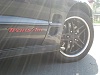
Here's a pic of what I was doing today, foglight ram air is next on my list.
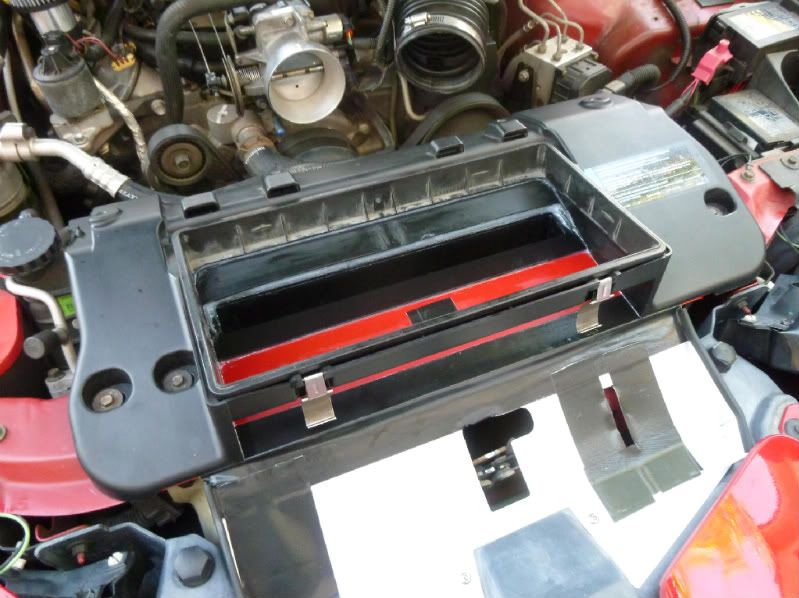
Here's a pic of what I was doing today, foglight ram air is next on my list.
Trending Topics
Did you paint your cold air kit under the filter black?
LS1 Tech Stories
The Best V8 Stories One Small Block at Time

6 Common C5 Corvette Failures and What's Involved In Repairing Them
Pouria Savadkouei
Retro Modern Bandit Pontiac Trans AM Comes With Burt Reynolds' Autograph
Verdad Gallardo
Top 10 Greatest Cadillac V Series Performance Models Ever, Ranked
Pouria Savadkouei
Top 10 Most Powerful Chevy Trucks Ever Made!

Hennessey's New Supercharged Silverado ZR2 Has 700 HP
Verdad Gallardo
Coachbuilt N2A Anteros Is an LS2-Powered C6 Corvette In Italian Clothes
Verdad Gallardo
Awesome K5 Blazer Restomod Comes With C7 Corvette Power
Verdad Gallardo
10 Camaros You Should Never Buy

10 LS Engine Myths That Refuse to Die
Verdad Gallardo Nope, that's your ram air kit.
I bought it off of E-bay about a month and a half ago, why aren't you selling it anywhere else anymore?
EDIT:
Oh, I can see how the picture can be confusing. The blackish grey part above the layer of clear silicone is the WS6 Air Box.
The rest of the CAI continues to run under the WS6 Airbox, but it is sealed off by the silicone.
I bought it off of E-bay about a month and a half ago, why aren't you selling it anywhere else anymore?
EDIT:
Oh, I can see how the picture can be confusing. The blackish grey part above the layer of clear silicone is the WS6 Air Box.
The rest of the CAI continues to run under the WS6 Airbox, but it is sealed off by the silicone.
Last edited by Suzaku; Jan 25, 2011 at 11:33 PM.


I wonder if multiple ram air setups would be beneficial to a larger cube engine like a 416 or 427. For example combining the jaam kit with the chris 1313 but wasn't sure if the gains of using both would be measurable over using one or the other alone.

It has been proven that the air pressure will actually escape thru the front of the air box and it works better blocked off. That is why the scoop type ram air kits block the front of the air box. You need to have it sealed up to keep the pressure in otherwise you are defeating the purpose.
It has been proven that the air pressure will actually escape thru the front of the air box and it works better blocked off. That is why the scoop type ram air kits block the front of the air box. You need to have it sealed up to keep the pressure in otherwise you are defeating the purpose.
I've sealed the ram air scoop on my hood to the airbox, but I have yet to put it through a dyno yet.
I'll keep you guys up to date on what happens when I put it through a dyno and cover each one of the ram intakes individually.
Keep in mind that air will always flow in the path of least restriction. If you have 2 sources of air trying to pressurize the same plenum, one source will dominate unless both sources are exactly equal in pressure. So in this case having 2 sources of air will hurt not help bc you won't be able to properly pressurize the airbox which is the whole point of RAM air
Keep in mind that air will always flow in the path of least restriction. If you have 2 sources of air trying to pressurize the same plenum, one source will dominate unless both sources are exactly equal in pressure. So in this case having 2 sources of air will hurt not help bc you won't be able to properly pressurize the airbox which is the whole point of RAM air
The first source, the engine is providing vacuum.
The second source, the hood ram air.
The third source, the under-body scoop ram-air.
And the lowest source of resistance is the engine which is providing negative pressure.
So unless the intake is being pressurized at a rate faster than the first (Higher than 1 PSI) source (engine), there shouldn't be any backwards flow or loss in effectiveness. And I doubt that Ram-air reaches 1PSI when working with an engine under full load. What it does do I think, is decrease the amount of effort required for the engine to pump air into itself, thus the horsepower gain. Of course, this depends on the speed at which the vehicle is traveling.
I will be stealing a spare boost gauge from my brother really soon to test my theory at 80mph.
TECH Fanatic
Joined: Sep 2003
Posts: 1,265
Likes: 4
From: St. Clair Shores Mi.
There are three sources when it comes to having 2 ram air setups.
The first source, the engine is providing vacuum.
The second source, the hood ram air.
The third source, the under-body scoop ram-air.
And the lowest source of resistance is the engine which is providing negative pressure.
So unless the intake is being pressurized at a rate faster than the first (Higher than 1 PSI) source (engine), there shouldn't be any backwards flow or loss in effectiveness. And I doubt that Ram-air reaches 1PSI when working with an engine under full load. What it does do I think, is decrease the amount of effort required for the engine to pump air into itself, thus the horsepower gain. Of course, this depends on the speed at which the vehicle is traveling.
I will be stealing a spare boost gauge from my brother really soon to test my theory at 80mph.
The first source, the engine is providing vacuum.
The second source, the hood ram air.
The third source, the under-body scoop ram-air.
And the lowest source of resistance is the engine which is providing negative pressure.
So unless the intake is being pressurized at a rate faster than the first (Higher than 1 PSI) source (engine), there shouldn't be any backwards flow or loss in effectiveness. And I doubt that Ram-air reaches 1PSI when working with an engine under full load. What it does do I think, is decrease the amount of effort required for the engine to pump air into itself, thus the horsepower gain. Of course, this depends on the speed at which the vehicle is traveling.
I will be stealing a spare boost gauge from my brother really soon to test my theory at 80mph.
I've had a Debaffled Hood and FRA for 12+ yrs now with no adverse effect on performance. Even if the Air is forced from one portal to the other it's still being injested by the engine under WOT.
I doubt that running two ram air systems could hurt performance but exactly how much it would help is the question. I think the gains would be much greater on a large cube engine with larger tb, intake, etc than on a stock cube engine w/ bolt ons especially in high speed wot conditions. Just my .02. Keep us posted on your tests Suzaku.
Well, the problem with all of those cases was that the scoop on the hood was not sealed to the airbox.
I've sealed the ram air scoop on my hood to the airbox, but I have yet to put it through a dyno yet.
I'll keep you guys up to date on what happens when I put it through a dyno and cover each one of the ram intakes individually.
I've sealed the ram air scoop on my hood to the airbox, but I have yet to put it through a dyno yet.
I'll keep you guys up to date on what happens when I put it through a dyno and cover each one of the ram intakes individually.
You can only accurately test this at the track, and it has already been done. The scoop style under the car is in a higher pressure area and will force more air into the lid than the lower pressure area of the stock ram air scoops. I promise you that if the lower air box is sealed to block the factory air path the car will be faster down the track(or on the road for that matter). I'm pretty sure Chris1313 is one of those that actually tested this theory, but there are others here as well.
Leaving the front of the airbox open is going to allow the high pressure air forced in from the scoop to escape. As stated by zracer323 above the air will take the path of least resistance. That path is straight out the front of your hood.
I'm only trying to save you some work by sharing what others have already tested. You sound determined to find out for yourself and that is a good thing. Please share your results when you get them so others can benefit from it.

