






Oil catch can without PCV
 Oil catch can without PCV
 I have searched and read through a bunch of PCV and catch can threads. I have yet to find the information I am looking for. I do not run a PCV system on my race motor. I use a oil cap breather to vent the crank case pressure. The drift series I am running in requires a catch can in place. I am just wondering how I would route this. I do not have the ls6 upgraded valley cover nor do I really want to install one.
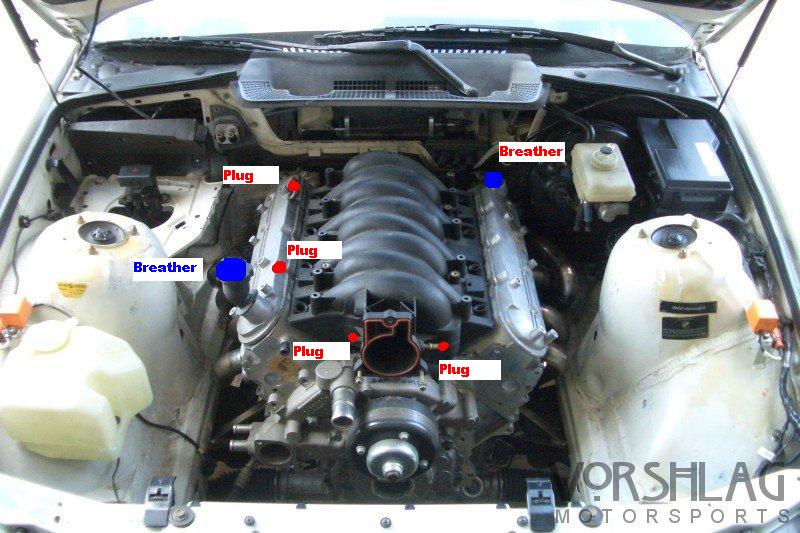
A picture of my current setup (not my engine, excuse the poor graphics)
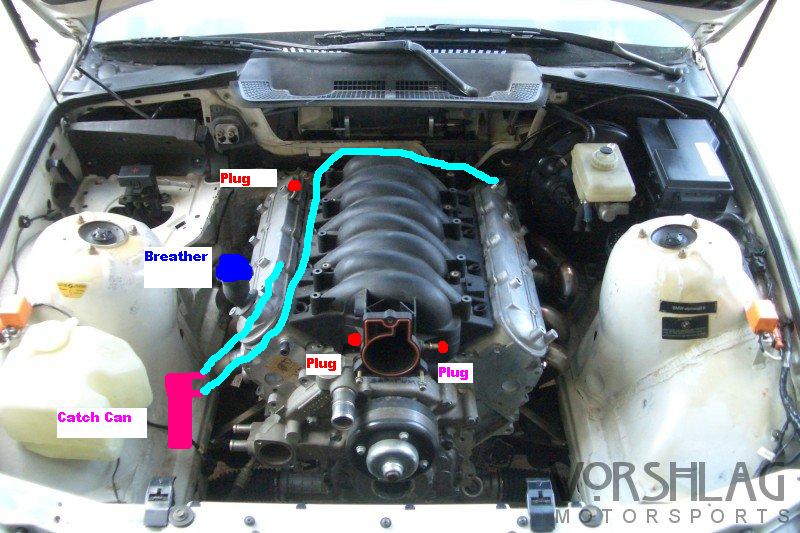
A picture of what I propose to do. Not sure if this is correct....
The filter I had on the driver side cover was getting saturated with oil. Also the throttle body seemed to have oil residue/black residue around the butterfly opening. The engine is brand new and I do have high oil pressure due to the melling pump and a 20-50 oil. Could this cause the blow by I am experiencing.
Thanks in advance
A picture of my current setup (not my engine, excuse the poor graphics)

A picture of what I propose to do. Not sure if this is correct....

The filter I had on the driver side cover was getting saturated with oil. Also the throttle body seemed to have oil residue/black residue around the butterfly opening. The engine is brand new and I do have high oil pressure due to the melling pump and a 20-50 oil. Could this cause the blow by I am experiencing.
Thanks in advance
You're looking for an oil-trapping pressure outlet,
routing across the motor leaves the crankcase
pressurized (or the crankcase air will find another
exit, untrapped). There's no "motivation" for any
air to enter the catch can.
Snail tracks by the TB blade show that your
crankcase is getting pressurized big time and the
PCV airflow is in reverse (pulled by intake tract
vacuum at WOT, pushed by blowby at more flow
than the PCV valve will let past).
Maybe all you're looking to do is fool some tech
inspector. Can and hoses might do that. But this
scheme will be ineffective at any actual oil trapping.
Blowby is ring presssure and end gap, vs peak
cylinder pressure. Oil pump ought to not enter into
it.
But your oil uptake is more likely off the rockers,
fog style.
routing across the motor leaves the crankcase
pressurized (or the crankcase air will find another
exit, untrapped). There's no "motivation" for any
air to enter the catch can.
Snail tracks by the TB blade show that your
crankcase is getting pressurized big time and the
PCV airflow is in reverse (pulled by intake tract
vacuum at WOT, pushed by blowby at more flow
than the PCV valve will let past).
Maybe all you're looking to do is fool some tech
inspector. Can and hoses might do that. But this
scheme will be ineffective at any actual oil trapping.
Blowby is ring presssure and end gap, vs peak
cylinder pressure. Oil pump ought to not enter into
it.
But your oil uptake is more likely off the rockers,
fog style.
You're looking for an oil-trapping pressure outlet,
routing across the motor leaves the crankcase
pressurized (or the crankcase air will find another
exit, untrapped). There's no "motivation" for any
air to enter the catch can.
Snail tracks by the TB blade show that your
crankcase is getting pressurized big time and the
PCV airflow is in reverse (pulled by intake tract
vacuum at WOT, pushed by blowby at more flow
than the PCV valve will let past).
Maybe all you're looking to do is fool some tech
inspector. Can and hoses might do that. But this
scheme will be ineffective at any actual oil trapping.
Blowby is ring presssure and end gap, vs peak
cylinder pressure. Oil pump ought to not enter into
it.
But your oil uptake is more likely off the rockers,
fog style.
routing across the motor leaves the crankcase
pressurized (or the crankcase air will find another
exit, untrapped). There's no "motivation" for any
air to enter the catch can.
Snail tracks by the TB blade show that your
crankcase is getting pressurized big time and the
PCV airflow is in reverse (pulled by intake tract
vacuum at WOT, pushed by blowby at more flow
than the PCV valve will let past).
Maybe all you're looking to do is fool some tech
inspector. Can and hoses might do that. But this
scheme will be ineffective at any actual oil trapping.
Blowby is ring presssure and end gap, vs peak
cylinder pressure. Oil pump ought to not enter into
it.
But your oil uptake is more likely off the rockers,
fog style.
Ok so my current set up is inefficient? and my proposed is wrong. So how do I go about routing the catch can while running no PCV and venting crankcase pressure? How can I stop the residue?

Launching!
Joined: Jun 2005
Posts: 277
Likes: 0
From: SC
It's supposed to be connected to the intake with a restrictor or something if not using PCV. This is going to me unmetered air FWIW. If it's a race only motor why not run an evac system? Apparently they're OK with it blowing out the exhaust but not the engine bay....
The car runs Map now without a MAF. I havent noticed any oil exiting the exhuast...
Launching!
Joined: Jun 2005
Posts: 277
Likes: 0
From: SC
Of course not. You have no connection to the intake to pull the crankcase vapors. I was being a smart ***, saying that if they're OK with you running a catch can and that's the only guidelines then you could possibly start eating oil and blowing it out the exhaust. A good baffled one should prevent that though. They want you to suck and burn your vapors, not let them escape. Should be a lot easier without MAF.
Trending Topics
Of course not. You have no connection to the intake to pull the crankcase vapors. I was being a smart ***, saying that if they're OK with you running a catch can and that's the only guidelines then you could possibly start eating oil and blowing it out the exhaust. A good baffled one should prevent that though. They want you to suck and burn your vapors, not let them escape. Should be a lot easier without MAF.
LS1 Tech Stories
The Best V8 Stories One Small Block at Time

Topdon ONE vs. Artidiag 800 BT2: Which is the Diagnostic Tablet For You?
Pouria Savadkouei
Gas Monkey Built a 6-Wheel Ferrari Testarossa With a Corvette LT4 Engine
Verdad Gallardo
7 Most Reliable High-Performance Engines GM Has Ever Built
Verdad Gallardo
Amazing '71 Camaro Restomod Is Modern Muscle Car Under the Skin
Verdad Gallardo
6 Common C5 Corvette Failures and What's Involved In Repairing Them
Pouria Savadkouei
Retro Modern Bandit Pontiac Trans AM Comes With Burt Reynolds' Autograph
Verdad Gallardo
Top 10 Greatest Cadillac V Series Performance Models Ever, Ranked
Pouria Savadkouei
Top 10 Most Powerful Chevy Trucks Ever Made!

Hennessey's New Supercharged Silverado ZR2 Has 700 HP
Verdad Gallardo Launching!
Joined: Jun 2005
Posts: 277
Likes: 0
From: SC
You just follow the instructions on the catch can. I would find a way to install baffled breather with tube (sounds like you have one), run a fresh air intake tube to the other side of the engine, baffled breather tube to catch can, and run catch can to manifold or behind throttle body. All of the other points should stay plugged. You want vapor to have only one way to go: to the catch can and then to the intake.
Actually, here's a vid that pretty much shows that. Keep in mind what I said above about the fresh air intake. If you don't already know about that, you're going to pull crankcase vapor from one side of the engine and need a fresh air supply on the other side. Otherwise you get too much negative pressure which is about as bad as having too much positive.
http://billettechnology.com/bt/video...-installation/
Actually, here's a vid that pretty much shows that. Keep in mind what I said above about the fresh air intake. If you don't already know about that, you're going to pull crankcase vapor from one side of the engine and need a fresh air supply on the other side. Otherwise you get too much negative pressure which is about as bad as having too much positive.
http://billettechnology.com/bt/video...-installation/
Last edited by SSellers; Jun 18, 2013 at 03:23 PM.

I don't know how set you are on not having a PCV system, but you could buy a 2004 ls6 valley cover that has all of the PCV built in so there's no lines running everywhere, which would delete the breather that emits oil mist all over the top of your motor as well. From there you just run a hose from the valley cover to the top of the catch can and run a hose from the bottom port of the catch can to the intake manifold.
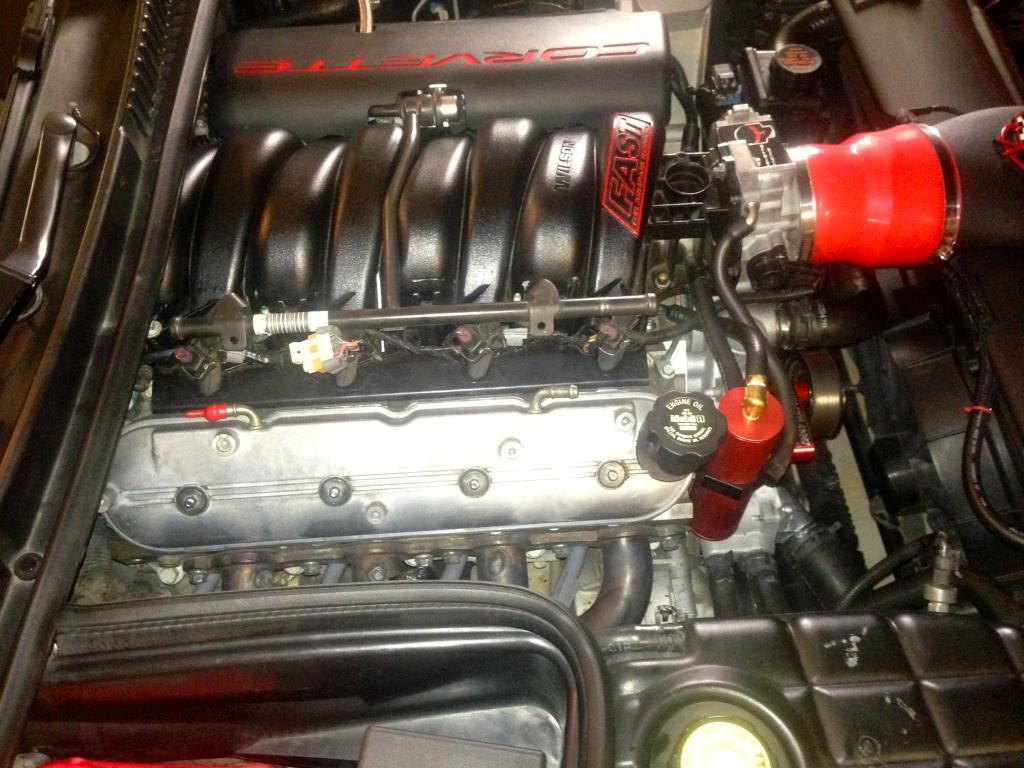
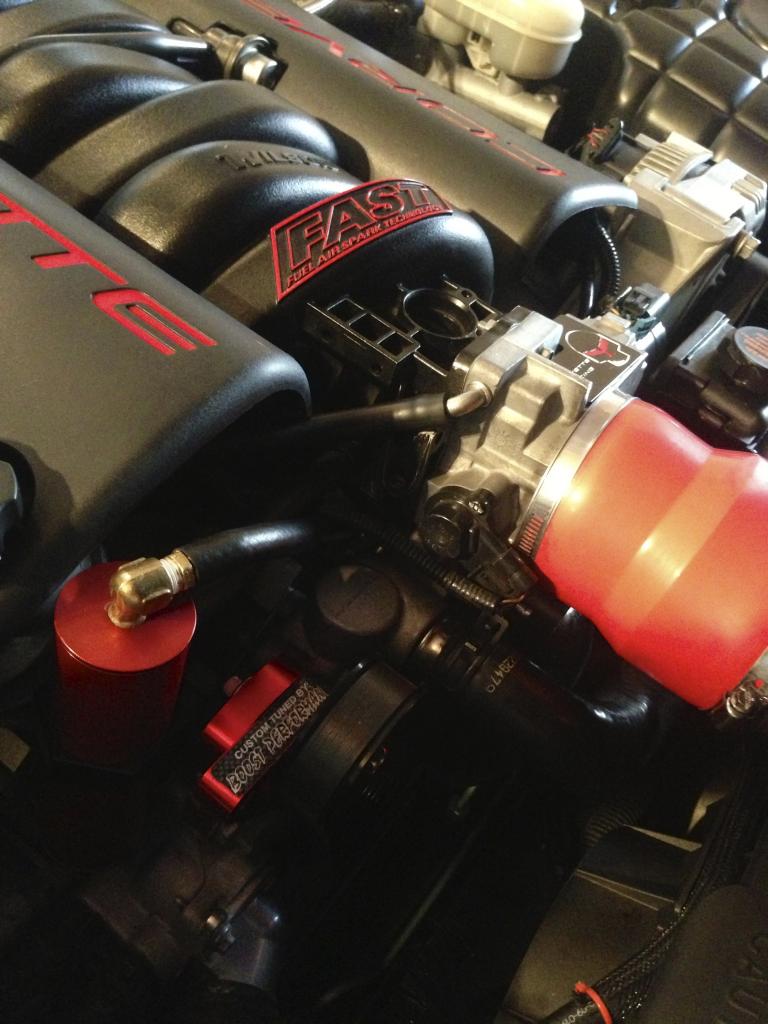

FYI, you can re-tune to account for the additional air. If you hook up to the intake (vacuum), re-tune for added air entering the oil cap filter. Other option is to put the oil cap back on & keep current tune. If you connect the TB to valve cover, you'll have to tune for that additional air, as well.
I appreciate all the information but I have a race this weekend and don't have time to source a ls6 valley cover. I just want to know how to hook up a catch can without the pcv system. Which ports to use, and if the port on the throttle body can just be plugged or has to run somewhere. The driver side valve cover has a port and I want to either block it or run it to the catch can. Sorry if I am not understanding some of you, this is my first LS and its a learning process.
Launching!
Joined: Jun 2005
Posts: 277
Likes: 0
From: SC
Don't worry about it. You'll get it and sometimes it's hard to put the pieces together your first go 'round, especially when you're about to pee your pants to get the car going. Been there.
Keep in mind you need crankcase breather hose or vacuum hose for these connections. Regular hose can collapse.
Keep the breather on the driver side, or if you have the capability run a hose from the clean side of the air filter on your air intake to that point.
Run the air tube in your oil filler to the designated catch can inlet.
Run the catch can outlet to the port on your throttle body on the passenger side.
Keep all other points plugged.
Retune as needed. Since you're essentially speed density it's a little easier than MAF.
When you're done you're going to have a PCV system without a PCV valve. The valve is just a regulator essentially and tries to maintain a certain negative pressure in the crankcase. Low load with high manifold vacuum the valve is more closed. High load with low manifold vacuum the valve is more open. It is essentially a regulated vacuum leak. You're not going to have the regulation. Personally I'd install a PCV valve just to make it a little easier to tune (in my opinion).
Keep in mind you need crankcase breather hose or vacuum hose for these connections. Regular hose can collapse.
Keep the breather on the driver side, or if you have the capability run a hose from the clean side of the air filter on your air intake to that point.
Run the air tube in your oil filler to the designated catch can inlet.
Run the catch can outlet to the port on your throttle body on the passenger side.
Keep all other points plugged.
Retune as needed. Since you're essentially speed density it's a little easier than MAF.
When you're done you're going to have a PCV system without a PCV valve. The valve is just a regulator essentially and tries to maintain a certain negative pressure in the crankcase. Low load with high manifold vacuum the valve is more closed. High load with low manifold vacuum the valve is more open. It is essentially a regulated vacuum leak. You're not going to have the regulation. Personally I'd install a PCV valve just to make it a little easier to tune (in my opinion).
I appreciate all the information but I have a race this weekend and don't have time to source a ls6 valley cover. I just want to know how to hook up a catch can without the pcv system. Which ports to use, and if the port on the throttle body can just be plugged or has to run somewhere. The driver side valve cover has a port and I want to either block it or run it to the catch can. Sorry if I am not understanding some of you, this is my first LS and its a learning process.
From your picture, run a hose from left side of tb to front valve cover (tb, not intake manifold. tb not shown in pic) nipple next to oil cap breather, passenger side. Replace oil cap breather w/ oil cap unless you want to re-tune before this weekend. Run hose from rear driver side valve cover to catch can & then from catch can to right front connection on intake manifold.
Launching!
Joined: Jun 2005
Posts: 277
Likes: 0
From: SC
That's why there are many models of valves. Each one is set up to work within certain vacuum parameters so that (1)the factory engine tune is correct for the "vacuum leak", and (2) the amount of negative pressure in the crankcase is correct for the engine at normal operation parameters. For example, if you put a valve made for something like a 1980 350 on an old 375hp 327 it would act like a major vacuum leak and also cause too much negative crankcase pressure at light load. Reason being is that the correct valve for the 327 would be almost closed at idle whereas the one from the 1980 model would be almost wide open due to the pintle spring being set up such that the very low idle vacuum of the 327 would be seen as close to full load.
Additionally, unless I missed something the way you have informed the OP to run the lines creates a fully closed system that will cause the system to create too much negative crankcase pressure and suck in seals (similar to how too much positive pressure can blow them out), create more oil consumption, create more oil contamination, and possibly bearing damage due to pressure differential with the oiling system. There has to be vacuum only on one side of the engine and fresh air intake on the other. Everything else needs to be plugged or else there is no positive ventilation.
Last edited by SSellers; Jun 19, 2013 at 07:09 AM.
Launching!
Joined: Jun 2005
Posts: 277
Likes: 0
From: SC
Usually the same thing I say when I'm wrong. Read this. You don't have to agree with it and that's fine but at least get another take on it.
http://www.aa1car.com/library/pcv.htm
Keep in mind you need crankcase breather hose or vacuum hose for these connections. Regular hose can collapse.
Keep the breather on the driver side, or if you have the capability run a hose from the clean side of the air filter on your air intake to that point.
Run the air tube in your oil filler to the designated catch can inlet.
Run the catch can outlet to the port on your throttle body on the passenger side. Keep all other points plugged. Retune as needed. Since you're essentially speed density it's a little easier than MAF.
Keep the breather on the driver side, or if you have the capability run a hose from the clean side of the air filter on your air intake to that point.
Run the air tube in your oil filler to the designated catch can inlet.
Run the catch can outlet to the port on your throttle body on the passenger side. Keep all other points plugged. Retune as needed. Since you're essentially speed density it's a little easier than MAF.
You should then re-tune for added air getting sucked in through the breather because the crank case is now connected to vacuum. You can probably get away w/ not tuning, but she'll run a bit lean. Lean isn't an issue until going WOT. That's where it may be too lean.
Internal vacuum is not an "internal vacuum leak," as it's measured air. Send your link to GM. Many LS1's came from factory w/ spring-less PCV valves & are plumbed open under vacuum. They close w/ crank case pressure of which vents out of the fresh air source. This is exactly how mine will remain plumbed. Again, pointless argument. Has nothing to do w/ the OP's request for info. "without PCV valve."
Usually the same thing I say when I'm wrong. Read this. You don't have to agree with it and that's fine but at least get another take on it.
http://www.aa1car.com/library/pcv.htm
http://www.aa1car.com/library/pcv.htm