




Why 6.0s are so thirsty?

Thread Starter
TECH Veteran


Joined: Sep 2014
Posts: 4,893
Likes: 703
From: Mississippi

Hmmmm very very interesting. I'm a proud owner of a LS2 in my Z28 but you right I'm puzzled as well. Only difference between a LS2 vs a LQ4 is the heads and material of the block. Maybe the compression as well.

On The Tree
Joined: Jul 2015
Posts: 153
Likes: 0
Better off MPG wise, NO I have never seen a carb out deliver MPG even over a simple throttle body style injection like that 90 had. I am very familiar with carbs I have been rebuilding, tuning them since 1973 so lack of knowledge is not the problem.

10 Second Club


Joined: May 2009
Posts: 3,427
Likes: 226
From: over dere
My 2011 non DOD 6.2 sierra was as good or better on fuel than any 5.3 I had. And WAY more power. Hook a trailer to it though and it'll get thirsty quick. That was still one of my favourite trucks.
4 door 4x4 with just a hyperjunk tuner
4 door 4x4 with just a hyperjunk tuner
Thread Starter
TECH Veteran
Joined: Sep 2014
Posts: 4,893
Likes: 703
From: Mississippi
Hammer, that's not the first time I have heard a non DOD 6.2 do the same on mileage as a 5.3 motor.
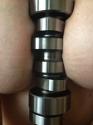
Its just kinda weird the 6.0 motors drinks way more gas than a 5.3 but yet the BIGGER 6.2 doesn't. Otherwise I'm not sure where the 6.0 LY6 hold its ground as far as power and gas mileage vs the 6.2 motor....afterall they basically have the same heads just 12 cubic inches difference between the two. Maybe the factory cam and intake has something to do with. Not 100 percent sure about it.
Its just kinda weird the 6.0 motors drinks way more gas than a 5.3 but yet the BIGGER 6.2 doesn't. Otherwise I'm not sure where the 6.0 LY6 hold its ground as far as power and gas mileage vs the 6.2 motor....afterall they basically have the same heads just 12 cubic inches difference between the two. Maybe the factory cam and intake has something to do with. Not 100 percent sure about it.
Originally Posted by Tuskyz28
Hmmmm very very interesting. I'm a proud owner of a LS2 in my Z28 but you right I'm puzzled as well. Only difference between a LS2 vs a LQ4 is the heads and material of the block. Maybe the compression as well.
So the LS2 heads ARE the compression change. Even worse if LQ4 has dished pissed-ons.
Originally Posted by big hammer
My 2011 non DOD 6.2 sierra was as good or better on fuel than any 5.3 I had. And WAY more power. Hook a trailer to it though and it'll get thirsty quick. That was still one of my favourite trucks.
4 door 4x4 with just a hyperjunk tuner
4 door 4x4 with just a hyperjunk tuner

10 Second Club
Joined: May 2009
Posts: 3,427
Likes: 226
From: over dere
Hammer, that's not the first time I have heard a non DOD 6.2 do the same on mileage as a 5.3 motor.
Its just kinda weird the 6.0 motors drinks way more gas than a 5.3 but yet the BIGGER 6.2 doesn't. Otherwise I'm not sure where the 6.0 LY6 hold its ground as far as power and gas mileage vs the 6.2 motor....afterall they basically have the same heads just 12 cubic inches difference between the two. Maybe the factory cam and intake has something to do with. Not 100 percent sure about it.
Its just kinda weird the 6.0 motors drinks way more gas than a 5.3 but yet the BIGGER 6.2 doesn't. Otherwise I'm not sure where the 6.0 LY6 hold its ground as far as power and gas mileage vs the 6.2 motor....afterall they basically have the same heads just 12 cubic inches difference between the two. Maybe the factory cam and intake has something to do with. Not 100 percent sure about it.
LS1 Tech Stories
The Best V8 Stories One Small Block at Time

Gas Monkey Built a 6-Wheel Ferrari Testarossa With a Corvette LT4 Engine
Verdad Gallardo
7 Most Reliable High-Performance Engines GM Has Ever Built
Verdad Gallardo
Amazing '71 Camaro Restomod Is Modern Muscle Car Under the Skin
Verdad Gallardo
6 Common C5 Corvette Failures and What's Involved In Repairing Them
Pouria Savadkouei
Retro Modern Bandit Pontiac Trans AM Comes With Burt Reynolds' Autograph
Verdad Gallardo
Top 10 Greatest Cadillac V Series Performance Models Ever, Ranked
Pouria Savadkouei
Top 10 Most Powerful Chevy Trucks Ever Made!

Hennessey's New Supercharged Silverado ZR2 Has 700 HP
Verdad Gallardo
Coachbuilt N2A Anteros Is an LS2-Powered C6 Corvette In Italian Clothes
Verdad Gallardo 10 Second Club
Joined: May 2009
Posts: 3,427
Likes: 226
From: over dere
Anothe Thing with the 6.2 is gm has them shifting like 300 rpm before they even hit peak HP

You have to look at total work being done, and the efficiency of the engine
Combustion engines are not terribly efficient to begin with. They all fall around, say 50%
All of them. 2.0, 3.0, 4.0, 5.0, 6.0, all very bad at converting gasoline to work.
If I have a car with a 2.0L engine and it weighs 2800lbs, then I switch the engine to a 6.0 and it still weighs 2800lbs, all else equal, then the work required to push it is equal and the economy should also be equal. What we are neglecting to mention is the heavier rotating components inside the 6.0 and it's transmission which will parasitically absorb more energy (so you will need more work) but the different here between 2.0 and 6.0 can be surprising (not much) when we factor in optimal gearing-rpm for a cruise example:
for example if you were comparing the 2.0 version of the car at 75mph you might see that engine vacuum is 9" Hg, rpm is 2800
WHere the 6.0 can cruise at 75mph with 1200rpm and 17" Hg (because the vehicle is so light) If we calculated the difference in parasitic loss between a 2.0@2800rpm with 9" Hg worth of load and a 6.0 @ 1200rpm with 17" Hg worth of load it would be very similar if not in favor of the 6.0. Even at idle condition, the 2.0 needs 900rpm and the 6.0 would need around 500rpm, so factoring in RPM Is a huge economy advantage for engines that can sustain lower rpm with low load (and thus lean air/fuel ratios, small injector on-times).
Couple of real world examples I've seen (cruising around 60-75mph):
stock 2.4L Auto from 1995 - 25mpg @ 2800lbs
Swapped to a 5.7L LS2, 6speed, 4.11gear - 29mpg+ @ 2800lbs
Swapped to a 5.3L Iron, 4l80e, 3.69gear - 25mpg @ 3300lbs~
Swapped to a 5.3L Iron, 4l80e, 4.11gear - 22mpg @ 3300lbs~
A swapped 5.3 / 4l80e with a 3.42:1 gear could probably do 28mpg (looking forward to it)
Injector duty didn't even flinch going from 60mph to 72mph with the 4.11->3.69 gear swap (it went 12mph faster for 'free' because the additional load of the reduced gearing was negligible compared to what them motor/trans needs to turn in terms of fuel)
Its just most of us would rather have the gear ratios for hauling *** than economy.
Combustion engines are not terribly efficient to begin with. They all fall around, say 50%
All of them. 2.0, 3.0, 4.0, 5.0, 6.0, all very bad at converting gasoline to work.
If I have a car with a 2.0L engine and it weighs 2800lbs, then I switch the engine to a 6.0 and it still weighs 2800lbs, all else equal, then the work required to push it is equal and the economy should also be equal. What we are neglecting to mention is the heavier rotating components inside the 6.0 and it's transmission which will parasitically absorb more energy (so you will need more work) but the different here between 2.0 and 6.0 can be surprising (not much) when we factor in optimal gearing-rpm for a cruise example:
for example if you were comparing the 2.0 version of the car at 75mph you might see that engine vacuum is 9" Hg, rpm is 2800
WHere the 6.0 can cruise at 75mph with 1200rpm and 17" Hg (because the vehicle is so light) If we calculated the difference in parasitic loss between a 2.0@2800rpm with 9" Hg worth of load and a 6.0 @ 1200rpm with 17" Hg worth of load it would be very similar if not in favor of the 6.0. Even at idle condition, the 2.0 needs 900rpm and the 6.0 would need around 500rpm, so factoring in RPM Is a huge economy advantage for engines that can sustain lower rpm with low load (and thus lean air/fuel ratios, small injector on-times).
Couple of real world examples I've seen (cruising around 60-75mph):
stock 2.4L Auto from 1995 - 25mpg @ 2800lbs
Swapped to a 5.7L LS2, 6speed, 4.11gear - 29mpg+ @ 2800lbs
Swapped to a 5.3L Iron, 4l80e, 3.69gear - 25mpg @ 3300lbs~
Swapped to a 5.3L Iron, 4l80e, 4.11gear - 22mpg @ 3300lbs~
A swapped 5.3 / 4l80e with a 3.42:1 gear could probably do 28mpg (looking forward to it)
Injector duty didn't even flinch going from 60mph to 72mph with the 4.11->3.69 gear swap (it went 12mph faster for 'free' because the additional load of the reduced gearing was negligible compared to what them motor/trans needs to turn in terms of fuel)
Its just most of us would rather have the gear ratios for hauling *** than economy.
Last edited by kingtal0n; Oct 2, 2017 at 09:10 AM.
Thread Starter
TECH Veteran
Joined: Sep 2014
Posts: 4,893
Likes: 703
From: Mississippi
Sounds like the 6.2 hauls *** while sipping gas like a 5.3 so you get the best of both worlds. The 6.2 trucks are still pretty pricey though.
Hammer... since you have owned both 5.3 trucks and a 6.2 truck can you elaborate the differences on towing performance, gas mileage while towing, and just overall daily driving of the two setups ?
Hammer... since you have owned both 5.3 trucks and a 6.2 truck can you elaborate the differences on towing performance, gas mileage while towing, and just overall daily driving of the two setups ?
10 Second Club
Joined: May 2009
Posts: 3,427
Likes: 226
From: over dere
Sounds like the 6.2 hauls *** while sipping gas like a 5.3 so you get the best of both worlds. The 6.2 trucks are still pretty pricey though.
Hammer... since you have owned both 5.3 trucks and a 6.2 truck can you elaborate the differences on towing performance, gas mileage while towing, and just overall daily driving of the two setups ?
Hammer... since you have owned both 5.3 trucks and a 6.2 truck can you elaborate the differences on towing performance, gas mileage while towing, and just overall daily driving of the two setups ?
In my experience a 6.2 will burn more fuel while towing but the quality of the tow is quite superior. No comparison in power
All things considered I probably wouldn't buy another 5.3.

my 2000 1500 5.3 has always gotten **** mileage. Maybe mid 14's on a good week all highway. MAYBE. Usually about 13 flat. Now tuned with tires and gears I'm lucky to get 12. I don'tr understand how people are claiming to get low 20's out of the newer trucks when they are still the same, basic, motor. With my commute a 1 mpg increase would net me an extra $400 a year in my pocket. Think about a 6 or 7 mpg improvement. The truck is never getting sold but it sure would be nice to see some better efficiency.

TECH Senior Member

Joined: Jun 2016
Posts: 22,298
Likes: 3,619
From: Central Cal.
We have a 2011 Suburban with a Gen4 5.3/4L60E. Around town it gets about 14-15mpg, highway about 18. The DOD is RARELY, if ever, in 4cyl mode. I honestly don't know why GM bothers with DOD. Waste of time and money. People I know with 1500 pickups usually do a little better; these Subs are heavy! lol
Thread Starter
TECH Veteran
Joined: Sep 2014
Posts: 4,893
Likes: 703
From: Mississippi
my 2000 1500 5.3 has always gotten **** mileage. Maybe mid 14's on a good week all highway. MAYBE. Usually about 13 flat. Now tuned with tires and gears I'm lucky to get 12. I don'tr understand how people are claiming to get low 20's out of the newer trucks when they are still the same, basic, motor. With my commute a 1 mpg increase would net me an extra $400 a year in my pocket. Think about a 6 or 7 mpg improvement. The truck is never getting sold but it sure would be nice to see some better efficiency.
Anotherws6 is your truck factory or modified with gears, tires, exhaust etc ?
10 Second Club
Joined: May 2009
Posts: 3,427
Likes: 226
From: over dere
We have a 2011 Suburban with a Gen4 5.3/4L60E. Around town it gets about 14-15mpg, highway about 18. The DOD is RARELY, if ever, in 4cyl mode. I honestly don't know why GM bothers with DOD. Waste of time and money. People I know with 1500 pickups usually do a little better; these Subs are heavy! lol
TECH Senior Member
Joined: Jun 2016
Posts: 22,298
Likes: 3,619
From: Central Cal.
I kinda figured that's what it is. I do know I could do a DOD delete and see NO difference in mileage. But I don't wanna bother with that. It's our main ride and can't go down very long. lol
10 Second Club
Joined: May 2009
Posts: 3,427
Likes: 226
From: over dere