When you click on links to various merchants on this site and make a purchase, this can result in this site earning a commission. Affiliate programs and affiliations include, but are not limited to, the eBay Partner Network.
and even though I followed the torque and stretch procedure on the factory rod bolts, I wasn't satisfied. I always like to follow up with a tourqe wrench to see if they all have the same tension on them. I found one rod bolt that would not take a torque reading that was the same as the others. This scared the crap out of me and I attempted to redo the procedure and double check it.
Why would you ever do this? Stretch is THE BEST way to measure pre-load on a fastener...the thing is, with most fasteners, we can't measure stretch (heads/mains are all in blind holes), and with those fasteners, we have to rely on controlling all of the below listed variables as much as possible.
Torque on the head of a fastener has a lot of variables, surface finish in the threads of the fastener and what it's fastening, as well as on the underside of the head and the surface the head is landing on, as well as the type, amount, and distribution of lubrication on assembly, cleanliness...it goes on and on...are all variables that affect the torque measurement on the head of a fastener.
Stretch on the other hand, has much less for variables...quality of the material of the fastener and consistency of that material from fastener to fastener...when you use high quality fasteners (rod bolts are a good place to use high quality fasteners), the amount that they stretch during installation is 100% directly correlated to the tension on the fastener. The only real issue with stretch as a measurement of pre-load is when you don't know how many times a fastener has been installed and uninstalled...as it is possible that it has been damaged...but that will affect torque readings too.
Degrees of rotation on a fastener can be a good way to properly measure tension on the fastener as well...but it has it's issues too (but I like it when working with blind holes where I can't measure stretch).
Why would you ever do this? Stretch is THE BEST way to measure pre-load on a fastener...the thing is, with most fasteners, we can't measure stretch (heads/mains are all in blind holes), and with those fasteners, we have to rely on controlling all of the below listed variables as much as possible.
Torque on the head of a fastener has a lot of variables, surface finish in the threads of the fastener and what it's fastening, as well as on the underside of the head and the surface the head is landing on, as well as the type, amount, and distribution of lubrication on assembly, cleanliness...it goes on and on...are all variables that affect the torque measurement on the head of a fastener.
Stretch on the other hand, has much less for variables...quality of the material of the fastener and consistency of that material from fastener to fastener...when you use high quality fasteners (rod bolts are a good place to use high quality fasteners), the amount that they stretch during installation is 100% directly correlated to the tension on the fastener. The only real issue with stretch as a measurement of pre-load is when you don't know how many times a fastener has been installed and uninstalled...as it is possible that it has been damaged...but that will affect torque readings too.
Degrees of rotation on a fastener can be a good way to properly measure tension on the fastener as well...but it has it's issues too (but I like it when working with blind holes where I can't measure stretch).
My particular rods came from a second hand source. although I had them checked out by my machine shop, I have no Idea how many times the bolts have been Streched or any details on the engine they came out of... The engine could have been severley abused for all I know.
Now lets say I slowly moved the tourque wrench readings up until I found the point were the stretched fastner wanted to give. If all the bolts took the same reading there should be no issue and I can have peice of mind. If one bolt does not take the same applied force, I know there is a problem with that fastner. In this case that one bolt still wanted to turn even with 5 Lbs less of applied force while all other bolts maintained the same amount of strech with the force applied. That tells me there is some sort of an issue with that fastner.
For me, Just knowing that one bolt had an issue and could cause a catastrophic Faliure of my new motor. I am more then satisfied that I caught a potential problem now before I ruined some expensive parts.
It's taken me over a year to scrape up the extra money after all my bills are paid to buy all the parts and pay for the machine work for my replacement motor. It may not be a Twin turbo motor using an LSX block but since it's going in my DD, I want to get my money's worth out of it. I can't affoard to do it a second time.
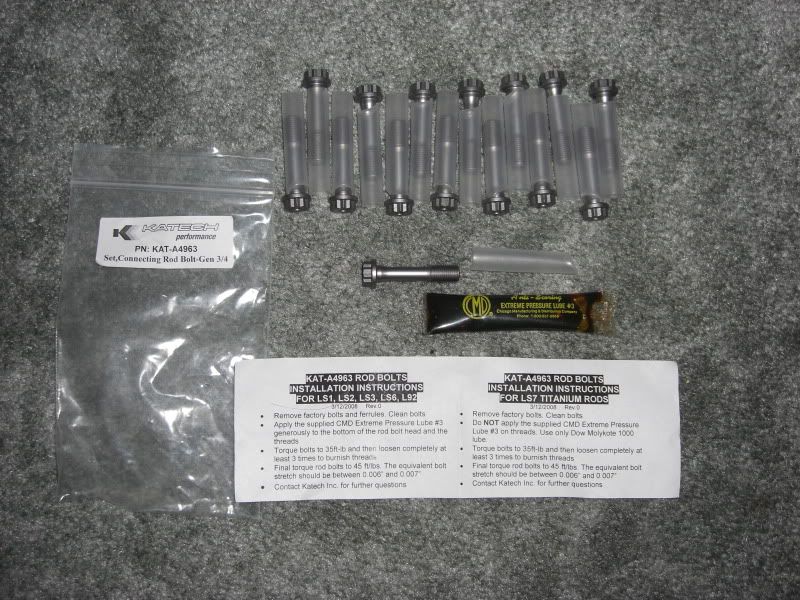
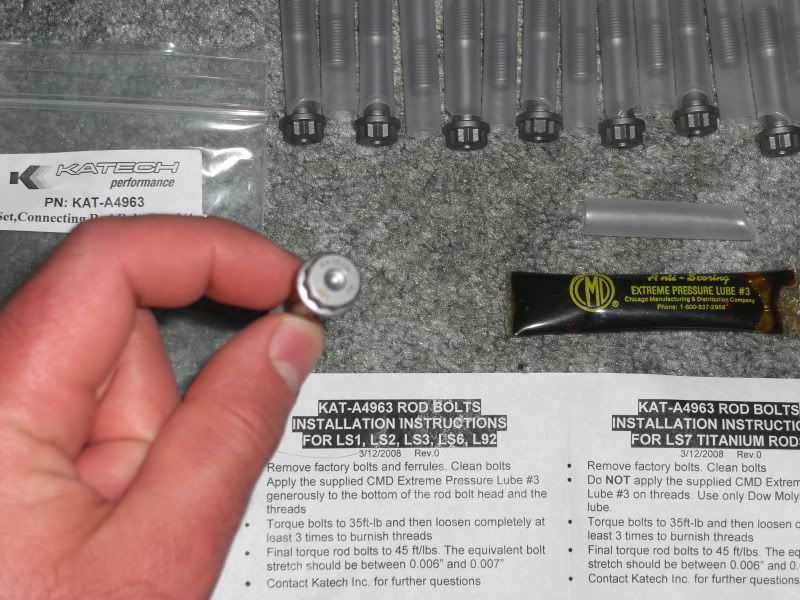
I have the same exact bolts you posted in your picture. I'm rebuilding my 2004 LQ9 from a Cadillac Escalade EXT. I'm not sure what torque angle to use. What did you end up doing?
I have the same exact bolts you posted in your picture. I'm rebuilding my 2004 LQ9 from a Cadillac Escalade EXT. I'm not sure what torque angle to use. What did you end up doing?
Forget the angle. Torque them to 48 ft lbs in 3 stages…20, then 40, then 48. Wait 1 minute between stages. I’ve done countless sets this way.
I have the same exact bolts you posted in your picture. I'm rebuilding my 2004 LQ9 from a Cadillac Escalade EXT. I'm not sure what torque angle to use. What did you end up doing?
Gas Monkey Built a 6-Wheel Ferrari Testarossa With a Corvette LT4 Engine
Slideshow: The controversial Ferrari F6 swaps its original flat-12 for a Corvette Z06-derived LT4 V8 and sends power to four rear wheels through a custom-built drivetrain.
7 Most Reliable High-Performance Engines GM Has Ever Built
Slideshow:These GM engines didn't just make huge power, they survived abuse, boost, track days, and six-digit mileage with a reputation for refusing to quit.
6 Common C5 Corvette Failures and What's Involved In Repairing Them
Slideshow: From wobbling harmonic balancers to failed EBCMs, these are the issues that define long-term C5 ownership and what repairs typically involve.
Retro Modern Bandit Pontiac Trans AM Comes With Burt Reynolds' Autograph
Slideshow: A modern Camaro transformed into a retro icon, this limited-run "Bandit" build blends nostalgia with brute force in a way few revivals manage.
Top 10 Greatest Cadillac V Series Performance Models Ever, Ranked
Slideshow: Cadillac didn't just crash the high-performance luxury vehicle party, it showed up loud, supercharged, and occasionally a little unhinged...
Coachbuilt N2A Anteros Is an LS2-Powered C6 Corvette In Italian Clothes
Slideshow: A one-off sports car that looks like a vintage Italian exotic-but hides a C6 Corvette underneath-just sold for the price of a new mid-engine Corvette.