





Octane enhancement?

Originally Posted by J-Rod
Look at your own article that you posted.
recommends Iso Octane blended with 20% toluene.
Toluene has a RON octane rating of 121 and a MON rating of 107, leading to a (R+M)/2 rating of 114. (R+M)/2 is how ordinary fuels are rated in the US. Note that toluene has a sensitivity rating of 121-107=14. This compares favorably with alcohols which have sensitivities in the 20-30 range. The more sensitive a fuel is the more its performance degrades under load. Toluene's low sensitivity means that it is an excellent fuel for a heavily loaded engine.
Toluene is denser than ordinary gasoline (0.87 g/mL vs. 0.72-0.74) and contains more energy per unit volume. Thus combustion of toluene leads to more energy being liberated and thus more power generated. This is in contrast to oxygenated octane boosters like ethanol or MTBE which contain less energy per unit volume compared to gasoline. The higher heating value of toluene also means that the exhaust gases contain more kinetic energy, which in turn means that there is more energy to drive turbocharger vanes. In practical terms this is experienced as a faster onset of turbo boost.
recommends Iso Octane blended with 20% toluene.
Toluene has a RON octane rating of 121 and a MON rating of 107, leading to a (R+M)/2 rating of 114. (R+M)/2 is how ordinary fuels are rated in the US. Note that toluene has a sensitivity rating of 121-107=14. This compares favorably with alcohols which have sensitivities in the 20-30 range. The more sensitive a fuel is the more its performance degrades under load. Toluene's low sensitivity means that it is an excellent fuel for a heavily loaded engine.
Toluene is denser than ordinary gasoline (0.87 g/mL vs. 0.72-0.74) and contains more energy per unit volume. Thus combustion of toluene leads to more energy being liberated and thus more power generated. This is in contrast to oxygenated octane boosters like ethanol or MTBE which contain less energy per unit volume compared to gasoline. The higher heating value of toluene also means that the exhaust gases contain more kinetic energy, which in turn means that there is more energy to drive turbocharger vanes. In practical terms this is experienced as a faster onset of turbo boost.
1. If it generates more heat then there is more chance for detonation.
2. Although denser, it needs more oxygen to achieve the power. the ECU will cut back on the fuel through the oxygen sensors if a rich condition is present there fore cutting back on the power. In open loop (WOT), the only adavantage is the fuels resistance to detonation so the ECU will not give any knock retard. Higher octanes do not give more power unless full advantage of the timing is taken into effect. that takes programming of the ECU.
Alcohols have excellent properties as well as disadvantages. They can corrode fuel lines (already stated) and they are not very dense but...
they are oxygenated and they have great heats of vaporization (cooling effect). I know everyone has had rubbing alcohol on their skin and has felt the cooling effect given by the alcohol.
Chris
[QUOTE=J-Rod]I don't agree with using airplane fuel either, just citing the known spec on it. In a carb'd application it can lead to Vapor locking from the fact that it has a low Reid Vapor Pressure. In FI cars it is not an issue since the lines are pressurized, vapor lock is never an issue. Also the fact that most aviation fuel is still leaded means dead 02s in a very short period.
QUOTE]
Not only that but there are alot of different "airplane" fuels. Our company Lear jet runs off of a cleaner grade kerosene. I certainly wouldn't add that to my fuel.
Chris
QUOTE]
Not only that but there are alot of different "airplane" fuels. Our company Lear jet runs off of a cleaner grade kerosene. I certainly wouldn't add that to my fuel.
Chris

TECH Fanatic
Joined: Nov 2001
Posts: 1,248
Likes: 0
From: Kansas City, MO
Another point to add to sawedoff's post.
If you added that large of an oxygenate to your fuel, you would definitely need to re-tune. Especially since, unlike dry nitrous oxide, the MAF has no way of detecting the increase.
If you added that large of an oxygenate to your fuel, you would definitely need to re-tune. Especially since, unlike dry nitrous oxide, the MAF has no way of detecting the increase.
Propylene oxide  its 1,2 epoxy propane....it will give you cancer by the way and its a very unstable compound that easily forms peroxides. It can blow up in you tank!!under the right conditions. PS. Sigma Aldrich sells iso octane in 4 liter bottles...not very expensive, if you have access.
Ricker
Originally Posted by DenzSS
Another point to add to sawedoff's post.
If you added that large of an oxygenate to your fuel, you would definitely need to re-tune. Especially since, unlike dry nitrous oxide, the MAF has no way of detecting the increase.
If you added that large of an oxygenate to your fuel, you would definitely need to re-tune. Especially since, unlike dry nitrous oxide, the MAF has no way of detecting the increase.
Originally Posted by ricker6869
its 1,2 epoxy propane....it will give you cancer by the way and its a very unstable compound that easily forms peroxides. It can blow up in you tank!!under the right conditions. PS. Sigma Aldrich sells iso octane in 4 liter bottles...not very expensive, if you have access.Ricker
LS1 Tech Stories
The Best V8 Stories One Small Block at Time

Top 10 Greatest Cadillac V Series Performance Models Ever, Ranked
Pouria Savadkouei
Top 10 Most Powerful Chevy Trucks Ever Made!

Hennessey's New Supercharged Silverado ZR2 Has 700 HP
Verdad Gallardo
Coachbuilt N2A Anteros Is an LS2-Powered C6 Corvette In Italian Clothes
Verdad Gallardo
Awesome K5 Blazer Restomod Comes With C7 Corvette Power
Verdad Gallardo
10 Camaros You Should Never Buy

10 LS Engine Myths That Refuse to Die
Verdad Gallardo
Five Reasons the Camaro Was the Most Pivotal Player in the Pony Car Wars 2.0
Brett Foote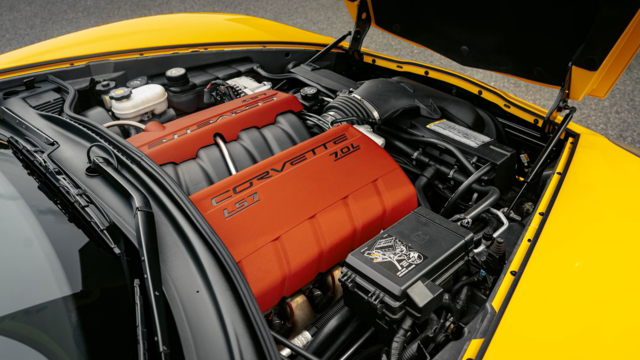
10 Reasons the LS7 Is GM's Most Extreme Naturally Aspirated V8 Engine Ever
Verdad Gallardo
On The Tree
Joined: Nov 2003
Posts: 162
Likes: 0
Originally Posted by ricker6869
its 1,2 epoxy propane....it will give you cancer by the way and its a very unstable compound that easily forms peroxides. It can blow up in you tank!!under the right conditions. PS. Sigma Aldrich sells iso octane in 4 liter bottles...not very expensive, if you have access.Ricker

6600 rpm clutch dump of death Administrator


Joined: Dec 2001
Posts: 4,983
Likes: 13
From: Texas
P.O. Will not pass an NHRA fuel check, or most of the other sanctioning bodies checks using cyclohexane as a reference in the dielectric check.
Oxygenated compounds work fine in FI cars. Many of the better unleaded race fuels are oxygenated in fact. The mix ratios for aftermarket oxygenates are about 4 oz per gallon (128 oz). It doesn't require a re-tune, the 02s will compensate just fine. You're not talking about tons of HP either, on the order of 5 HP or less from what I've seen going from oxgenated fuel to non-oxygenated fuel. But in some class based racing (like some stock classes, every little bit helps)
I know guys who can custom blend any fuel you want, with whatever you want in it, to meet the rules of any fuel check out there. P.O. and many of the other additives are pretty low tech, but no doubt they work in certain circumstances.
There are all sorts of compounds that folks have played withover the years like nitro based compounds, mono-hydrazine, p.o., and a host of others.
If you want to impress me, figure out how to mix hydrogen peroxide (h2o2) with gas as an oxidizer, and keep it stable.
Oxygenated compounds work fine in FI cars. Many of the better unleaded race fuels are oxygenated in fact. The mix ratios for aftermarket oxygenates are about 4 oz per gallon (128 oz). It doesn't require a re-tune, the 02s will compensate just fine. You're not talking about tons of HP either, on the order of 5 HP or less from what I've seen going from oxgenated fuel to non-oxygenated fuel. But in some class based racing (like some stock classes, every little bit helps)
I know guys who can custom blend any fuel you want, with whatever you want in it, to meet the rules of any fuel check out there. P.O. and many of the other additives are pretty low tech, but no doubt they work in certain circumstances.
There are all sorts of compounds that folks have played withover the years like nitro based compounds, mono-hydrazine, p.o., and a host of others.
If you want to impress me, figure out how to mix hydrogen peroxide (h2o2) with gas as an oxidizer, and keep it stable.
Originally Posted by J-Rod
If you want to impress me, figure out how to mix hydrogen peroxide (h2o2) with gas as an oxidizer, and keep it stable.


Teching In
Joined: Jul 2004
Posts: 41
Likes: 0
Just 2 more cents Good day gentlemen,
I'm new to the board, and certainly not a chemist by any stretch. But I can speak from personal experience on the Toluene/Xylene topic. I have an 87 GN and typically I'm limited to around 15 to 16 pounds of boost with 93 octane pump gas and about 20 degrees of timing. Running 1 gallon of xylene with 3 gallons of 93 pump gas allows me to run about 20 pounds of boost at the same timing level. I would always add about 1 or 2 ozs of dexron in with the xylene for lube qualities. To gain 4 pounds of boost in a Turbo Buick equates to around 40 horsepower. I don't buy it much anymore because I have a progressive alcohol injection system now, (26 PSI of boost with no KR, how fun is that!), but anyway for the 2 or so years I used it everything went well. Just thought I'd chime in. - Tom
I'm new to the board, and certainly not a chemist by any stretch. But I can speak from personal experience on the Toluene/Xylene topic. I have an 87 GN and typically I'm limited to around 15 to 16 pounds of boost with 93 octane pump gas and about 20 degrees of timing. Running 1 gallon of xylene with 3 gallons of 93 pump gas allows me to run about 20 pounds of boost at the same timing level. I would always add about 1 or 2 ozs of dexron in with the xylene for lube qualities. To gain 4 pounds of boost in a Turbo Buick equates to around 40 horsepower. I don't buy it much anymore because I have a progressive alcohol injection system now, (26 PSI of boost with no KR, how fun is that!), but anyway for the 2 or so years I used it everything went well. Just thought I'd chime in. - Tom
6600 rpm clutch dump of death Administrator
Joined: Dec 2001
Posts: 4,983
Likes: 13
From: Texas
Originally Posted by Termin8r
Good day gentlemen,
I'm new to the board, and certainly not a chemist by any stretch. But I can speak from personal experience on the Toluene/Xylene topic. I have an 87 GN and typically I'm limited to around 15 to 16 pounds of boost with 93 octane pump gas and about 20 degrees of timing. Running 1 gallon of xylene with 3 gallons of 93 pump gas allows me to run about 20 pounds of boost at the same timing level. I would always add about 1 or 2 ozs of dexron in with the xylene for lube qualities. To gain 4 pounds of boost in a Turbo Buick equates to around 40 horsepower. I don't buy it much anymore because I have a progressive alcohol injection system now, (26 PSI of boost with no KR, how fun is that!), but anyway for the 2 or so years I used it everything went well. Just thought I'd chime in. - Tom
I'm new to the board, and certainly not a chemist by any stretch. But I can speak from personal experience on the Toluene/Xylene topic. I have an 87 GN and typically I'm limited to around 15 to 16 pounds of boost with 93 octane pump gas and about 20 degrees of timing. Running 1 gallon of xylene with 3 gallons of 93 pump gas allows me to run about 20 pounds of boost at the same timing level. I would always add about 1 or 2 ozs of dexron in with the xylene for lube qualities. To gain 4 pounds of boost in a Turbo Buick equates to around 40 horsepower. I don't buy it much anymore because I have a progressive alcohol injection system now, (26 PSI of boost with no KR, how fun is that!), but anyway for the 2 or so years I used it everything went well. Just thought I'd chime in. - Tom


