








What's up with Comp Cams ?

Joined: Aug 2007
Posts: 24,241
Likes: 89
From: Turnin' Wrenches Infractions: 005



On The Tree
Joined: Sep 2004
Posts: 188
Likes: 1
From: Houston, TX
I'm sorry some of you are having problems. This thread raises two question in my mind.
One thing I'd like to see people focus on more is pushrod rigidity. All of the pushrod flex takes place right after the valve starts to open, which is maximum acceleration. After the velocity picks up and he acceleration tapers off some the pushrod straightens back out, adding some loft/separation to the rocker and valve on the opening side of the lobe. You can think of it as valve float on the opening side of the lobe. Right over the nose of the cam the spring returns the valvetrain to the lobe, slamming the lifter onto the nose of the lobe. I have a Spintron chart that I saved from another discussion that demonstrates this.
Most LSx heads will not allow anything larger than an 11/32" pushrod to fit, and most of the people I talk to don't even run that size, they still have 5/16" pushrods. Mated with a modern lobe they're going to flex, the only question is how much.
On the cam degreeing, this is something I've dealt with forever with cams from every maker I've bought from. If it is a performance engine...the cam must be degreed and moved if needed. I also believe that little to no advance should be ground into the cam. I sell quite a few Dodge Viper cams, and the company that makes the cores roughs in and heat treats the lobes to match the factory prints, which puts the cam grinding company and me in a situation where we can't possibly grind enough *advance* into the cam without risking going through the heat treat and having a lobe fail. So, I have them grind the cam centered, no advance, so that the heat treat is really thick everywhere and knock on wood I've yet to have one fail.
I don't know how many of the failed cams in the pics provided had a lot of advance ground into them so they would be a *drop-in* fit with no degreeing or moving needed. If they did, and the engines suffered from too much pushrod flex, I can see that causing a lot of failures.
Just something to think about.
One thing I'd like to see people focus on more is pushrod rigidity. All of the pushrod flex takes place right after the valve starts to open, which is maximum acceleration. After the velocity picks up and he acceleration tapers off some the pushrod straightens back out, adding some loft/separation to the rocker and valve on the opening side of the lobe. You can think of it as valve float on the opening side of the lobe. Right over the nose of the cam the spring returns the valvetrain to the lobe, slamming the lifter onto the nose of the lobe. I have a Spintron chart that I saved from another discussion that demonstrates this.
Most LSx heads will not allow anything larger than an 11/32" pushrod to fit, and most of the people I talk to don't even run that size, they still have 5/16" pushrods. Mated with a modern lobe they're going to flex, the only question is how much.
On the cam degreeing, this is something I've dealt with forever with cams from every maker I've bought from. If it is a performance engine...the cam must be degreed and moved if needed. I also believe that little to no advance should be ground into the cam. I sell quite a few Dodge Viper cams, and the company that makes the cores roughs in and heat treats the lobes to match the factory prints, which puts the cam grinding company and me in a situation where we can't possibly grind enough *advance* into the cam without risking going through the heat treat and having a lobe fail. So, I have them grind the cam centered, no advance, so that the heat treat is really thick everywhere and knock on wood I've yet to have one fail.
I don't know how many of the failed cams in the pics provided had a lot of advance ground into them so they would be a *drop-in* fit with no degreeing or moving needed. If they did, and the engines suffered from too much pushrod flex, I can see that causing a lot of failures.
Just something to think about.
^^ nice post, yes I'm starting to research pushrod OD now...
So your saying 11/32 is the biggest I can fit in my 317 head?
Another big problem is people not using a pushrod checker and using the how many turns of the rocker bolt method... And improper lifter preload!!!
Honestly it could be a number of reasons.... It's hard to just blame the cam
So your saying 11/32 is the biggest I can fit in my 317 head?
Another big problem is people not using a pushrod checker and using the how many turns of the rocker bolt method... And improper lifter preload!!!
Honestly it could be a number of reasons.... It's hard to just blame the cam

Launching!
Joined: Jul 2009
Posts: 222
Likes: 0
From: Durham, NC
Is there a timeline for these issues?
Say, the incorrect grinds and/or wear issues started 1, 2, 4 years ago?
Are the incorrect grind and wear issues connected?
Have the incorrect grinds and/or wear issue cams stopped being produced, if so, when?
^^ nice post, yes I'm starting to research pushrod OD now...
So your saying 11/32 is the biggest I can fit in my 317 head?
Another big problem is people not using a pushrod checker and using the how many turns of the rocker bolt method... And improper lifter preload!!!
Honestly it could be a number of reasons.... It's hard to just blame the cam
So your saying 11/32 is the biggest I can fit in my 317 head?
Another big problem is people not using a pushrod checker and using the how many turns of the rocker bolt method... And improper lifter preload!!!
Honestly it could be a number of reasons.... It's hard to just blame the cam
Hope this helps
I'm sorry some of you are having problems. This thread raises two question in my mind.
One thing I'd like to see people focus on more is pushrod rigidity. All of the pushrod flex takes place right after the valve starts to open, which is maximum acceleration. After the velocity picks up and he acceleration tapers off some the pushrod straightens back out, adding some loft/separation to the rocker and valve on the opening side of the lobe. You can think of it as valve float on the opening side of the lobe. Right over the nose of the cam the spring returns the valvetrain to the lobe, slamming the lifter onto the nose of the lobe. I have a Spintron chart that I saved from another discussion that demonstrates this.
Most LSx heads will not allow anything larger than an 11/32" pushrod to fit, and most of the people I talk to don't even run that size, they still have 5/16" pushrods. Mated with a modern lobe they're going to flex, the only question is how much.
On the cam degreeing, this is something I've dealt with forever with cams from every maker I've bought from. If it is a performance engine...the cam must be degreed and moved if needed. I also believe that little to no advance should be ground into the cam. I sell quite a few Dodge Viper cams, and the company that makes the cores roughs in and heat treats the lobes to match the factory prints, which puts the cam grinding company and me in a situation where we can't possibly grind enough *advance* into the cam without risking going through the heat treat and having a lobe fail. So, I have them grind the cam centered, no advance, so that the heat treat is really thick everywhere and knock on wood I've yet to have one fail.
I don't know how many of the failed cams in the pics provided had a lot of advance ground into them so they would be a *drop-in* fit with no degreeing or moving needed. If they did, and the engines suffered from too much pushrod flex, I can see that causing a lot of failures.
Just something to think about.
One thing I'd like to see people focus on more is pushrod rigidity. All of the pushrod flex takes place right after the valve starts to open, which is maximum acceleration. After the velocity picks up and he acceleration tapers off some the pushrod straightens back out, adding some loft/separation to the rocker and valve on the opening side of the lobe. You can think of it as valve float on the opening side of the lobe. Right over the nose of the cam the spring returns the valvetrain to the lobe, slamming the lifter onto the nose of the lobe. I have a Spintron chart that I saved from another discussion that demonstrates this.
Most LSx heads will not allow anything larger than an 11/32" pushrod to fit, and most of the people I talk to don't even run that size, they still have 5/16" pushrods. Mated with a modern lobe they're going to flex, the only question is how much.
On the cam degreeing, this is something I've dealt with forever with cams from every maker I've bought from. If it is a performance engine...the cam must be degreed and moved if needed. I also believe that little to no advance should be ground into the cam. I sell quite a few Dodge Viper cams, and the company that makes the cores roughs in and heat treats the lobes to match the factory prints, which puts the cam grinding company and me in a situation where we can't possibly grind enough *advance* into the cam without risking going through the heat treat and having a lobe fail. So, I have them grind the cam centered, no advance, so that the heat treat is really thick everywhere and knock on wood I've yet to have one fail.
I don't know how many of the failed cams in the pics provided had a lot of advance ground into them so they would be a *drop-in* fit with no degreeing or moving needed. If they did, and the engines suffered from too much pushrod flex, I can see that causing a lot of failures.
Just something to think about.
We've been selling comp cams for over 5 years now and have never had a cam failure because of a faulty core. We do use VR1 oil on every car we do a cam swap in, and the lobes that I use are not crazy aggressive. Not saying it couldn't ever happen, but it's something Tick Performance has yet to encounter.
This makes me wonder.
Is there a timeline for these issues?
Say, the incorrect grinds and/or wear issues started 1, 2, 4 years ago?
Are the incorrect grind and wear issues connected?
Have the incorrect grinds and/or wear issue cams stopped being produced, if so, when?
Is there a timeline for these issues?
Say, the incorrect grinds and/or wear issues started 1, 2, 4 years ago?
Are the incorrect grind and wear issues connected?
Have the incorrect grinds and/or wear issue cams stopped being produced, if so, when?
This is why I carefully selected all the components in my valvetrain. Starting with endurance lobes, high-end lifters, stiffer pushrods, lightweight rockers, lightweight valves, and valvesprings without crazy aggressive spring pressures. And use of VR1 oil as well.
Unfortunately, I see vendors who throw insanely aggressive lobes, 5/16" pushrods, LS7 lifters, heavy *** valves, and super aggressive springs on a combo and call it a day. I just couldn't do that. And unfortunately, folks take those combos as the "bible" because that's what everyone runs. Well, it's not right. It takes time for weekend cars to be beat on long enough to show long-term effects. Now we're seeing them.
Unfortunately, I see vendors who throw insanely aggressive lobes, 5/16" pushrods, LS7 lifters, heavy *** valves, and super aggressive springs on a combo and call it a day. I just couldn't do that. And unfortunately, folks take those combos as the "bible" because that's what everyone runs. Well, it's not right. It takes time for weekend cars to be beat on long enough to show long-term effects. Now we're seeing them.
LS1 Tech Stories
The Best V8 Stories One Small Block at Time

Gas Monkey Built a 6-Wheel Ferrari Testarossa With a Corvette LT4 Engine
Verdad Gallardo
7 Most Reliable High-Performance Engines GM Has Ever Built
Verdad Gallardo
Amazing '71 Camaro Restomod Is Modern Muscle Car Under the Skin
Verdad Gallardo
6 Common C5 Corvette Failures and What's Involved In Repairing Them
Pouria Savadkouei
Retro Modern Bandit Pontiac Trans AM Comes With Burt Reynolds' Autograph
Verdad Gallardo
Top 10 Greatest Cadillac V Series Performance Models Ever, Ranked
Pouria Savadkouei
Top 10 Most Powerful Chevy Trucks Ever Made!

Hennessey's New Supercharged Silverado ZR2 Has 700 HP
Verdad Gallardo
Coachbuilt N2A Anteros Is an LS2-Powered C6 Corvette In Italian Clothes
Verdad Gallardo
I don't want to minimize the issues that other vendors have experienced, but I haven't seen these same issues.
I've never had a Comp Cam core fail.
I've never had a Comp Cam be off more than 2 degrees when degree'd in with a QUALITY timing chain. I degree'd a cam that was 4 degrees off with a low cost double roller chain, then checked it with a Comp/Cloyes Hex-A-Just and it was then 2 degrees off.
I have a Cam Pro, the readings I get off the cams that I've checked are shockingly close to what they're supposed to be, they're as good or better than the other cam manufacturers that I've checked.
I've never had a stock rocker trunnion fail.
I've never had a lifter fail, of any brand or type.
I've never had a valve spring fail.
I've also NEVER used a ignorant LSK lobe on a camshaft.
I believe I've never had these issues because I've steered people away from using ignorant lobes and I've always used good springs. In the spring spintron testing that I was involved in, the highest pressure springs were NOT the best. Higher pressure springs pole vault the pushrod just like Greg said. The most widely used springs in the industry, the Patriot Gold were the worst, with .100" of valve loft with a .600"ish lift XE-R lobe.
The valve train is a system, the lobe choice is the foundation, just like a foundation of a house. If the foundation is wrong, it doesn't matter what you've done with the remainder of the system, it'll still be wrong.
I'm asking everyone to please do this for the LS community, every person who has ever had a cam failure needs to post what cam lobe they were using, what springs they were using, what brand pushrod, diameter and wall thickness, rocker arm brand/type and oil used. I think you'll see some definite trends from that information, with the primary trend being failures associated with lobe choice/spring choice. Also, some of the pushrods available are not made from the material that they're supposed to be made from.
My hypothesis on LSK cam lobes... 100% failure rate within 50,000 miles, with some occurring as soon as 1,500 miles. The failure may be the lifter, the trunnion, the spring, or the cam core itself. If you have one of these "Magic" cams using LSK lobes, you're driving a ticking time bomb.
BTW, in terms of lobe intensity, the Cam Motion cam that I checked had a slower ramp rate than a stock LS9 camshaft, and you wonder why they would be more durable? It all comes down to lobe choice...
I've never had a Comp Cam core fail.
I've never had a Comp Cam be off more than 2 degrees when degree'd in with a QUALITY timing chain. I degree'd a cam that was 4 degrees off with a low cost double roller chain, then checked it with a Comp/Cloyes Hex-A-Just and it was then 2 degrees off.
I have a Cam Pro, the readings I get off the cams that I've checked are shockingly close to what they're supposed to be, they're as good or better than the other cam manufacturers that I've checked.
I've never had a stock rocker trunnion fail.
I've never had a lifter fail, of any brand or type.
I've never had a valve spring fail.
I've also NEVER used a ignorant LSK lobe on a camshaft.
I believe I've never had these issues because I've steered people away from using ignorant lobes and I've always used good springs. In the spring spintron testing that I was involved in, the highest pressure springs were NOT the best. Higher pressure springs pole vault the pushrod just like Greg said. The most widely used springs in the industry, the Patriot Gold were the worst, with .100" of valve loft with a .600"ish lift XE-R lobe.
The valve train is a system, the lobe choice is the foundation, just like a foundation of a house. If the foundation is wrong, it doesn't matter what you've done with the remainder of the system, it'll still be wrong.
I'm asking everyone to please do this for the LS community, every person who has ever had a cam failure needs to post what cam lobe they were using, what springs they were using, what brand pushrod, diameter and wall thickness, rocker arm brand/type and oil used. I think you'll see some definite trends from that information, with the primary trend being failures associated with lobe choice/spring choice. Also, some of the pushrods available are not made from the material that they're supposed to be made from.
My hypothesis on LSK cam lobes... 100% failure rate within 50,000 miles, with some occurring as soon as 1,500 miles. The failure may be the lifter, the trunnion, the spring, or the cam core itself. If you have one of these "Magic" cams using LSK lobes, you're driving a ticking time bomb.
BTW, in terms of lobe intensity, the Cam Motion cam that I checked had a slower ramp rate than a stock LS9 camshaft, and you wonder why they would be more durable? It all comes down to lobe choice...
I don't want to minimize the issues that other vendors have experienced, but I haven't seen these same issues.
I've never had a Comp Cam core fail.
I've never had a Comp Cam be off more than 2 degrees when degree'd in with a QUALITY timing chain. I degree'd a cam that was 4 degrees off with a low cost double roller chain, then checked it with a Comp/Cloyes Hex-A-Just and it was then 2 degrees off.
I have a Cam Pro, the readings I get off the cams that I've checked are shockingly close to what they're supposed to be, they're as good or better than the other cam manufacturers that I've checked.
I've never had a stock rocker trunnion fail.
I've never had a lifter fail, of any brand or type.
I've never had a valve spring fail.
I've also NEVER used a ignorant LSK lobe on a camshaft.
I believe I've never had these issues because I've steered people away from using ignorant lobes and I've always used good springs. In the spring spintron testing that I was involved in, the highest pressure springs were NOT the best. Higher pressure springs pole vault the pushrod just like Greg said. The most widely used springs in the industry, the Patriot Gold were the worst, with .100" of valve loft with a .600"ish lift XE-R lobe.
The valve train is a system, the lobe choice is the foundation, just like a foundation of a house. If the foundation is wrong, it doesn't matter what you've done with the remainder of the system, it'll still be wrong.
I'm asking everyone to please do this for the LS community, every person who has ever had a cam failure needs to post what cam lobe they were using, what springs they were using, what brand pushrod, diameter and wall thickness, rocker arm brand/type and oil used. I think you'll see some definite trends from that information, with the primary trend being failures associated with lobe choice/spring choice. Also, some of the pushrods available are not made from the material that they're supposed to be made from.
My hypothesis on LSK cam lobes... 100% failure rate within 50,000 miles, with some occurring as soon as 1,500 miles. The failure may be the lifter, the trunnion, the spring, or the cam core itself. If you have one of these "Magic" cams using LSK lobes, you're driving a ticking time bomb.
BTW, in terms of lobe intensity, the Cam Motion cam that I checked had a slower ramp rate than a stock LS9 camshaft, and you wonder why they would be more durable? It all comes down to lobe choice...
I've never had a Comp Cam core fail.
I've never had a Comp Cam be off more than 2 degrees when degree'd in with a QUALITY timing chain. I degree'd a cam that was 4 degrees off with a low cost double roller chain, then checked it with a Comp/Cloyes Hex-A-Just and it was then 2 degrees off.
I have a Cam Pro, the readings I get off the cams that I've checked are shockingly close to what they're supposed to be, they're as good or better than the other cam manufacturers that I've checked.
I've never had a stock rocker trunnion fail.
I've never had a lifter fail, of any brand or type.
I've never had a valve spring fail.
I've also NEVER used a ignorant LSK lobe on a camshaft.
I believe I've never had these issues because I've steered people away from using ignorant lobes and I've always used good springs. In the spring spintron testing that I was involved in, the highest pressure springs were NOT the best. Higher pressure springs pole vault the pushrod just like Greg said. The most widely used springs in the industry, the Patriot Gold were the worst, with .100" of valve loft with a .600"ish lift XE-R lobe.
The valve train is a system, the lobe choice is the foundation, just like a foundation of a house. If the foundation is wrong, it doesn't matter what you've done with the remainder of the system, it'll still be wrong.
I'm asking everyone to please do this for the LS community, every person who has ever had a cam failure needs to post what cam lobe they were using, what springs they were using, what brand pushrod, diameter and wall thickness, rocker arm brand/type and oil used. I think you'll see some definite trends from that information, with the primary trend being failures associated with lobe choice/spring choice. Also, some of the pushrods available are not made from the material that they're supposed to be made from.
My hypothesis on LSK cam lobes... 100% failure rate within 50,000 miles, with some occurring as soon as 1,500 miles. The failure may be the lifter, the trunnion, the spring, or the cam core itself. If you have one of these "Magic" cams using LSK lobes, you're driving a ticking time bomb.
BTW, in terms of lobe intensity, the Cam Motion cam that I checked had a slower ramp rate than a stock LS9 camshaft, and you wonder why they would be more durable? It all comes down to lobe choice...
So, let's hear the actual combinations that failed, not just "Comp sucks my cam core sucks because it failed" story. Let's hear the whole story before jumping on the bandwagon that every comp cam sold is going to fail and come apart.


LS1Tech Sponsor
Joined: Mar 2013
Posts: 288
Likes: 1
From: Mooresville, NC
Never had a comp cam fail here either.. Had a good number of stock GM cams fail just last year. None of the cars I would classify as abused.
__________________

See what's in our shop on Facebook! Customer Build Blogs!
www.pcmofnc.com
Performance Installs - Dyno Tuning - Custom Camshafts & Valvetrain - Remote HPtuners Tuning - Mail Order Tuning & Sales
704-307-4227
See what's in our shop on Facebook! Customer Build Blogs!
www.pcmofnc.com
Performance Installs - Dyno Tuning - Custom Camshafts & Valvetrain - Remote HPtuners Tuning - Mail Order Tuning & Sales
704-307-4227

Couldn't of said it better myself Brian.
So, let's hear the actual combinations that failed, not just "Comp sucks my cam core sucks because it failed" story. Let's hear the whole story before jumping on the bandwagon that every comp cam sold is going to fail and come apart.
So, let's hear the actual combinations that failed, not just "Comp sucks my cam core sucks because it failed" story. Let's hear the whole story before jumping on the bandwagon that every comp cam sold is going to fail and come apart.
As I said previously in this thread, if the installer & oils are the problem then there isn't an installer in the entire southeast of the country that can install a camshaft or valvetrain. That logic is a double edged sword regardless of how you slice it. I've had them fail on me, and I'll go toe to toe with anyone in the world in regards to setting up a stable & quiet valvetrain.
My mission in this thread is not to throw anyone under the bus but the public is being mislead. There are several shops that know this is going on and won't say/do anything about it. They either dismiss a cam failure as an isolated incident (even though they're not isolated) and/or they won't offer the info because it hurts sales. Maybe enough vendors ganging up on Comp due to loss of sales will force them to establish some better QC and better treat their customers. While you're at it, tell them to make sure their ICL is at least within 1-2 degrees, and not the 3-5 off that I've seen.
Cheers.




Joined: Nov 2001
Posts: 34,643
Likes: 2,571
From: Schiller Park, ILL Member: #317
I have seen specific recommendations from Valvoline that NSL oils have a change interval of 500 miles, as compared to the 3,000 mile recommendation for VR1 (VV205).
I have personally been using VV205 in my old flat tappet SBC for years now, with no issues at all. I would pick this oil for a street engine over the VV850 "NSL" oil for the reasons I mentioned above.
Good to hear. I used pretty much all comp products for my valvetrain and heads as I am just getting back into the domestic world recently and the last time I build a domestic motor they were considered to have a very good name. It has been about 10 years ago now and did not really think their quality would change. I guess we will see!
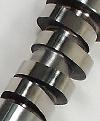
Over the years, cam design has progressed at a very rapid pace. If you recall back to 1998 or 1999, the best cam lobes on the market were the Comp Xtreme Energy High Lift lobes. Commonly known as XE lobes, they were very good .550-.570" lift lobes that had good valve control and were quiet. Beehive springs and the early duals that were available at the time seemed to work just fine with them.
But the bar kept getting raised. Savvy shops like LPE and LG asked Comp to create even faster lobes for their own proprietary cams. LSK and XE-R lobes were born. Soon people were making even more power than with the old XE lobes and the popular Crane lobes (remember those?).
The problem was, head porters started adding larger, heavier valves for their high flowing cylinder heads, and the spring and pushrod technology wasn't keeping pace. Now, those fast XE-R and LSK lobes weren't very happy when you coupled them up with a 2.08" or larger valve and a Patriot Gold or Extreme spring.
Comp continued raising the bar with their LSL/LSR line of lobes a few years ago and again, more power was found...at least for a little while. Problem was, the small gains in power were being squandered by installers who would use cheap valve springs, heavy solid stainless vales, and flimsy pushrods.
Most of the Comp cam lobes I've used for the past 3-4 years have been designs that are LESS radical and offer better valvetrain stability. This is why the LSG lobes (aka original EPS lobes), LXL lobes (the softer closing, quieter ones), and HUC lobes (modern marine lobe) became a much bigger part of my custom cam recommendations. Valve control problems were killing power and wrecking people's valvetrain. Obviously, Comp became a victim of their own ambition. Their technology had outpaced the experience of their young installers and combos were falling apart.
As mentioned, this is not all Comp's fault. Much of the problem lies with people specing out too fast of cam lobes for too flimsy of a valvetrain combo. On the flip side, some people are now specing too stout of springs for their combos and it's destroying lifters or worse. The bad combos exposed any weakness in the heat treatment and this is a big reason why you're seeing so many failures.
Slower lobes help, better heat treatment helps, better springs and pushrods help, better oil helps. Make a mistake with one of these, you might still be OK. Make a mistake on all 4 and you can kiss the cams goodbye in short order. Shops like Tick see few failures because they are installing the combos they spec. Shops like Spartan saw a lot of failures come in their shop because they were installed by God knows who?
But back to Comp. I think the majority of their lobes are too fast, I think the quality of their heat treatment has gotten thinner in the search of faster lobes, and I think that because they have gotten SO busy, they have stopped sweating the details on sending out custom cams ground on the proper centerline. It happens. You get popular and you have to add inexperienced machinists to pick up the slack. It happens. I just got tired of it happening to me.
But the bar kept getting raised. Savvy shops like LPE and LG asked Comp to create even faster lobes for their own proprietary cams. LSK and XE-R lobes were born. Soon people were making even more power than with the old XE lobes and the popular Crane lobes (remember those?).
The problem was, head porters started adding larger, heavier valves for their high flowing cylinder heads, and the spring and pushrod technology wasn't keeping pace. Now, those fast XE-R and LSK lobes weren't very happy when you coupled them up with a 2.08" or larger valve and a Patriot Gold or Extreme spring.
Comp continued raising the bar with their LSL/LSR line of lobes a few years ago and again, more power was found...at least for a little while. Problem was, the small gains in power were being squandered by installers who would use cheap valve springs, heavy solid stainless vales, and flimsy pushrods.
Most of the Comp cam lobes I've used for the past 3-4 years have been designs that are LESS radical and offer better valvetrain stability. This is why the LSG lobes (aka original EPS lobes), LXL lobes (the softer closing, quieter ones), and HUC lobes (modern marine lobe) became a much bigger part of my custom cam recommendations. Valve control problems were killing power and wrecking people's valvetrain. Obviously, Comp became a victim of their own ambition. Their technology had outpaced the experience of their young installers and combos were falling apart.
As mentioned, this is not all Comp's fault. Much of the problem lies with people specing out too fast of cam lobes for too flimsy of a valvetrain combo. On the flip side, some people are now specing too stout of springs for their combos and it's destroying lifters or worse. The bad combos exposed any weakness in the heat treatment and this is a big reason why you're seeing so many failures.
Slower lobes help, better heat treatment helps, better springs and pushrods help, better oil helps. Make a mistake with one of these, you might still be OK. Make a mistake on all 4 and you can kiss the cams goodbye in short order. Shops like Tick see few failures because they are installing the combos they spec. Shops like Spartan saw a lot of failures come in their shop because they were installed by God knows who?
But back to Comp. I think the majority of their lobes are too fast, I think the quality of their heat treatment has gotten thinner in the search of faster lobes, and I think that because they have gotten SO busy, they have stopped sweating the details on sending out custom cams ground on the proper centerline. It happens. You get popular and you have to add inexperienced machinists to pick up the slack. It happens. I just got tired of it happening to me.
__________________

2013 Corvette Grand Sport A6 LME forged 416, Greg Good ported TFS 255 LS3 heads, 222/242 .629"/.604" 121LSA Pat G blower cam, ARH 1 7/8" headers, ESC Novi 1500 Supercharger w/8 rib direct drive conversion, 747rwhp/709rwtq on 93 octane, 801rwhp/735rwtq on race fuel, 10.1 @ 147.25mph 1/4 mile, 174.7mph Half Mile.
2016 Corvette Z51 M7 Magnuson Heartbeat 2300 supercharger, TSP LT headers, Pat G tuned, 667rwhp, 662rwtq, 191mph TX Mile.
2009.5 Pontiac G8 GT 6.0L, A6, AFR 230v2 heads. 506rwhp/442rwtq. 11.413 @ 121.29mph 1/4 mile, 168.7mph TX Mile
2000 Pewter Ram Air Trans Am M6 heads/cam 508 rwhp/445 rwtq SAE, 183.092 TX Mile
2022 Cadillac Escalade 6.2L A10 S&B CAI, Corsa catback.
2023 Corvette 3LT Z51 soon to be modified.
Custom LSX tuning in person or via email press here.
2013 Corvette Grand Sport A6 LME forged 416, Greg Good ported TFS 255 LS3 heads, 222/242 .629"/.604" 121LSA Pat G blower cam, ARH 1 7/8" headers, ESC Novi 1500 Supercharger w/8 rib direct drive conversion, 747rwhp/709rwtq on 93 octane, 801rwhp/735rwtq on race fuel, 10.1 @ 147.25mph 1/4 mile, 174.7mph Half Mile.
2016 Corvette Z51 M7 Magnuson Heartbeat 2300 supercharger, TSP LT headers, Pat G tuned, 667rwhp, 662rwtq, 191mph TX Mile.
2009.5 Pontiac G8 GT 6.0L, A6, AFR 230v2 heads. 506rwhp/442rwtq. 11.413 @ 121.29mph 1/4 mile, 168.7mph TX Mile
2000 Pewter Ram Air Trans Am M6 heads/cam 508 rwhp/445 rwtq SAE, 183.092 TX Mile
2022 Cadillac Escalade 6.2L A10 S&B CAI, Corsa catback.
2023 Corvette 3LT Z51 soon to be modified.
Custom LSX tuning in person or via email press here.