






Flogging engine on chassis dyno after rebuild

Thread Starter
Launching!
Joined: Aug 2004
Posts: 284
Likes: 0
From: British Columbia, Canada
 Flogging engine on chassis dyno after rebuild
 So, after my rebuild I am trailering my car the my nearest chassis dyno. Any problems with flogging it on the dyno before doing anything else. It will obviously be full of break in oil. This will be the first time being fired up as the tuner needs to put a base tune on my car to the new 50 lb injectors to sync with my MAF.
Thread Starter
Launching!
Joined: Aug 2004
Posts: 284
Likes: 0
From: British Columbia, Canada
I think I may get my ECM sent to Texas speed and have them throw on a base tune so I can run it and drive it to the dyno shop. This will put some break in miles on it before it hits the rollers. Thoughts?
A decent tuner won't 'flog it' if he knows it's a new engine.
He should be able to run the engine in & tune it so you would be good to go.
He should be able to run the engine in & tune it so you would be good to go.
Basically OP you need to get a "break-in" tune like you mentioned just to get the engine running and car driving. Then put some miles on the engine to break it in according to the builder of said engine, then after that's done you take it to the tuner and have him/her fully tune the engine in all aspects.

TECH Fanatic
Joined: Aug 2011
Posts: 1,324
Likes: 6
From: Marengo, Ia
I know many engine dyno's have engine breakin programs that vary the load and rpm to properly seat the rings and break in the engine allowing full throttle dyno pulls to be safely done immediately with no worries of harming the engine. I would ask your tuner if the same thing can be done on a chassis dyno, it sounds ideal to break in a engine in a controlled environment like that.
when you build a "new" engine... there is basically nothing that needs to be broken in...
except for the Rings on the pistons...(and flat tappet cams/lifters...but you are probably hydraulic roller lifters)
when you build an engine, you only have a very short time to "seat" the rings
you cant do that without building cylinder pressure...
the only way to build cylinder pressure is to beat on it...go WOT....
you need to do full rpm pulls of WOT followed by a full deceleration back to idle
full to WOT seats the rings, back to idle draws garbage off the cylinder walls..
half a dozen good dyno pulls is all it takes.....
(when you buy a vehicle from the factory, the engine has already gone thru a break in process on an engine test stand/machine - they tell you to take it easy for 500 miles because they want you to get used to driving your vehicle as it may respond differently than you are used to)
When a cylinder is new or overhauled the surface of it's walls are honed with abrasive stones to produce a rough surface that will help wear the piston rings in. This roughing up of the surface is known as "cross-hatching". A cylinder wall that has been properly "cross hatched" has a series of minute peaks and valleys cut into its surface. The face or portion of the piston ring that interfaces with the cross hatched cylinder wall is tapered to allow only a small portion of the ring to contact the honed cylinder wall. When the engine is operated, the tapered portion of the face of the piston ring rubs against the coarse surface of the cylinder wall causing wear on both objects.
Each tiny groove acts as the oil reservoir holding oil up to the top level of the groove where it then spreads over the peak surface. The piston ring must travel up and down over this grooved surface, and must "hydroplane" on the oil film retained by the grooves. Otherwise, the ring would make metal-to-metal contact with the cylinder wall and the cylinder would quickly wear out.
However the ring will only ride on this film of oil if there is sufficient surface area to support the ring on the oil. When the cylinders are freshly honed the peaks are sharp with little surface area. Our goal when seating the rings on new steel cylinders is to flatten out these peaks to give more surface area to support the rings, while leaving the bottom of the groove intact to hold enough oil to keep the surface of the cylinder wet with oil. See illustration. At the point where the top of the peaks produced by the honing operation become smooth and the tapered portion of the piston ring wears flat break in has occurred.

except for the Rings on the pistons...(and flat tappet cams/lifters...but you are probably hydraulic roller lifters)
when you build an engine, you only have a very short time to "seat" the rings
you cant do that without building cylinder pressure...
the only way to build cylinder pressure is to beat on it...go WOT....
you need to do full rpm pulls of WOT followed by a full deceleration back to idle
full to WOT seats the rings, back to idle draws garbage off the cylinder walls..
half a dozen good dyno pulls is all it takes.....
(when you buy a vehicle from the factory, the engine has already gone thru a break in process on an engine test stand/machine - they tell you to take it easy for 500 miles because they want you to get used to driving your vehicle as it may respond differently than you are used to)
When a cylinder is new or overhauled the surface of it's walls are honed with abrasive stones to produce a rough surface that will help wear the piston rings in. This roughing up of the surface is known as "cross-hatching". A cylinder wall that has been properly "cross hatched" has a series of minute peaks and valleys cut into its surface. The face or portion of the piston ring that interfaces with the cross hatched cylinder wall is tapered to allow only a small portion of the ring to contact the honed cylinder wall. When the engine is operated, the tapered portion of the face of the piston ring rubs against the coarse surface of the cylinder wall causing wear on both objects.
Each tiny groove acts as the oil reservoir holding oil up to the top level of the groove where it then spreads over the peak surface. The piston ring must travel up and down over this grooved surface, and must "hydroplane" on the oil film retained by the grooves. Otherwise, the ring would make metal-to-metal contact with the cylinder wall and the cylinder would quickly wear out.
However the ring will only ride on this film of oil if there is sufficient surface area to support the ring on the oil. When the cylinders are freshly honed the peaks are sharp with little surface area. Our goal when seating the rings on new steel cylinders is to flatten out these peaks to give more surface area to support the rings, while leaving the bottom of the groove intact to hold enough oil to keep the surface of the cylinder wet with oil. See illustration. At the point where the top of the peaks produced by the honing operation become smooth and the tapered portion of the piston ring wears flat break in has occurred.
Trending Topics
LS1 Tech Stories
The Best V8 Stories One Small Block at Time

6 Common C5 Corvette Failures and What's Involved In Repairing Them
Pouria Savadkouei
Retro Modern Bandit Pontiac Trans AM Comes With Burt Reynolds' Autograph
Verdad Gallardo
Top 10 Greatest Cadillac V Series Performance Models Ever, Ranked
Pouria Savadkouei
Top 10 Most Powerful Chevy Trucks Ever Made!

Hennessey's New Supercharged Silverado ZR2 Has 700 HP
Verdad Gallardo
Coachbuilt N2A Anteros Is an LS2-Powered C6 Corvette In Italian Clothes
Verdad Gallardo
Awesome K5 Blazer Restomod Comes With C7 Corvette Power
Verdad Gallardo
10 Camaros You Should Never Buy

10 LS Engine Myths That Refuse to Die
Verdad Gallardo

Thread Starter
Launching!
Joined: Aug 2004
Posts: 284
Likes: 0
From: British Columbia, Canada
Totally makes sense thanks. I will speak with my builder, but I am sure he know that stuff anyways. Now the new clutch on the other hand, would it be up for some WOT right off the bat?
what do you mean... now??
he's been doing LS stuff from when they first came out..
granted... there's been a lot more big block/small block/conventional Ford/chevy stuff... but we pretty much do anything Ford or Chevy...and a handfull of Dodge(but we try to stay away from most of the dodge stuff)
he's been doing LS stuff from when they first came out..
granted... there's been a lot more big block/small block/conventional Ford/chevy stuff... but we pretty much do anything Ford or Chevy...and a handfull of Dodge(but we try to stay away from most of the dodge stuff)
what do you mean... now?? he's been doing LS stuff from when they first came out.. granted... there's been a lot more big block/small block/conventional Ford/chevy stuff... but we pretty much do anything Ford or Chevy...and a handfull of Dodge(but we try to stay away from most of the dodge stuff)
the LS does not need torque plates to be honed......
makes absolutely zero difference whether you use them or not....its just a way for machine shops to charge you extra money on a block that doesnt need it in the first place.

TECH Enthusiast


Joined: Jan 2013
Posts: 686
Likes: 76
From: Thibodaux LA
when we rebuilt my friend ls1 we did a stock rebuild. new bearings gaskets and rings. we did alittle hone one the cylinder walls to get the glaze off. every thread we read about setting the rings said to basically beat the **** out of it to set the rings. a few wot pulls is all that is needed.

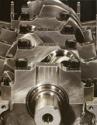
When a cylinder is new or overhauled the surface of it's walls are honed with abrasive stones to produce a rough surface that will help wear the piston rings in. This roughing up of the surface is known as "cross-hatching". A cylinder wall that has been properly "cross hatched" has a series of minute peaks and valleys cut into its surface. The face or portion of the piston ring that interfaces with the cross hatched cylinder wall is tapered to allow only a small portion of the ring to contact the honed cylinder wall. When the engine is operated, the tapered portion of the face of the piston ring rubs against the coarse surface of the cylinder wall causing wear on both objects.
Each tiny groove acts as the oil reservoir holding oil up to the top level of the groove where it then spreads over the peak surface. The piston ring must travel up and down over this grooved surface, and must "hydroplane" on the oil film retained by the grooves. Otherwise, the ring would make metal-to-metal contact with the cylinder wall and the cylinder would quickly wear out.
However the ring will only ride on this film of oil if there is sufficient surface area to support the ring on the oil. When the cylinders are freshly honed the peaks are sharp with little surface area. Our goal when seating the rings on new steel cylinders is to flatten out these peaks to give more surface area to support the rings, while leaving the bottom of the groove intact to hold enough oil to keep the surface of the cylinder wet with oil. See illustration. At the point where the top of the peaks produced by the honing operation become smooth and the tapered portion of the piston ring wears flat break in has occurred.
Each tiny groove acts as the oil reservoir holding oil up to the top level of the groove where it then spreads over the peak surface. The piston ring must travel up and down over this grooved surface, and must "hydroplane" on the oil film retained by the grooves. Otherwise, the ring would make metal-to-metal contact with the cylinder wall and the cylinder would quickly wear out.
However the ring will only ride on this film of oil if there is sufficient surface area to support the ring on the oil. When the cylinders are freshly honed the peaks are sharp with little surface area. Our goal when seating the rings on new steel cylinders is to flatten out these peaks to give more surface area to support the rings, while leaving the bottom of the groove intact to hold enough oil to keep the surface of the cylinder wet with oil. See illustration. At the point where the top of the peaks produced by the honing operation become smooth and the tapered portion of the piston ring wears flat break in has occurred.
I strongly disagree. Not only have I seen and measured the stress from bolting on a torque plate distort the cylinder bores, the main caps do too. It's even more prevalent when you go to aftermarket head studs or bolts. Bump the bone through and you see "shadows" in the cylinder wall where the hone didn't clean up.

I strongly disagree. Not only have I seen and measured the stress from bolting on a torque plate distort the cylinder bores, the main caps do too. It's even more prevalent when you go to aftermarket head studs or bolts. Bump the bone through and you see "shadows" in the cylinder wall where the hone didn't clean up.[/QUOTE]
I've seen the same thing. The bore grows when a torque plate is installed and upgraded fasteners show this more.
I've seen the same thing. The bore grows when a torque plate is installed and upgraded fasteners show this more.
Hence my reasoning for not using said machine shop.
There's a few in Baron Rouge that do good work, however when the time comes it'll probably be a built short block from a sponsor.
There's a few in Baron Rouge that do good work, however when the time comes it'll probably be a built short block from a sponsor.