When you click on links to various merchants on this site and make a purchase, this can result in this site earning a commission. Affiliate programs and affiliations include, but are not limited to, the eBay Partner Network.
Here's a PDF that covers gasket surface TSB. I'd worry about the surface feel more than the appearance. I use a plastic scraper to remove Gasket material. But for light suface rust solvents fail to remove I use a white Roloc disc. I've personally had great success with this method in the past. The key is continuously moving light passes with a white Roloc disc. For added insurance I block every hole on the engine surface I'm cleaning. I highly recommend against use scotch brite or sand paper. They tend to lose their abrasive components more frequently & quickly. If your uncomfortable with the appearance get the block lightly decked.
OK - I'm stumped. You attach a pdf file that explicitly states not to use the kind of products that you say you've had great success with. You can feal nicks and gouges with your finger but you can't detect a hollow created by a spinning disc that way. I'd also guess that most don't have a true straight edge to check flatness with.
every time you catch an edge with a roloc it gouges on that edge. sometimes it'll cause a wave pattern depending on how much force you use.
I'm not here to **** on anyone's ideas or skills. I just have a different view and more than a few years of practical machining and metrology experience.
If the machine shop says it's flat and hasn't been decked, it's probably got a good enough surface finish to run a stock type MLS gasket on. You could verify with a surface finish tester. Lastly, discoloration does not mean poor surface finish.
OK - I'm stumped. You attach a pdf file that explicitly states not to use the kind of products that you say you've had great success with. You can feal nicks and gouges with your finger but you can't detect a hollow created by a spinning disc that way. I'd also guess that most don't have a true straight edge to check flatness with.
Well I guess I should've went more in depth about my personal experiences. I've used Roloc disc to clean head gasket surfaces many times. With out a single failure. But all those times the vehicle owner chose this method to save $. I'd give them the choice to do it the correct way or the cheaper, risky & incorrect route. In all cases the cylinder heads have been machined true. It was just the blocks mating surface that was lightly hit with a Roloc disc. So in short I prefer the correct TSB method but have done it incorrectly with plenty of "luck". Just because I've gotten away with it doesn't make it correct. Also with all of these cases I've used a straight edge paied with a feeler guage to ensure block was within GM'S tolerances You can never go wrong following GM's TSB. As I said before if you're not pleased with the appearance of the surface have it resurfaced. I agree with truckdoug that is probably safe to use a mls style gasket. I personally wouldn't get hung up on the appearance since you've already had a machine shop take a look. Sorry if anyone found my 1st post misleading.
As a general rule never use a roloc for anything. 90* razor blade for the big stuff. Large sanding block for final finish on a DIY project IMO. Machine shop mill finished to 50RA or better for big power/money builds.
Here’s another great video what shows why the roloc shouldn't be used… even the soft rubber kind.
Always acceptations to the rule and a lot depends on the application.
The light roloc disc used sparingly on an iron surface isn’t going to hurt much and will clean it up fast. If I were putting together an mild NA build I wouldn’t think twice about his method. In the right experienced hands you’ll see very little distortion with a roloc on an iron deck surface. I wouldn’t use one for alum… but people do all the time.
I like to use a block that’s about twice as large as the surface. I order flat alum 3/4" - ½” thick to use as a sanding block. The sanding blocks pictured above aren’t very true/flat when dealing with deck/head surfaces.
Clean it up with a razor, hit it with 200g then 400g. LS9 gasket. Tested this method many times without a head gasket leak to date up to 30+lbs of boost on 10:1 LS engines.
This DIY surface job is holding strong. Currently running 8.70 1/4 miles around 160. Using the sanding block above, final pass using 400g. (wet sanded)
With the acception being the new alum LS blocks. (NA blocks) Seems like GM decided the head gaskets were good enough to seal with poorly finished decks and heads. The gen4 alum motors I’ve seen have all had very poor deck/head surfaces. My LC9 leaked. I block sanded the deck/heads down to 400g with no luck. They leaked half way through the season.
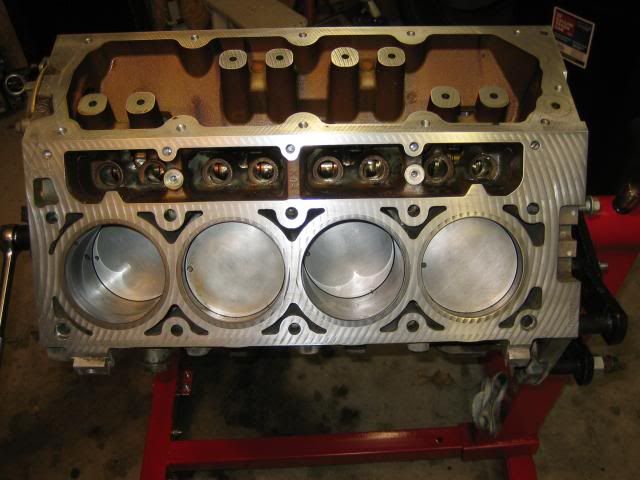
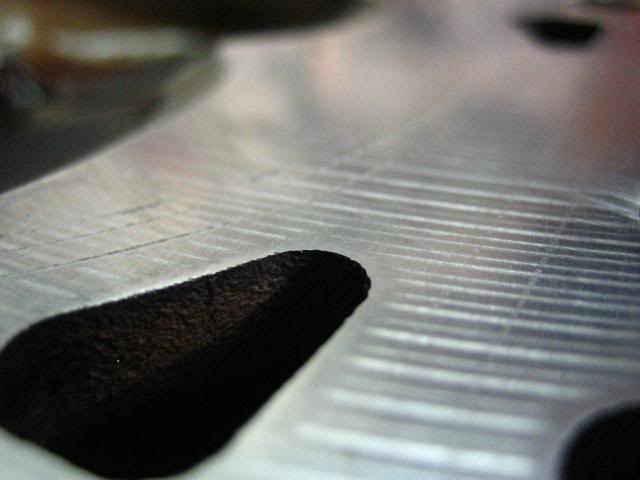
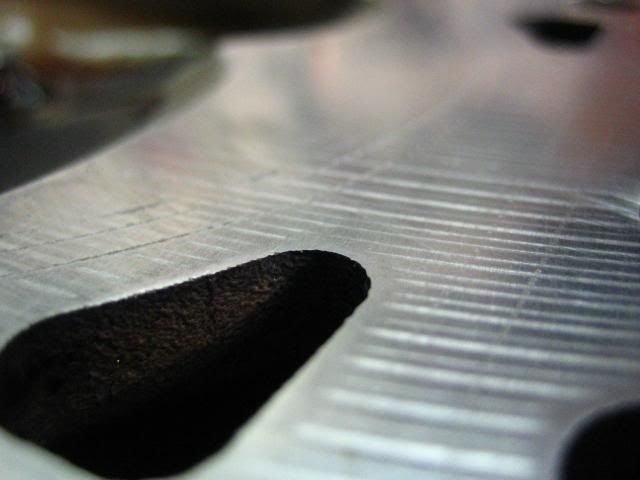
Heres the great OEM finish…
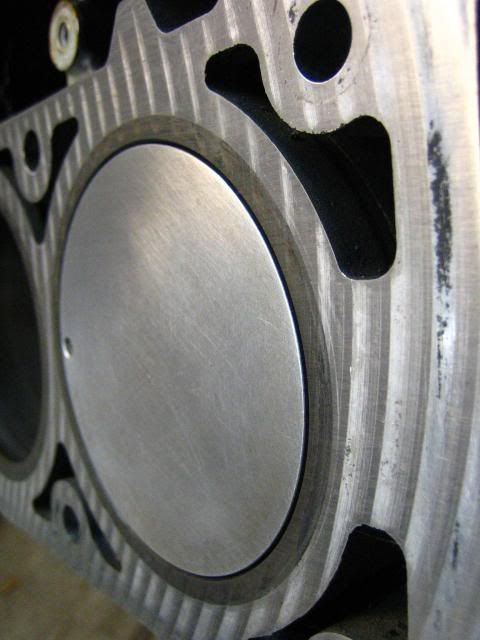
Even the heads suck…
Last edited by Forcefed86; Jun 20, 2016 at 12:08 PM.
As a general rule never use a roloc for anything. 90* razor blade for the big stuff. Large sanding block for final finish on a DIY project IMO. Machine shop mill finished to 50RA or better for big power/money builds.
Here’s another great video what shows why the roloc shouldn't be used… even the soft rubber kind.
Always acceptations to the rule and a lot depends on the application.
The light roloc disc used sparingly on an iron surface isn’t going to hurt much and will clean it up fast. If I were putting together an mild NA build I wouldn’t think twice about his method. In the right experienced hands you’ll see very little distortion with a roloc on an iron deck surface. I wouldn’t use one for alum… but people do all the time.
I like to use a block that’s about twice as large as the surface. I order flat alum 3/4" - ½” thick to use as a sanding block. The sanding blocks pictured above aren’t very true/flat when dealing with deck/head surfaces.
Clean it up with a razor, hit it with 200g then 400g. LS9 gasket. Tested this method many times without a head gasket leak to date up to 30+lbs of boost on 10:1 LS engines.
This DIY surface job is holding strong. Currently running 8.70 1/4 miles around 160. Using the sanding block above, final pass using 400g. (wet sanded)
With the acception being the new alum LS blocks. (NA blocks) Seems like GM decided the head gaskets were good enough to seal with poorly finished decks and heads. The gen4 alum motors I’ve seen have all had very poor deck/head surfaces. My LC9 leaked. I block sanded the deck/heads down to 400g with no luck. They leaked half way through the season.
Heres the great OEM finish…
Even the heads suck…
Wow, someone forgot to change the inserts in that cutter...chatter city.
All gen4 alum motors I’ve seen are this way. Including a brand new block my buddy ordered from GM. Maybe they altered the CNC program to push blocks through the line more quickly? I dunno the reason, but it’s not a random issue due to a dull blade or improper surfacing. This is what GM considers “good enough” these days for their NA blocks. I heard the factory forced induction blocks get a decent surface job from GM, but have no proof either way.
They use a facemill that has PCD inserts to finish the surfaces. I have been at both Ford and GM and even quoted some tools to do the machining. The cutters used vary between 8-12" in diameter so they can take the whole surface in one pass. They can make it look like a mirror if they want to, but the gasket has a hard time sealing that way. The imperfections and feed lines you see actually help it to seal. When you get the surface too smooth, it becomes easier to push past the sealing surfaces.
I've used Roloc's for years and they even have a special pad specifically for doing gasket material on blocks. If you can get all the old gasket material off without using any type of abrasive, have at it, but that usually isn't the case.
Sure seems like the imperfections don't get along well with MLS gaskets and boost. If this were the case, why would Cometic and other race gasket manufactures suggest the minimum 50RA roughness levels?
Well I guess I should've went more in depth about my personal experiences. I've used Roloc disc to clean head gasket surfaces many times. With out a single failure. But all those times the vehicle owner chose this method to save $. I'd give them the choice to do it the correct way or the cheaper, risky & incorrect route. In all cases the cylinder heads have been machined true. It was just the blocks mating surface that was lightly hit with a Roloc disc. So in short I prefer the correct TSB method but have done it incorrectly with plenty of "luck". Just because I've gotten away with it doesn't make it correct. Also with all of these cases I've used a straight edge paied with a feeler guage to ensure block was within GM'S tolerances You can never go wrong following GM's TSB. As I said before if you're not pleased with the appearance of the surface have it resurfaced. I agree with truckdoug that is probably safe to use a mls style gasket. I personally wouldn't get hung up on the appearance since you've already had a machine shop take a look. Sorry if anyone found my 1st post misleading.
Do you actually tell a customer they can save money if you clean the surfaces
the sloppy, hurry up and don't care if it seals or not way? I have never known any person with even an ounce of decency even think of that.
Next time you use a roloc disk put a quality straight edge over surface and
look at it good, get some light behind it, then ask yourself if you would do that to your own block, that you wanted to live.
Sure seems like the imperfections don't get along well with MLS gaskets and boost. If this were the case, why would Cometic and other race gasket manufactures suggest the minimum 50RA roughness levels?
50 Ra is pretty rough by all standards for finishing. That is really easy to achieve with most machining methods. When we machine aluminum, we are looking in the 20 Ra...sometimes better. We worked on a project a few years ago that had a 6 Ra on aluminum. You can scratch that surface by touching it with your bare hand.
I was at a GM facility when we tested a roughing cutter on the new LT1 block. We got a 19-20Ra right off the bat. We kept increasing the feed until we got it higher. The finish on the roughing operation wasn't that critical but flatness was.
Do you actually tell a customer they can save money if you clean the surfaces
the sloppy, hurry up and don't care if it seals or not way? I have never known any person with even an ounce of decency even think of that.
Next time you use a roloc disk put a quality straight edge over surface and
look at it good, get some light behind it, then ask yourself if you would do that to your own block, that you wanted to live.
If you saw the machines half of these shops used to resurface the deck, a Roloc disk would probably be a major improvement as far as finish and flatness.
We are not talking about using sanding disks on a Roloc, we are talking about using a very fine scotch-brite pad. If you distort the surface or gouge it that bad with that pad, you have a LOT more problems to worry about than the finish or flatness.
Do you actually tell a customer they can save money if you clean the surfaces
the sloppy, hurry up and don't care if it seals or not way? I have never known any person with even an ounce of decency even think of that.
Next time you use a roloc disk put a quality straight edge over surface and
look at it good, get some light behind it, then ask yourself if you would do that to your own block, that you wanted to live.
Let's get this straight. I don't think you even read what I wrote. If you did , you didn't comprehend it well. I suggest to rereading it. I clearly stated I use a straight edge to check tolerances. Obviously I didn't just set a ruler on the deck of the block in the dark & said that looks good to me. I know the difference between a ruler & straight edge. Along with the proper procedures to use a straight edge. I'm not "selling" the Roloc disc method. Every one of these cases were cast iron blocks in side work vehicles done outside of a shop. So these clients often are family, close friends or friends of friends. I advise to do the proper method 1st EVERY time. The proper method works 90% of the time. But every now & then I get the joy of a neglected vehicle. That has crazy amounts of build up & what not. I can't tell how many times people use tabs, blue devil, stop leak to "fix" coolant system failures.(big NO NO)On these often I find myself pulling teeth just to get the owners to the point of resurfacing the head. I refuse the work on the vehicle if they don't go past this point. I'll NEVER just to blindly slap a head gasket on. Some of the customers I deal with are tight on $. So they want/demand the middle ground route to just get them back on the road. Even if that means temporarily. I don't prefer incorrect methods. If the customer is willing to gamble I'll often play to an extent. The last time I did the Roloc bristle method was on a 5.3 work truck. At the time of repair it had about 140k on the odo. It's still rocking the same head gaskets 4+years later with 300k+miles now on the odo. The heads were resurfaced but the block wasn't. This truck is driven from San Antonio too the midland area on a bi-weekly basis. So it's clearly working. If you take 1 thing from this particular post ALWAYS DO IT THE CORRECT WAY.
Let's summarize. I PREFER the proper method. Have I done head gaskets another way besides the proper method? Reluctantly yes.
Below is the disc I've used in the improper/less desired method. Figured I'd clear up the confusion about my posts.
From: Saskatchewan, Canada - where arguing "DA" is for the slow and weak...
I used a 220/400 approach to blocking the heads and cylinder deck on our Procharged TBSS' LS2 using wet/dry sand paper. Took off just enough to remove any residue left over from plastic scraping with paint thinner. Take your time and maintain your focus.
My first job in my Dad's shop was cleaning a cylinder block mating surface.
Is it alright to do this while using high boost? Might run 18 to 27lbs of boost
running this much boost you need to use multi layer copper gaskets or have your engine machined to use o rings normal factory style gaskets will fail under that much boost eventually
Gas Monkey Built a 6-Wheel Ferrari Testarossa With a Corvette LT4 Engine
Slideshow: The controversial Ferrari F6 swaps its original flat-12 for a Corvette Z06-derived LT4 V8 and sends power to four rear wheels through a custom-built drivetrain.
7 Most Reliable High-Performance Engines GM Has Ever Built
Slideshow:These GM engines didn't just make huge power, they survived abuse, boost, track days, and six-digit mileage with a reputation for refusing to quit.
6 Common C5 Corvette Failures and What's Involved In Repairing Them
Slideshow: From wobbling harmonic balancers to failed EBCMs, these are the issues that define long-term C5 ownership and what repairs typically involve.
Retro Modern Bandit Pontiac Trans AM Comes With Burt Reynolds' Autograph
Slideshow: A modern Camaro transformed into a retro icon, this limited-run "Bandit" build blends nostalgia with brute force in a way few revivals manage.
Top 10 Greatest Cadillac V Series Performance Models Ever, Ranked
Slideshow: Cadillac didn't just crash the high-performance luxury vehicle party, it showed up loud, supercharged, and occasionally a little unhinged...
























 That has crazy amounts of build up & what not. I can't tell how many times people use tabs, blue devil, stop leak to "fix" coolant system failures.(big NO NO)On these often I find myself pulling teeth just to get the owners to the point of resurfacing the head. I refuse the work on the vehicle if they don't go past this point. I'll NEVER just to blindly slap a head gasket on. Some of the customers I deal with are tight on $. So they want/demand the middle ground route to just get them back on the road. Even if that means temporarily. I don't prefer incorrect methods. If the customer is willing to gamble I'll often play to an extent. The last time I did the Roloc bristle method was on a 5.3 work truck. At the time of repair it had about 140k on the odo. It's still rocking the same head gaskets 4+years later with 300k+miles now on the odo. The heads were resurfaced but the block wasn't. This truck is driven from San Antonio too the midland area on a bi-weekly basis. So it's clearly working. If you take 1 thing from this particular post ALWAYS DO IT THE CORRECT WAY.