


different rockers to make cam more appropriate for road couse?


Thread Starter
Teching In
Joined: Jun 2016
Posts: 3
Likes: 0
 different rockers to make cam more appropriate for road couse?
 I purchased a car and I am not happy with the cam thats in it. I didnt know enough about cams to realize this wasnt spec'd for road course use. I want to lower the lift significantly to reduce chance of valvetrain failure.
Obviously, the best solution would be to put a new cam in the car thats made for road course use. Seeing as I only do HPDE, I am not as concerned about overall power. I want the car to be reliable, and if I can do it a bit cheaper/easier than throwing a new cam in, I want to do that.
My idea was to switch to 1.6 rockers on either just the intake or both. Seeing as I still don't know a ton about cams, I am going to need some help.
Current cam/setup:
Comp cam .620/.586 235/238 112+4
243 heads
2.04 intake valves
1.60 exhaust valves
Titanium retainers
FAST 90 Intake
LS2 90mm Ported Throttle Body
Vararam Intake
BTR dual valve springs
Trunnion Upgraded Rockers
Would switching to 1.6 rockers be a reasonable thing to do? Should I do just the intake size? Or both.
Obviously, the best solution would be to put a new cam in the car thats made for road course use. Seeing as I only do HPDE, I am not as concerned about overall power. I want the car to be reliable, and if I can do it a bit cheaper/easier than throwing a new cam in, I want to do that.
My idea was to switch to 1.6 rockers on either just the intake or both. Seeing as I still don't know a ton about cams, I am going to need some help.
Current cam/setup:
Comp cam .620/.586 235/238 112+4
243 heads
2.04 intake valves
1.60 exhaust valves
Titanium retainers
FAST 90 Intake
LS2 90mm Ported Throttle Body
Vararam Intake
BTR dual valve springs
Trunnion Upgraded Rockers
Would switching to 1.6 rockers be a reasonable thing to do? Should I do just the intake size? Or both.
Last edited by stuiephoto; Jun 27, 2016 at 01:29 PM.
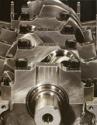


I think if you look at the GM ASA cam, that will give you some ideas. That cam was designed for the type of driving that you are doing. Personally, I would swap out the cam to get the slower ramp rates as well. Not sure if you installed a timing chain damper, but with your driving that is critical so that could be another reason to open the motor up again.
I know there are a lot of cams out there, but I would install the GM ASA if I were pursuing road course driving.
I know there are a lot of cams out there, but I would install the GM ASA if I were pursuing road course driving.
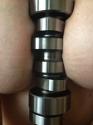

My opinion you'd be far better off getting a new cam. Moving the lifters less will be very beneficial if you want lower lift. You'd have better valve train stability to do a mild LLSR cam and far fewer problems.


Joined: May 2004
Posts: 1,593
Likes: 267
From: Halfway back on the Highway to Hell...again!
I agree with Mystic. All a rocker change will do is change the lift of the valve.
BTR make s a specific road race cam. My son has one in his room waiting to go in. We just assembled his heads yesterday. Now we're just waiting on a 6.2L purchase or just cam this one for the time being.
A lot going on in his life right now since he's leaving for the Air Force shortly. But I will make sure his **** it badass when he gets back.
BTR make s a specific road race cam. My son has one in his room waiting to go in. We just assembled his heads yesterday. Now we're just waiting on a 6.2L purchase or just cam this one for the time being.
A lot going on in his life right now since he's leaving for the Air Force shortly. But I will make sure his **** it badass when he gets back.
Thread Starter
Teching In
Joined: Jun 2016
Posts: 3
Likes: 0
I guess I dont know enough about cams. What would change, other than lift, that would make the valvetrain more stable by switching cams vs. rockers? From what I understand, high lift cams in road course applications are the issue. If I lower lift, does this not solve that issue?
Pardon my ignorance. Its such a PITA to do a cam in a c5z, im trying to avoid it.
Pardon my ignorance. Its such a PITA to do a cam in a c5z, im trying to avoid it.
Trending Topics
The faster you accelerate the valve train the more potential instability that can result. The slower ramp rate will accelerate the valve slower as well as the rest of the components. Might want to do a bit of reading up on cam design to at least get some of the basic ideas. Not sure what head work has been done on your car, but you may not even be taking advantage of that higher lift.
I guess I dont know enough about cams. What would change, other than lift, that would make the valvetrain more stable by switching cams vs. rockers? From what I understand, high lift cams in road course applications are the issue. If I lower lift, does this not solve that issue?
Pardon my ignorance. Its such a PITA to do a cam in a c5z, im trying to avoid it.
Pardon my ignorance. Its such a PITA to do a cam in a c5z, im trying to avoid it.
1. Weight/mass
2. Speed
3. Distance traveled
increasing any of these three increases accelerative forces on the components. Since speed is the goal, the at least one of the other two much be decreased in order to avoid increased forces on the motor.
So, if you move to 1.6 ratio rockers, you move the lifters, pushrods and heavy side of the rockers no differently than the 1.7 rockers, but you move less air.
On the opposite end, if you keep the 1.7 ratio, you can install a cam that reduces the travel of the entire heavy side of the valvetrain, which will reduce internal resistance due to accelerative forces and allow the engine to spin more freely.
Truly, the best thing you could do would be to install beehive valve springs allowing for 600 lift, higher ratio rockers, such as 1.8:1 to achieve approximately 600 lift, and a cam designed to lift approximately 560 on a 1.7 rocker, and 11/32 pushrods to minimize flex. Go as light as you can on keepers and retainers. This would give you the best overall valvetrain stability without removing the heads.
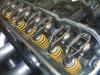
Like others said, lift is the least of your worries with that type of cam. Ramp rates of the lobes are going to be more crucial for the overall stability of the valvetrain on the track. And changing rocker ratios is not going to do anything for that.
At this point, I'd suggest to just change out the cam and be done with it. Get something milder with smoother lobes better suited for high RPM stability and longevity.
At this point, I'd suggest to just change out the cam and be done with it. Get something milder with smoother lobes better suited for high RPM stability and longevity.
Joined: May 2004
Posts: 1,593
Likes: 267
From: Halfway back on the Highway to Hell...again!
Next time, no less than $1500.
Thread Starter
Teching In
Joined: Jun 2016
Posts: 3
Likes: 0
Here's the deal. In a rotational system or a reciprocating system, there three things that affect angular acceleration, and therefore force:
1. Weight/mass
2. Speed
3. Distance traveled
increasing any of these three increases accelerative forces on the components. Since speed is the goal, the at least one of the other two much be decreased in order to avoid increased forces on the motor.
So, if you move to 1.6 ratio rockers, you move the lifters, pushrods and heavy side of the rockers no differently than the 1.7 rockers, but you move less air.
On the opposite end, if you keep the 1.7 ratio, you can install a cam that reduces the travel of the entire heavy side of the valvetrain, which will reduce internal resistance due to accelerative forces and allow the engine to spin more freely.
Truly, the best thing you could do would be to install beehive valve springs allowing for 600 lift, higher ratio rockers, such as 1.8:1 to achieve approximately 600 lift, and a cam designed to lift approximately 560 on a 1.7 rocker, and 11/32 pushrods to minimize flex. Go as light as you can on keepers and retainers. This would give you the best overall valvetrain stability without removing the heads.
1. Weight/mass
2. Speed
3. Distance traveled
increasing any of these three increases accelerative forces on the components. Since speed is the goal, the at least one of the other two much be decreased in order to avoid increased forces on the motor.
So, if you move to 1.6 ratio rockers, you move the lifters, pushrods and heavy side of the rockers no differently than the 1.7 rockers, but you move less air.
On the opposite end, if you keep the 1.7 ratio, you can install a cam that reduces the travel of the entire heavy side of the valvetrain, which will reduce internal resistance due to accelerative forces and allow the engine to spin more freely.
Truly, the best thing you could do would be to install beehive valve springs allowing for 600 lift, higher ratio rockers, such as 1.8:1 to achieve approximately 600 lift, and a cam designed to lift approximately 560 on a 1.7 rocker, and 11/32 pushrods to minimize flex. Go as light as you can on keepers and retainers. This would give you the best overall valvetrain stability without removing the heads.
hey man, join the club! We've all been there. I know cam swaps suck but you'll rev better in the long run
