






Cammed ls1 engine shaking.

Thread Starter
Staging Lane

Joined: Jul 2014
Posts: 95
Likes: 2
From: Northern Michigan
Thread Starter
Staging Lane
Joined: Jul 2014
Posts: 95
Likes: 2
From: Northern Michigan

The tuner is everything when it comes to your build, otherwise you have a really expensive stack of receipts and some shiny parts, with a mediocre running car, or a ticking time bomb til it detonates and comes apart. I'm sure every tuner has had a horror story or two, but what was the damage and was it when they first started tuning?
Just do research and go with your gut, but he should know if your car has a miss in it and if he cannot tune it with your cam, find someone who can

This is always my response when people ask me why I drove over 4 hours to get my car tuned after my tuner moved to Texas. Everyone keeps dropping names of "Good" tuners in my area, but I personally know people that have went to them and the carnage they've caused. So i just say that I'm really picky about my car and I'm not bashing anyone around here, but I feel more comfortable with where I'm taking it.
The tuner is everything when it comes to your build, otherwise you have a really expensive stack of receipts and some shiny parts, with a mediocre running car, or a ticking time bomb til it detonates and comes apart. I'm sure every tuner has had a horror story or two, but what was the damage and was it when they first started tuning?
Just do research and go with your gut, but he should know if your car has a miss in it and if he cannot tune it with your cam, find someone who can
The tuner is everything when it comes to your build, otherwise you have a really expensive stack of receipts and some shiny parts, with a mediocre running car, or a ticking time bomb til it detonates and comes apart. I'm sure every tuner has had a horror story or two, but what was the damage and was it when they first started tuning?
Just do research and go with your gut, but he should know if your car has a miss in it and if he cannot tune it with your cam, find someone who can
LS1 Tech Stories
The Best V8 Stories One Small Block at Time

6 Common C5 Corvette Failures and What's Involved In Repairing Them
Pouria Savadkouei
Retro Modern Bandit Pontiac Trans AM Comes With Burt Reynolds' Autograph
Verdad Gallardo
Top 10 Greatest Cadillac V Series Performance Models Ever, Ranked
Pouria Savadkouei
Top 10 Most Powerful Chevy Trucks Ever Made!

Hennessey's New Supercharged Silverado ZR2 Has 700 HP
Verdad Gallardo
Coachbuilt N2A Anteros Is an LS2-Powered C6 Corvette In Italian Clothes
Verdad Gallardo
Awesome K5 Blazer Restomod Comes With C7 Corvette Power
Verdad Gallardo
10 Camaros You Should Never Buy

10 LS Engine Myths That Refuse to Die
Verdad Gallardo

Exactly! Here is what I think happens all to often with these so called, well known, top tuners....it's not that they don't know what they're doing, it's more about time vs money. Say you are paying $500 for some high in demand so called respectable tuner, to tune your car. He has dozens of others in line who have high dollar builds that he can make more money off of, so he doesn't focus the same level of detail on the little guy....he doesn't need to...he's well established and in high demand. So you get a quick tune that may "seem" okay, but is not optimal. Simply because you are not one his high dollar valued customers. I mean if the tuner was really incompetent he would never become so valued or in demand....he's just focusing his true talent on the big money customers. Some may disagree with me, and that's fine, but ive seen this happen way to much, and have had it happen to me personally
Well said. Unfortunately this happens all too often. Some of these tuners will literally only spend an hour or two to simply load a tune from a "similar" build car, do a couple WOT pulls on the dyno, cruise it around the block (nothing more than a few minutes of the street), then roll it out the door and call it perfect, aka- good enough. All while the customer is indeed NOT getting a "full custom dyno & street tune" specific to their car, but still paying for that ~$500 custom tune. It's straight up ripping-off good paying customers.


With a good sized cam and factory motor mounts it will shake A LOT. I liked solid mounts in my car and most people do. I prefer the solid motor mount and factory rubber trans mount setup. You'll get a lot of vibration in the car with the poly trans mount but pretty much none with the poly motor mounts. I hate vibrations and rattles and my car didn't make a single rattle or noise after I put the poly mounts in. But you DO NOT need to worry about the motor shaking, it's normal with rubber mounts and a cam.
Having over +10% LTFT needs to be checked out, 99% of the time it is caused by a vacuum leak, so check all vacuum hoses and replace intake gaskets if you don't find anything with the vacuum hoses. Also the LTFT could be off if the car wasn't tuned properly. Over 10% LTFT will cause a check engine light with a lean code btw.
Having over +10% LTFT needs to be checked out, 99% of the time it is caused by a vacuum leak, so check all vacuum hoses and replace intake gaskets if you don't find anything with the vacuum hoses. Also the LTFT could be off if the car wasn't tuned properly. Over 10% LTFT will cause a check engine light with a lean code btw.
Thread Starter
Staging Lane
Joined: Jul 2014
Posts: 95
Likes: 2
From: Northern Michigan
With a good sized cam and factory motor mounts it will shake A LOT. I liked solid mounts in my car and most people do. I prefer the solid motor mount and factory rubber trans mount setup. You'll get a lot of vibration in the car with the poly trans mount but pretty much none with the poly motor mounts. I hate vibrations and rattles and my car didn't make a single rattle or noise after I put the poly mounts in. But you DO NOT need to worry about the motor shaking, it's normal with rubber mounts and a cam.
Having over +10% LTFT needs to be checked out, 99% of the time it is caused by a vacuum leak, so check all vacuum hoses and replace intake gaskets if you don't find anything with the vacuum hoses. Also the LTFT could be off if the car wasn't tuned properly. Over 10% LTFT will cause a check engine light with a lean code btw.
Having over +10% LTFT needs to be checked out, 99% of the time it is caused by a vacuum leak, so check all vacuum hoses and replace intake gaskets if you don't find anything with the vacuum hoses. Also the LTFT could be off if the car wasn't tuned properly. Over 10% LTFT will cause a check engine light with a lean code btw.



With a good sized cam and factory motor mounts it will shake A LOT. I liked solid mounts in my car and most people do. I prefer the solid motor mount and factory rubber trans mount setup. You'll get a lot of vibration in the car with the poly trans mount but pretty much none with the poly motor mounts. I hate vibrations and rattles and my car didn't make a single rattle or noise after I put the poly mounts in. But you DO NOT need to worry about the motor shaking, it's normal with rubber mounts and a cam.
Having over +10% LTFT needs to be checked out, 99% of the time it is caused by a vacuum leak, so check all vacuum hoses and replace intake gaskets if you don't find anything with the vacuum hoses. Also the LTFT could be off if the car wasn't tuned properly. Over 10% LTFT will cause a check engine light with a lean code btw.
Having over +10% LTFT needs to be checked out, 99% of the time it is caused by a vacuum leak, so check all vacuum hoses and replace intake gaskets if you don't find anything with the vacuum hoses. Also the LTFT could be off if the car wasn't tuned properly. Over 10% LTFT will cause a check engine light with a lean code btw.
Yes but that does not mean there is not a problem...as previously mentioned, when fuel trims are extremely positive @ idle +20%, that can potentially indicate a vacuum leak. Aside from that, some tuners turn off LTFT on cam cars with a decent amount of overlap. Short Term is what matters most, Long Term is there to correct for aging sensors.

Shaking... is wasted energy. The less the engine shakes the better. The rough camshaft and lopey idle can stay just fine- but you will want to limit the energy dissipated through the engine by its shaking. In other words, the more stable you can hold the engine still, the better the transfer of energy from the engine to ground. It isn't just wasted energy you care about; A shaky engine can contribute to poor shifting character from a manual transmission, for example.
I would replace the mounts with either brand new OEM units or some poly motor mount is fine. And Add an engine "Stabilizer" ($30~ ebay) to see how much it helps out. You might be surprised what a $30 rubber "engine damper" can do for the way the car behaves if the OEM mounts are worn/old.
If you post a high quality video (audio specifically) I can tell you whether it has a lean missfire or a lopey cam etc... as can many others here. A misfire should be plain obvious on a single cylinder because you can pull plugwires and listen for a change in the engine tone (pull them one at a time. WHen you pull one that doesnt cause a change, thats the misfire cylinder)
I would replace the mounts with either brand new OEM units or some poly motor mount is fine. And Add an engine "Stabilizer" ($30~ ebay) to see how much it helps out. You might be surprised what a $30 rubber "engine damper" can do for the way the car behaves if the OEM mounts are worn/old.
If you post a high quality video (audio specifically) I can tell you whether it has a lean missfire or a lopey cam etc... as can many others here. A misfire should be plain obvious on a single cylinder because you can pull plugwires and listen for a change in the engine tone (pull them one at a time. WHen you pull one that doesnt cause a change, thats the misfire cylinder)
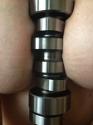
my tuner said the ltft were adding fuel to bank two so he suspects there is a miss or something. I think he's running out of excuses for why he can't tune my car. Next step is going to TJ at baker in Grand Rapids. He's even suggested the intake mani is to blame, but his fast ls2 runs just fine.
There is one vacuum leak you'll never correct though - the one at the valves. Bigger cams leak vacuum at the valves during the overlap event. That's why the car runs like it has a vacuum leak all the time. This causes false lean. Also, long tubes tend to read false lean at idle on top of the cam causing false lean at idle.
Two very simple things that can help correct a lot of this behavior -
1. Delay the end of injection timing. In the normal table, set the fully warmed up values in the "normal" table to 6.19 or something. That's sort of a guess without knowing all the specifics of your engine. Mine are set to 6.34 iirc. Ask your tuner if he changed your normal end of injection timing to - if he didn't touch it, could be a problem. This keeps less fuel from bypassing straight out he exhaust, preventing unused oxygen in the system, thereby reducing false lean. Some people report this also increases low end torque, but I've never measured that to confirm it.
2. Reduce the aim oxygen sensor switch point at idle airflow to 200 mV or so. Bigger cams like to idle "lean". You might find that some of the shaking dissipates a bit just running a bit leaner on the idle - again, this is "false" lean based on unused oxygen.
Also, ask your tuner what your idle timing is set to. Larger cams tend to like to idle in the mid to high 20's.
Hope that helps. if your tuner didn't touch any of those items, that might help you with deciding on continuing to work with him. If you're struggling to find a local guy, Lorenz at LSXPowerTuning has not had a bad report that I've seen doing remote tuning.
You can confirm or rule out a vacuum leak with a cigar, a few shots of whiskey, and about ten minutes.
Take a deep puff on the cigar, open the throttle, exhale into the intake, close the throttle. Repeat a few times. Anywhere you see smoke other than the throttle is a vacuum leak.
if you don't want cigar, use a hookah
Edit - the whiskey is for the mechanic to enjoy with the cigar
Take a deep puff on the cigar, open the throttle, exhale into the intake, close the throttle. Repeat a few times. Anywhere you see smoke other than the throttle is a vacuum leak.
if you don't want cigar, use a hookah
Edit - the whiskey is for the mechanic to enjoy with the cigar
Maybe the car is twerking? J/K
If you have a narrow lobe separation and thus a greater overlap then it will "shake".
What rpm do you have it idling at? A good indicator that you have serious lope on the cam is that you have to set the idle higher than stock.
If you have a narrow lobe separation and thus a greater overlap then it will "shake".
What rpm do you have it idling at? A good indicator that you have serious lope on the cam is that you have to set the idle higher than stock.
25% is the maximum compensation possible, not the max allowable before a CEL.
I'm not going to say I know everything and you're wrong, but in the last 15 years as a tech I haven't seen a vehicle that allows 25% without a CEL. And I know this is fact because damn near every car I have ever diagnosed for a fuel trim code had compensation percentages that fell between 10-20%. It's very rare I see one maxed out at 25%, and when I do, you don't need a data stream to tell you something is very wrong. I have had several cars trigger a trouble code at 11%. Plus, if you read the proper information and not what you see on the internet it'll tell you that 10% is the max (and that's inclusive of negative points -5 and +5 equal 10% total when it comes to FT). I've seen a couple of articles that skew the information and make it seem as if 25% is allowable, but it's not, it's the max possible.
I've find problems with cars with that have under 10% correction. 99% of the time i'll find a vacuum leak, worn PCV or dirty MAF if I have any more than 5%+ correction.
I've never heard that the LTFT is there to correct for aging sensors, it is more like a zeroing point for the stft. If you spend a lot of time in data streams and sometimes manipulate FTs like I do you will see that the LTFT gravitates toward the center of the STFT. If there is a FT problem and STFT is swinging say between 10-20%+ correction then the LTFT will move up to around 15% and then the STFT will swing more evenly above and below 0, for this example it would now swing -5 to +5%. STFT on a car with zero issues usually has around a 6 point swing and will go from -3% to +3% rarely leaving that zone. If it is swinging from 10%+ to 20%+ the LTFT will come up to bring the STFT swing back roughly equal around 0.
That's with a stock vehicle, when it comes to cammed and tuned etc, I don't have experience playing with data on those so I can't comment on that.
I'm not going to say I know everything and you're wrong, but in the last 15 years as a tech I haven't seen a vehicle that allows 25% without a CEL. And I know this is fact because damn near every car I have ever diagnosed for a fuel trim code had compensation percentages that fell between 10-20%. It's very rare I see one maxed out at 25%, and when I do, you don't need a data stream to tell you something is very wrong. I have had several cars trigger a trouble code at 11%. Plus, if you read the proper information and not what you see on the internet it'll tell you that 10% is the max (and that's inclusive of negative points -5 and +5 equal 10% total when it comes to FT). I've seen a couple of articles that skew the information and make it seem as if 25% is allowable, but it's not, it's the max possible.
Yes but that does not mean there is not a problem...as previously mentioned, when fuel trims are extremely positive @ idle +20%, that can potentially indicate a vacuum leak. Aside from that, some tuners turn off LTFT on cam cars with a decent amount of overlap. Short Term is what matters most, Long Term is there to correct for aging sensors.
I've never heard that the LTFT is there to correct for aging sensors, it is more like a zeroing point for the stft. If you spend a lot of time in data streams and sometimes manipulate FTs like I do you will see that the LTFT gravitates toward the center of the STFT. If there is a FT problem and STFT is swinging say between 10-20%+ correction then the LTFT will move up to around 15% and then the STFT will swing more evenly above and below 0, for this example it would now swing -5 to +5%. STFT on a car with zero issues usually has around a 6 point swing and will go from -3% to +3% rarely leaving that zone. If it is swinging from 10%+ to 20%+ the LTFT will come up to bring the STFT swing back roughly equal around 0.
That's with a stock vehicle, when it comes to cammed and tuned etc, I don't have experience playing with data on those so I can't comment on that.
Last edited by 00pooterSS; Jul 13, 2016 at 11:42 AM.