












finding 11/32 pushrods

11/32 .120 with restrictors in my road race engine (manton). Cost me 220 for the set. Well worth the investment if you plan to spend any time at high rpm, especially sustained.
Pictured next to a 5/16 regular magnum pr for reference.

Pictured next to a 5/16 regular magnum pr for reference.
Last edited by DietCoke; Aug 15, 2017 at 04:26 PM.
What length accuracy do they specify on their website? I took a look but couldn't find it.
LS1 Tech Stories
The Best V8 Stories One Small Block at Time

Topdon ONE vs. Artidiag 800 BT2: Which is the Diagnostic Tablet For You?
Pouria Savadkouei
Gas Monkey Built a 6-Wheel Ferrari Testarossa With a Corvette LT4 Engine
Verdad Gallardo
7 Most Reliable High-Performance Engines GM Has Ever Built
Verdad Gallardo
Amazing '71 Camaro Restomod Is Modern Muscle Car Under the Skin
Verdad Gallardo
6 Common C5 Corvette Failures and What's Involved In Repairing Them
Pouria Savadkouei
Retro Modern Bandit Pontiac Trans AM Comes With Burt Reynolds' Autograph
Verdad Gallardo
Top 10 Greatest Cadillac V Series Performance Models Ever, Ranked
Pouria Savadkouei
Top 10 Most Powerful Chevy Trucks Ever Made!

Hennessey's New Supercharged Silverado ZR2 Has 700 HP
Verdad Gallardo


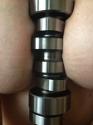

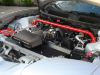


since I am not an engineer....how does thicker wall compare to bigger O.D on a push rod....equal...better...worse ???
That is really a whole other argument. It doesnt just depend on the pushrod though It is valvetrain stability as a whole.
There are a few tests showing 3/8 .080 have less flex than 5/16 .120 wall then there are tests showing the opposite It also depends on length as well as material used, and any taper, as well as valvespring pressures/control.
It gets pretty deep not in just what is learned but what is argued.
For 99% of builds 5/16 080 chrome moly will work. for the rest 11/32 080 or 120. A small percentage would need anything over that. Even so they have to have a small ball end on them for both rockers and pushrod cups.
There are a few tests showing 3/8 .080 have less flex than 5/16 .120 wall then there are tests showing the opposite It also depends on length as well as material used, and any taper, as well as valvespring pressures/control.
It gets pretty deep not in just what is learned but what is argued.
For 99% of builds 5/16 080 chrome moly will work. for the rest 11/32 080 or 120. A small percentage would need anything over that. Even so they have to have a small ball end on them for both rockers and pushrod cups.

That is really a whole other argument. It doesnt just depend on the pushrod though It is valvetrain stability as a whole.
There are a few tests showing 3/8 .080 have less flex than 5/16 .120 wall then there are tests showing the opposite It also depends on length as well as material used, and any taper, as well as valvespring pressures/control.
It gets pretty deep not in just what is learned but what is argued.
For 99% of builds 5/16 080 chrome moly will work. for the rest 11/32 080 or 120. A small percentage would need anything over that. Even so they have to have a small ball end on them for both rockers and pushrod cups.
There are a few tests showing 3/8 .080 have less flex than 5/16 .120 wall then there are tests showing the opposite It also depends on length as well as material used, and any taper, as well as valvespring pressures/control.
It gets pretty deep not in just what is learned but what is argued.
For 99% of builds 5/16 080 chrome moly will work. for the rest 11/32 080 or 120. A small percentage would need anything over that. Even so they have to have a small ball end on them for both rockers and pushrod cups.
Any tests showing that a 5/16 0.120 wall is stiffer than a 3/8 0.080 wall pushrod of the same length is incorrect. The 3/8" pushrod will be 85% stiffer. Length will have an effect on stiffness, however assuming that one is comparing pushrods for the same motor then the same length would be required.
With aftermarket springs, the 5/16" will flex at high RPM and I would recommend the largest OD pushrod that will fit. Double taper pushrods can fit where a straight pushrod may not, however they tend to cost more.
Using hardened pushrods makes no difference at all with regards to stiffness.
Read this >>>>>>>> An Investigation Into Pushrod Stiffness
Note that one of the members from Sweden did some testing and his results and my analytical results were within 1%. Also, I have had several engine builders contact me after I posted that thread and tell me they find the same type of results on the dyno.


That is really a whole other argument. It doesnt just depend on the pushrod though It is valvetrain stability as a whole.
There are a few tests showing 3/8 .080 have less flex than 5/16 .120 wall then there are tests showing the opposite It also depends on length as well as material used, and any taper, as well as valvespring pressures/control.
It gets pretty deep not in just what is learned but what is argued.
For 99% of builds 5/16 080 chrome moly will work. for the rest 11/32 080 or 120. A small percentage would need anything over that. Even so they have to have a small ball end on them for both rockers and pushrod cups.
There are a few tests showing 3/8 .080 have less flex than 5/16 .120 wall then there are tests showing the opposite It also depends on length as well as material used, and any taper, as well as valvespring pressures/control.
It gets pretty deep not in just what is learned but what is argued.
For 99% of builds 5/16 080 chrome moly will work. for the rest 11/32 080 or 120. A small percentage would need anything over that. Even so they have to have a small ball end on them for both rockers and pushrod cups.
Last time I checked, all pushrods were of steel alloy. Therefore, material has no bearing on the stiffness of the pushrod since all steel pushrods will have the same modulus of elasticity.
Any tests showing that a 5/16 0.120 wall is stiffer than a 3/8 0.080 wall pushrod of the same length is incorrect. The 3/8" pushrod will be 85% stiffer. Length will have an effect on stiffness, however assuming that one is comparing pushrods for the same motor then the same length would be required.
With aftermarket springs, the 5/16" will flex at high RPM and I would recommend the largest OD pushrod that will fit. Double taper pushrods can fit where a straight pushrod may not, however they tend to cost more.
Any tests showing that a 5/16 0.120 wall is stiffer than a 3/8 0.080 wall pushrod of the same length is incorrect. The 3/8" pushrod will be 85% stiffer. Length will have an effect on stiffness, however assuming that one is comparing pushrods for the same motor then the same length would be required.
With aftermarket springs, the 5/16" will flex at high RPM and I would recommend the largest OD pushrod that will fit. Double taper pushrods can fit where a straight pushrod may not, however they tend to cost more.
Length does affect stiffness, but most of ours are ~7.4". Certainly as you go longer, increasing OD makes even more sense.
Yup, spring rate, spring rate, spring rate. Not only that, but multiply your spring rate by the rocker ratio. Oh, and on the power stroke when you're opening the exhaust valve, add the cylinder pressure times exhaust valve area. Easy to get well past 2000 lbs being supported by a pushrod.
The only way to gain a substantial increase in bending stiffness is to increase the OD. Increase the wall thickness will only change the stiffness by a few percent, i.e., the gain is marginal.
Using hardened pushrods makes no difference at all with regards to stiffness.
Read this >>>>>>>> An Investigation Into Pushrod Stiffness
Note that one of the members from Sweden did some testing and his results and my analytical results were within 1%. Also, I have had several engine builders contact me after I posted that thread and tell me they find the same type of results on the dyno.
Using hardened pushrods makes no difference at all with regards to stiffness.
Read this >>>>>>>> An Investigation Into Pushrod Stiffness
Note that one of the members from Sweden did some testing and his results and my analytical results were within 1%. Also, I have had several engine builders contact me after I posted that thread and tell me they find the same type of results on the dyno.
And hardened rods do NOT change the modulus. They only make the rods stay on the modulus longer. In other words, the yield strength is higher, but the modulus of elasticity is exactly the same.