





Camshaft LSA effects
Thread Starter
TECH Apprentice
Joined: Apr 2016
Posts: 313
Likes: 16
From: Lincoln, NE
 Camshaft LSA effects
 Curious just how much a cams LSA has on tune ability and power. Is a cam with a 111 LSA vs 114 LSA really that different? Does LSA matter for N/A, Nitrous, Turbo, and Supercharger?
Probably goofy question but want to learn some knowledge.
Probably goofy question but want to learn some knowledge.
LSA and duration determine the overlap, and yes it matters a lot in terms of power and tuning. For example a cam with a 111 LSA will have more overlap than a cam with a 114 LSA all else being equal

TECH Fanatic


Joined: Jan 2017
Posts: 1,758
Likes: 442
Its all about valve events. Durations and centerlines will determine when valves open and close. A cam on a 108 can be easy to tune. A cam on a 112 can be tough to tune. There is a lot to it. I suggest reading about valve events online. Many good reads can be found. Yes it can be in depth and complicated. Many other factors can determine tunability as well as streetability.
Thread Starter
TECH Apprentice
Joined: Apr 2016
Posts: 313
Likes: 16
From: Lincoln, NE
For example here's my cam in my lq9 408 and I've spent way way too much at tuner shops trying to get it better in drivablity and after one local big name shop I pulled away and about went through a stoplight it left surging like an alcohol motor lol. Went straight back and said didn't come in this way and answer was that's the way it is cam is too big.
Cam - Comp 243/251, .624/.624, 111+1 LSA, 110 ISL
The cam is a custom grind that I feel makes the car pull hard up top!! I've had a guy with a twin turbo 6.0 say it feels by the seat of the pants like it pulls harder than his turbo car. But I've also been told that the numbers on a mustang dyno were weak did 466 at the wheels.
Anyways I enjoy learning about cams pretty amazing stuff.
Cam - Comp 243/251, .624/.624, 111+1 LSA, 110 ISL
The cam is a custom grind that I feel makes the car pull hard up top!! I've had a guy with a twin turbo 6.0 say it feels by the seat of the pants like it pulls harder than his turbo car. But I've also been told that the numbers on a mustang dyno were weak did 466 at the wheels.
Anyways I enjoy learning about cams pretty amazing stuff.
Thread Starter
TECH Apprentice
Joined: Apr 2016
Posts: 313
Likes: 16
From: Lincoln, NE
Guess I'd also add and I read this in the stickies but after three different tuners each time the car sounds very different almost soft in terms of the dreaded "chop" topic lol. Not sure how that's possible to make the cam sounds weak in a tune but it does.
Trending Topics
Thread Starter
TECH Apprentice
Joined: Apr 2016
Posts: 313
Likes: 16
From: Lincoln, NE
Motor was built for Nitrous but haven't been sprayed ever. Wonder if I'm leaving power on the table with this cam, maybe too big?
But so if I'm understanding cams better it's the overlap that can make it harder to tune. At what point does the factory ECU not able to handle bigger cams and would benefit from an aftermarket ecu?
But so if I'm understanding cams better it's the overlap that can make it harder to tune. At what point does the factory ECU not able to handle bigger cams and would benefit from an aftermarket ecu?
LS1 Tech Stories
The Best V8 Stories One Small Block at Time

Topdon ONE vs. Artidiag 800 BT2: Which is the Diagnostic Tablet For You?
Pouria Savadkouei
Gas Monkey Built a 6-Wheel Ferrari Testarossa With a Corvette LT4 Engine
Verdad Gallardo
7 Most Reliable High-Performance Engines GM Has Ever Built
Verdad Gallardo
Amazing '71 Camaro Restomod Is Modern Muscle Car Under the Skin
Verdad Gallardo
6 Common C5 Corvette Failures and What's Involved In Repairing Them
Pouria Savadkouei
Retro Modern Bandit Pontiac Trans AM Comes With Burt Reynolds' Autograph
Verdad Gallardo
Top 10 Greatest Cadillac V Series Performance Models Ever, Ranked
Pouria Savadkouei
Top 10 Most Powerful Chevy Trucks Ever Made!

Hennessey's New Supercharged Silverado ZR2 Has 700 HP
Verdad Gallardo Thread Starter
TECH Apprentice
Joined: Apr 2016
Posts: 313
Likes: 16
From: Lincoln, NE
Curiosity but how much different is a cam like this:
244/249 .643 .643 114+4
Over mine:
243/251, .624/.624, 111+1 LSA, 110 ISL
Is the example cam easier to tune over mine? Just trying to get real world understandings.
244/249 .643 .643 114+4
Over mine:
243/251, .624/.624, 111+1 LSA, 110 ISL
Is the example cam easier to tune over mine? Just trying to get real world understandings.

TECH Senior Member


Joined: Jun 2016
Posts: 22,300
Likes: 3,625
From: Central Cal.
Just the 3 degrees more LSA would smooth it out a good amount. With the slight duration change, your overlap shrinks from 25 degrees to 18.5 degrees. That alone would make it somewhat easier to tune.
Thread Starter
TECH Apprentice
Joined: Apr 2016
Posts: 313
Likes: 16
From: Lincoln, NE
Came across an older topic from 2007 on here "Cam Overlap: Finding the "Sweet Spot"", @Patrick G mentioned something in regards to intake manifolds "It has some to do with exhaust design, but even more to do with our induction. With a large plenum EFI intake manifold with long runners, it's hard to make the most of a cam with lots of overlap, hence the diminishing returns after a certain overlap point. If you were to run an individual runner intake manifold, you could run 20-30 degrees of overlap at .050" with a 346 and still have decent street manners. Without a common plenum transferring reversion from cylinder to cylinder, you get a much cleaner idle and crisper throttle response."
So based on that would a FAST 102 intake be hurting a cam like mine and a Holley intake would be better?
So based on that would a FAST 102 intake be hurting a cam like mine and a Holley intake would be better?
TECH Senior Member
Joined: Jun 2016
Posts: 22,300
Likes: 3,625
From: Central Cal.
And by Holley intake you mean a 4bbl-style "spider" unit? Then yeah, I would say it would work better with your cam.
You found some GOOD info! Patrick Guerra KNOWS his stuff, and KNOWS how to spec a cam!
You found some GOOD info! Patrick Guerra KNOWS his stuff, and KNOWS how to spec a cam!
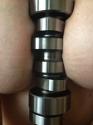

IMO, LSA is simply a calculated value. LSA by itself determines nothing. it only gives you the relationship between intake and exhaust centerlines. For tuneability, I always look to overlap first - in combination with compression and duration.
overlap is the amount of duration that both valves are open at the same time. if you keep all durations equal, but change the LSA, it's honestly a completely different cam, because all four valve events change. Conversely, if you keep three valve events constant and only change one, you will get a cam that has different durations and LSA, even though less changed. it is always best to look at the valve events.
Here's an example. Compare two cams: 230/240-114+4 and 230/240-111+4. only thing that changed is LSA, right????
LSA........114........111
IVC.........45..........42
EVO........58..........55
IVO.........5............8
EVC.........2............5
OL...........7...........13
Literally NOTHING about the valve events of these two cams is the same. the 111 will make better midrange, will not rev as good, will chop more at idle and be harder to tune.
Now, here's two different cams to compare: 230/240-114+4 and 230/232-116+6. Only thing that DIDN'T change was intake duration right????
LSA........114........116
IVC..........45..........45
EVO.........58.........58
IVO.........5............5
EVC.........2............-6
OL...........7...........-1
three out of four valve events are completely identical for these two cams. but the specs make it look like they're not even in the same family. Between these two cams, the -1 overlap would be cake to tune, would have a tame idle, and likely not make quite the peak torque of the 114 due to lost duration, but would make peak power and peak tq at identical RPMs to the 114.
So, some generalities:
* higher overlap makes more chop, harder to tune, and generally raises peak tq and carries past peak a bit better
* Later IVC favors higher RPM power
* Lower IVC favors more midrange tq at the expense of peaking early on power and falling off faster.
* earlier EVO favors higher RPM and generally works better with higher compression
When you're comparing cams, look primarily at IVC, EVO, and overlap for how they will perform relative to each other. LSA is just a derived value from the assumed symmetrical centerlines of the lobes based on valve events.
Edit - I did want to add displacement is a factor also. Larger displacements tend to "absorb" overlap. So, as you cam a larger engine, you can be more liberal on overlap and get it to settle down. Especially longer than stock stroke. So, while I agree your cam has a lot of overlap, it is in a 408, and it can be tamed. it will just take an unusual - or rather less conventional - approach. if you read all the tricks on HPTuners for taming cams, you've probably had tuners try them all and none of the "normal" stuff has worked.
overlap is the amount of duration that both valves are open at the same time. if you keep all durations equal, but change the LSA, it's honestly a completely different cam, because all four valve events change. Conversely, if you keep three valve events constant and only change one, you will get a cam that has different durations and LSA, even though less changed. it is always best to look at the valve events.
Here's an example. Compare two cams: 230/240-114+4 and 230/240-111+4. only thing that changed is LSA, right????
LSA........114........111
IVC.........45..........42
EVO........58..........55
IVO.........5............8
EVC.........2............5
OL...........7...........13
Literally NOTHING about the valve events of these two cams is the same. the 111 will make better midrange, will not rev as good, will chop more at idle and be harder to tune.
Now, here's two different cams to compare: 230/240-114+4 and 230/232-116+6. Only thing that DIDN'T change was intake duration right????
LSA........114........116
IVC..........45..........45
EVO.........58.........58
IVO.........5............5
EVC.........2............-6
OL...........7...........-1
three out of four valve events are completely identical for these two cams. but the specs make it look like they're not even in the same family. Between these two cams, the -1 overlap would be cake to tune, would have a tame idle, and likely not make quite the peak torque of the 114 due to lost duration, but would make peak power and peak tq at identical RPMs to the 114.
So, some generalities:
* higher overlap makes more chop, harder to tune, and generally raises peak tq and carries past peak a bit better
* Later IVC favors higher RPM power
* Lower IVC favors more midrange tq at the expense of peaking early on power and falling off faster.
* earlier EVO favors higher RPM and generally works better with higher compression
When you're comparing cams, look primarily at IVC, EVO, and overlap for how they will perform relative to each other. LSA is just a derived value from the assumed symmetrical centerlines of the lobes based on valve events.
Edit - I did want to add displacement is a factor also. Larger displacements tend to "absorb" overlap. So, as you cam a larger engine, you can be more liberal on overlap and get it to settle down. Especially longer than stock stroke. So, while I agree your cam has a lot of overlap, it is in a 408, and it can be tamed. it will just take an unusual - or rather less conventional - approach. if you read all the tricks on HPTuners for taming cams, you've probably had tuners try them all and none of the "normal" stuff has worked.
Last edited by Darth_V8r; Sep 19, 2017 at 02:01 PM.
When you advance spark timing, you generally increase the torque gained out of a single cylinder firing (up to a point - you can go too far). The breaking point is usually around 33 degrees at idle - beyond that, increasing spark decreases torque. Typically. Now, add the random misfire nature of a cammed engine. So, this makes your stronger cylinder fires and your weaker cylinder fires stronger and weaker relative to each other. Hard to say this typing. So when you get a "good" hit, the engine RPM wants to increase a lot. When you get a bad hit, engine RPM wants to decrease a lot. by reducing timing and using more airflow, you can generally tame a cam by making the "good" fires less good.
Spark timing continued - you can also make it chop more or chop less with adaptive spark. if you use a lot of adaptive spark, it will make the engine speed up and slow down quite a lot and will add to the chop. if you use less adaptive spark - or what I'd call a more "progressive" adaptive spark, where you ramp it up based on RPM error, you can help it reach its center easier.
An easy example - if you want to make a stock engine have some idle chop, set all your adaptive spark underspeeds to something ridiculous like 14 and all your overspeeds to -14. it'll make it chop. not like a major huge cam, but it'll chop.
Injector timing. When you go to a larger cam, you have two random events going on that contribute to misfiring. you have a vacuum leak at the valves due to overlap. And you have raw fuel leaving the cylinder due to overlap. That's the root cause of the random misfiring that causes the characteristic "cammed" sound. now, you can't fix the vacuum leaks, but you CAN make the injectors fire later at idle, so that the majority of the fuel is injected AFTER the exhaust valve closes, so you lose less fuel out the tailpipe.
If you compare the various tunes you've had done, you should see variations in timing as described above.

our cams are similar, mine in my 408 is a 244/248 on a 110+1 on xer lobes. been a bear to tune. had it in for close to 10 years and since i don't drive it much the surging isn't that big a deal but it still sucks. had it tuned in both sd and maf but don't seem to make much a difference but the sd tune seems to surge quite a bit less. one of these days i was debating on a cam of similar size but on say a 113+ 3 or so,or throwing in a llsr cam also on a wider lsa. should make close to same tq but carry hp on out a little further.
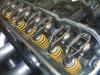
Is a cam with a 111 LSA vs 114 LSA really that different?
A 111 LSA camshaft can idle as smooth as stock and a 114 LSA camshaft can buck like a wild bronco and vice versa. It's all about the amount of overlap, which comes partially from LSA but also from duration.
A baby cam 111 LSA will have a lot less overlap than a donkey dick cam 114 LSA and those will drive completely different.