When you click on links to various merchants on this site and make a purchase, this can result in this site earning a commission. Affiliate programs and affiliations include, but are not limited to, the eBay Partner Network.
Alright, I am starting to put my engine back together and have the melling standard m295 oil pump to put in it. This is a 6.0L that will have an LSA supercharger on it along with a BTR PDS stage 3 torque cam. I will be running the holley 302-2 oil pan also. Do I need to get a high volume oil pump or should the one I have be fine? I really dont plan on this engine reving past 6500rpm.
Pretty sure the LS3 had an issue with drain back even with the standard pump, at least on a road course. I know some guys run an extra quart of oil on track.
There's a very niche group of engines that would actually benefit from a high volume oil pump. Unless you're spinning the engine 8000+ rpm for long periods of time, or trying to use thin oil with wide clearances, there's no need. It'll just rob power.
There's a very niche group of engines that would actually benefit from a high volume oil pump. Unless you're spinning the engine 8000+ rpm for long periods of time, or trying to use thin oil with wide clearances, there's no need. It'll just rob power.
Wouldn't the extra volume of oil a high volume oil pump pushes through the engine help with cooling?
Wouldn't the extra volume of oil a high volume oil pump pushes through the engine help with cooling?
Oil flow does remove a good bit of heat.
Specifically bearings etc.
Common misconception. Oil does not cool the bearings. Less than 3% of all heat in the bearings and crank is from combustion heat. The overwhelming majority of bearing heat is from hydrodynamic friction. The forces of pressure from the crank journals against the oil film. This is why bearing heat, and oil temperature overall, increase with higher viscosity oil. This is also why it's important to run the proper viscosity of oil for the clearance.
A high volume pump also doesn't push oil through the bearings faster. Inside the bearings, ahead of the eccentric path of the crank journal, is an oil wedge. All the pump does is ensure this area is filled with oil. After that, oil flow through and out of the bearing is determine by the rpm and pressure exerted on the oil by the crank journal. A high volume pump is only required when the stock pump can no longer keep up with the demand for that oil wedge. That takes a lot of clearance and rpm to reach that point.
Last edited by Polyalphaolefin; Mar 28, 2019 at 09:04 PM.
Common misconception. Oil does not cool the bearings. Less than 3% of all heat in the bearings and crank is from combustion heat. The overwhelming majority of bearing heat is from hydrodynamic friction. The forces of pressure from the crank journals against the oil film. This is why bearing heat, and oil temperature overall, increase with higher viscosity oil. This is also why it's important to run the proper viscosity of oil for the clearance.
Hydrodynamic friction is a reality, but your percentages are off. I disagree with you here. Oil cools every moving part inside any internal combustion engine, including bearings. I learned this many years ago doing windage tests. We assembled a couple engines (cup stuff) with see-through windows in the valve covers and the oil pan. We photographed the valvetrain with extreme high speed photography (and video) as well as the rotating assembly. Learned a lot about windage in the top of an engine, which 99% of folks never even think about. Also learned even more about windage in the crankcase utilizing different oils, as well as components. At the same time we utilized several sensors throughout the engine to help us determine oil formulations and volume vs. internal cooling of parts, and the sensor locations included main and cam bearings. Trust me here, oil volume and makeup plays a huge role in bearing temps.
Probably the coolest part of this testing for me personally was seeing how many revolutions the roller wheel on the rocker arms turned due to loosing contact with the lash cap at high rpm. Boiled down to rocker flex. We marked the rollers to help us capture data.
We did lots of data tests while I was there for many big cup teams for all kinds of info, from airflow to coolant types. That was the good ole days when cup teams still farmed out engines.
Hydrodynamic friction is a reality, but your percentages are off. I disagree with you here. Oil cools every moving part inside any internal combustion engine, including bearings. I learned this many years ago doing windage tests. We assembled a couple engines (cup stuff) with see-through windows in the valve covers and the oil pan. We photographed the valvetrain with extreme high speed photography (and video) as well as the rotating assembly. Learned a lot about windage in the top of an engine, which 99% of folks never even think about. Also learned even more about windage in the crankcase utilizing different oils, as well as components. At the same time we utilized several sensors throughout the engine to help us determine oil formulations and volume vs. internal cooling of parts, and the sensor locations included main and cam bearings. Trust me here, oil volume and makeup plays a huge role in bearing temps.
Probably the coolest part of this testing for me personally was seeing how many revolutions the roller wheel on the rocker arms turned due to loosing contact with the lash cap at high rpm. Boiled down to rocker flex. We marked the rollers to help us capture data.
We did lots of data tests while I was there for many big cup teams for all kinds of info, from airflow to coolant types. That was the good ole days when cup teams still farmed out engines.
I believe you're misinterpreting your data. I've done the same thing. Trust me, the heat is coming from friction. When you increase ZDDP levels, bearing temp increases due to higher ZDDP having a higher coefficient of friction. When combined ZDDP + Trimer MoDTC, the bearing temps went down from the lower coefficient of friction. Same temperature of oil in the pan, and same viscosity.
Poly & Che70velle That's definitely the best information on oil flow I've seen in a while. I hope both of you will share more thoughts on the topic.
Originally Posted by 99Silver6.0
Is the WS6Store ported LS pump high enough flow I should be worried??
I don't think there's anything to worry about in pumping the pan dry with a ported stock oil pump in any typical application. I ran a Katech ported LS6 and never had any issues for 15 years and 130,000 + miles. WS6 Store is well known for selling quality products.
A ported oil pump does not flow more oil, as the pump itself can only flow so much. The porting benefit is lower friction and resistance to the oil flowing in/out of the pump
I believe you're misinterpreting your data. I've done the same thing. Trust me, the heat is coming from friction. When you increase ZDDP levels, bearing temp increases due to higher ZDDP having a higher coefficient of friction. When combined ZDDP + Trimer MoDTC, the bearing temps went down from the lower coefficient of friction. Same temperature of oil in the pan, and same viscosity.
It doesn't matter what force is producing the heat. Whether by combustion or friction, the only cooling element the bearings are exposed to is the oil. And I am not discussing oil viscosity or type. The above indicates heat sorces and flow not cooling. That only can come from the oil.
Hydrodynamic friction is the source of the heat, not sliding friction. Therefore you cannot have this discussion without considering viscosity and oil composition.
Higher viscosity oil has a higher coefficient of friction and thus more heat generated.
Synthetic oils have a lower CoF and thus less heat generated.
The lower the hydrodynamic (fluid) friction, the less heat the oil transfers into the bearings. There is no cooling happening there, only control of heat generation and transfer. The only parts of the engine that see a cooling benefit from oil is areas not directly under dynamic oil pressure like rocker fulcrums and cam lobes.
Last edited by Polyalphaolefin; Mar 31, 2019 at 04:23 PM.
Common misconception. Oil does not cool the bearings. Less than 3% of all heat in the bearings and crank is from combustion heat. The overwhelming majority of bearing heat is from hydrodynamic friction. The forces of pressure from the crank journals against the oil film. This is why bearing heat, and oil temperature overall, increase with higher viscosity oil. This is also why it's important to run the proper viscosity of oil for the clearance.
A high volume pump also doesn't push oil through the bearings faster. Inside the bearings, ahead of the eccentric path of the crank journal, is an oil wedge. All the pump does is ensure this area is filled with oil. After that, oil flow through and out of the bearing is determine by the rpm and pressure exerted on the oil by the crank journal. A high volume pump is only required when the stock pump can no longer keep up with the demand for that oil wedge. That takes a lot of clearance and rpm to reach that point.
You edited your post, and I missed it. I certainly know what the data we gathered revealed to us. The Cup teams at the time payed us 7 figures to do data testing for them, so we were legit and left no stones unturned. We were one of three companies in the southeast doing this type of work for the big teams.
Ive spoken with many engine builders through the years since, on the topic of bearing heat, with the latest being Tony Mamo. The amount of oil volume reaching the bearings plays a major role in keeping the bearing temps in check. Perhaps we agree to disagree...I do enjoy reading your posts and it’s refreshing to find someone on an automotive forum that knows chemical makeups of lubricants, such as yourself.
You edited your post, and I missed it. I certainly know what the data we gathered revealed to us. The Cup teams at the time payed us 7 figures to do data testing for them, so we were legit and left no stones unturned. We were one of three companies in the southeast doing this type of work for the big teams.
Ive spoken with many engine builders through the years since, on the topic of bearing heat, with the latest being Tony Mamo. The amount of oil volume reaching the bearings plays a major role in keeping the bearing temps in check. Perhaps we agree to disagree...I do enjoy reading your posts and it’s refreshing to find someone on an automotive forum that knows chemical makeups of lubricants, such as yourself.
That feeling is mutual. I feel we could learn a few things from each other.
Gas Monkey Built a 6-Wheel Ferrari Testarossa With a Corvette LT4 Engine
Slideshow: The controversial Ferrari F6 swaps its original flat-12 for a Corvette Z06-derived LT4 V8 and sends power to four rear wheels through a custom-built drivetrain.
7 Most Reliable High-Performance Engines GM Has Ever Built
Slideshow:These GM engines didn't just make huge power, they survived abuse, boost, track days, and six-digit mileage with a reputation for refusing to quit.
6 Common C5 Corvette Failures and What's Involved In Repairing Them
Slideshow: From wobbling harmonic balancers to failed EBCMs, these are the issues that define long-term C5 ownership and what repairs typically involve.
Retro Modern Bandit Pontiac Trans AM Comes With Burt Reynolds' Autograph
Slideshow: A modern Camaro transformed into a retro icon, this limited-run "Bandit" build blends nostalgia with brute force in a way few revivals manage.
Top 10 Greatest Cadillac V Series Performance Models Ever, Ranked
Slideshow: Cadillac didn't just crash the high-performance luxury vehicle party, it showed up loud, supercharged, and occasionally a little unhinged...
Coachbuilt N2A Anteros Is an LS2-Powered C6 Corvette In Italian Clothes
Slideshow: A one-off sports car that looks like a vintage Italian exotic-but hides a C6 Corvette underneath-just sold for the price of a new mid-engine Corvette.




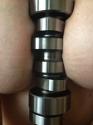


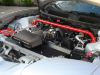


 Standard vs high volume oil pump