








Question about quench

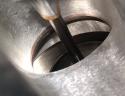
The overall purpose of setting up an ideal quench is having enough quench area to cause turbulence in the chamber. Turbulence in the intake runner or port is always a bad thing, but chamber turbulence is uber important in efficiency and allowing you to make the most potential power with the least amount of timing.
A hemi engine has vey little to no quench area, but makes up for it with a better flowing port layout and overall better flowing design (more potential to make power) than a wedge setup...at the cost of needing more overall ignition timing.

TECH Senior Member


Joined: Jun 2016
Posts: 22,308
Likes: 3,624
From: Central Cal.
I learned here! I have a Tahoe with LM7, and wondered, come overhaul time (maybe top end only) how much difference it would make using a .040 head gasket and milling about .020 which SHOULD net about a 10:1 CR. I think this should be able to use 87 regular gas, as the Gen IV 5.3's are mostly around 10:1 and use regular. Is this on the right track?

On The Tree
Joined: Jun 2019
Posts: 184
Likes: 66
From: HTown, Texas
To optimize the effects of setting up an ideal quench distance, a flat top piston and wedge shaped chamber (not a hemi) is always going to work the best. A flattop piston will push the combustion wave (due to effects of quench) toward the center of the chamber and spark plug, more so than a dished piston. Quench AREA is a major contributor in efficiency of a well setup chamber design. Flat tops have more quench area than dished pistons.
On The Tree
Joined: Jun 2019
Posts: 184
Likes: 66
From: HTown, Texas
I learned here! I have a Tahoe with LM7, and wondered, come overhaul time (maybe top end only) how much difference it would make using a .040 head gasket and milling about .020 which SHOULD net about a 10:1 CR. I think this should be able to use 87 regular gas, as the Gen IV 5.3's are mostly around 10:1 and use regular. Is this on the right track?
For those of you that feel you need mid grade 89 . This is what I do , I alternate one tank of regular , then premium . In my state premium is still 93 .By doing this I get a higher average octane level at a cheaper total cost. In my area midgrade is 30 cents more than regular. But 93 is only 20 cents more than 89 . Premium 93 has considerably more detergents also .The 50/50 mix is 90 run it down to 1/3 tank premium and your still at 89
Last edited by omc8; Mar 18, 2020 at 09:54 AM.
Trending Topics
Crevice volume refers to the area on top of the rings. Some of the most powerful N/A engines ever built have ridiculously small chambers (35 to 40 cc’s) and flat top pistons. Can you elaborate more on your reply please?
LS1 Tech Stories
The Best V8 Stories One Small Block at Time

Topdon ONE vs. Artidiag 800 BT2: Which is the Diagnostic Tablet For You?
Pouria Savadkouei
Gas Monkey Built a 6-Wheel Ferrari Testarossa With a Corvette LT4 Engine
Verdad Gallardo
7 Most Reliable High-Performance Engines GM Has Ever Built
Verdad Gallardo
Amazing '71 Camaro Restomod Is Modern Muscle Car Under the Skin
Verdad Gallardo
6 Common C5 Corvette Failures and What's Involved In Repairing Them
Pouria Savadkouei
Retro Modern Bandit Pontiac Trans AM Comes With Burt Reynolds' Autograph
Verdad Gallardo
Top 10 Greatest Cadillac V Series Performance Models Ever, Ranked
Pouria Savadkouei
Top 10 Most Powerful Chevy Trucks Ever Made!
