When you click on links to various merchants on this site and make a purchase, this can result in this site earning a commission. Affiliate programs and affiliations include, but are not limited to, the eBay Partner Network.
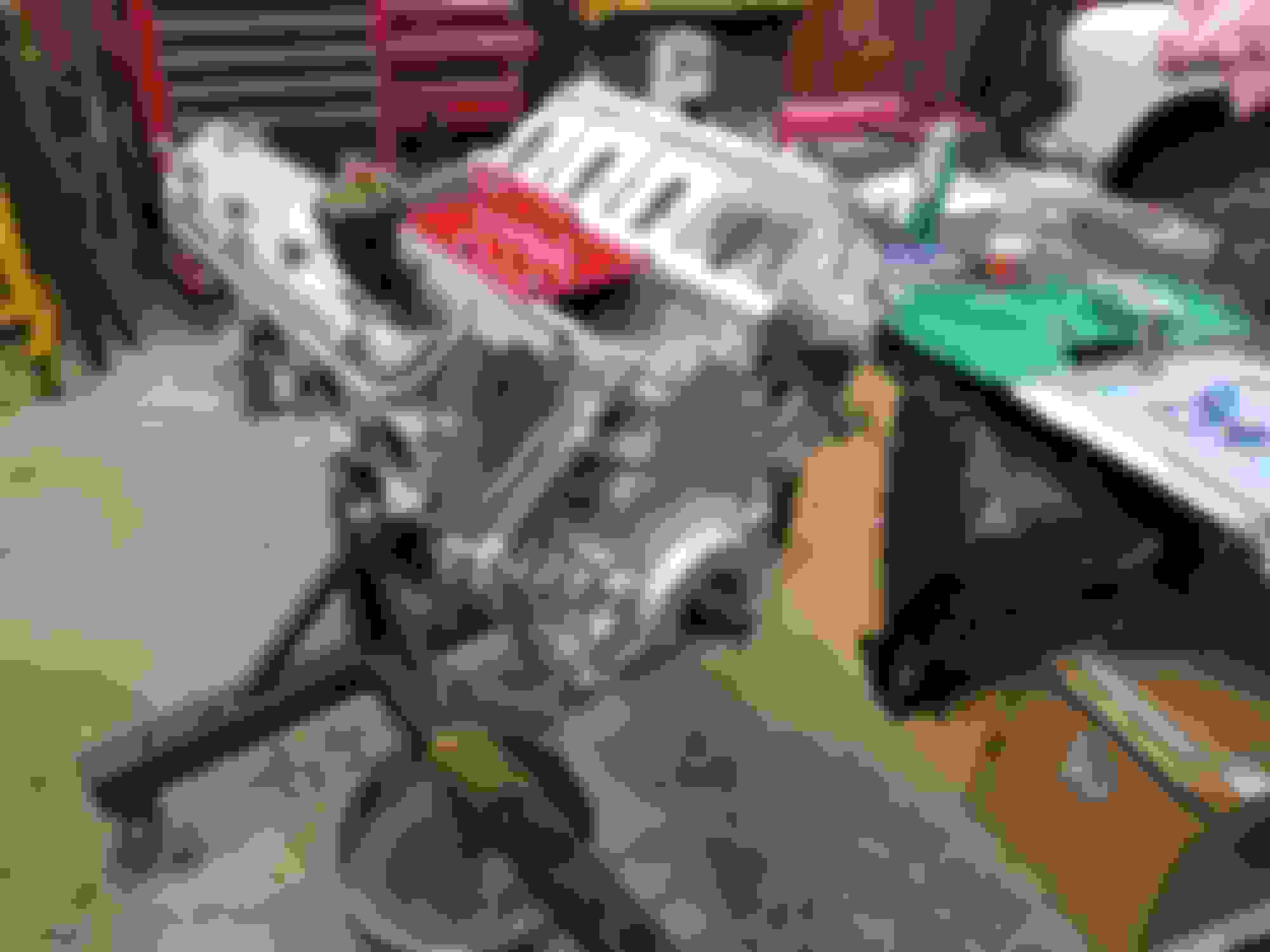
I have several threads about issues I've had with misfires with my engine but I'll sum it up here again. I put a gen 3 24x thompson motorsports 383 in my 02 formula this past year and have had misfire problems since getting it running. I've changed plugs, tried different plug gap, new plug wires, new coil packs, cleaned and flow tested injectors (deatschwerks 50lb), checked and cleaned all grounds on engine, new AC delco crank sensor (tried a total of 3), put a new crank sensor harness pigtail on, new AC delco cam sensor, new MAP sensor, car has new fuel pump and has good fuel pressure, new fuel filter, new O2 sensors, pulled the roller rockers off and put stock rockers back on thinking it could be valve float, found no broken springs and springs are new PAC .660 lift which are plenty adequate for cam. When I first got the engine running in the car it would misfire bad at lower RPM if i gave it too much load off the line from a stop, if I slowly rolled into it, it would pull cleanly up to about 5k RPM and would begin to break up and misfire again and would not pull through it. I initially put the engine together with all the factory original sensors from the LS1 that came out of the car which ran fine with no misfire problems, reused the same BTR stage 3 cam, PRC 225 heads, and johnson lifters from old engine. I found when I changed the crank sensor it fixed the low RPM misfire I was experiencing but still had the miss above 5K, and after reading several threads about bad crank sensors right out of the box I tried yet another new sensor only to findout it wouldn't even allow the engine to start, would only sputter and pop, so i swithched back to the other new crank sensor. Had the car on the dyno twice attempting to tune it, tuner went as far as to wipe out the tune from the ECU and load a stock tune in and start from scratch thinking it could be a corrupt file, but no change. After the 2nd time on the dyno it threw a P0336 crank sensor "out of range" code, I've been reading threads about these issues till my eyes bleed and everything seems to point to the reluctor wheel, and since the year warranty is running out on the engine I decided to pull it out and measure the reluctor wheel..and this is what I found.
We measured the overall runout of the reluctor just below the teeth and found it to have about .024" runout which is more than .010" over what thompson stated it had in the paperwork provided with the engine, however the issue I see is there are several teeth that are bent or "laid over" slightly which you can see by just looking at it as it spins over. One tooth was bent .010" in one direction and the next corresponding tooth was .011" in the opposite direction, and the two halves of the wheel have varying gap between them as you spin it over and appears to be "wavy". Looks like someone smacked the wheel near the teeth in a few spots to align the reluctor either before or after welding it..and where it is welded the 2 piece wheel shows a larger gap between both halves. This might be splitting hairs here but I'd like to know what the true tolerance is for these reluctors becuase GM states no more than .010" and aftermarket crank manufactures state the sensors will operate with up to .040" runout...so which is it?? All i know is I measured the reluctor in the old LS1 and it appears dead straight and only has .004" runout. In either case the engine is going back to Thompson for them to inspect it and most likely replace the reluctor, I spoke with them about using a billet 24x reluctor wheel instead of the factory 2 piece design so I don't have this issue again, but does anyone have experience with this problem or have used a billet wheel before? Is it worth the extra cost? Let me know your thoughts as this has been extremely frustrating. Thanks!
When I rebuilt my LS6, the replacement factory crank was dropped by the delivery company and bent the reluctor wheel. I noticed when we put the crank in the block to check the bearing clearances. We literally took a screwdriver and gently pried it back straight and worked our way around using a dial indicator. It's seen 7400 rpms with no misfire. Point is, I think the reluctor runout importance can be slightly exaggerated. I would suggest trying a second computer if you've tried multiple sensors and a confirmed ground/power. You may also want to check the wiring harness. Put an oscilloscope on the crank signal pins at the ECU connector harness and see if it looks clean at rpm.
As long as the engine is out, I’d replace it. He said some of the teeth are bent over.
You can get the crank out with the pistons and rods still in but pushed even with the deck. It’s a big job but easier than trying to tweak it and hope it’s ok after reinstalling the engine.
When I rebuilt my LS6, the replacement factory crank was dropped by the delivery company and bent the reluctor wheel. I noticed when we put the crank in the block to check the bearing clearances. We literally took a screwdriver and gently pried it back straight and worked our way around using a dial indicator. It's seen 7400 rpms with no misfire. Point is, I think the reluctor runout importance can be slightly exaggerated. I would suggest trying a second computer if you've tried multiple sensors and a confirmed ground/power. You may also want to check the wiring harness. Put an oscilloscope on the crank signal pins at the ECU connector harness and see if it looks clean at rpm.
yeah the next thing i was going to try was another ECU, but couldnt get the car in to the tuner in time..guy is booked till end of year and warranty on the engine is running out. I talked to thompson motorsports and they are going to take the short block back and replace the reluctor though. Wish i had access to that diagnostic tool but unfortunately i dont..if the engine goes back in and still has this problem thats what ill be checking, or taking it somewhere to have the crank sensor wiring checked.
As long as the engine is out, I’d replace it. He said some of the teeth are bent over.
You can get the crank out with the pistons and rods still in but pushed even with the deck. It’s a big job but easier than trying to tweak it and hope it’s ok after reinstalling the engine.
yeah i agree..im going to ship the short block back to TMS though since its still under warranty to replace the reluctor, they're covering shipping so ill only be out the time
As long as the engine is out, I’d replace it. He said some of the teeth are bent over.
You can get the crank out with the pistons and rods still in but pushed even with the deck. It’s a big job but easier than trying to tweak it and hope it’s ok after reinstalling the engine.
^^^^^^^ABSOLUTELY AGREE!!!^^^^^
Sometimes, straightened parts can return to their bent state. For the low cost involved, and especially with the motor out, Ron is 100% correct. Wouldnt be worth my time gambling if a new one is $30-$50, and I think their much less than that. Then you know what you've got. I'm 99% certain this is the issue. Question for OP; is your car an A4? Ron knows where I'm going with this one!!
^^^^^^^ABSOLUTELY AGREE!!!^^^^^
Sometimes, straightened parts can return to their bent state. For the low cost involved, and especially with the motor out, Ron is 100% correct. Wouldnt be worth my time gambling if a new one is $30-$50, and I think their much less than that. Then you know what you've got. I'm 99% certain this is the issue. Question for OP; is your car an A4? Ron knows where I'm going with this one!!
yeah its a FLT 4L60e with yank pt4000 stall. Thought about converter ballooning maybe but this same trans/converter was in the car with the last engine, and no misfires.
yeah the next thing i was going to try was another ECU, but couldnt get the car in to the tuner in time..guy is booked till end of year and warranty on the engine is running out. I talked to thompson motorsports and they are going to take the short block back and replace the reluctor though. Wish i had access to that diagnostic tool but unfortunately i dont..if the engine goes back in and still has this problem thats what ill be checking, or taking it somewhere to have the crank sensor wiring checked.
.
I had a 2002 Tahoe spontaneously shutting off for a half a second and come back on and would sometimes misfire at idle and finally completely died . Ended up being a broken crank sensor wire about 24 inches from where it connects to the sensor, was still in wire loom wrapped with tape, even the wire insulation was still intact just wire broke inside.
.
I had a 2002 Tahoe spontaneously shutting off for a half a second and come back on and would sometimes misfire at idle and finally completely died . Ended up being a broken crank sensor wire about 24 inches from where it connects to the sensor, was still in wire loom wrapped with tape, even the wire insulation was still intact just wire broke inside.
Yeah i changed the pigtail on the connector with about 6 inches of new wire since that's the area where its close to the exhaust..didn't make a difference though, but I just think it's weird that 3 different crank sensors all had different results, the original sensor from the LS1 (which worked fine in the LS1) had a bad misfire at low and high RPM, the 2nd new ACdelco crank sensor fixed most of the problem but still misses above 5K RPM and the 3rd new ACdelco sensor wouldn't even start the car (so I swapped back to crank sensor #2).
Got my engine back from thompson motorsports, had them install a billet 1 piece 24x reluctor. They used a callies brand reluctor wheel. I have been trying to find information on which direction these callies wheels are supposed to face since the billet wheels dont have the diamond shaped holes on one side (which is one easy way to tell the proper direction they are to be installed with a factory 2 piece wheel). After reading countless threads about reluctor problems, especially the thread about one being installed backwards, its got me paranoid. So i just want to confirm this wheel was installed properly and facing the right direction before going through all the work of putting the engine back together and in the car. As you can see the callies logo is facing the rear..i dont see any markings saying front or rear so if anyone had used a one piece callies wheel, is this the correct orientation? Tried calling callies today but closed weekends, and my curiosity cant wait.
You doubt Thompson knows their way around this stuff??
well they told me they rarely ever install billet 1 piece wheels on their builds, yet nearly every other engine builder ive read about or talked to says they never use stock wheels anymore because of the runout and separation problems. So being they dont use billet wheels that often i want make sure its installed right..i dont see any markings on the wheel indicating front/rear.
using a picture of the goodson installation tool and looking where the dowels line up with the crank flange and the hole in the reluctor wheel, it appears to be correct. That being said, got the engine mostly back together..AGAIN (in a forest gump voice). Just have to bolt rockers down, put balancer on and prime it with the weed sprayer...then back in the car it goes and fingers crossed this problem is gone.
You mentioned the alignment tool, and that reminded me that the reluctor can only go on one way IF using the tool.
yeah, there was that one thread where the reluctor wheel was installed backwards by a reputable shop, so they must not have used the install tool, now after seeing how it is installed with the tool it makes sense it can't go on backwards, and I'm certain Thompson Motorsports uses the install tool when putting one on a crank.
Gas Monkey Built a 6-Wheel Ferrari Testarossa With a Corvette LT4 Engine
Slideshow: The controversial Ferrari F6 swaps its original flat-12 for a Corvette Z06-derived LT4 V8 and sends power to four rear wheels through a custom-built drivetrain.
7 Most Reliable High-Performance Engines GM Has Ever Built
Slideshow:These GM engines didn't just make huge power, they survived abuse, boost, track days, and six-digit mileage with a reputation for refusing to quit.
6 Common C5 Corvette Failures and What's Involved In Repairing Them
Slideshow: From wobbling harmonic balancers to failed EBCMs, these are the issues that define long-term C5 ownership and what repairs typically involve.
Retro Modern Bandit Pontiac Trans AM Comes With Burt Reynolds' Autograph
Slideshow: A modern Camaro transformed into a retro icon, this limited-run "Bandit" build blends nostalgia with brute force in a way few revivals manage.
Top 10 Greatest Cadillac V Series Performance Models Ever, Ranked
Slideshow: Cadillac didn't just crash the high-performance luxury vehicle party, it showed up loud, supercharged, and occasionally a little unhinged...









 24x reluctor wheel issues