224/228 114 PTV Problem, Cracked Piston + Block, Plz Help


Sounds to me like the cam was advanced, even though the cam may be dot to dot on the chain, it still may not be right, its a pain but every cam should be degreed in. We installed an XER cam, we put it dot to dot, and the cam was advanced almost 2 degree's from where it was supposed to be

I just did an install with AFR 205's milled .010 with Cometic .040 gaskets. I used a Comp 224/228 .581/.588 112lsa 2 degrees advanced. I installed the cam straight up dot to dot. I measured my P/V at .110 intake and .148 exhaust. I checked my piston deck height and it was .008". A friend of mine just got the same setup as you described. Heads milled .024, Cometic .040 gaskets, Comp 224/228 .581/.588 114lsa 1 degree advanced. We plan on checking P/V with that much milling and that small a quench.

Teching In
Joined: Aug 2004
Posts: 46
Likes: 0
From: Windham, NH
Originally Posted by MelloYellow
This is a friend's setup, so I haven't researched the build and am looking for comments. Pistons Smacked the valves, some type of PTV issue. Piston was pierced by valve stem, motor seized, block cracked.
Setup:
Cam = Comp XE-R 224/228 114+1 113CL .581/.588 Lift.
Heads = AFR 205's milled .024", 2.02 Int, 1.60 Exh.
Should there be an issue with this setup? I was surprised a 224/228 would have PTV issues?
Would like to define what is wrong here for sure. Is it possible we have the wrong 2.08 valves or a bad cam grind?
TIA.
Setup:
Cam = Comp XE-R 224/228 114+1 113CL .581/.588 Lift.
Heads = AFR 205's milled .024", 2.02 Int, 1.60 Exh.
Should there be an issue with this setup? I was surprised a 224/228 would have PTV issues?
Would like to define what is wrong here for sure. Is it possible we have the wrong 2.08 valves or a bad cam grind?
TIA.

First.... which gaskets did you use. Stock, GM Metal or Cometics.
I am going the AFR route as well and traded a few e-mails with Tony about compression ratio and so on. He stated they milled .03 and used .04 Cometics. So if you used Cometics you are darn close to his setup. He checked piston over deck height and got around .007 I think. I believe GM states some crazy range for piston deck height though... like .005 to .020
 Was your piston deck height checked? In ANY event... I asked Tony if the needed to flycut the pistons with his setup and he said no BUT they had to make sure the cam was EXACTLY straight up. It was a REAL close fit. Something like 4 hours was spent degreeing the cam in his car to insure success.
People... please, please, please check your PTV clearance. Always!
So... things that could have gone wrong... cam slightly advanced or retarded would probably do it. Piston deck height could be one of the crazy GM "spec" heights.
I'm sorry to hear that man.... real sorry.
--Bill
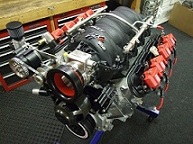 Must Check Ptv !!!
 Let this thread be a lesson to everyone.
The cam installed position was not confirmed with a degree wheel, nor was piston to valve checked.
Guys....if your not going to take the extra time to degree the cam (confirming you got what you paid for, AND that it is installed properly), you ABSOLUTELY must check piston to valve at the very least. If you don't, your rolling the dice with any cam install, I don't care if its 208' @ .050, and the catastrophic end results of a bad install is simply not worth the time you save because you didn't "think" you would have a problem.
FWIW, this install should have had enough PTV if, and this is a big IF, the cam was installed in the correct position as noted on the cam card. Consider this....I've personally built easily 75 or so shortblocks in my lifetime, and I am an extremely detail oriented individual....however, when I recently installed the AFR 224/228 cam in my C5 (that all of you have seen results on), when proceeding to degree the cam and check how close it landed based on a "straight up" installed position, I found it to be horribly off. I don't remember exact numbers, but it was say 20-30 degrees off of where I expected it to be. After double checking my entire procedure and coming up with the same results, I backtracked to my cam install and found I had missed the "dot to dot" install by one tooth on the cam gear. I was working with the engine intalled in the engine bay (as most of you are) and it wasn't as easy to line up those dots because you weren't standing directly in front of the engine as you would be if you were working on an engine stand. It was the first time that happened to me and the point I am making is that it could happen to ANYONE. The fact that I ALWAYS degree any cam installs I do, as well as always checking piston to valve clearance, eliminates that issue as a potential problem, but I make mention of it for obvious reasons.
I believe that this situation was probably caused by an improper cam install, but other factors could have caused the same results (wrong cam, improperly ground cam, bad timing chain set, etc.). Simply taking the time to check piston to valve clearance, not to mention degreeing the cam to maximize performance, will eliminate ANY potential scenarios that could cause serious engine damage from valves contacting pistons.
Tony Mamo
AFR Sales / Product Design
The cam installed position was not confirmed with a degree wheel, nor was piston to valve checked.
Guys....if your not going to take the extra time to degree the cam (confirming you got what you paid for, AND that it is installed properly), you ABSOLUTELY must check piston to valve at the very least. If you don't, your rolling the dice with any cam install, I don't care if its 208' @ .050, and the catastrophic end results of a bad install is simply not worth the time you save because you didn't "think" you would have a problem.
FWIW, this install should have had enough PTV if, and this is a big IF, the cam was installed in the correct position as noted on the cam card. Consider this....I've personally built easily 75 or so shortblocks in my lifetime, and I am an extremely detail oriented individual....however, when I recently installed the AFR 224/228 cam in my C5 (that all of you have seen results on), when proceeding to degree the cam and check how close it landed based on a "straight up" installed position, I found it to be horribly off. I don't remember exact numbers, but it was say 20-30 degrees off of where I expected it to be. After double checking my entire procedure and coming up with the same results, I backtracked to my cam install and found I had missed the "dot to dot" install by one tooth on the cam gear. I was working with the engine intalled in the engine bay (as most of you are) and it wasn't as easy to line up those dots because you weren't standing directly in front of the engine as you would be if you were working on an engine stand. It was the first time that happened to me and the point I am making is that it could happen to ANYONE. The fact that I ALWAYS degree any cam installs I do, as well as always checking piston to valve clearance, eliminates that issue as a potential problem, but I make mention of it for obvious reasons.
I believe that this situation was probably caused by an improper cam install, but other factors could have caused the same results (wrong cam, improperly ground cam, bad timing chain set, etc.). Simply taking the time to check piston to valve clearance, not to mention degreeing the cam to maximize performance, will eliminate ANY potential scenarios that could cause serious engine damage from valves contacting pistons.
Tony Mamo
AFR Sales / Product Design

I had PtoV issues with my F11 (228/230 112lsa + 4) I only had like 45 thousandths on the intake. This should fit easily with everything. My 2.055 valves made it have terrible clearance. I had to retard the cam by 2 degrees to make it fit. Now i have a 112lsa +2 o well. You should always check this crap though.

TECH Fanatic

Joined: Mar 2003
Posts: 1,946
Likes: 1
Originally Posted by Tony Mamo @ AFR
... you ABSOLUTELY must check piston to valve at the very least. If you don't, your rolling the dice with any cam install, I don't care if its 208' @ .050, and the catastrophic end results of a bad install is simply not worth the time you save because you didn't "think" you would have a problem.
...
...
Anyone???



TECH Senior Member
Joined: Mar 2004
Posts: 14,620
Likes: 17
From: BFE
Your not checking the PtoV clearance at max lift, you need to check it during the camshaft overlap period. For instance if your checking cylinder #1 your overlap would be really close to where the timing chain dots line up. You set the valvetrain to zero lash with both valves closed, your cam gear timing mark will be at 12 o clock, overlap occurs 360 crank degrees from that, or 180 cam degrees, so overlap would be when the upper timing gear is at 6 o clock. Check intake and exhaust 10 degrees before TDC and 10 degrees after TDC during overlap and everywhere in between.
I usually put the dial indicator against a retainer and have it clamped to a long metric bolt using rocker arm threads, usually from the next cylinder over (#3). You zero the guage when you make piston contact with the valve by pushing the valve open, then when you let it go, that reading is your clearance.
I usually put the dial indicator against a retainer and have it clamped to a long metric bolt using rocker arm threads, usually from the next cylinder over (#3). You zero the guage when you make piston contact with the valve by pushing the valve open, then when you let it go, that reading is your clearance.
1-dial indicator
2-very light valve spring int/exhaust (to get a more accurate reading)

TECH Addict
Joined: Mar 2004
Posts: 2,336
Likes: 0
From: Fat Chance Hotel
I'm with him.
>everything broke loose while they were testing the setup around 1500-2000rpm<
It shouldn't have turned by hand either. And 1500-2000rpms is not going to cause any float.
Stock rocker arms?
>everything broke loose while they were testing the setup around 1500-2000rpm<
It shouldn't have turned by hand either. And 1500-2000rpms is not going to cause any float.
Stock rocker arms?

PREDATOR Z hit the nail on the head.you install light weight spring on 1 intake and 1 exhaust,bolt the head down.spin the motor over with a dial indcator on the rockers recording the valve events,degree wheel on the front of the motor.check the cam card for events to see if they are happening when they should be.if not ,the light weight springs will not cause any valves too get bent.you must check high performance parts ,this is called blueprinting,any GOOD engine builder does this!!
Originally Posted by SideStep
OK, what is a good process for checking PTV???
Anyone???
Anyone???
Originally Posted by Goober35
Clay is crap. You can only tell if it hits or not and even then it is realy hard to tell. What if you have just a little and i mean just a little like .002 or .005 vavle float witch you will and you clearance was .001 now you have a vavle that has gone deeper than the piston. You need a dial indicator. Mesure 10degres before and after. Max lift does not matter.
Just my .02 cents.
Just my .02 cents.

im gonna come down on the side of stupidity on the installers part ... i mean, even if all of the parts were wacked you should still check...
just a quick way to tell would be to bolt the heads on without a gasket and turn the motor over by hand and if it clears you probably ok .... i say probably because this is not 100% sure since you will get valve float, rod stretch, expansion from heat, etc.
the way i look at it, someone just paid several thousand dollars for a lesson that they will never forget
just a quick way to tell would be to bolt the heads on without a gasket and turn the motor over by hand and if it clears you probably ok .... i say probably because this is not 100% sure since you will get valve float, rod stretch, expansion from heat, etc.
the way i look at it, someone just paid several thousand dollars for a lesson that they will never forget

Originally Posted by SideStep
You are serious??? That is what AFR told you... good lord
If those heads are "as ordered", meaning, the right size valves, milled properly and all of those things, you can't blame AFR. And, I'd not expect them to pay for the damage (if it were me, not that I wouldn't like them to). If the heads are wrong (valves, angle milled, etc) then it's a double problem. They may tell you that if you had checked it, you'd have caught it and they wouldn't have to pay for it or, they may fix it. And, they would have screwed up as well.
If the cam was installed wrong, you may have an excellent case with the shop to get them to fix it.
Man, I hope you (your friend) get this all sorted out soon. Good luck!
Just remember, "If it were easy, everyone would be doing it".

Thread Starter
TECH Fanatic
Joined: Nov 2001
Posts: 1,986
Likes: 1
From: Centrifugal City
The shop that did the install is covering the motor at no cost.
I believe the motor was turned by hand before starting.
I think in tear down the cam gears will be off a tooth.
They are going to fly cut the new pistons to be safe. Any word on how much is good and how much is too much? I think LG takes .080 off the Intake spot.
I believe the motor was turned by hand before starting.
I think in tear down the cam gears will be off a tooth.
They are going to fly cut the new pistons to be safe. Any word on how much is good and how much is too much? I think LG takes .080 off the Intake spot.

Staging Lane
Joined: Dec 2003
Posts: 51
Likes: 0
Originally Posted by MelloYellow
Thanks for the reality check on paper guys. Looks good to me too. At this point we're going back to check dot to dot, mis-ground cam, over-milled heads, larger than spec'd intake valve, etc.
Most people don't do PTV unless you are in a Mid-230+ duration cam. Most wouldn't PTV a 218/224 cam or a stock cam for that matter. The above combo was sold as a match working setup. Many people install cams without degreeing our non-adjustable timing setups.
The only thing it protects you from is cases where a manufacturer screws something major up, which is what this looks like. It's easy to sit back and armchair it and say you should have degree'd or you should have PTV'd, but this setup shouldn't have required it.
I bet 90% of the head/cam installs are done like this unless you get into crazy high duration or heavily milled heads.
Will go dig some more. Wasn't my car fortunately. This WAS the AFR 205 and rec'd cam that blew up. Could be anything at this point. I remember there was a bad batch of Comp grinds awhile back at MTI... unrelated I guess?
FWIW, I don't want to get into vendor bashing but this is the AFR 224/228 114+1 cam via Comp Cam. There is too much left that needs to be verified on the build. AFR's position was, "Well that's our recommended package, but you should have checked the PTV anyhow".

Most people don't do PTV unless you are in a Mid-230+ duration cam. Most wouldn't PTV a 218/224 cam or a stock cam for that matter. The above combo was sold as a match working setup. Many people install cams without degreeing our non-adjustable timing setups.
The only thing it protects you from is cases where a manufacturer screws something major up, which is what this looks like. It's easy to sit back and armchair it and say you should have degree'd or you should have PTV'd, but this setup shouldn't have required it.
I bet 90% of the head/cam installs are done like this unless you get into crazy high duration or heavily milled heads.
Will go dig some more. Wasn't my car fortunately. This WAS the AFR 205 and rec'd cam that blew up. Could be anything at this point. I remember there was a bad batch of Comp grinds awhile back at MTI... unrelated I guess?
FWIW, I don't want to get into vendor bashing but this is the AFR 224/228 114+1 cam via Comp Cam. There is too much left that needs to be verified on the build. AFR's position was, "Well that's our recommended package, but you should have checked the PTV anyhow".
and piston to valve clearance Sounds like dealership tech!
TECH Fanatic
Joined: Mar 2003
Posts: 1,946
Likes: 1
Originally Posted by MelloYellow
The shop that did the install is covering the motor at no cost.
I believe the motor was turned by hand before starting.
I think in tear down the cam gears will be off a tooth.
They are going to fly cut the new pistons to be safe. Any word on how much is good and how much is too much? I think LG takes .080 off the Intake spot.
I believe the motor was turned by hand before starting.
I think in tear down the cam gears will be off a tooth.
They are going to fly cut the new pistons to be safe. Any word on how much is good and how much is too much? I think LG takes .080 off the Intake spot.
Keep us informed of the outcome....
Good luck...

6600 rpm clutch dump of death Administrator


Joined: Dec 2001
Posts: 4,983
Likes: 13
From: Texas
Some good points above. I think we all know what assumptions will do for you. If you assume anything you are already in the hole. Let me give you an example that isn't related to this cam install.
Lets say you buys a block already prepped from shop W. You buy a crank which is std/std from Vendor X, You buy a set of bearings from vendor Y, and you buy pistons and rings from vendor Z. The question is do you check any of that when you assemble the motor.
If you know what you are doing then the answer is yes.
If you don't you assume that everyones mics are calibrated with one another. You put it all together and you assume all that stuff has proper clearance. Here is a little hint THEY AREN'T. Theres a good chance you end up with a box of broken parts (often very expensive ones).
I posted this before if you install cams and don't have a degree wheel, and don't know how to use one then perhaps you need to leave the cam installs to those who do. Otherwise, you are asking for bad results.
As for PTV. PTV isn't duration or lift specific. You can't assume a cam will clear based soley on lift or duration. Its duration plus valve events plus lift... Get any of those wrong and you bang a piston...
Here are Comp's instructions on how to degree a cam, along with a list of some of the tools you need at the end.....
http://www.compcams.com/Technical/In.../Files/145.pdf
There is more to putting a cam in than going dot to dot. I know Tony for instance spent one whole evening playing with his degree wheel trying to optimize valve events on his cam. You might say "So what does that mean to me" Well, look at Tony's dyno numbers, and look at some of the folks who don't check.
I'm not trying to be ugly here, but some folks attack Tony and LAPD since they can't just slap parts on a car and duplicate the numbers. Yet they haven't done their homework, so Tony and LAPD must have a "ringer" dyno. Face it, this is why some "shop" or "tuner" cars make power. The guys who know what to check are checking it, while other just throw it in and go.
Here we have a separate case where someone didn't check their work and broke a motor. That sucks for everyone. It sucks for for the owner of the shop as he now has to replace a motor. It sucks for the consumer as his car is broke. It sucks for AFR since some folks will get the wrong impression that it is AFR's fault.
If you are going to put a cam in, you need to check PTV and degree it. There are no two ways about it. If you don't possible issues are your own. Folks don't like to think about it, but cams get mis-ground, they get stuck in the wrong box, etc... So, its cheap and easy insurance to check that cam before you fire your motor up and kill an bunch a of stuff.
Lets say you buys a block already prepped from shop W. You buy a crank which is std/std from Vendor X, You buy a set of bearings from vendor Y, and you buy pistons and rings from vendor Z. The question is do you check any of that when you assemble the motor.
If you know what you are doing then the answer is yes.
If you don't you assume that everyones mics are calibrated with one another. You put it all together and you assume all that stuff has proper clearance. Here is a little hint THEY AREN'T. Theres a good chance you end up with a box of broken parts (often very expensive ones).
I posted this before if you install cams and don't have a degree wheel, and don't know how to use one then perhaps you need to leave the cam installs to those who do. Otherwise, you are asking for bad results.
As for PTV. PTV isn't duration or lift specific. You can't assume a cam will clear based soley on lift or duration. Its duration plus valve events plus lift... Get any of those wrong and you bang a piston...
Here are Comp's instructions on how to degree a cam, along with a list of some of the tools you need at the end.....
http://www.compcams.com/Technical/In.../Files/145.pdf
There is more to putting a cam in than going dot to dot. I know Tony for instance spent one whole evening playing with his degree wheel trying to optimize valve events on his cam. You might say "So what does that mean to me" Well, look at Tony's dyno numbers, and look at some of the folks who don't check.
I'm not trying to be ugly here, but some folks attack Tony and LAPD since they can't just slap parts on a car and duplicate the numbers. Yet they haven't done their homework, so Tony and LAPD must have a "ringer" dyno. Face it, this is why some "shop" or "tuner" cars make power. The guys who know what to check are checking it, while other just throw it in and go.
Here we have a separate case where someone didn't check their work and broke a motor. That sucks for everyone. It sucks for for the owner of the shop as he now has to replace a motor. It sucks for the consumer as his car is broke. It sucks for AFR since some folks will get the wrong impression that it is AFR's fault.
If you are going to put a cam in, you need to check PTV and degree it. There are no two ways about it. If you don't possible issues are your own. Folks don't like to think about it, but cams get mis-ground, they get stuck in the wrong box, etc... So, its cheap and easy insurance to check that cam before you fire your motor up and kill an bunch a of stuff.
I totaly agree with the "cam in the wrong box" because it happend to me! I received a 228/222 on a 115lsa and I ordered a 228/230 112lsa. It was not a misgrind because the cam was engraved properly.
This comes down to the shop not doing their work right. I think it is proven that a simple check would have prevented this problem. However, as a consumer/customer, I should not have to really care what the shop does. I say, install these heads and cam and I pay you the money for it. Glad to hear that the shop is trying to right their wrongs.
This comes down to the shop not doing their work right. I think it is proven that a simple check would have prevented this problem. However, as a consumer/customer, I should not have to really care what the shop does. I say, install these heads and cam and I pay you the money for it. Glad to hear that the shop is trying to right their wrongs.