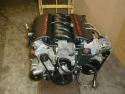








Torquer V.3 owners chime in!!

I have had this cam for a few months and I love it. I'm cam only and put the #'s in my sig down. I used 7.4 prs the graph looks sweet. There is a ms3/termi car in town and at the track we ran with in .06 in the 1/4
current torquer v3 owners post more opinions...
-post some vids
Is this cam a slug at the lower 3k rpms??
Also, I read on page three the car had to be going over 70 in 6th gear??? wtf....
-post some vids
Is this cam a slug at the lower 3k rpms??
Also, I read on page three the car had to be going over 70 in 6th gear??? wtf....
LS1 Tech Stories
The Best V8 Stories One Small Block at Time

Topdon ONE vs. Artidiag 800 BT2: Which is the Diagnostic Tablet For You?
Pouria Savadkouei
Gas Monkey Built a 6-Wheel Ferrari Testarossa With a Corvette LT4 Engine
Verdad Gallardo
7 Most Reliable High-Performance Engines GM Has Ever Built
Verdad Gallardo
Amazing '71 Camaro Restomod Is Modern Muscle Car Under the Skin
Verdad Gallardo
6 Common C5 Corvette Failures and What's Involved In Repairing Them
Pouria Savadkouei
Retro Modern Bandit Pontiac Trans AM Comes With Burt Reynolds' Autograph
Verdad Gallardo
Top 10 Greatest Cadillac V Series Performance Models Ever, Ranked
Pouria Savadkouei
Top 10 Most Powerful Chevy Trucks Ever Made!

Hennessey's New Supercharged Silverado ZR2 Has 700 HP
Verdad Gallardo


Great Cam, People are always making good numbers with this cam. But, I would trust what TSP says and just use 7.4 Rods.
4.10's are calling your name
Post the Video...
Nice Numbers!!!
4.10's are calling your name
Nice Numbers!!!
Last edited by 99Ls1fever; Jul 16, 2009 at 06:44 PM.


Joined: Aug 2007
Posts: 24,241
Likes: 89
From: Turnin' Wrenches Infractions: 005
i rode in a V3/exhaust/gears/M6 car, we used to go from 3500 punches and that bitch would fly. Around town it drove like a normal Z28 but at over 3500 that thing could move out.

I really like the Torquer 3 camshaft as a mid-high rpm camshaft. It comes in earlier than the MS4 & makes better mid-range power. That's really important in street car applications.
Remember guys we can guess what pushrods you'll probably need, but it's up the installer to check it & confirm the correct length pushrods are installed! That's the main reason we sell so many pushrod length checkers!!
Remember guys we can guess what pushrods you'll probably need, but it's up the installer to check it & confirm the correct length pushrods are installed! That's the main reason we sell so many pushrod length checkers!!
__________________
Jason
Co-Owner, Texas Speed & Performance, Ltd.
2005 Twin Turbo C6
404cid Stroker, 67mm Twins
994rwhp/902lb ft @ 22 psi (mustang dyno) www.Texas-Speed.com
Jason
Co-Owner, Texas Speed & Performance, Ltd.
2005 Twin Turbo C6
404cid Stroker, 67mm Twins
994rwhp/902lb ft @ 22 psi (mustang dyno) www.Texas-Speed.com

Joined: Aug 2007
Posts: 24,241
Likes: 89
From: Turnin' Wrenches Infractions: 005
sorry buddy, dont have one. that LS1 took a **** with a connecting rod failure. New motor to replace it is a 6.0 iron block. Hey I do still have the V3 out of that motor (buddys car), its got a tiny nick on it but could be polished out. I already have a tr224 so i dont really need it. Anyone wanna make me an offer???
I really like the Torquer 3 camshaft as a mid-high rpm camshaft. It comes in earlier than the MS4 & makes better mid-range power. That's really important in street car applications.
Remember guys we can guess what pushrods you'll probably need, but it's up the installer to check it & confirm the correct length pushrods are installed! That's the main reason we sell so many pushrod length checkers!!
Remember guys we can guess what pushrods you'll probably need, but it's up the installer to check it & confirm the correct length pushrods are installed! That's the main reason we sell so many pushrod length checkers!!
TX Red- Thanks for posting those video's


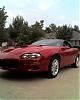
here is a post i saved when the tv3 was made i was stuck on this cam for about 2 years but then when i finally got a cam i decided to go to a custom cam
"The problem with camshafts is that they're completely subjective. What one thinks is perfect another thinks is too big, too small, too much, not enough, etc. Below are the specs on both camshafts:
Torquer v.2: 232/234, .595"/.598", 112 or 113 LSA standard
Torquer v.3: 231/234, .643"/.598", 111 LSA standard
There were a few goals in designing the T3 cam:
1. better low-end and mid-range compared to the T2
2. more aggressive ramp rate on the intake for better power
3. all around great street/strip cam that is very driveable with a good tune
As you can see, the T3 does have one less degree of duration @ .050" on the intake. It's a more aggressive lobe that ramps up faster vs. the lobe on the T2. It provides greater net lift and allows for quicker opening and closing of the intake valve. Again, whether or not a cam works great in the mid-range is dependent on what you're comparing it to. A smaller cam like our 224R or 228R will provide you with a little more low-end power, but it won't make as much peak power. The T2 camshaft was designed to give customers the ability to make some great power without going too big on cam and without feeling like they didn't go big enough. The T3 was just a revision of the T2. With all other variables of a camshaft held constant, a tighter (i.e. lower numerically) LSA with added advance will help low-end and mid-range power. You can change just these two aspects and completely change the characteristics of how well a camshaft works. The goal is to find the happy medium where the cam works well and makes great power without falling off too quick up top or completely lacking any oomph down low. Some of these issues cannot be 100% solved with adjusting LSA and ICL. A lot of duration relative to the size of the engine is still going to have certain characteristics that go along with it, no matter the LSA or ICL.
The net result is that the T2 and T3 will make comparable power. The T3 is going to provide you with a little more low-end and mid-range power vs. the T2, and it also gives you the capability to use a little more of the flow potential of a good set of ported heads.
Trevor
Texas Speed & Performance"
"The problem with camshafts is that they're completely subjective. What one thinks is perfect another thinks is too big, too small, too much, not enough, etc. Below are the specs on both camshafts:
Torquer v.2: 232/234, .595"/.598", 112 or 113 LSA standard
Torquer v.3: 231/234, .643"/.598", 111 LSA standard
There were a few goals in designing the T3 cam:
1. better low-end and mid-range compared to the T2
2. more aggressive ramp rate on the intake for better power
3. all around great street/strip cam that is very driveable with a good tune
As you can see, the T3 does have one less degree of duration @ .050" on the intake. It's a more aggressive lobe that ramps up faster vs. the lobe on the T2. It provides greater net lift and allows for quicker opening and closing of the intake valve. Again, whether or not a cam works great in the mid-range is dependent on what you're comparing it to. A smaller cam like our 224R or 228R will provide you with a little more low-end power, but it won't make as much peak power. The T2 camshaft was designed to give customers the ability to make some great power without going too big on cam and without feeling like they didn't go big enough. The T3 was just a revision of the T2. With all other variables of a camshaft held constant, a tighter (i.e. lower numerically) LSA with added advance will help low-end and mid-range power. You can change just these two aspects and completely change the characteristics of how well a camshaft works. The goal is to find the happy medium where the cam works well and makes great power without falling off too quick up top or completely lacking any oomph down low. Some of these issues cannot be 100% solved with adjusting LSA and ICL. A lot of duration relative to the size of the engine is still going to have certain characteristics that go along with it, no matter the LSA or ICL.
The net result is that the T2 and T3 will make comparable power. The T3 is going to provide you with a little more low-end and mid-range power vs. the T2, and it also gives you the capability to use a little more of the flow potential of a good set of ported heads.
Trevor
Texas Speed & Performance"