ARP head studs 12 point vs. hex nut?



 ARP head studs 12 point vs. hex nut?
 I'm looking at getting some arp studs. I noticed there is an option for 12 point nuts for like $30 more. What's so great about these over the standard hex nut?





Originally Posted by davered00ss
I would think the 6 pt with a 6 pt socket would be less likely to strip.

The 12pt socket on a 12pt fastener is the least likely to slip.
The above post about 'gripping only the corners" is referring to using a 12pt socket on a 6pt hex fastener. On a hex head fastener, a 6pt socket is the preferred tool, no doubt. A 12pt socket will fit a hex head of course, but that doesn't make it the best tool for the job either.
It's like a screw head...which do you find slips and strips out the head the least...a slotted, a phillips, allen, or a torx?
Correct answer is the torx, much more gripping surfaces makes it less likely to slip and strip the fastener head.
This is why a 12pt nut used with a 12pt socket is "better"...although for the small torque loads these head bolts see, the chances of rounding off a hex head using a 6pt socket is nil. The only reason the 12pt costs more is it's more expensive to produce...it's not IMO any superior in actual usage than the hex nut stud kit is.

The above post about 'gripping only the corners" is referring to using a 12pt socket on a 6pt hex fastener. On a hex head fastener, a 6pt socket is the preferred tool, no doubt. A 12pt socket will fit a hex head of course, but that doesn't make it the best tool for the job either.
It's like a screw head...which do you find slips and strips out the head the least...a slotted, a phillips, allen, or a torx?
Correct answer is the torx, much more gripping surfaces makes it less likely to slip and strip the fastener head.
This is why a 12pt nut used with a 12pt socket is "better"...although for the small torque loads these head bolts see, the chances of rounding off a hex head using a 6pt socket is nil. The only reason the 12pt costs more is it's more expensive to produce...it's not IMO any superior in actual usage than the hex nut stud kit is.
Originally Posted by Thimble
The 12pt socket on a 12pt fastener is the least likely to slip.
The above post about 'gripping only the corners" is referring to using a 12pt socket on a 6pt hex fastener. On a hex head fastener, a 6pt socket is the preferred tool, no doubt. A 12pt socket will fit a hex head of course, but that doesn't make it the best tool for the job either.
The above post about 'gripping only the corners" is referring to using a 12pt socket on a 6pt hex fastener. On a hex head fastener, a 6pt socket is the preferred tool, no doubt. A 12pt socket will fit a hex head of course, but that doesn't make it the best tool for the job either.
Trending Topics

Registered User
Joined: Dec 2010
Posts: 2
Likes: 0
There are 2 arguments going on here. The premise of each was not clearly stated, but both are correct. The heading or topic should read "A 6 point versus a 12 point bolt & nut with a 12 point socket.
1. The number of points that a socket has refers to the number of angles inside the socket. 90% of bolts that you will encounter have hexagon shape or six angled sides. The 6 point socket or hex socket matches the angles and face of these bolts exactly. Because of the exact match, the 6 point socket provides better torque and control over a 12 pt socket or double hex socket. Because of the firm grasp of the socket, the 6 pt socket is far less likely to strip or damage (round off) a fastener than the 12 pointed counter part. Especially use a 6 pt socket on tightly torqued or rusted nuts.
The 12 point socket or double hex socket has the obvious 12 faces. Each angle is half that of the angle in a 6 point socket. This makes "getting on" a bolt far easier by giving the socket and bolt 6 more chances to meet up. The downside to this configuration is that each face of a 6 point nut or bold is not exactly met by the socket. This can lead to stripping or damaging the nut or bolt. There are 12 point fasteners available which can only be turned using the 12 point socket. While these are not common, they can be found in some automotive repair. Another advantage to the 12 point socket is the ability to fit a square bolt ( a bolt with a square or 4 sided head). While these are somewhat rare, if your application may include square bolts, a 12 point socket set my prove to be quite valuable.
Even as quoted in wiki (http://en.wikipedia.org/wiki/Socket_wrench),
"Modern nuts and bolt heads are made with hexagonal gripping surfaces and as such limit the number of positions a wrench can adopt when placed over them. Sockets are produced in 6-point (hexagonal) and 12-point (double-hexagonal) configurations. 12-point sockets can be used on square nuts and fasteners, and also offer double the amount of starting points, but greatly increase the chance of rounding or slipping off a nut or fastener. In general, 12-point sockets, being faster and more versatile, are used in general purpose applications, while six-point sockets are used where greater torque values are needed."
However, these arguments are with regards to the 6 point bolt and nut only, with a 12 point socket. The value of this combination is the convenience of use in tight places.
2. When the 12 point socket is used with the 12 point bolt or nut, then the 12 point system is better, also as stated earlier above. This idea is similar to using a 30 spline axle over a 26 spline setup in the differential cage.
1. The number of points that a socket has refers to the number of angles inside the socket. 90% of bolts that you will encounter have hexagon shape or six angled sides. The 6 point socket or hex socket matches the angles and face of these bolts exactly. Because of the exact match, the 6 point socket provides better torque and control over a 12 pt socket or double hex socket. Because of the firm grasp of the socket, the 6 pt socket is far less likely to strip or damage (round off) a fastener than the 12 pointed counter part. Especially use a 6 pt socket on tightly torqued or rusted nuts.
The 12 point socket or double hex socket has the obvious 12 faces. Each angle is half that of the angle in a 6 point socket. This makes "getting on" a bolt far easier by giving the socket and bolt 6 more chances to meet up. The downside to this configuration is that each face of a 6 point nut or bold is not exactly met by the socket. This can lead to stripping or damaging the nut or bolt. There are 12 point fasteners available which can only be turned using the 12 point socket. While these are not common, they can be found in some automotive repair. Another advantage to the 12 point socket is the ability to fit a square bolt ( a bolt with a square or 4 sided head). While these are somewhat rare, if your application may include square bolts, a 12 point socket set my prove to be quite valuable.
Even as quoted in wiki (http://en.wikipedia.org/wiki/Socket_wrench),
"Modern nuts and bolt heads are made with hexagonal gripping surfaces and as such limit the number of positions a wrench can adopt when placed over them. Sockets are produced in 6-point (hexagonal) and 12-point (double-hexagonal) configurations. 12-point sockets can be used on square nuts and fasteners, and also offer double the amount of starting points, but greatly increase the chance of rounding or slipping off a nut or fastener. In general, 12-point sockets, being faster and more versatile, are used in general purpose applications, while six-point sockets are used where greater torque values are needed."
However, these arguments are with regards to the 6 point bolt and nut only, with a 12 point socket. The value of this combination is the convenience of use in tight places.
2. When the 12 point socket is used with the 12 point bolt or nut, then the 12 point system is better, also as stated earlier above. This idea is similar to using a 30 spline axle over a 26 spline setup in the differential cage.
Last edited by JamesPDX; Dec 16, 2010 at 04:52 AM.



Joined: Aug 2007
Posts: 24,241
Likes: 89
From: Turnin' Wrenches Infractions: 005
A traditional 12 point socket does not fit the ARP nuts very well. I tried using this:
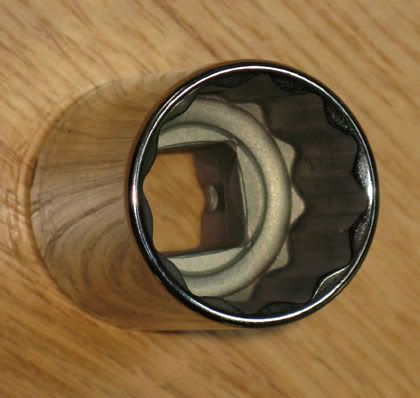
And then I switched to this, and it was way better, its a spline drive:
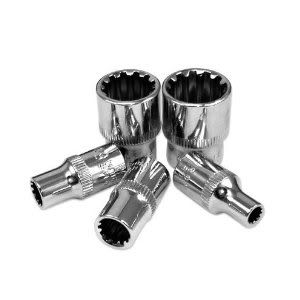
And then I switched to this, and it was way better, its a spline drive:


I think one of the main reasons for a 12pt nut is that a 12pt nut has a smaller outside diameter compared to a 6pt nut, so a 12pt nut will fit between larger valve springs (easier) and allow a smaller size socket versus the 6pt nut for the same stud. Does that make sense?