










L92/L76 Intake Manifold Flow Comparison
 L92/L76 Intake Manifold Flow Comparison
 To help clear up some confusion regarding the L92 (truck) and L76 (car) intake manifolds I decided I'd start this thread up to shed some light on both the manifold's flow capabilities. The L76 intakes are more familiar looking than the L92's so I'm including some pics of the L92 to help everyone get an idea of what the truck intake looks like.
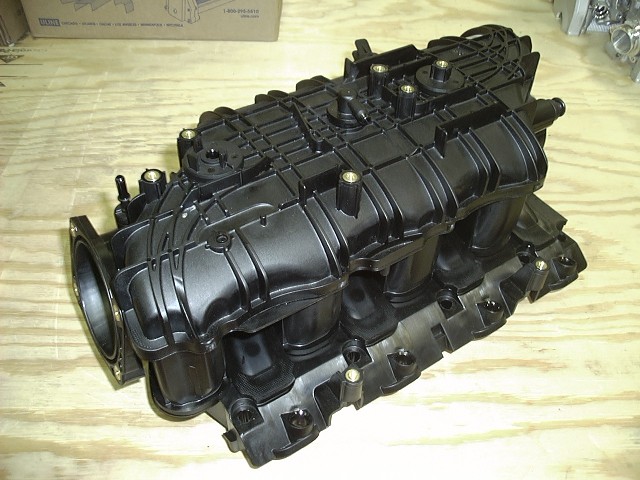
Here’s a couple of images of the L92 Cadillac Escalade intake.
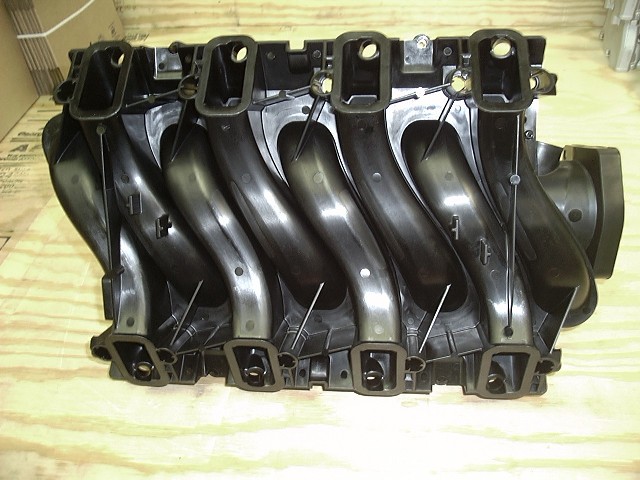
Here's a shot of the underside.
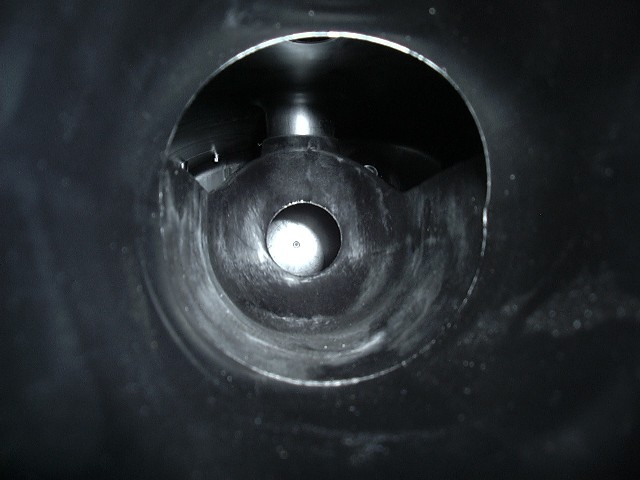
And a shot looking just past the inside of the ttb flange.
I did a recent flow comparison of both intake manifolds bolted onto an OEM stock and CNC ported L92 head and thought that it would be of some interest here. The part number on the L92 intake is 25379711 and the L76 has part number 12590124.
Port 1 is a base line test on a stock untouched L92 head (#823 cast). Port 2 is the same stock port with the L92 intake manifold bolted up. And Port 3 has the L76 intake bolted up. I used a stock OEM intake valve in the stock head tests and a stainless aftermarket valve in the CNC head test. The same 4.155” test bore was used in all tests.
Stock head with OEM valves:
Lift____.100”_.150”__.200”_.250”_.300”_.350”_.400” _.450”_.500”_.550”_.600”_.650”
Port 1_ 76.3_113.1_155.7_191.1_225.5_252.5_276.3_296.1_312 .0_322.4_311.9_310.3
Port 2_ 73.1_113.9_149.9_180.6_203.1_221.9_237.1_246.7_255 .3_259.1_259.8_260.4
Port 3_ 72.1_111.3_150.8_182.8_206.8_231.9_249.2_265.5_278 .3_286.6_293.0_298.6
As you can see flow through the L92 intake is pretty limited compared to the L76, while the car intake holds up reasonably well on the stock head.
Port 4 is a baseline test on one of our typical Stage 2 CNC intake ports. Port 5 is the ported port with the L92 intake and Port 6 is the L76 intake. The same manifolds were used in both tests as were the same runners on each manifold. I tested the #3 cylinder (second back on the driver’s side) and I plugged off all runners and vacuum ports to force airflow through the ttb flange. I did not have a ttb bolted on.
WCCH Stage 2 CNC head with stainless valves:
Lift____.100”_.150”__.200”_.250”_.300”_.350”_.400” _.450”_.500”_.550”_.600”_.650”
Port 4_ 73.9_110.7_146.7_188.2_220.6_252.7_278.9_298.8_322 .3_337.3_352.2_361.5
Port 5_ 70.8_108.1_143.8_178.9_202.5_221.4_236.6_247.6_257 .4_264.5_266.3_279.1
Port 6_ 72.7_108.3_143.8_181.8_209.7_233.6_252.6_271.6_286 .4_300.0_309.8_296.8
This is definitely worse than the differential flow loss of an LS7 head and intake manifold (we saw a 370+cfm port and 330cfm with the intake bolted up). The L76 intake pretty much looks like a standard LS2 manifold up to the last 3 or 4 inches form the cylinder head flange. The ttb and plenum appears very similar to the OEM 90mm cathedral intake. I roughly measured the L76 runner centerline at 10.0". I couldn't measure the L92 runner length due to the plenum layout.
The L92 manifold design limits high lift airflow and I can't help but wonder if this was done by design. Speculation here: I don't think GM wanted to deal with drivetrain warranty issues in the truck line therefore they choked off the high peak intake flow. It allows the engine to make nice low and mid range torque and produce the 400+hp goal. Nice work GM.
At the moment, high performance intake manifold options for EFI applications are growing for the cathedral heads. To date 6 companies mass manufacture high performance intakes for cathedral heads and only one makes an L92 and it’s a carb style manifold and is not exactly a mod friendly setup for late model cars. So, it looks like engine builds using the L92 heads have some horsepower room to grow when some of the manifold manufacturers come on board. At the moment it seems the cylinder heads have outpaced the intake systems.
One thing’s for sure, we live in great times to be a GM hot rodder.
Richard
Here’s a couple of images of the L92 Cadillac Escalade intake.
Here's a shot of the underside.
And a shot looking just past the inside of the ttb flange.
I did a recent flow comparison of both intake manifolds bolted onto an OEM stock and CNC ported L92 head and thought that it would be of some interest here. The part number on the L92 intake is 25379711 and the L76 has part number 12590124.
Port 1 is a base line test on a stock untouched L92 head (#823 cast). Port 2 is the same stock port with the L92 intake manifold bolted up. And Port 3 has the L76 intake bolted up. I used a stock OEM intake valve in the stock head tests and a stainless aftermarket valve in the CNC head test. The same 4.155” test bore was used in all tests.
Stock head with OEM valves:
Lift____.100”_.150”__.200”_.250”_.300”_.350”_.400” _.450”_.500”_.550”_.600”_.650”
Port 1_ 76.3_113.1_155.7_191.1_225.5_252.5_276.3_296.1_312 .0_322.4_311.9_310.3
Port 2_ 73.1_113.9_149.9_180.6_203.1_221.9_237.1_246.7_255 .3_259.1_259.8_260.4
Port 3_ 72.1_111.3_150.8_182.8_206.8_231.9_249.2_265.5_278 .3_286.6_293.0_298.6
As you can see flow through the L92 intake is pretty limited compared to the L76, while the car intake holds up reasonably well on the stock head.
Port 4 is a baseline test on one of our typical Stage 2 CNC intake ports. Port 5 is the ported port with the L92 intake and Port 6 is the L76 intake. The same manifolds were used in both tests as were the same runners on each manifold. I tested the #3 cylinder (second back on the driver’s side) and I plugged off all runners and vacuum ports to force airflow through the ttb flange. I did not have a ttb bolted on.
WCCH Stage 2 CNC head with stainless valves:
Lift____.100”_.150”__.200”_.250”_.300”_.350”_.400” _.450”_.500”_.550”_.600”_.650”
Port 4_ 73.9_110.7_146.7_188.2_220.6_252.7_278.9_298.8_322 .3_337.3_352.2_361.5
Port 5_ 70.8_108.1_143.8_178.9_202.5_221.4_236.6_247.6_257 .4_264.5_266.3_279.1
Port 6_ 72.7_108.3_143.8_181.8_209.7_233.6_252.6_271.6_286 .4_300.0_309.8_296.8
This is definitely worse than the differential flow loss of an LS7 head and intake manifold (we saw a 370+cfm port and 330cfm with the intake bolted up). The L76 intake pretty much looks like a standard LS2 manifold up to the last 3 or 4 inches form the cylinder head flange. The ttb and plenum appears very similar to the OEM 90mm cathedral intake. I roughly measured the L76 runner centerline at 10.0". I couldn't measure the L92 runner length due to the plenum layout.
The L92 manifold design limits high lift airflow and I can't help but wonder if this was done by design. Speculation here: I don't think GM wanted to deal with drivetrain warranty issues in the truck line therefore they choked off the high peak intake flow. It allows the engine to make nice low and mid range torque and produce the 400+hp goal. Nice work GM.
At the moment, high performance intake manifold options for EFI applications are growing for the cathedral heads. To date 6 companies mass manufacture high performance intakes for cathedral heads and only one makes an L92 and it’s a carb style manifold and is not exactly a mod friendly setup for late model cars. So, it looks like engine builds using the L92 heads have some horsepower room to grow when some of the manifold manufacturers come on board. At the moment it seems the cylinder heads have outpaced the intake systems.
One thing’s for sure, we live in great times to be a GM hot rodder.
Richard
Originally Posted by Richard@WCCH
So, it looks like engine builds using the L92 heads have some horsepower room to grow when some of the manifold manufacturers come on board. At the moment it seems the cylinder heads have outpaced the intake systems.
One thing’s for sure, we live in great times to be a GM hot rodder.
Richard
One thing’s for sure, we live in great times to be a GM hot rodder.
Richard
BTW: Your Stage 2 L92 heads are SWEET!!!
Originally Posted by Richard@WCCH
To help clear up some confusion regarding the L92 (truck) and L76 (car) intake manifolds I decided I'd start this thread up to shed some light on both the manifold's flow capabilities. The L76 intakes are more familiar looking than the L92's so I'm including some pics of the L92 to help everyone get an idea of what the truck intake looks like.
Here’s a couple of images of the L92 Cadillac Escalade intake.
Here's a shot of the underside.
And a shot looking just past the inside of the ttb flange.
I did a recent flow comparison of both intake manifolds bolted onto an OEM stock and CNC ported L92 head and thought that it would be of some interest here. The part number on the L92 intake is 25379711 and the L76 has part number 12590124.
Port 1 is a base line test on a stock untouched L92 head (#823 cast). Port 2 is the same stock port with the L92 intake manifold bolted up. And Port 3 has the L76 intake bolted up. I used a stock OEM intake valve in the stock head tests and a stainless aftermarket valve in the CNC head test. The same 4.155” test bore was used in all tests.
Stock head with OEM valves:
Lift____.100”_.150”__.200”_.250”_.300”_.350”_.400” _.450”_.500”_.550”_.600”_.650”
Port 1_ 76.3_113.1_155.7_191.1_225.5_252.5_276.3_296.1_312 .0_322.4_311.9_310.3
Port 2_ 73.1_113.9_149.9_180.6_203.1_221.9_237.1_246.7_255 .3_259.1_259.8_260.4
Port 3_ 72.1_111.3_150.8_182.8_206.8_231.9_249.2_265.5_278 .3_286.6_293.0_298.6
As you can see flow through the L92 intake is pretty limited compared to the L76, while the car intake holds up reasonably well on the stock head.
Port 4 is a baseline test on one of our typical Stage 2 CNC intake ports. Port 5 is the ported port with the L92 intake and Port 6 is the L76 intake. The same manifolds were used in both tests as were the same runners on each manifold. I tested the #3 cylinder (second back on the driver’s side) and I plugged off all runners and vacuum ports to force airflow through the ttb flange. I did not have a ttb bolted on.
WCCH Stage 2 CNC head with stainless valves:
Lift____.100”_.150”__.200”_.250”_.300”_.350”_.400” _.450”_.500”_.550”_.600”_.650”
Port 4_ 73.9_110.7_146.7_188.2_220.6_252.7_278.9_298.8_322 .3_337.3_352.2_361.5
Port 5_ 70.8_108.1_143.8_178.9_202.5_221.4_236.6_247.6_257 .4_264.5_266.3_279.1
Port 6_ 72.7_108.3_143.8_181.8_209.7_233.6_252.6_271.6_286 .4_300.0_309.8_296.8
This is definitely worse than the differential flow loss of an LS7 head and intake manifold (we saw a 370+cfm port and 330cfm with the intake bolted up). The L76 intake pretty much looks like a standard LS2 manifold up to the last 3 or 4 inches form the cylinder head flange. The ttb and plenum appears very similar to the OEM 90mm cathedral intake. I roughly measured the L76 runner centerline at 10.0". I couldn't measure the L92 runner length due to the plenum layout.
The L92 manifold design limits high lift airflow and I can't help but wonder if this was done by design. Speculation here: I don't think GM wanted to deal with drivetrain warranty issues in the truck line therefore they choked off the high peak intake flow. It allows the engine to make nice low and mid range torque and produce the 400+hp goal. Nice work GM.
At the moment, high performance intake manifold options for EFI applications are growing for the cathedral heads. To date 6 companies mass manufacture high performance intakes for cathedral heads and only one makes an L92 and it’s a carb style manifold and is not exactly a mod friendly setup for late model cars. So, it looks like engine builds using the L92 heads have some horsepower room to grow when some of the manifold manufacturers come on board. At the moment it seems the cylinder heads have outpaced the intake systems.
One thing’s for sure, we live in great times to be a GM hot rodder.
Richard
Here’s a couple of images of the L92 Cadillac Escalade intake.
Here's a shot of the underside.
And a shot looking just past the inside of the ttb flange.
I did a recent flow comparison of both intake manifolds bolted onto an OEM stock and CNC ported L92 head and thought that it would be of some interest here. The part number on the L92 intake is 25379711 and the L76 has part number 12590124.
Port 1 is a base line test on a stock untouched L92 head (#823 cast). Port 2 is the same stock port with the L92 intake manifold bolted up. And Port 3 has the L76 intake bolted up. I used a stock OEM intake valve in the stock head tests and a stainless aftermarket valve in the CNC head test. The same 4.155” test bore was used in all tests.
Stock head with OEM valves:
Lift____.100”_.150”__.200”_.250”_.300”_.350”_.400” _.450”_.500”_.550”_.600”_.650”
Port 1_ 76.3_113.1_155.7_191.1_225.5_252.5_276.3_296.1_312 .0_322.4_311.9_310.3
Port 2_ 73.1_113.9_149.9_180.6_203.1_221.9_237.1_246.7_255 .3_259.1_259.8_260.4
Port 3_ 72.1_111.3_150.8_182.8_206.8_231.9_249.2_265.5_278 .3_286.6_293.0_298.6
As you can see flow through the L92 intake is pretty limited compared to the L76, while the car intake holds up reasonably well on the stock head.
Port 4 is a baseline test on one of our typical Stage 2 CNC intake ports. Port 5 is the ported port with the L92 intake and Port 6 is the L76 intake. The same manifolds were used in both tests as were the same runners on each manifold. I tested the #3 cylinder (second back on the driver’s side) and I plugged off all runners and vacuum ports to force airflow through the ttb flange. I did not have a ttb bolted on.
WCCH Stage 2 CNC head with stainless valves:
Lift____.100”_.150”__.200”_.250”_.300”_.350”_.400” _.450”_.500”_.550”_.600”_.650”
Port 4_ 73.9_110.7_146.7_188.2_220.6_252.7_278.9_298.8_322 .3_337.3_352.2_361.5
Port 5_ 70.8_108.1_143.8_178.9_202.5_221.4_236.6_247.6_257 .4_264.5_266.3_279.1
Port 6_ 72.7_108.3_143.8_181.8_209.7_233.6_252.6_271.6_286 .4_300.0_309.8_296.8
This is definitely worse than the differential flow loss of an LS7 head and intake manifold (we saw a 370+cfm port and 330cfm with the intake bolted up). The L76 intake pretty much looks like a standard LS2 manifold up to the last 3 or 4 inches form the cylinder head flange. The ttb and plenum appears very similar to the OEM 90mm cathedral intake. I roughly measured the L76 runner centerline at 10.0". I couldn't measure the L92 runner length due to the plenum layout.
The L92 manifold design limits high lift airflow and I can't help but wonder if this was done by design. Speculation here: I don't think GM wanted to deal with drivetrain warranty issues in the truck line therefore they choked off the high peak intake flow. It allows the engine to make nice low and mid range torque and produce the 400+hp goal. Nice work GM.
At the moment, high performance intake manifold options for EFI applications are growing for the cathedral heads. To date 6 companies mass manufacture high performance intakes for cathedral heads and only one makes an L92 and it’s a carb style manifold and is not exactly a mod friendly setup for late model cars. So, it looks like engine builds using the L92 heads have some horsepower room to grow when some of the manifold manufacturers come on board. At the moment it seems the cylinder heads have outpaced the intake systems.
One thing’s for sure, we live in great times to be a GM hot rodder.
Richard
Trending Topics
Originally Posted by Forteen3GT
I would love to see you do the same with the GMPP Carb Style piece.
Thanx.
LS1 Tech Stories
The Best V8 Stories One Small Block at Time

Gas Monkey Built a 6-Wheel Ferrari Testarossa With a Corvette LT4 Engine
Verdad Gallardo
7 Most Reliable High-Performance Engines GM Has Ever Built
Verdad Gallardo
Amazing '71 Camaro Restomod Is Modern Muscle Car Under the Skin
Verdad Gallardo
6 Common C5 Corvette Failures and What's Involved In Repairing Them
Pouria Savadkouei
Retro Modern Bandit Pontiac Trans AM Comes With Burt Reynolds' Autograph
Verdad Gallardo
Top 10 Greatest Cadillac V Series Performance Models Ever, Ranked
Pouria Savadkouei
Top 10 Most Powerful Chevy Trucks Ever Made!

Hennessey's New Supercharged Silverado ZR2 Has 700 HP
Verdad Gallardo
Coachbuilt N2A Anteros Is an LS2-Powered C6 Corvette In Italian Clothes
Verdad Gallardo I have a couple of customers who are going to use a carb style manifold. I'm not sure how their results will correlate to the late model cars as one is going to be a big turbo setup and the other will be a swap into an early year car. As of now I don't have a carb style intake but when one does show up I'll add the test to the results here.
Justin: We sell our L92 head package for $1585.00 per pair complete. It includes stainless valves and a dual spring kit. Let me know if you'd like to order a set.
Richard
Justin: We sell our L92 head package for $1585.00 per pair complete. It includes stainless valves and a dual spring kit. Let me know if you'd like to order a set.
Richard
Originally Posted by Richard@WCCH
I have a couple of customers who are going to use a carb style manifold. I'm not sure how their results will correlate to the late model cars as one is going to be a big turbo setup and the other will be a swap into an early year car. As of now I don't have a carb style intake but when one does show up I'll add the test to the results here.
Richard
Richard


Sounds like a good price Richard I'll be giving you a call for more info when it comes time to actually buying a set.
Originally Posted by Richard@WCCH
Justin: We sell our L92 head package for $1585.00 per pair complete. It includes stainless valves and a dual spring kit. Let me know if you'd like to order a set.
Richard
Richard
Originally Posted by Richard@WCCH
Justin: We sell our L92 head package for $1585.00 per pair complete. It includes stainless valves and a dual spring kit. Let me know if you'd like to order a set.
Richard
Richard

Do you think these can be used on a 403 with a baby cam and make 500RWHP that drives like stock?

Thanks Richard, that is proly why I start dropping off around 5700. I was wondering if it was that intake. Atleast I know there is alot more in her once those aftermarket intakes are produced.
Originally Posted by WKMCD
SWEET DEAL.....
Do you think these can be used on a 403 with a baby cam and make 500RWHP that drives like stock?
Do you think these can be used on a 403 with a baby cam and make 500RWHP that drives like stock?

Originally Posted by 03 BUSA
Thanks Richard, that is proly why I start dropping off around 5700. I was wondering if it was that intake. Atleast I know there is alot more in her once those aftermarket intakes are produced.
Richard

Adkoonerstrator
iTrader: (4)
Joined: Nov 2001
Posts: 21,420
Likes: 0
From: Deep in the seedy underworld of Koonerville
Awesome info Richard.
What is the limiting factor of these intake manifolds do you think, plenum volume, runner size, etc? I think it's pretty clear the layout of the L92 is probably it's limiting factor up top but, what about the car style intakes? It's always something I've wondered about.
What is the limiting factor of these intake manifolds do you think, plenum volume, runner size, etc? I think it's pretty clear the layout of the L92 is probably it's limiting factor up top but, what about the car style intakes? It's always something I've wondered about.

Teching In
Joined: Dec 2006
Posts: 35
Likes: 0
Outstanding, objective information. Thank you. I can't help but think you guys are spot on regarding the intake's "performance" and it being tailored to the intent of the engine by GM. Makes perfect sense, their engineers aren't dummies, nor or they building hot rods. It almost makes me wonder though, do you think there was some "underground" activity in the design of the heads? Sounds silly, but I think it would be just too cool if they conspired to make the heads far "better" than the intakes, knowing they'd have a terrific home in the budget hot rod community!? Probably not, I guess I am just stoked to be getting a set of these heads.
Mark
Mark
Originally Posted by XLR8NSS
Awesome info Richard.
What is the limiting factor of these intake manifolds do you think, plenum volume, runner size, etc? I think it's pretty clear the layout of the L92 is probably it's limiting factor up top but, what about the car style intakes? It's always something I've wondered about.
What is the limiting factor of these intake manifolds do you think, plenum volume, runner size, etc? I think it's pretty clear the layout of the L92 is probably it's limiting factor up top but, what about the car style intakes? It's always something I've wondered about.
What needs to be done is to design something a bit closer to the LS7 manifold. They have a shorter runner that doesn't curl around so sharply at the plenum entrance thus they can keep pace with higher port flow better than the L76 intake. Still not the ultimate design, but much improved.
One things for sure, the L92 heads are badly in need of a high performance oriented intake.
Richard