





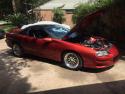




L92 Stroker new build

TECH Addict
Joined: Sep 2010
Posts: 2,898
Likes: 467

OP.
Don't fit this camshaft.
I thought your engine was a 6.0. Not a 416.
For an engine going in a heavy truck you need to focus on low and mid range torque.
You need a camshaft with an IVC of around 46 or else the engine will fall on it's face in the top end.
That 219/235 camshaft has good valve events for a stock 6.0 displacement.
For a 416 it won't work good.
The IVC is only at 38 degrees.
I would recommend something with low overlap, appropriate valve events with the overlap centred.
Also a lower split to enhance the torque and responsiveness in the low-mid range RPM.
226/238 116 LSA +3
228/240 115LSA +3
230/242 114 LSA +3
Those three cams have the same valve events.
Only the overlap is different. Zero, Four and Eight degrees.
Don't fit this camshaft.
I thought your engine was a 6.0. Not a 416.
For an engine going in a heavy truck you need to focus on low and mid range torque.
You need a camshaft with an IVC of around 46 or else the engine will fall on it's face in the top end.
That 219/235 camshaft has good valve events for a stock 6.0 displacement.
For a 416 it won't work good.
The IVC is only at 38 degrees.
I would recommend something with low overlap, appropriate valve events with the overlap centred.
Also a lower split to enhance the torque and responsiveness in the low-mid range RPM.
226/238 116 LSA +3
228/240 115LSA +3
230/242 114 LSA +3
Those three cams have the same valve events.
Only the overlap is different. Zero, Four and Eight degrees.
Last edited by bortous; Jun 6, 2020 at 11:54 AM.
OP.
Don't fit this camshaft.
I thought your engine was a 6.0. Not a 416.
For an engine going in a heavy truck you need to focus on low and mid range torque.
You need a camshaft with an IVC of around 46 or else the engine will fall on it's face in the top end.
That 219/235 camshaft has good valve events for a stock 6.0 displacement.
For a 416 it won't work good.
The IVC is only at 38 degrees.
I would recommend something with low overlap, appropriate valve events with the overlap centred.
Also a lower split to enhance the torque and responsiveness in the low-mid range RPM.
226/238 116 LSA +3
228/240 115LSA +3
230/242 114 LSA +3
Those three cams have the same valve events.
Only the overlap is different. Zero, Four and Eight degrees.
Don't fit this camshaft.
I thought your engine was a 6.0. Not a 416.
For an engine going in a heavy truck you need to focus on low and mid range torque.
You need a camshaft with an IVC of around 46 or else the engine will fall on it's face in the top end.
That 219/235 camshaft has good valve events for a stock 6.0 displacement.
For a 416 it won't work good.
The IVC is only at 38 degrees.
I would recommend something with low overlap, appropriate valve events with the overlap centred.
Also a lower split to enhance the torque and responsiveness in the low-mid range RPM.
226/238 116 LSA +3
228/240 115LSA +3
230/242 114 LSA +3
Those three cams have the same valve events.
Only the overlap is different. Zero, Four and Eight degrees.
Just saying my thoughts.
TECH Addict
Joined: Sep 2010
Posts: 2,898
Likes: 467
When I saw L92 I thought 6.0.
I mentioned that in my post.
It was an error on my part.
And what is bad about the info I give?
With this thread, the OP is clearly using a camshaft with valve events that are not suitable for his engine size.
I'm sure I am not the only one who can see that.
I could just say good luck and it will turn out well but it's not really genuine.
This site is for sharing information, opinions, and to give advice.
I have received plenty of advice, and opinions myself and it's up to me to listen or consider.
The same goes for everyone else.
Hopefully that clears it up for you sir.

Thread Starter
Staging Lane
Joined: Feb 2020
Posts: 60
Likes: 12
As the OP, I made this cam selection based off of the advice of a few companies and then after speaking to a few tech guys at comp cams. This cam is designed for the 1,500-6,700 RPM range. My yukon will most likely never go above 6500.
The L92 in the yukon is a 6.2 not a 6.0.
Can someone explain how this is a baby cam?
Also why are these valve events not suitable for this engine?
Not discrediting anyone but I'd like to have faith in the cam manufacturer being able to help with the best selection.
The L92 in the yukon is a 6.2 not a 6.0.
Can someone explain how this is a baby cam?
Also why are these valve events not suitable for this engine?
Not discrediting anyone but I'd like to have faith in the cam manufacturer being able to help with the best selection.
Thread Starter
Staging Lane
Joined: Feb 2020
Posts: 60
Likes: 12
OP.
Don't fit this camshaft.
I thought your engine was a 6.0. Not a 416.
For an engine going in a heavy truck you need to focus on low and mid range torque.
You need a camshaft with an IVC of around 46 or else the engine will fall on it's face in the top end.
That 219/235 camshaft has good valve events for a stock 6.0 displacement.
For a 416 it won't work good.
The IVC is only at 38 degrees.
I would recommend something with low overlap, appropriate valve events with the overlap centred.
Also a lower split to enhance the torque and responsiveness in the low-mid range RPM.
226/238 116 LSA +3
228/240 115LSA +3
230/242 114 LSA +3
Those three cams have the same valve events.
Only the overlap is different. Zero, Four and Eight degrees.
Don't fit this camshaft.
I thought your engine was a 6.0. Not a 416.
For an engine going in a heavy truck you need to focus on low and mid range torque.
You need a camshaft with an IVC of around 46 or else the engine will fall on it's face in the top end.
That 219/235 camshaft has good valve events for a stock 6.0 displacement.
For a 416 it won't work good.
The IVC is only at 38 degrees.
I would recommend something with low overlap, appropriate valve events with the overlap centred.
Also a lower split to enhance the torque and responsiveness in the low-mid range RPM.
226/238 116 LSA +3
228/240 115LSA +3
230/242 114 LSA +3
Those three cams have the same valve events.
Only the overlap is different. Zero, Four and Eight degrees.
LS1 Tech Stories
The Best V8 Stories One Small Block at Time

Gas Monkey Built a 6-Wheel Ferrari Testarossa With a Corvette LT4 Engine
Verdad Gallardo
7 Most Reliable High-Performance Engines GM Has Ever Built
Verdad Gallardo
Amazing '71 Camaro Restomod Is Modern Muscle Car Under the Skin
Verdad Gallardo
6 Common C5 Corvette Failures and What's Involved In Repairing Them
Pouria Savadkouei
Retro Modern Bandit Pontiac Trans AM Comes With Burt Reynolds' Autograph
Verdad Gallardo
Top 10 Greatest Cadillac V Series Performance Models Ever, Ranked
Pouria Savadkouei
Top 10 Most Powerful Chevy Trucks Ever Made!

Hennessey's New Supercharged Silverado ZR2 Has 700 HP
Verdad Gallardo
Coachbuilt N2A Anteros Is an LS2-Powered C6 Corvette In Italian Clothes
Verdad Gallardo
TECH Senior Member


Joined: Jun 2016
Posts: 22,298
Likes: 3,619
From: Central Cal.
Ignore them. They can't comprehend anyone using a cam with less than 230 degrees of intake duration.
You specified 1500-6700 rev range, and you got a cam that will perform nicely in that range, while still being civilized at very low RPM.
You will have plenty of low end torque because of the large displacement.
It seems some around here can't comprehend what works in a truck, which is what a Yukon is.
You specified 1500-6700 rev range, and you got a cam that will perform nicely in that range, while still being civilized at very low RPM.
You will have plenty of low end torque because of the large displacement.
It seems some around here can't comprehend what works in a truck, which is what a Yukon is.

Thread Starter
Staging Lane
Joined: Feb 2020
Posts: 60
Likes: 12
Ignore them. They can't comprehend anyone using a cam with less than 230 degrees of intake duration.
You specified 1500-6700 rev range, and you got a cam that will perform nicely in that range, while still being civilized at very low RPM.
You will have plenty of low end torque because of the large displacement.
It seems some around here can't comprehend what works in a truck, which is what a Yukon is.
You specified 1500-6700 rev range, and you got a cam that will perform nicely in that range, while still being civilized at very low RPM.
You will have plenty of low end torque because of the large displacement.
It seems some around here can't comprehend what works in a truck, which is what a Yukon is.
Didn't mean to offend anyone I was just amused by some of the comments. Your cam is not a baby cam compared to a stock cam but certainly a baby cam compared to max effort 416 built for the drag racer in mind and just for the record I do like aggressive cams.
Thread Starter
Staging Lane
Joined: Feb 2020
Posts: 60
Likes: 12
I'm not offended. I definitely want to learn as much as I can. And yeah, a yukon denali is definitely not a record setting drag vehicle haha
TECH Addict
Joined: Sep 2010
Posts: 2,898
Likes: 467
As the OP, I made this cam selection based off of the advice of a few companies and then after speaking to a few tech guys at comp cams. This cam is designed for the 1,500-6,700 RPM range. My yukon will most likely never go above 6500.
The L92 in the yukon is a 6.2 not a 6.0.
Can someone explain how this is a baby cam?
Also why are these valve events not suitable for this engine?
Not discrediting anyone but I'd like to have faith in the cam manufacturer being able to help with the best selection.
The L92 in the yukon is a 6.2 not a 6.0.
Can someone explain how this is a baby cam?
Also why are these valve events not suitable for this engine?
Not discrediting anyone but I'd like to have faith in the cam manufacturer being able to help with the best selection.
The impression I get is that these cam specs were given to suit a stock displacement.
The IVC determines your operating RPM range.
In a 416 engine size, an IVC of 38 is certainly not going to pull that well to 6500rpm. This would be the bare minimum for an Ls1.
The basic rule of thumb is that you need an IVC of around 48-50 for that engine size to get a good RPM range and for the engine to not fall on it's face up top.
Because it's a truck you would lower the IVC a few degrees to improve the torque output in the lower RPM ranges as well as open the exhaust a little later to help with torque production too.
That 226/238 I mentioned will work and is considered tiny for such an engine size.
I can also attest that I had experience with a camshaft with similar valve events in my old 408.
I had a 223/231 111LSA +4 camshaft with an IVC of 38.5. This didn't even pull that well down low.
When I swapped to a proper camshaft a 236/244 my torque was much stronger off idle-3000rpm with no other changes except the camshaft.
For peace of mind contact Pat G who will most certainly spec you something that will work great.
Pat knows his stuff more than anyone on here.
TECH Addict
Joined: Sep 2010
Posts: 2,898
Likes: 467
Ignore them. They can't comprehend anyone using a cam with less than 230 degrees of intake duration.
You specified 1500-6700 rev range, and you got a cam that will perform nicely in that range, while still being civilized at very low RPM.
You will have plenty of low end torque because of the large displacement.
It seems some around here can't comprehend what works in a truck, which is what a Yukon is.
You specified 1500-6700 rev range, and you got a cam that will perform nicely in that range, while still being civilized at very low RPM.
You will have plenty of low end torque because of the large displacement.
It seems some around here can't comprehend what works in a truck, which is what a Yukon is.
It's certainly no drag racers dream spec.
As I said, you need to look at valve events not just the specs.
Thread Starter
Staging Lane
Joined: Feb 2020
Posts: 60
Likes: 12
OP, when you spoke to these manufacturers did you tell them this was a 416 size engine?
The impression I get is that these cam specs were given to suit a stock displacement.
The IVC determines your operating RPM range.
In a 416 engine size, an IVC of 38 is certainly not going to pull that well to 6500rpm. This would be the bare minimum for an Ls1.
The basic rule of thumb is that you need an IVC of around 48-50 for that engine size to get a good RPM range and for the engine to not fall on it's face up top.
Because it's a truck you would lower the IVC a few degrees to improve the torque output in the lower RPM ranges as well as open the exhaust a little later to help with torque production too.
That 226/238 I mentioned will work and is considered tiny for such an engine size.
I can also attest that I had experience with a camshaft with similar valve events in my old 408.
I had a 223/231 111LSA +4 camshaft with an IVC of 38.5. This didn't even pull that well down low.
When I swapped to a proper camshaft a 236/244 my torque was much stronger off idle-3000rpm with no other changes except the camshaft.
For peace of mind contact Pat G who will most certainly spec you something that will work great.
Pat knows his stuff more than anyone on here.
The impression I get is that these cam specs were given to suit a stock displacement.
The IVC determines your operating RPM range.
In a 416 engine size, an IVC of 38 is certainly not going to pull that well to 6500rpm. This would be the bare minimum for an Ls1.
The basic rule of thumb is that you need an IVC of around 48-50 for that engine size to get a good RPM range and for the engine to not fall on it's face up top.
Because it's a truck you would lower the IVC a few degrees to improve the torque output in the lower RPM ranges as well as open the exhaust a little later to help with torque production too.
That 226/238 I mentioned will work and is considered tiny for such an engine size.
I can also attest that I had experience with a camshaft with similar valve events in my old 408.
I had a 223/231 111LSA +4 camshaft with an IVC of 38.5. This didn't even pull that well down low.
When I swapped to a proper camshaft a 236/244 my torque was much stronger off idle-3000rpm with no other changes except the camshaft.
For peace of mind contact Pat G who will most certainly spec you something that will work great.
Pat knows his stuff more than anyone on here.
TECH Addict
Joined: Sep 2010
Posts: 2,898
Likes: 467
When I spoke to the manufacturers (cam motion, livernois, lingenfelter and comp) the first thing I told them was it was a 416 stroker going into a yukon denali. I was given similar specs from them. Comp assured me this cam was ideal for my setup. Obviously i want to make the right choices in my build and learn as much as possible.
I still highly recommend you contact Pat G just to get his thoughts on this.
Whatever he tells you, will be correct.
Thread Starter
Staging Lane
Joined: Feb 2020
Posts: 60
Likes: 12
If I'm unhappy with how this cam handles, I will definitely reach out to Pat G.
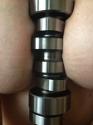
OP -- The ONLY concern I have with the 219 cam spec is your dynamic compression. You might find that you have a propensity for KR if you run the cam with 11.4 compression. If you plan to run E85, you'll be fine. If you updated your compression goal to compensate for the cam, you'll be fine.
[rant]
Holy WTF. Very clear that people do not understand how a truck works... Late IVC is for biasing power to higher RPM, which is the LAST thing he needs. Sure in a 3300 lb street car, it's fine, and you can make some sacrifices and stall it accordingly to get perceived torque. Take all the street car generalities and toss them
Trucks don't work like that. You need lower stall speed so you're not revving the **** out of it to get it moving - especially with a trailer or loaded down. You ever drive through a parking lot, engine screaming at 3800 rpm at 5 mph pulling a trailer? It sucks. This is a 6000 lb truck that might at times be responsible for 10K-lbs given a family vacation pulling a camper or something. Torque needs to come in early and hard. If you need more power in a truck, it's not because you need more power, it's because you need more torque. In which case, if the OP feels he needs more torque, my advice would be a blower, not a cam swap. I actually liked the original 222/224 cam in your OP, myself, and I was very interested to see how it would do.
The purpose of a cam is NOT to make power - it is to determine the RPM range at which torque and power build, and the shape of the power and torque curves. The heads make the power. Cam determines WHEN and HOW it makes power. NOT how much power. Trucks need torque to build in the off idle region, not wait until the cam comes into tune to build torque. I once put a friend into a 180/186 cam with an all mechanical diesel-swapped jeep and a deliberately undersized turbo, and I would challenge most of the gasser strokers on this site to try to out pull that thing.
For those actually interested in learning, my proposed cam for the OP would be on the order of 220/228-114+0. With compression being the driving factor. If the engine was not yet built, i would recommend 220/228-112+2, and a 3cc dish in the piston to get compression to 11:1 for 93 octane friendliness. Without putting much thought into it or even looking into the cams from other vendors, my guess is that's in the same range.
[/rant]
[rant]
Holy WTF. Very clear that people do not understand how a truck works... Late IVC is for biasing power to higher RPM, which is the LAST thing he needs. Sure in a 3300 lb street car, it's fine, and you can make some sacrifices and stall it accordingly to get perceived torque. Take all the street car generalities and toss them
Trucks don't work like that. You need lower stall speed so you're not revving the **** out of it to get it moving - especially with a trailer or loaded down. You ever drive through a parking lot, engine screaming at 3800 rpm at 5 mph pulling a trailer? It sucks. This is a 6000 lb truck that might at times be responsible for 10K-lbs given a family vacation pulling a camper or something. Torque needs to come in early and hard. If you need more power in a truck, it's not because you need more power, it's because you need more torque. In which case, if the OP feels he needs more torque, my advice would be a blower, not a cam swap. I actually liked the original 222/224 cam in your OP, myself, and I was very interested to see how it would do.
The purpose of a cam is NOT to make power - it is to determine the RPM range at which torque and power build, and the shape of the power and torque curves. The heads make the power. Cam determines WHEN and HOW it makes power. NOT how much power. Trucks need torque to build in the off idle region, not wait until the cam comes into tune to build torque. I once put a friend into a 180/186 cam with an all mechanical diesel-swapped jeep and a deliberately undersized turbo, and I would challenge most of the gasser strokers on this site to try to out pull that thing.
For those actually interested in learning, my proposed cam for the OP would be on the order of 220/228-114+0. With compression being the driving factor. If the engine was not yet built, i would recommend 220/228-112+2, and a 3cc dish in the piston to get compression to 11:1 for 93 octane friendliness. Without putting much thought into it or even looking into the cams from other vendors, my guess is that's in the same range.
[/rant]


TECH Addict
Joined: Sep 2010
Posts: 2,898
Likes: 467
OP -- The ONLY concern I have with the 219 cam spec is your dynamic compression. You might find that you have a propensity for KR if you run the cam with 11.4 compression. If you plan to run E85, you'll be fine. If you updated your compression goal to compensate for the cam, you'll be fine.
[rant]
Holy WTF. Very clear that people do not understand how a truck works... Late IVC is for biasing power to higher RPM, which is the LAST thing he needs. Sure in a 3300 lb street car, it's fine, and you can make some sacrifices and stall it accordingly to get perceived torque. Take all the street car generalities and toss them
Trucks don't work like that. You need lower stall speed so you're not revving the **** out of it to get it moving - especially with a trailer or loaded down. You ever drive through a parking lot, engine screaming at 3800 rpm at 5 mph pulling a trailer? It sucks. This is a 6000 lb truck that might at times be responsible for 10K-lbs given a family vacation pulling a camper or something. Torque needs to come in early and hard. If you need more power in a truck, it's not because you need more power, it's because you need more torque. In which case, if the OP feels he needs more torque, my advice would be a blower, not a cam swap. I actually liked the original 222/224 cam in your OP, myself, and I was very interested to see how it would do.
The purpose of a cam is NOT to make power - it is to determine the RPM range at which torque and power build, and the shape of the power and torque curves. The heads make the power. Cam determines WHEN and HOW it makes power. NOT how much power. Trucks need torque to build in the off idle region, not wait until the cam comes into tune to build torque. I once put a friend into a 180/186 cam with an all mechanical diesel-swapped jeep and a deliberately undersized turbo, and I would challenge most of the gasser strokers on this site to try to out pull that thing.
For those actually interested in learning, my proposed cam for the OP would be on the order of 220/228-114+0. With compression being the driving factor. If the engine was not yet built, i would recommend 220/228-112+2, and a 3cc dish in the piston to get compression to 11:1 for 93 octane friendliness. Without putting much thought into it or even looking into the cams from other vendors, my guess is that's in the same range.
[/rant]
[rant]
Holy WTF. Very clear that people do not understand how a truck works... Late IVC is for biasing power to higher RPM, which is the LAST thing he needs. Sure in a 3300 lb street car, it's fine, and you can make some sacrifices and stall it accordingly to get perceived torque. Take all the street car generalities and toss them
Trucks don't work like that. You need lower stall speed so you're not revving the **** out of it to get it moving - especially with a trailer or loaded down. You ever drive through a parking lot, engine screaming at 3800 rpm at 5 mph pulling a trailer? It sucks. This is a 6000 lb truck that might at times be responsible for 10K-lbs given a family vacation pulling a camper or something. Torque needs to come in early and hard. If you need more power in a truck, it's not because you need more power, it's because you need more torque. In which case, if the OP feels he needs more torque, my advice would be a blower, not a cam swap. I actually liked the original 222/224 cam in your OP, myself, and I was very interested to see how it would do.
The purpose of a cam is NOT to make power - it is to determine the RPM range at which torque and power build, and the shape of the power and torque curves. The heads make the power. Cam determines WHEN and HOW it makes power. NOT how much power. Trucks need torque to build in the off idle region, not wait until the cam comes into tune to build torque. I once put a friend into a 180/186 cam with an all mechanical diesel-swapped jeep and a deliberately undersized turbo, and I would challenge most of the gasser strokers on this site to try to out pull that thing.
For those actually interested in learning, my proposed cam for the OP would be on the order of 220/228-114+0. With compression being the driving factor. If the engine was not yet built, i would recommend 220/228-112+2, and a 3cc dish in the piston to get compression to 11:1 for 93 octane friendliness. Without putting much thought into it or even looking into the cams from other vendors, my guess is that's in the same range.
[/rant]