


Dart SHP Pro Iron 434



Staging Lane


Joined: Mar 2017
Posts: 66
Likes: 10
From: Augusta, GA

depends on the cap material and the block - iron eagle for over 2000. I have the Ford windsor SHP which is the lowest version of the Dart SBF's - Dart rates for 600+ HP - but Woody at Fordstrokers told me if I broke it at anything less than 1200hp he would replace it .... He did my ford shortblock. The other advantage with the LS Next SHP is that the main caps being the way they are, solve the bay to bay breathing issues... and priority main oiling.
Last edited by Racesloth; Feb 24, 2020 at 12:40 PM.


All I can say at this point is I’m gonna sit back and try and learn something from this thread lol. I’ll just keep my mouth shut trying to sound smart. 25x cam for low end torque is new for me, especially on 114 centers. To me it still feels like you’re saying one thing and doing the opposite, so I’m excited to see the results. With the help you’re getting I’m sure it’ll deliver what you want. Badass parts coming together in this build regardless of port shape and size it is going to be a beast of an engine and be very powerful.
I think there needs to be an engine dyno routine that’s automated that goes from 3000 rpm minimal load, slammed to WOT to emulate a converter flashing to 6000 rpm, and pull to 7000. Time would be just as important of a measurement as power. There needs to be some way to quantify the magic sauce that actually accelerates a car vs just putting up a big dyno number. I’ve seen and been in cars that do one well and the other badly and you know the engine makes power, but it doesn’t put it to use properly.
Curious to head from others if you want to brainstorm that test routine or share experiences of a non responsive, under performing engine that you know made great dyno power.
I think there needs to be an engine dyno routine that’s automated that goes from 3000 rpm minimal load, slammed to WOT to emulate a converter flashing to 6000 rpm, and pull to 7000. Time would be just as important of a measurement as power. There needs to be some way to quantify the magic sauce that actually accelerates a car vs just putting up a big dyno number. I’ve seen and been in cars that do one well and the other badly and you know the engine makes power, but it doesn’t put it to use properly.
Curious to head from others if you want to brainstorm that test routine or share experiences of a non responsive, under performing engine that you know made great dyno power.
Last edited by spanks13; Feb 24, 2020 at 09:41 AM.


Thread Starter
TECH Addict
Joined: Sep 2010
Posts: 2,898
Likes: 467
All I can say at this point is I’m gonna sit back and try and learn something from this thread lol. I’ll just keep my mouth shut trying to sound smart. 25x cam for low end torque is new for me, especially on 114 centers. To me it still feels like you’re saying one thing and doing the opposite, so I’m excited to see the results. With the help you’re getting I’m sure it’ll deliver what you want. Badass parts coming together in this build regardless of port shape and size it is going to be a beast of an engine and be very powerful.
I think there needs to be an engine dyno routine that’s automated that goes from 3000 rpm minimal load, slammed to WOT to emulate a converter flashing to 6000 rpm, and pull to 7000. Time would be just as important of a measurement as power. There needs to be some way to quantify the magic sauce that actually accelerates a car vs just putting up a big dyno number. I’ve seen and been in cars that do one well and the other badly and you know the engine makes power, but it doesn’t put it to use properly.
Curious to head from others if you want to brainstorm that test routine or share experiences of a non responsive, under performing engine that you know made great dyno power.
I think there needs to be an engine dyno routine that’s automated that goes from 3000 rpm minimal load, slammed to WOT to emulate a converter flashing to 6000 rpm, and pull to 7000. Time would be just as important of a measurement as power. There needs to be some way to quantify the magic sauce that actually accelerates a car vs just putting up a big dyno number. I’ve seen and been in cars that do one well and the other badly and you know the engine makes power, but it doesn’t put it to use properly.
Curious to head from others if you want to brainstorm that test routine or share experiences of a non responsive, under performing engine that you know made great dyno power.
Let me try once again and explain. I am not saying one thing and doing the opposite.
The camshaft Tony and I have chosen is still going to produce VERY strong low end torque due to the heads, FAST intake and the size of the engine.
Plus we will have 12:5.1 compression.
The reason for using a larger than usual camshaft is for more top end power because the bottom and mid range will already be very strong.
There is more room to move thanks to the intake and even with a larger camshaft there will still be plenty of pull in those lower RPM ranges.
Also, don't forget once lash is taken out (.013) this will end up being a 248/254 or 249/255 114LSA when converted to hydraulic.
So it's not all that big for a 434.
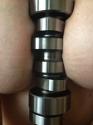
If you went with an iron block, be advised on setting up your lash -- you will not gain lash like you do with aluminum. You'll want to set it up cold about where you want it hot. You will only gro .002-.004" lash with temperature.
Thread Starter
TECH Addict
Joined: Sep 2010
Posts: 2,898
Likes: 467
So that means i will need to be at .009" so i have .013 hot lash?


Thread Starter
TECH Addict
Joined: Sep 2010
Posts: 2,898
Likes: 467
But i will definitely need more cold lash because of camshaft and the block being iron.
That's fine. Call comp and get the cold numbers. Pretty sure physics in not vendor-specific.
Thread Starter
TECH Addict
Joined: Sep 2010
Posts: 2,898
Likes: 467
For all you head gurus,
How does a Trickflow 245cc compare to an AFR 245cc in terms of efficiency and hp potential?
i notice the trickflow has a 13.5 degree valve angle vs 15 for the AFR.
Brian Tooley is a huge fan of the trickflow 245 head.
Just curious to see peoples thoughts.
There isn't much information out there on the internet regarding a comparison between these two.
How does a Trickflow 245cc compare to an AFR 245cc in terms of efficiency and hp potential?
i notice the trickflow has a 13.5 degree valve angle vs 15 for the AFR.
Brian Tooley is a huge fan of the trickflow 245 head.
Just curious to see peoples thoughts.
There isn't much information out there on the internet regarding a comparison between these two.
Last edited by bortous; Feb 25, 2020 at 03:37 AM.

TECH Fanatic

Joined: Mar 2014
Posts: 1,266
Likes: 165
For all you head gurus,
How does a Trickflow 245cc compare to an AFR 245cc in terms of efficiency and hp potential?
i notice the trickflow has a 13.5 degree valve angle vs 15 for thd AFR.
Brian Tooley is a huge fan of the trickflow 245 head.
Just curious to see peoples thoughts.
There isn't much information out there on the internet regarding a comparison between these two.
How does a Trickflow 245cc compare to an AFR 245cc in terms of efficiency and hp potential?
i notice the trickflow has a 13.5 degree valve angle vs 15 for thd AFR.
Brian Tooley is a huge fan of the trickflow 245 head.
Just curious to see peoples thoughts.
There isn't much information out there on the internet regarding a comparison between these two.
Thread Starter
TECH Addict
Joined: Sep 2010
Posts: 2,898
Likes: 467
If I was you, that would be a question for Tony. The windage tray pictured is the one dart came up with. You can see it on there site. It depends on the oil pan being used. We have the Milodon pan and it sits pretty close to the rotating assembly. Adding that full windage tray would restrict oil flow back to the sump. So we had to make our own tray that just covers the sump area. That way oil doesn't have to go down the tray then back down the pan to get to the sump. Its expensive as hell but I wish we would have gotten the Canton pan but this one seems to work fine. I called ARP and got 4 2000 windage tray studs for the main caps above the sump to mount the tray. Works perfect.
He already responds to emails for my build and is very busy.
Just seeing if anyone out there knows the technical differences between the two heads.
TECH Fanatic
Joined: Mar 2014
Posts: 1,266
Likes: 165
There is a guy in the Drag Racing Tech section that is running the Cathedral 245 Trick Flows with a 83mm single turbo that he shows being dynoed on a chassis dyno that made just over 2000Hp with those heads. He has it in a 98 camaro. Hes a great guy and will respond to any of your questions. He now has a new build thread going on with a Calypso Fox body.
TECH Fanatic
Joined: Mar 2014
Posts: 1,266
Likes: 165
When we bought our AFR heads I did the research and they seemed to be very close when comparing them. With the great reputation AFR has with all the other heads they have we chose them. I have been very impressed with the power people have been making with the Trick Flows. But at the end of the day I would still get the AFR's. But thats me. Interested as to what Tony said. Care to Share?
Thread Starter
TECH Addict
Joined: Sep 2010
Posts: 2,898
Likes: 467
I just searched through the many emails I have exchanged with Tony.
My question was: How does this head compare to the Trickflow? Answer below...
Problem with the TFS Mamofication is your chasing volume.....the port would end up larger and flow the same as my extremely sorted out programs designed around a smaller AFR casting that I start with.
I can get them to work well but the in house stuff I offer and have spent years perfecting will almost always be the most efficient.
My question was: How does this head compare to the Trickflow? Answer below...
Problem with the TFS Mamofication is your chasing volume.....the port would end up larger and flow the same as my extremely sorted out programs designed around a smaller AFR casting that I start with.
I can get them to work well but the in house stuff I offer and have spent years perfecting will almost always be the most efficient.