




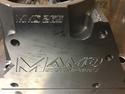




GM Performance Crate engine LS7 570hp/ Head options
 GM Performance Crate engine LS7 570hp/ Head options
 I have swapped my 5th gen Camaro with a wet sump GM Crate LS7 which comes with installed with a 227/242 116 LSA .591/.590 Camshaft.
It was installed and tuned late last summer and put down some pretty decent numbers. 562whp/509 wtq with stock top end and HP tune.
For peice of mind, since I have likely voided the warranty, I want to do the heads. I want to know what is the deal with the guide material and Valve Combination?
From my perspective it seems manganese 90 extended guides should be used in any rebuild or new head. I don't know anything about the metallurgy in regards to the valves as they relate to each guide type though, or simply which is the least likely to fail.
I am looking for which valvetrain parts are actually needed for a reliable head build based on the cam spec above.
Appreciate the response, but please don't offer the standard vendors as verbatim.
It was installed and tuned late last summer and put down some pretty decent numbers. 562whp/509 wtq with stock top end and HP tune.
For peice of mind, since I have likely voided the warranty, I want to do the heads. I want to know what is the deal with the guide material and Valve Combination?
From my perspective it seems manganese 90 extended guides should be used in any rebuild or new head. I don't know anything about the metallurgy in regards to the valves as they relate to each guide type though, or simply which is the least likely to fail.
I am looking for which valvetrain parts are actually needed for a reliable head build based on the cam spec above.
Appreciate the response, but please don't offer the standard vendors as verbatim.
Put some TFS heads on it go. They are the best bolt on replacement and have PM guides like oem. I would put hollowstem intake valves in and get more serious on the springs(pac1204x for most cams). TEA can set you up. Sell your stock heads since they are basically new.
Put some TFS heads on it go. They are the best bolt on replacement and have PM guides like oem. I would put hollowstem intake valves in and get more serious on the springs(pac1204x for most cams). TEA can set you up. Sell your stock heads since they are basically new.
Aren't the OEM guides part of the problem with the LS7 heads?? You always hear bronzium 90, etc..
I want to try and keep costs in check maybe a rebuild but want a concensus pick on what is proven.
I agree completely with Dave. Dump the heads, before they dump on you and take out the entire motor. I've had a wet sump LS7 in my C5 since 2014. It was built from separately purchased parts. Original valve job on the LS7 heads done by a very reputable shop, on a Serdi machine. Cam wasn't a race cam. Had 238/242 duration@.050, .635 lift. 7 of 8 Ti intakes were junk in under 20,000 miles, all 16 guides were out of spec in the same 20 thousand miles. Sent them to AHP in Cali for the 2nd valve job, 8 new Ferrea hollow stem intakes, and 16 new PM guides. I'm changing springs this next spring/early Summer. The 2nd valve job now has 22,000 miles on it. I'll either be changing springs, or changing heads, because I'm not going to accept a motor needing 3 valve jobs in 42,000 miles, at least with the way I use the car. If that's the case, I'll sell the heads, and go with Brodix, or whatever. I drive it pretty easy, mostly on the freeway from Michigan to Florida, and back. It has been on the strip, too, but not a lot. I'll say this to sum it up. Not all LS7 heads are machined correctly, and/or have stability in the quality level of critical components. Some LS7 heads are probably as good as, or better than, any head ever manufactured by any OEM. Some of the rest of them cannot be fixed to an acceptable level of reliability. I'm beginning to accept the fact that mine aren't ever going to be fixed to that acceptable level, due to improper machining from Linimar, GMs machining vendor for the heads. It's a crap shoot. You may have a great set. You may have a lousy set. GM doesn't care which set you have. All they care about is they have your money. Period. I wish you the best of luck with your motor. I'm sure you could get 15,000-20,000 miles out of it without much risk of a loud BOOM. Well, pretty sure. If you now have no warranty, you've circumvented the best reason you had for buying a brand new OEM crate engine. Keep your eyes, and ears open, my friend. My opinion, but a lot of my opinion is based on my own personal LS7 experiences..........
Last edited by grinder11; Jan 27, 2023 at 05:47 PM.
I tried to look into this same matter when I bought my LS7. Long story short, I never felt like I could get to the bottom of what is the real issue so I sold the heads and went aftermarket. Yep, it was a fear-based decision, but I don't have the money to be building engines twice!
What I found is lots of different theories out there, and that GM has been tight lipped about it. Each shop has their own ideas what is the right fix based on their own experience. User feedback seems that any fix is just temporary though and you'll eventually need to do it again.
Maybe the most sensible theory I heard is that the LS7 valvetrain geometry isn't ideal and that's why the guide wear occurs, and why fixes just put off to the next repair. And valve lift above ~0.600 inch accelerates the wear. I know the intake valve size and placement was a high priority during LS7 development, so much so that the exhaust valve was compromised. Even with my aftermarket heads the rocker tip wipe pattern is nowhere near as good as an LS3.
What I found is lots of different theories out there, and that GM has been tight lipped about it. Each shop has their own ideas what is the right fix based on their own experience. User feedback seems that any fix is just temporary though and you'll eventually need to do it again.
Maybe the most sensible theory I heard is that the LS7 valvetrain geometry isn't ideal and that's why the guide wear occurs, and why fixes just put off to the next repair. And valve lift above ~0.600 inch accelerates the wear. I know the intake valve size and placement was a high priority during LS7 development, so much so that the exhaust valve was compromised. Even with my aftermarket heads the rocker tip wipe pattern is nowhere near as good as an LS3.
Last edited by QwkTrip; Jan 27, 2023 at 09:40 PM.
Trending Topics
I agree completely with Dave. Dump the heads, before they dump on you and take out the entire motor. I've had a wet sump LS7 in my C5 since 2014. It was built from separately purchased parts. Original valve job on the LS7 heads done by a very reputable shop, on a Serdi machine. Cam wasn't a race cam. Had 238/242 duration@.050, .635 lift. 7 of 8 Ti intakes were junk in under 20,000 miles, all 16 guides were out of spec in the same 20 thousand miles. Sent them to AHP in Cali for the 2nd valve job, 8 new Ferrea hollow stem intakes, and 16 new PM guides. I'm changing springs this next spring/early Summer. The 2nd valve job now has 22,000 miles on it. I'll either be changing springs, or changing heads, because I'm not going to accept a motor needing 3 valve jobs in 42,000 miles, at least with the way I use the car. If that's the case, I'll sell the heads, and go with Brodix, or whatever. I drive it pretty easy, mostly on the freeway from Michigan to Florida, and back. It has been on the strip, too, but not a lot. I'll say this to sum it up. Not all LS7 heads are machined correctly, and/or have stability in the quality level of critical components. Some LS7 heads are probably as good as, or better than, any head ever manufactured by any OEM. Some of the rest of them cannot be fixed to an acceptable level of reliability. I'm beginning to accept the fact that mine aren't ever going to be fixed to that acceptable level, due to improper machining from Linimar, GMs machining vendor for the heads. It's a crap shoot. You may have a great set. You may have a lousy set. GM doesn't care which set you have. All they care about is they have your money. Period. I wish you the best of luck with your motor. I'm sure you could get 15,000-20,000 miles out of it without much risk of a loud BOOM. Well, pretty sure. If you now have no warranty, you've circumvented the best reason you had for buying a brand new OEM crate engine. Keep your eyes, and ears open, my friend. My opinion, but a lot of my opinion is based on my own personal LS7 experiences..........
This all makes sense.
As for the oem casting, wasn't the guides, valves and rocker ratio causing the issue? Reworking the heads into correct tolerances and quality materials does not resolve? My cam is pretty low lift.
Seems Advanced Induction has a good reputation as I have seen. I don't know if those are oem castings or another head used.
LS1 Tech Stories
The Best V8 Stories One Small Block at Time

Gas Monkey Built a 6-Wheel Ferrari Testarossa With a Corvette LT4 Engine
Verdad Gallardo
7 Most Reliable High-Performance Engines GM Has Ever Built
Verdad Gallardo
Amazing '71 Camaro Restomod Is Modern Muscle Car Under the Skin
Verdad Gallardo
6 Common C5 Corvette Failures and What's Involved In Repairing Them
Pouria Savadkouei
Retro Modern Bandit Pontiac Trans AM Comes With Burt Reynolds' Autograph
Verdad Gallardo
Top 10 Greatest Cadillac V Series Performance Models Ever, Ranked
Pouria Savadkouei
Top 10 Most Powerful Chevy Trucks Ever Made!

Hennessey's New Supercharged Silverado ZR2 Has 700 HP
Verdad Gallardo
Coachbuilt N2A Anteros Is an LS2-Powered C6 Corvette In Italian Clothes
Verdad Gallardo This all makes sense.
As for the oem casting, wasn't the guides, valves and rocker ratio causing the issue? Reworking the heads into correct tolerances and quality materials does not resolve? My cam is pretty low lift.
Seems Advanced Induction has a good reputation as I have seen. I don't know if those are oem castings or another head used.
As for the oem casting, wasn't the guides, valves and rocker ratio causing the issue? Reworking the heads into correct tolerances and quality materials does not resolve? My cam is pretty low lift.
Seems Advanced Induction has a good reputation as I have seen. I don't know if those are oem castings or another head used.
So, I got one of the few holdover crate 427/570hp engines, but no telling when it was produced exactly. Could have been on the shelf for years. They say all years are affected, but you mention linimar? I assume that was the earliest version motors?


Teching In

Joined: Mar 2018
Posts: 11
Likes: 4
From: Montgomery IL
I had a Z06 for a few years. It only had 28,000 miles on it at the time, sold it at 30,000 miles. The previous owner had the heads "done". His shop invoice showed that they replaced the guides with bronze, put in solid stem exhaust valves and a did basic valve job.
My car lost a lifter and bent a push rod in the first 2 weeks I owned it. While assessing the damage, I noticed a lot of play in the valve stems, particularly the intakes. I pulled the heads to replace the lifter and disassembled. The coating on all 8 of the Ti intake valves had worn off leaving raw titanium to saw through the freshly done bronze guides. I put the heads back together and shipped them to AHP. Kohle called me back and confirmed my diagnosis . He said most of the LS7 heads they get have that issue on at least a few valves but I caught mine in time before they started wobbling around in the worn guide and one of the heads ended up dropping which is what happens most of the time when they get bad.
I called Del West and spoke to the techs there. They alluded to GM did not pay Del West to fully finish the Ti valves they way Del West recommended. However, they have a refurbishing program where they will recoat and tumble polish the Ti valves if they are serviceable (mine were not). Kohle ended up giving me a good deal on a new set of OEM Ti valves, and the heads were back to me in no time and I sold the car.
IMO, the guide material does not have as much to do with LS7 valve failures as much as the coating on the valves does. This seems to be confirmed when I called Katech and the tech there did not even care what condition the factory Ti valves were in, they replace them with their own proprietary moly coated Ti intake valves. The end result is the same but just jamming in a new set of guides or a new set of OEM Ti valves may not fix the issue which may be why many end up getting replacement guides every 10,000 miles. If it were my money, I would invest in a different coating on the valve rather than the MS90 guides.
Del West also coats the Ti rods and they have been known to have issues as well. Here is a link on Katech's site with some background on the valve guide issue: https://katechengines.com/pdf/183889
My car lost a lifter and bent a push rod in the first 2 weeks I owned it. While assessing the damage, I noticed a lot of play in the valve stems, particularly the intakes. I pulled the heads to replace the lifter and disassembled. The coating on all 8 of the Ti intake valves had worn off leaving raw titanium to saw through the freshly done bronze guides. I put the heads back together and shipped them to AHP. Kohle called me back and confirmed my diagnosis . He said most of the LS7 heads they get have that issue on at least a few valves but I caught mine in time before they started wobbling around in the worn guide and one of the heads ended up dropping which is what happens most of the time when they get bad.
I called Del West and spoke to the techs there. They alluded to GM did not pay Del West to fully finish the Ti valves they way Del West recommended. However, they have a refurbishing program where they will recoat and tumble polish the Ti valves if they are serviceable (mine were not). Kohle ended up giving me a good deal on a new set of OEM Ti valves, and the heads were back to me in no time and I sold the car.
IMO, the guide material does not have as much to do with LS7 valve failures as much as the coating on the valves does. This seems to be confirmed when I called Katech and the tech there did not even care what condition the factory Ti valves were in, they replace them with their own proprietary moly coated Ti intake valves. The end result is the same but just jamming in a new set of guides or a new set of OEM Ti valves may not fix the issue which may be why many end up getting replacement guides every 10,000 miles. If it were my money, I would invest in a different coating on the valve rather than the MS90 guides.
Del West also coats the Ti rods and they have been known to have issues as well. Here is a link on Katech's site with some background on the valve guide issue: https://katechengines.com/pdf/183889
Last edited by Formula8; Jan 31, 2023 at 06:31 PM.
I wonder what qualifies as non-recoatable/non-serviceable in Del Wests eyes? I heard a similar story directly from Ferrea on the sodium filled hollow exhaust valves. Ferrea was approached about manufacturing the exhaust valves for GM. They gave GM the specs it would take to make a reliable sodium exhaust valve, along with a price, of course. GM insisted they be made to the GM spec, in other words, down to a price. Ferrea refused, and backed out of the deal. We ALL know how that worked out for GM!! This came straight from a Ferrea employees/owners mouth, so I have no reason to doubt him. Especially considering what Del West has stated is very similar. Only difference being West went forward on the project, and Ferrea would not.....
I had a Z06 for a few years. It only had 28,000 miles on it at the time, sold it at 30,000 miles. The previous owner had the heads "done". His shop invoice showed that they replaced the guides with bronze, put in solid stem exhaust valves and a did basic valve job.
My car lost a lifter and bent a push rod in the first 2 weeks I owned it. While assessing the damage, I noticed a lot of play in the valve stems, particularly the intakes. I pulled the heads to replace the lifter and disassembled. The coating on all 8 of the Ti intake valves had worn off leaving raw titanium to saw through the freshly done bronze guides. I put the heads back together and shipped them to AHP. Kohle called me back and confirmed my diagnosis . He said most of the LS7 heads they get have that issue on at least a few valves but I caught mine in time before they started wobbling around in the worn guide and one of the heads ended up dropping which is what happens most of the time when they get bad.
I called Del West and spoke to the techs there. They alluded to GM did not pay Del West to fully finish the Ti valves they way Del West recommended. However, they have a refurbishing program where they will recoat and tumble polish the Ti valves if they are serviceable (mine were not). Kohle ended up giving me a good deal on a new set of OEM Ti valves, and the heads were back to me in no time and I sold the car.
IMO, the guide material does not have as much to do with LS7 valve failures as much as the coating on the valves does. This seems to be confirmed when I called Katech and the tech there did not even care what condition the factory Ti valves were in, they replace them with their own proprietary moly coated Ti intake valves. The end result is the same but just jamming in a new set of guides or a new set of OEM Ti valves may not fix the issue which may be why many end up getting replacement guides every 10,000 miles. If it were my money, I would invest in a different coating on the valve rather than the MS90 guides.
Del West also coats the Ti rods and they have been known to have issues as well. Here is a link on Katech's site with some background on the valve guide issue: https://katechengines.com/pdf/183889
My car lost a lifter and bent a push rod in the first 2 weeks I owned it. While assessing the damage, I noticed a lot of play in the valve stems, particularly the intakes. I pulled the heads to replace the lifter and disassembled. The coating on all 8 of the Ti intake valves had worn off leaving raw titanium to saw through the freshly done bronze guides. I put the heads back together and shipped them to AHP. Kohle called me back and confirmed my diagnosis . He said most of the LS7 heads they get have that issue on at least a few valves but I caught mine in time before they started wobbling around in the worn guide and one of the heads ended up dropping which is what happens most of the time when they get bad.
I called Del West and spoke to the techs there. They alluded to GM did not pay Del West to fully finish the Ti valves they way Del West recommended. However, they have a refurbishing program where they will recoat and tumble polish the Ti valves if they are serviceable (mine were not). Kohle ended up giving me a good deal on a new set of OEM Ti valves, and the heads were back to me in no time and I sold the car.
IMO, the guide material does not have as much to do with LS7 valve failures as much as the coating on the valves does. This seems to be confirmed when I called Katech and the tech there did not even care what condition the factory Ti valves were in, they replace them with their own proprietary moly coated Ti intake valves. The end result is the same but just jamming in a new set of guides or a new set of OEM Ti valves may not fix the issue which may be why many end up getting replacement guides every 10,000 miles. If it were my money, I would invest in a different coating on the valve rather than the MS90 guides.
Del West also coats the Ti rods and they have been known to have issues as well. Here is a link on Katech's site with some background on the valve guide issue: https://katechengines.com/pdf/183889