











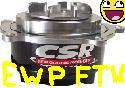


Broke my torque arm
 Broke my torque arm
 Car is basically stock, it shouldnt have happend. It broke when I was pulling onto the highway into traffic and I almost got hit, I thought it was the rear end.
I need to prevent this from happening again and I think I may know the problem but would like other opinions.
Car is lowered with an eibach pro kit. I think my pinion angle is way off because of this. When I changed trannies I had to force the torque are onto the rearend to bolt it up. On my old firebird it just slipped on and off effortlessly.
Do yall think that LCA relocation brackets will get my pinion angle back normal? Car has really bad wheel hop so Im hoping to cure this to before my stall comes in the mail.
Thanks,
trent
I need to prevent this from happening again and I think I may know the problem but would like other opinions.
Car is lowered with an eibach pro kit. I think my pinion angle is way off because of this. When I changed trannies I had to force the torque are onto the rearend to bolt it up. On my old firebird it just slipped on and off effortlessly.
Do yall think that LCA relocation brackets will get my pinion angle back normal? Car has really bad wheel hop so Im hoping to cure this to before my stall comes in the mail.
Thanks,
trent
The lowering of your susp. has no influence on your pinion angle. Broken torque arms have been known to happen from stress fractures that finally give away from load transfer. The LCA relocation brackets are a good idea to aid in transferring load to the chassis so the torque arm doesn't have to do all the work.
Last edited by SS RRR; May 20, 2009 at 06:25 AM.
Trending Topics
My vote goes for getting the TA off of the trans tail shaft...I had a Spohn trans mounted TA and split the tailshaft...I have a Spohn cross brace mounted TA with 2 DS loops and I love it...UMI and BMR are also great choices too...
--Alan
--Alan
LS1 Tech Stories
The Best V8 Stories One Small Block at Time

Gas Monkey Built a 6-Wheel Ferrari Testarossa With a Corvette LT4 Engine
Verdad Gallardo
7 Most Reliable High-Performance Engines GM Has Ever Built
Verdad Gallardo
Amazing '71 Camaro Restomod Is Modern Muscle Car Under the Skin
Verdad Gallardo
6 Common C5 Corvette Failures and What's Involved In Repairing Them
Pouria Savadkouei
Retro Modern Bandit Pontiac Trans AM Comes With Burt Reynolds' Autograph
Verdad Gallardo
Top 10 Greatest Cadillac V Series Performance Models Ever, Ranked
Pouria Savadkouei
Top 10 Most Powerful Chevy Trucks Ever Made!

Hennessey's New Supercharged Silverado ZR2 Has 700 HP
Verdad Gallardo
Coachbuilt N2A Anteros Is an LS2-Powered C6 Corvette In Italian Clothes
Verdad Gallardo
I broke my stock TA as well. It cracked where it bolts up to the diff. Snapped right as I downshifted to chase down an EVO.
I have a new stocker on there now, and a Spohn chromemoly adj tunnel mount TA waiting to go on.
I have a new stocker on there now, and a Spohn chromemoly adj tunnel mount TA waiting to go on.
wow, I thought lowering the car moved the pinion angle some. Now I wonder why the TA didnt want to slide onto the rear.
This is from the Herron performance website under LCA relocation info...
"Product Information
Reposition your instant center by changing your lower control arm angle for improved traction. Brackets lower the rear of the control arm up to 3", a must for all lowered vehicles to correct lost suspension geometry. By lowering your vehicle, you are changing the lower control arm angle, allowing the rear mounting point to sit higher than the front. This will, in return, cause wheel hop and a great deal of traction loss.
Lowered Vehicles: We do not recommend lowering a 3rd or 4th generation F-Body without lower control arm relocation brackets due to the compromise in the geometry on the instant center. Brackets will significantly improve instant center position, eliminate wheel hop and increase traction. Brackets installed will also help 60-foot times of .10 or better, lower ETs and increase track consistency--a must for all lowered vehicles! "
So I must have gotten instant center and pinion angle mixed up, what is instant center?
This is from the Herron performance website under LCA relocation info...
"Product Information
Reposition your instant center by changing your lower control arm angle for improved traction. Brackets lower the rear of the control arm up to 3", a must for all lowered vehicles to correct lost suspension geometry. By lowering your vehicle, you are changing the lower control arm angle, allowing the rear mounting point to sit higher than the front. This will, in return, cause wheel hop and a great deal of traction loss.
Lowered Vehicles: We do not recommend lowering a 3rd or 4th generation F-Body without lower control arm relocation brackets due to the compromise in the geometry on the instant center. Brackets will significantly improve instant center position, eliminate wheel hop and increase traction. Brackets installed will also help 60-foot times of .10 or better, lower ETs and increase track consistency--a must for all lowered vehicles! "
So I must have gotten instant center and pinion angle mixed up, what is instant center?
So I must have gotten instant center and pinion angle mixed up, what is instant center?

wow, I thought lowering the car moved the pinion angle some. Now I wonder why the TA didnt want to slide onto the rear.
This is from the Herron performance website under LCA relocation info...
"Product Information
Reposition your instant center by changing your lower control arm angle for improved traction. Brackets lower the rear of the control arm up to 3", a must for all lowered vehicles to correct lost suspension geometry. By lowering your vehicle, you are changing the lower control arm angle, allowing the rear mounting point to sit higher than the front. This will, in return, cause wheel hop and a great deal of traction loss.
Lowered Vehicles: We do not recommend lowering a 3rd or 4th generation F-Body without lower control arm relocation brackets due to the compromise in the geometry on the instant center. Brackets will significantly improve instant center position, eliminate wheel hop and increase traction. Brackets installed will also help 60-foot times of .10 or better, lower ETs and increase track consistency--a must for all lowered vehicles! "
So I must have gotten instant center and pinion angle mixed up, what is instant center?
This is from the Herron performance website under LCA relocation info...
"Product Information
Reposition your instant center by changing your lower control arm angle for improved traction. Brackets lower the rear of the control arm up to 3", a must for all lowered vehicles to correct lost suspension geometry. By lowering your vehicle, you are changing the lower control arm angle, allowing the rear mounting point to sit higher than the front. This will, in return, cause wheel hop and a great deal of traction loss.
Lowered Vehicles: We do not recommend lowering a 3rd or 4th generation F-Body without lower control arm relocation brackets due to the compromise in the geometry on the instant center. Brackets will significantly improve instant center position, eliminate wheel hop and increase traction. Brackets installed will also help 60-foot times of .10 or better, lower ETs and increase track consistency--a must for all lowered vehicles! "
So I must have gotten instant center and pinion angle mixed up, what is instant center?
Was it a noticeable differences with those suspension parts? I will be doing the same very shortly?


TECH Regular
Joined: Dec 2005
Posts: 444
Likes: 0
From: Kailua-Kona, HI
The lowering of your susp. has no influence on your pinion angle. Broken torque arms have been known to happen from stress fractures that finally give away from load transfer. The LCA relocation brackets are a good idea to aid in transferring load to the chassis so the torque arm doesn't have to do all the work.
Actually lowering your car has all the influence in the world when it comes to changing the pinion angle.
Suspension geometry always has an effect on pinion angle.
In this case, you have a triangle. If you were to make a line straight off the tailshaft of your trans (as if the DS went straight back) that would be the top side of tha triangle. The driveshaft is the bottom side of the triangle, and the distance in between the two sides at the rear of the vehicle will be the third side.
When you change the dimensions of that third side, which will come from either lowering or lifting the suspension of the car, it will change the pinion angle unless you were to shim the rear axle housing (not usually done on a coil spring setup, mostly on leaf sprung set-ups, so not an option for us).
That is why it is mandatory (if you want max performance) to have an adjustable torque arm especially when you lower the car.
SO I am not sure why you would say that, when it is fairly common knowledge that the wheel hop associated with a lowered f-body is due to the change in pinion angle and the rear axle not biting into the pavement.
LCA relocation brackets will help correct the problem, but considering the TA is broke, get an Adj. TA and the LCA reloc. brkts and be done with it.
Don't forget when you lower the car, you throw the back end off side ways. You bring the back of the car back to center over the rearend with the adj. panhard bar.
The only time the pinion angle will change (and hopefully in a very minuscule fashion) is when there is extreme load (ie shock to the drive train) on the differential which forces the diff. in an upward fashion. This is where stress fractures can take place with the stock stamped steel torque arm which inevitably leads to breakage.
I blame wheel hop more on the angle of LCA's rather than pinion angle.
Wow, this is gonna get more expensive than I thought. I cant find a stocker near me so I guess Im gonna bite the bullet and get an adjustable TA. Id like to keep it tranny mounted due to my car being lower on power, under 400 ponies, and to keep cost down. I just cant spend 400-600 bucks on a chassis mounted torque arm right now.
What would you guys use?
What would you guys use?
Ok, I found these...
edelbrock
http://store.summitracing.com/partde...5&autoview=sku
UMI
http://store.summitracing.com/partde...5&autoview=sku
edelbrock
http://store.summitracing.com/partde...5&autoview=sku
UMI
http://store.summitracing.com/partde...5&autoview=sku