







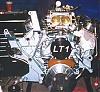


flippin oil problem is back!!!!

Thread Starter
On The Tree
Joined: May 2009
Posts: 161
Likes: 0
From: Haslet, TX (north Fort Worth)
 flippin oil problem is back!!!!
 about 2 months ago i had a leak from the front of my oil pan where it meets the timing cover...i pulled the pan and put a new felpro in with rtv copper..well now the leak is back..pretty bad...about a drop every 3 seconds when its just idling! a friend told me there is no need for the rtv with the rubber felpros...i checked the torque on the front pan bolts..i checked the pcv valve and its working (I assume it is..i took it off and could hear the valve slide back and forth freely)...i also checked the CCV hose on the pass valve cover and its not obstructed so i dont think its pressure that is causing the leak..i hate to pull the pan and replace my brand new oil pan gasket only to have the same results...but i'm also sick of whiping up oil...anyone have any ideas? i would appreciate it
about 2 months ago i had a leak from the front of my oil pan where it meets the timing cover...i pulled the pan and put a new felpro in with rtv copper..well now the leak is back..pretty bad...about a drop every 3 seconds when its just idling! a friend told me there is no need for the rtv with the rubber felpros...i checked the torque on the front pan bolts..i checked the pcv valve and its working (I assume it is..i took it off and could hear the valve slide back and forth freely)...i also checked the CCV hose on the pass valve cover and its not obstructed so i dont think its pressure that is causing the leak..i hate to pull the pan and replace my brand new oil pan gasket only to have the same results...but i'm also sick of whiping up oil...anyone have any ideas? i would appreciate it
IMO, adding RTV to the Felpro rubber gasket creates more opportunity for leaks. Think about how the pan/gasket/block seat without it.
Block
-----
Gasket
-----
Pan
In this scenario, there are only two places oil can leak from, between the pan and the gasket, and the gasket and the block. Now add the RTV -
Block
-----
RTV
-----
Gasket
-----
RTV
-----
Pan
Now you've created 4 places for oil to find the path of least resistance. If the block surface and oil pan rails are clean and dry (like any gasketed surface should be) then there should be no problem whatsoever installing dry.
I've used that Felpro Gasket, and the only place I apply RTV is in the Corners where the Front Plate meets the Block, and where the Rear Main meets the Block.
I've never had any leaks out of it.
I've never had any leaks out of it.
i'm curious are you running a high volume oil pump ... i've had problems in the past with them could'nt keep a gasket sealed .. oil pan or timing cover could be warped those are things to check ...

TECH Regular
Joined: Apr 2007
Posts: 420
Likes: 0
From: Kempner, TX
Using RTV is old school, going back to the days when the oil pan gasket set came in four pieces.
All the pan gaskets I use are one piece and each states, SPECIFICALLY, to install them dry.
Oil residue MUST be removed from both the block (pan rails, etc.) and the oil pan for proper sealing.
I often read of guys using RTV at the four corners and when I do, I choose not to challenge that thinking - deciding there's no way I'd be able to change their thinking and to avoid an endless back and forth.
As I've written before, there's no need to re-invent the wheel here. Simply follow the manufacturer's installation instructions. Proper torquing sequence pays dividends too.
Jake
West Point ROCKS! Nation's TOP COLLEGE per Forbes Magazine!
All the pan gaskets I use are one piece and each states, SPECIFICALLY, to install them dry.
Oil residue MUST be removed from both the block (pan rails, etc.) and the oil pan for proper sealing.
I often read of guys using RTV at the four corners and when I do, I choose not to challenge that thinking - deciding there's no way I'd be able to change their thinking and to avoid an endless back and forth.
As I've written before, there's no need to re-invent the wheel here. Simply follow the manufacturer's installation instructions. Proper torquing sequence pays dividends too.
Jake
West Point ROCKS! Nation's TOP COLLEGE per Forbes Magazine!
Trending Topics
Thread Starter
On The Tree
Joined: May 2009
Posts: 161
Likes: 0
From: Haslet, TX (north Fort Worth)
appreciate the responses..i'll put a dry one in and see how that holds up...time to check shbox for the torque sequence too...i assume its inside out criscross
LS1 Tech Stories
The Best V8 Stories One Small Block at Time

Topdon ONE vs. Artidiag 800 BT2: Which is the Diagnostic Tablet For You?
Pouria Savadkouei
Gas Monkey Built a 6-Wheel Ferrari Testarossa With a Corvette LT4 Engine
Verdad Gallardo
7 Most Reliable High-Performance Engines GM Has Ever Built
Verdad Gallardo
Amazing '71 Camaro Restomod Is Modern Muscle Car Under the Skin
Verdad Gallardo
6 Common C5 Corvette Failures and What's Involved In Repairing Them
Pouria Savadkouei
Retro Modern Bandit Pontiac Trans AM Comes With Burt Reynolds' Autograph
Verdad Gallardo
Top 10 Greatest Cadillac V Series Performance Models Ever, Ranked
Pouria Savadkouei
Top 10 Most Powerful Chevy Trucks Ever Made!

Hennessey's New Supercharged Silverado ZR2 Has 700 HP
Verdad Gallardo
The instructions do say to install dry, but even when properly cleaned and torqued they sometimes leak at the timing cover especially when using synthetic oil. I use a small amount of Permatex Import Grey only on the corners at the front cover. Haven't had problems with the rear of the pan installed dry. Good Luck.




I've tried them both "dry" and with RTV at the corners. I've had them seep both ways. I'm getting really frustrated.....
I remember reading an article back in the '90s, where the author had spoken with a couple of GM engineers, who said one of the prime tasks of theirs, with the LT1s, was to eliminate fluid leaks. My '96 leaks more oil, no matter how many times I've changed the gaskets/seals, that ALL of the cars I've ever owned, put together! And that goes back to 1971......
Thread Starter
On The Tree
Joined: May 2009
Posts: 161
Likes: 0
From: Haslet, TX (north Fort Worth)
I've tried them both "dry" and with RTV at the corners. I've had them seep both ways. I'm getting really frustrated.....
I remember reading an article back in the '90s, where the author had spoken with a couple of GM engineers, who said one of the prime tasks of theirs, with the LT1s, was to eliminate fluid leaks. My '96 leaks more oil, no matter how many times I've changed the gaskets/seals, that ALL of the cars I've ever owned, put together! And that goes back to 1971......
I remember reading an article back in the '90s, where the author had spoken with a couple of GM engineers, who said one of the prime tasks of theirs, with the LT1s, was to eliminate fluid leaks. My '96 leaks more oil, no matter how many times I've changed the gaskets/seals, that ALL of the cars I've ever owned, put together! And that goes back to 1971......
I meant to post this several days ago.....
If you think about it, the original Chevy design, both big and small block, had only one opening in the timing cover...for the crank, so there was only one possible place for a leak. The "higher tech" LT1 front cover has an opening for the A) water pump drive; B) the Optispark; C) the crankshaft; and D) the crank position sensor. Four possible sources for a leak. This is progress?
TECH Regular
Joined: Apr 2007
Posts: 420
Likes: 0
From: Kempner, TX
Another thing to check is the flatness of the pan itself. Clean all the surfaces, then set the oil pan against the block or some other flat surface WITH NO GASKET in place. See if the oil pan sits flush and doesn't rock side to side or front to back and their is NO gap between the pan and the flat surface.
Many times, over torqueing the pan bolts can cause the area where the bolts go through will distort the block side of the pan and prevents the pan from sitting flat and level. Over-torqueing can cause little protrusions to be created on the block side of the pan. Look for them and, if found, flatten them.
If the pan rocks, the pan is bent. Lay a straight edge along the sides of the pan rails to find where the bend is and try straghtening it with blows from a hammer and a piece of wood.
If it rocks, the pan is probably bent/warped which is most times caused by over/unevenly torqueing the pan bolts/nuts.
Be sure to choose a pan gasket that has torque limiters built into the gasket. Clean all the surfaces with spray brake cleaner to remove any oil residue.
First pull down the four corner nuts to half torque, then cross torque the center bolts and finally final torque the four corners. Torque in increments moving from one bolt/side of the pan to the other.
Let the installation set for an hour or so and then go over all the bolts/nuts again to make sure they're holding the torque setting.
Make sure the pan correctly indexes with the gasket at the front and rear. Be sure to use the torque equalizing bars on each side of the pan.
Hope this helps.
Jake
West Point ROCKS! Nation's TOP COLLEGE per Forbes Magazine!
Many times, over torqueing the pan bolts can cause the area where the bolts go through will distort the block side of the pan and prevents the pan from sitting flat and level. Over-torqueing can cause little protrusions to be created on the block side of the pan. Look for them and, if found, flatten them.
If the pan rocks, the pan is bent. Lay a straight edge along the sides of the pan rails to find where the bend is and try straghtening it with blows from a hammer and a piece of wood.
If it rocks, the pan is probably bent/warped which is most times caused by over/unevenly torqueing the pan bolts/nuts.
Be sure to choose a pan gasket that has torque limiters built into the gasket. Clean all the surfaces with spray brake cleaner to remove any oil residue.
First pull down the four corner nuts to half torque, then cross torque the center bolts and finally final torque the four corners. Torque in increments moving from one bolt/side of the pan to the other.
Let the installation set for an hour or so and then go over all the bolts/nuts again to make sure they're holding the torque setting.
Make sure the pan correctly indexes with the gasket at the front and rear. Be sure to use the torque equalizing bars on each side of the pan.
Hope this helps.
Jake
West Point ROCKS! Nation's TOP COLLEGE per Forbes Magazine!
TECH Regular
Joined: Apr 2007
Posts: 420
Likes: 0
From: Kempner, TX
A couple of more thoughts. Be sure to use bolts that are designed specifically for your engine/oil pan.
Bolts that are even a little too long can bottom out in the block and prevent proper gasket compression and sealing. You may feel that they are properly tightened, but they won't be.
Bolts that come with flat washers more evenly distribute the torque. If you're not using stock bolts, be sure to check the replacements to make sure they match the stock ones.
I feel sure that the cause of your problem lies somewhere along the lines of what I've mentioned. You just have to find it.
Hope this helps.
Jake
West Point ROCKS! Nation's TOP COLLEGE per Forbes Magazine!
Bolts that are even a little too long can bottom out in the block and prevent proper gasket compression and sealing. You may feel that they are properly tightened, but they won't be.
Bolts that come with flat washers more evenly distribute the torque. If you're not using stock bolts, be sure to check the replacements to make sure they match the stock ones.
I feel sure that the cause of your problem lies somewhere along the lines of what I've mentioned. You just have to find it.
Hope this helps.
Jake
West Point ROCKS! Nation's TOP COLLEGE per Forbes Magazine!
"JAKE", you make some good points. However, in my particular case, I've tried two different brands of 1 piece pan gaskets, FelPro and Mr. Gasket. They both have the steel sleeves in them, to prevent over-torquing. I used the OE bolts for the installation, as well as the equalizing braces.
At this point, I have some UV dye in the oil, in order to try and trace the leaks. I just can't find my damned "black light" to get the dye to light up, and show me where the oil is leaking....I haven't used it since the late 60s, to light up the rock posters in had in my room back then!
At this point, I have some UV dye in the oil, in order to try and trace the leaks. I just can't find my damned "black light" to get the dye to light up, and show me where the oil is leaking....I haven't used it since the late 60s, to light up the rock posters in had in my room back then!

If its leaking from the front near the timing cover, I'd check that. Look at the bottom lip of the Timing Cover is it cracked, scored badly or damaged in some way? This could be allowing the oil to seep by and drip from the front like your saying.




ensure leak is actually coming from the the pan. a drop every 3 seconds while running says opti, crank, or water pump seal to me.
Some of you guys know that the factory uses RTV on the corners of the oil pan gaskets right...When I did mine, I put it on the four corners and in the rear main seal adapter, and the timing cover. I made sure the block was 100% dry. I let the thing sit for 24hrs to fully cure before putting anything back in it. I don't care that the "RIGHT STUFF" says ready for immediate use, I always let it sit.
Some of you guys know that the factory uses RTV on the corners of the oil pan gaskets right...When I did mine, I put it on the four corners and in the rear main seal adapter, and the timing cover. I made sure the block was 100% dry. I let the thing sit for 24hrs to fully cure before putting anything back in it. I don't care that the "RIGHT STUFF" says ready for immediate use, I always let it sit.
