








Can I remove all the PCV's
 Can I remove all the PCV's
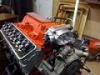
 OK just finishing up my 383 build and I want to remove all the PCV's and do breathers. I don't have emissions here and I don't want this new engine having the same bad habit as me breathing in that crap and gunking up the intake and heads. Can I remove all 3 (one on each valve cover and the one on the intake) and use one breather on each valve cover? I was planing on using a brass plug on the front of the intake and a ruber plug on the driver side of the intake. The valve covers I have do have baffles on each and the hole with gromet in it messure 1inch wide. Any reason I can't do this? I have already deleted the EGR crap as well. I thought about using High temp RTV on the bottom of the intake where the gases come up through the intake under that deflection cover but not sure if thats a real good idea. any thoughts on that?
Let me get this straight. You want to remove the PCV system, the system designed for removing moisture and blowby gas and vapor, entirely?
Not a good idea.
Not to mention, half of the people on this forum don't even know what a "PCV" is. The system as a whole is the PCV system. PCV stands for "positive crankcase ventilation," and is not specifically one component. There is a PCV valve, a PCV fresh air supply hose, and a PCV return hose. There is no such thing as "all of the PCVs" and whatnot. Each part compliments eachother. Manifold vacuum pulls fresh air in from the PCV fresh air supply hose (on the passenger side valve cover) to displace stagnant contaminated crankcase gas through the PCV valve (located on the driver side of the intake manifold - there is ONLY ONE PCV VALVE - THERE IS NOT A PCV VALVE ON THE PASSENGER SIDE VALVE COVER). This gas is subsequently reintroduced into the intake manifold via the PCV return hose (either a loop on early models or a hose that is routed under the throttle body on later models) to be combusted through the normal combustion process.
Eliminating the PCV system entirely will completely seal off the crankcase, promoting sludge and retaining moisture in the crankcase. Even before the PCV system was invented, engines used a draft tube (way back in the 60s). If it was invented in the 60s and has been on every single production engine since then, it's got to be important.
Short version - if you want to delete the tube on the passenger side valve cover and replace it with a breather, that's fine. But if this engine sees ANY kind of street time, all of the other PCV components need to stay intact and functional.
Not a good idea.
Not to mention, half of the people on this forum don't even know what a "PCV" is. The system as a whole is the PCV system. PCV stands for "positive crankcase ventilation," and is not specifically one component. There is a PCV valve, a PCV fresh air supply hose, and a PCV return hose. There is no such thing as "all of the PCVs" and whatnot. Each part compliments eachother. Manifold vacuum pulls fresh air in from the PCV fresh air supply hose (on the passenger side valve cover) to displace stagnant contaminated crankcase gas through the PCV valve (located on the driver side of the intake manifold - there is ONLY ONE PCV VALVE - THERE IS NOT A PCV VALVE ON THE PASSENGER SIDE VALVE COVER). This gas is subsequently reintroduced into the intake manifold via the PCV return hose (either a loop on early models or a hose that is routed under the throttle body on later models) to be combusted through the normal combustion process.
Eliminating the PCV system entirely will completely seal off the crankcase, promoting sludge and retaining moisture in the crankcase. Even before the PCV system was invented, engines used a draft tube (way back in the 60s). If it was invented in the 60s and has been on every single production engine since then, it's got to be important.
Short version - if you want to delete the tube on the passenger side valve cover and replace it with a breather, that's fine. But if this engine sees ANY kind of street time, all of the other PCV components need to stay intact and functional.
Last edited by RamAir95TA; Feb 19, 2010 at 01:55 PM.
Trending Topics

On The Tree
Joined: May 2008
Posts: 124
Likes: 0
As a side note on how important getting those gasses out of the crankcase are, I believe most Pro-Mod cars as well as other extremely high HP cars run a completely independent vacuum pump/system to forcefully remove any air trapped in the crankcase. If hardcore race cars are still using a PCV type of system than I'm sure it's just not for looks for to make the hippies happy.
LS1 Tech Stories
The Best V8 Stories One Small Block at Time

Gas Monkey Built a 6-Wheel Ferrari Testarossa With a Corvette LT4 Engine
Verdad Gallardo
7 Most Reliable High-Performance Engines GM Has Ever Built
Verdad Gallardo
Amazing '71 Camaro Restomod Is Modern Muscle Car Under the Skin
Verdad Gallardo
6 Common C5 Corvette Failures and What's Involved In Repairing Them
Pouria Savadkouei
Retro Modern Bandit Pontiac Trans AM Comes With Burt Reynolds' Autograph
Verdad Gallardo
Top 10 Greatest Cadillac V Series Performance Models Ever, Ranked
Pouria Savadkouei
Top 10 Most Powerful Chevy Trucks Ever Made!

Hennessey's New Supercharged Silverado ZR2 Has 700 HP
Verdad Gallardo
Coachbuilt N2A Anteros Is an LS2-Powered C6 Corvette In Italian Clothes
Verdad Gallardo Let me get this straight. You want to remove the PCV system, the system designed for removing moisture and blowby gas and vapor, entirely?
Not a good idea.
Not to mention, half of the people on this forum don't even know what a "PCV" is. The system as a whole is the PCV system. PCV stands for "positive crankcase ventilation," and is not specifically one component. There is a PCV valve, a PCV fresh air supply hose, and a PCV return hose. There is no such thing as "all of the PCVs" and whatnot. Each part compliments eachother. Manifold vacuum pulls fresh air in from the PCV fresh air supply hose (on the passenger side valve cover) to displace stagnant contaminated crankcase gas through the PCV valve (located on the driver side of the intake manifold - there is ONLY ONE PCV VALVE - THERE IS NOT A PCV VALVE ON THE PASSENGER SIDE VALVE COVER). This gas is subsequently reintroduced into the intake manifold via the PCV return hose (either a loop on early models or a hose that is routed under the throttle body on later models) to be combusted through the normal combustion process.
Eliminating the PCV system entirely will completely seal off the crankcase, promoting sludge and retaining moisture in the crankcase. Even before the PCV system was invented, engines used a draft tube (way back in the 60s). If it was invented in the 60s and has been on every single production engine since then, it's got to be important.
Short version - if you want to delete the tube on the passenger side valve cover and replace it with a breather, that's fine. But if this engine sees ANY kind of street time, all of the other PCV components need to stay intact and functional.
Not a good idea.
Not to mention, half of the people on this forum don't even know what a "PCV" is. The system as a whole is the PCV system. PCV stands for "positive crankcase ventilation," and is not specifically one component. There is a PCV valve, a PCV fresh air supply hose, and a PCV return hose. There is no such thing as "all of the PCVs" and whatnot. Each part compliments eachother. Manifold vacuum pulls fresh air in from the PCV fresh air supply hose (on the passenger side valve cover) to displace stagnant contaminated crankcase gas through the PCV valve (located on the driver side of the intake manifold - there is ONLY ONE PCV VALVE - THERE IS NOT A PCV VALVE ON THE PASSENGER SIDE VALVE COVER). This gas is subsequently reintroduced into the intake manifold via the PCV return hose (either a loop on early models or a hose that is routed under the throttle body on later models) to be combusted through the normal combustion process.
Eliminating the PCV system entirely will completely seal off the crankcase, promoting sludge and retaining moisture in the crankcase. Even before the PCV system was invented, engines used a draft tube (way back in the 60s). If it was invented in the 60s and has been on every single production engine since then, it's got to be important.
Short version - if you want to delete the tube on the passenger side valve cover and replace it with a breather, that's fine. But if this engine sees ANY kind of street time, all of the other PCV components need to stay intact and functional.
