







Golen 396 lt1

Is that why no new MAF's have screens on them? So what exactly is your tuning experience since you claim to know more than someone does this for a living. Hell when I was only making 27xrwhp I left the car strapped down and swapped out descreened MAF ends and picked up 3rwhp, and the a/f didn't budge. And what the hell kind of air filter are you running that would let something big enough in to be caught by the MAF screen? 
On The Tree
Joined: Oct 2006
Posts: 125
Likes: 0
From: Metairie, La.
Here's what happened when my airbox developed a hidden crack underneath probably caused by overtightening the screws on the Vettes airbox. Not saying this is normal or anything, just that it can happen. With that being said I'm now running a descreened larger plastic MAF housing. 
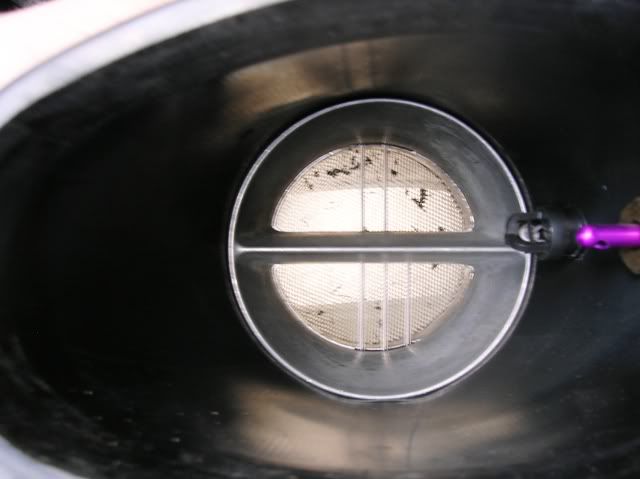
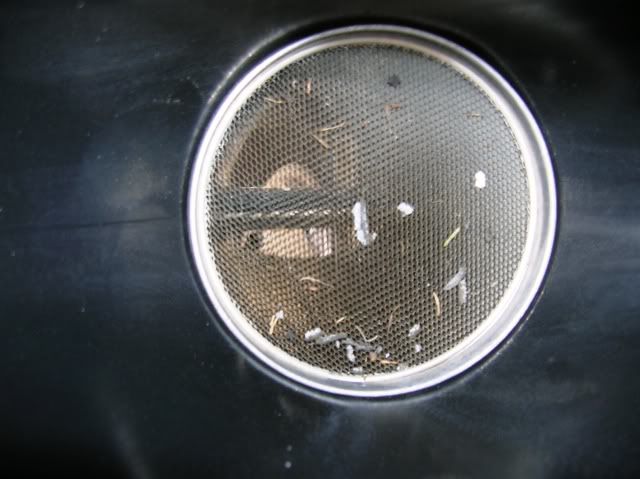
Your tuner is a morron. Ask an engineer who designs MAFs. The screen helps keep debris out and most importantly straightens airflow which allows for more accurate readings. IF you gained anything the same hp can be gained from a tune. Removing it skews the readings and probably leaned out a little. Again anyone who reccomends it is a complete morron.
i dont see you making 600rwhp with a N/A 396 unless you spray it. even then your set up needs to be spot on.
why not go 383 and add boost? there are a few roads to get to your goals.. and you will need to build the rest of the car as well.. or your going to be breaking a lot of stuff.
why not go 383 and add boost? there are a few roads to get to your goals.. and you will need to build the rest of the car as well.. or your going to be breaking a lot of stuff.
i dont see you making 600rwhp with a N/A 396 unless you spray it. even then your set up needs to be spot on.
why not go 383 and add boost? there are a few roads to get to your goals.. and you will need to build the rest of the car as well.. or your going to be breaking a lot of stuff.
why not go 383 and add boost? there are a few roads to get to your goals.. and you will need to build the rest of the car as well.. or your going to be breaking a lot of stuff.

Soild Roller is going to be needed if you want 600 HP N/A nuff said
again thanks everyone for the help, ideas and better understanding that 600hp to rear wheels is a far fetched goal I may never reach with this motor. But certainly say whatever I do decide to go with will be much better and faster then what the car comes with stock. I mean for $10K as a budget I should be able to get something that will throw me back in the seat, look good, perform great, and sound like it has one large set of *****
LS1 Tech Stories
The Best V8 Stories One Small Block at Time

6 Common C5 Corvette Failures and What's Involved In Repairing Them
Pouria Savadkouei
Retro Modern Bandit Pontiac Trans AM Comes With Burt Reynolds' Autograph
Verdad Gallardo
Top 10 Greatest Cadillac V Series Performance Models Ever, Ranked
Pouria Savadkouei
Top 10 Most Powerful Chevy Trucks Ever Made!

Hennessey's New Supercharged Silverado ZR2 Has 700 HP
Verdad Gallardo
Coachbuilt N2A Anteros Is an LS2-Powered C6 Corvette In Italian Clothes
Verdad Gallardo
Awesome K5 Blazer Restomod Comes With C7 Corvette Power
Verdad Gallardo
10 Camaros You Should Never Buy

10 LS Engine Myths That Refuse to Die
Verdad Gallardo


Teching In
Joined: Jul 2011
Posts: 30
Likes: 0
From: North Jersey
600 is a crazy goal....unless your going to strictly drag the car lol. i shouldnt say crazy its awesome but no very fesable. (prob spelled that wrong ha ha) anyway you have to think about other things as well rear, trans, suspension etc. my car is by far not a beast compared to a lot of the guys rides on this forum but it is def a handful. if you go with that platform set it up the way you planned and do a decent cam...dont go nuts if your new...hell im fairly new to the fuel injected world but anyway you would be amazed at how powerful a vehicle making say 350rwhp is. trust me youll scare yourself in it. especially if your new. and with what it seems your leaning towards spending your money on you can easily achieve a more realistic number like that without any problem.

The screen does on sole job on the LT1. Straighten the incoming air. This only required when the inlet air is still bending when entering the inlet of the MAF. The inertia pushes most of the air to one side of the inlet. This is a problem because some of the air slips by and doesn't get metered. Now this can actually be adjusted in the tune to compensate because this will happen anytime the demand for air is the same. A tuner can recommend removing it because they are going to recalibrate the meter anyways.
Gm added the screen to our MAFs and all others that use or MAFs also. They did this so that all of the MAFs can have the same calibration tables and save a ton of time and money in factory tuning.
Now the only real question is.... does the screen actually lower the CFM flow of the meter?? not really. I believe that they only restrict the flow about 3 CFM. not much to worry about. Would I leave the screen in? Yes. I would because unless you are going to recalibrate the sensor there is no real reason to remove it. Now if you are porting the sensor because of needing more airflow then yeah, yank that thing out. Your gonna need to calibrate it anyways.
Now can this dumb argument be done???

I probably should have disagreed in a respectful manner by not calling him a morron but sometimes the forums get the better of ya you know?
anyhow 3 hp is honestly way way too small of a gain to actually think it came from the screen. So you shut the car off to descreen it. How long? did it cool down? what were actual temps like iat manifold temp etc? there are so many variables its not even funny. All dynos will vary pull to pull too. I've tuned enough cars to know that a back to back pull can very quite a bit. Just a degree or two in temperature can pull timing by a single degree accounting for 3 hp which is 1% on a 300 hp motor.
@rickreeves. So you're telling me you would RATHER have pebbles and debris being sucked into your motor doing potential damage in many ways? why in the world after that happening would you take it off. if anything I would have patted myself on the back and said " dam if i listened to those idiots to descreen the maf I could have killed my motor'.
Oem manufacturers have learned that the straighter the path for air the less need for a screen. Sensors have gotten more accurate and larger which are able to generate a much more accurate reading for the ecm. Just because GM removed it doesnt mean it shouldnt be there on ones that came with it.
to the op. For 10Gs you can definitely build something to put you back in your seat and put a smile on your face. My friend built a cast cranked super budger hand ported LT1 headed 383 that cost him less than $5k and hes putting 400 to the wheels. thats a significant jump from stock for the money. He's more than happy. Th ebest advice I can offer is to make a plan for what you want. know where to draw the line on how much you want to spend and how much power you want. it's so easy to get sucked up into wanting more and more power but remember this : The more money you have the faster you can go. there will always be someone faster! Just build something you will like.
anyhow 3 hp is honestly way way too small of a gain to actually think it came from the screen. So you shut the car off to descreen it. How long? did it cool down? what were actual temps like iat manifold temp etc? there are so many variables its not even funny. All dynos will vary pull to pull too. I've tuned enough cars to know that a back to back pull can very quite a bit. Just a degree or two in temperature can pull timing by a single degree accounting for 3 hp which is 1% on a 300 hp motor.
@rickreeves. So you're telling me you would RATHER have pebbles and debris being sucked into your motor doing potential damage in many ways? why in the world after that happening would you take it off. if anything I would have patted myself on the back and said " dam if i listened to those idiots to descreen the maf I could have killed my motor'.
Oem manufacturers have learned that the straighter the path for air the less need for a screen. Sensors have gotten more accurate and larger which are able to generate a much more accurate reading for the ecm. Just because GM removed it doesnt mean it shouldnt be there on ones that came with it.
to the op. For 10Gs you can definitely build something to put you back in your seat and put a smile on your face. My friend built a cast cranked super budger hand ported LT1 headed 383 that cost him less than $5k and hes putting 400 to the wheels. thats a significant jump from stock for the money. He's more than happy. Th ebest advice I can offer is to make a plan for what you want. know where to draw the line on how much you want to spend and how much power you want. it's so easy to get sucked up into wanting more and more power but remember this : The more money you have the faster you can go. there will always be someone faster! Just build something you will like.
Sorry but GM didn't switch to non-screened MAFs because it's better. They have switched because of manufacturing costs. To add the screen in the maf cost more than to make the inlet track straight so the MAF will read accurately at all amounts of flow.
The screen does on sole job on the LT1. Straighten the incoming air. This only required when the inlet air is still bending when entering the inlet of the MAF. The inertia pushes most of the air to one side of the inlet. This is a problem because some of the air slips by and doesn't get metered. Now this can actually be adjusted in the tune to compensate because this will happen anytime the demand for air is the same. A tuner can recommend removing it because they are going to recalibrate the meter anyways.
Gm added the screen to our MAFs and all others that use or MAFs also. They did this so that all of the MAFs can have the same calibration tables and save a ton of time and money in factory tuning.
Now the only real question is.... does the screen actually lower the CFM flow of the meter?? not really. I believe that they only restrict the flow about 3 CFM. not much to worry about. Would I leave the screen in? Yes. I would because unless you are going to recalibrate the sensor there is no real reason to remove it. Now if you are porting the sensor because of needing more airflow then yeah, yank that thing out. Your gonna need to calibrate it anyways.
Now can this dumb argument be done???
The screen does on sole job on the LT1. Straighten the incoming air. This only required when the inlet air is still bending when entering the inlet of the MAF. The inertia pushes most of the air to one side of the inlet. This is a problem because some of the air slips by and doesn't get metered. Now this can actually be adjusted in the tune to compensate because this will happen anytime the demand for air is the same. A tuner can recommend removing it because they are going to recalibrate the meter anyways.
Gm added the screen to our MAFs and all others that use or MAFs also. They did this so that all of the MAFs can have the same calibration tables and save a ton of time and money in factory tuning.
Now the only real question is.... does the screen actually lower the CFM flow of the meter?? not really. I believe that they only restrict the flow about 3 CFM. not much to worry about. Would I leave the screen in? Yes. I would because unless you are going to recalibrate the sensor there is no real reason to remove it. Now if you are porting the sensor because of needing more airflow then yeah, yank that thing out. Your gonna need to calibrate it anyways.
Now can this dumb argument be done???
And
at your 3cfm statement.http://www.camaroz28.com/forums/show...0&postcount=41
Here is why I did mine...
Flowbench measurements on the MAF (Superflow 300).
Measurements were made at 3" and converted to 28" (water).
(B-body) 3" MAF w/ screen = 670 cfm
(B-body) 3" MAF w/o screen = 808 cfm
(F-body) 3.5" MAF w/ screen = 759 cfm
(F-body) 3.5" MAF w/o screen = 979 cfm
Last edited by speed_demon24; Jul 22, 2011 at 08:02 PM.
well even so, a 350 at 6500 rpms only requires 658 cfm of air flow so where is the restriction???
so taking the screen out is about like going and buying a 58mm TB for a stock car. completely useless...
so taking the screen out is about like going and buying a 58mm TB for a stock car. completely useless...
28" of water is 1psi, so to get it to flow 750 cfm you are losing 1 psi after the MAF which is pretty significant.


this might help a little with the question about how much air a motor uses and might require.
http://hubpages.com/hub/Cylinder-Head-Porting-101
Last edited by jasonisdn; Jul 23, 2011 at 12:42 PM.

again thanks everyone for the help, ideas and better understanding that 600hp to rear wheels is a far fetched goal I may never reach with this motor. But certainly say whatever I do decide to go with will be much better and faster then what the car comes with stock. I mean for $10K as a budget I should be able to get something that will throw me back in the seat, look good, perform great, and sound like it has one large set of *****