


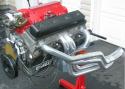


At wits end...need help

Thread Starter
TECH Regular
iTrader: (17)
Joined: Oct 2005
Posts: 465
Likes: 0
From: Tinley Park, IL.
 At wits end...need help
 What I've got
97 lt1 stock bottom end
LE 2.2 heads / cam
58 mm tb
My problem
PCM is adding, on average, 10-15% more fuel(short term) on bank 2 and the long term fuel trim is maxed @+ 25% . Bank 1 is pulling fuel at idle as it always does and it's long term is -10 to-17%.
B1 injector pulse width is 3.3 ms at idle
B2 is at 5.8 ms at idle
This all started last fall when I threw a code for bank 2 high voltage. Figured no big deal swapped out both o2 sensors as preventative. Still there
What I've done
Cyl leak down. All within 5% of each other
Injector balance test. Perfect
Checked for good spark on all 8. All good
Readjusted all the rockers to be safe
Swapped out o2 extensions to see if there is a short. Good
Swapped plugs. Still there
I was getting an occasional high voltage spike on my bank 2 rear o2 sim. Disconnected both of them cause they're disabled anyways. Still there
Sprayed carb cleaner and traced vac lines with propane. Still there
fuel pressure is 38@ idle w/ vacuum and 45 without( old holly fpr)
all injectors ohm out within .1 of each other.( 30lb svo)
My thoughts without throwing unnecessary parts at it
Possible maf
Possible PCM
Short in the engine harness
Pull the intake to visually check the intake gaskets for vac leaks
Here is a pic of the plugs from 2-8

Why 2 and 4 look decent and 6 n 8 look like **** is beyond me. Bank 1 look like I just installed them
my first thought when looking at the plugs, with the thought that all 4 cyl are getting the same amount of fuel, is 2 and 4 have a vac leak of some sort. To me, The added fuel explains 6 and 8 being rich.
Any other ideas?
97 lt1 stock bottom end
LE 2.2 heads / cam
58 mm tb
My problem
PCM is adding, on average, 10-15% more fuel(short term) on bank 2 and the long term fuel trim is maxed @+ 25% . Bank 1 is pulling fuel at idle as it always does and it's long term is -10 to-17%.
B1 injector pulse width is 3.3 ms at idle
B2 is at 5.8 ms at idle
This all started last fall when I threw a code for bank 2 high voltage. Figured no big deal swapped out both o2 sensors as preventative. Still there
What I've done
Cyl leak down. All within 5% of each other
Injector balance test. Perfect
Checked for good spark on all 8. All good
Readjusted all the rockers to be safe
Swapped out o2 extensions to see if there is a short. Good
Swapped plugs. Still there
I was getting an occasional high voltage spike on my bank 2 rear o2 sim. Disconnected both of them cause they're disabled anyways. Still there
Sprayed carb cleaner and traced vac lines with propane. Still there
fuel pressure is 38@ idle w/ vacuum and 45 without( old holly fpr)
all injectors ohm out within .1 of each other.( 30lb svo)
My thoughts without throwing unnecessary parts at it
Possible maf
Possible PCM
Short in the engine harness
Pull the intake to visually check the intake gaskets for vac leaks
Here is a pic of the plugs from 2-8
Why 2 and 4 look decent and 6 n 8 look like **** is beyond me. Bank 1 look like I just installed them
my first thought when looking at the plugs, with the thought that all 4 cyl are getting the same amount of fuel, is 2 and 4 have a vac leak of some sort. To me, The added fuel explains 6 and 8 being rich.
Any other ideas?
Last edited by Formula WS6; Jan 18, 2012 at 10:11 PM.

TECH Apprentice
Joined: Feb 2005
Posts: 384
Likes: 0
There are only so many things I can think of that would affect only two cylinders. Are those rear plugs carbon fouled or oil fouled?
Without further information, my best guesses:
You've checked for external vacuum leaks around the intake manifold, but you could still be leaking internally from the lifter-valley side. Poor sealing of the intake gaskets could be sucking oil into the rear two cylinders, fouling out the plugs, as well as creating a false lean condition on that bank from the poor combustion (oil isn't known for its high octane rating). Computer responds to the excess oxygen in the exhaust by adding fuel to that bank to compensate (as oxygen sensors can only detect oxygen -- not unburnt fuel), thus causing the LTFTs to diverge.
That, or bad valve guides / seals allowing the same thing. (Incidentally, my LE2 heads are back at Lloyds for a few bad guides after only 10K miles on new K-line inserts.)
You've already checked the health of the piston rings. Perhaps you could move the injectors to the other bank and see if the condition follows.
Without further information, my best guesses:
You've checked for external vacuum leaks around the intake manifold, but you could still be leaking internally from the lifter-valley side. Poor sealing of the intake gaskets could be sucking oil into the rear two cylinders, fouling out the plugs, as well as creating a false lean condition on that bank from the poor combustion (oil isn't known for its high octane rating). Computer responds to the excess oxygen in the exhaust by adding fuel to that bank to compensate (as oxygen sensors can only detect oxygen -- not unburnt fuel), thus causing the LTFTs to diverge.
That, or bad valve guides / seals allowing the same thing. (Incidentally, my LE2 heads are back at Lloyds for a few bad guides after only 10K miles on new K-line inserts.)
You've already checked the health of the piston rings. Perhaps you could move the injectors to the other bank and see if the condition follows.
Thread Starter
TECH Regular
iTrader: (17)
Joined: Oct 2005
Posts: 465
Likes: 0
From: Tinley Park, IL.
thanks for responding Alex
the rear plugs are definately fuel fouled. the motor doesn't burn a drop of oil. I thought about poor sealing of the intake on the valley side. It's certainly not ruled out but I popped the oil cap and opened up propane into the oil fill for about 30 seconds with no definative change in pulse width or fuel trims.( potentially very dumb, I know but I'm kinda desperate for an awnser).
the rear plugs are definately fuel fouled. the motor doesn't burn a drop of oil. I thought about poor sealing of the intake on the valley side. It's certainly not ruled out but I popped the oil cap and opened up propane into the oil fill for about 30 seconds with no definative change in pulse width or fuel trims.( potentially very dumb, I know but I'm kinda desperate for an awnser).
Trending Topics
move youre injectors around.. my friend bought an lt1 cheap as hell with a stuck injector...Id pull one of them and move it.. see if the problem follows the injector...It did with his.. it did the same ****..
LS1 Tech Stories
The Best V8 Stories One Small Block at Time

Gas Monkey Built a 6-Wheel Ferrari Testarossa With a Corvette LT4 Engine
Verdad Gallardo
7 Most Reliable High-Performance Engines GM Has Ever Built
Verdad Gallardo
Amazing '71 Camaro Restomod Is Modern Muscle Car Under the Skin
Verdad Gallardo
6 Common C5 Corvette Failures and What's Involved In Repairing Them
Pouria Savadkouei
Retro Modern Bandit Pontiac Trans AM Comes With Burt Reynolds' Autograph
Verdad Gallardo
Top 10 Greatest Cadillac V Series Performance Models Ever, Ranked
Pouria Savadkouei
Top 10 Most Powerful Chevy Trucks Ever Made!

Hennessey's New Supercharged Silverado ZR2 Has 700 HP
Verdad Gallardo
Coachbuilt N2A Anteros Is an LS2-Powered C6 Corvette In Italian Clothes
Verdad Gallardo TECH Apprentice
Joined: Feb 2005
Posts: 384
Likes: 0
Okay. Well, if you haven't already, go ahead and re-torqure the rear intake bolts on that side just for kicks -- see if they've backed out at all. I believe the torque specs are around 30-35 lbs-ft.
Do you have access to noid lights to test the injectors in operation? The injectors are always supplied +12VDC, and the PCM just decides when to ground them out. I dont believe the computer is engineered to adjust individual cylinder pulsewidths outside of adjusting fuel injector constants/offsets within the programming. Not sure what else could hang them open unless they are sticking, which is why I mention moving them around to see if the condition follows. Perhaps you could check the wiring (DVM continuity check) between the injector and the PCM pinouts -- make sure nothing is grounding out when it isn't supposed to.
What brand of oxygen sensors are you running? Don't say Bosch.
[EDIT] I should probably mention that split block learns are thought to be connected to aftermarket throttle bodies' IAC passages and stop-screw positioning, but that doesn't explain your *two* fouled cylinders.
Do you have access to noid lights to test the injectors in operation? The injectors are always supplied +12VDC, and the PCM just decides when to ground them out. I dont believe the computer is engineered to adjust individual cylinder pulsewidths outside of adjusting fuel injector constants/offsets within the programming. Not sure what else could hang them open unless they are sticking, which is why I mention moving them around to see if the condition follows. Perhaps you could check the wiring (DVM continuity check) between the injector and the PCM pinouts -- make sure nothing is grounding out when it isn't supposed to.
What brand of oxygen sensors are you running? Don't say Bosch.
[EDIT] I should probably mention that split block learns are thought to be connected to aftermarket throttle bodies' IAC passages and stop-screw positioning, but that doesn't explain your *two* fouled cylinders.
Last edited by Alex94TAGT; Jan 18, 2012 at 11:44 PM.
Thread Starter
TECH Regular
iTrader: (17)
Joined: Oct 2005
Posts: 465
Likes: 0
From: Tinley Park, IL.
I wanna say the injector balance test I did would have made that evident, but I have seen outragous problems with cars. for the test I pressurize the fuel system, record the psi and then I pulse the injector with my tool for 3 seconds at a 10 milisecond interval, record the ending fuel pressure and compare all of the differences. I did it for all of em and everyone were identical.
if the pcm is adding fuel, isnt that what it does in open loop? Is that what you mean by "short term" Why would Inj pulse be different between banks... isnt 2ms a long time in pulse time? Im no tuner so this is a learning time for me too... where are your o2s in relation to the collector/head...?

Launching!
Joined: Mar 2009
Posts: 274
Likes: 0
From: Weatherford Tx 76085 corner of N. Hwy 51 and 150 Green branch Rd.
Do this it don't cost you anything just a little bit of your time. But before you do i would get a stethoscope (its cheap plus very useful tool) and check the injectors. Listen to them at idle if they tick, they should. As rpms climb they will start ticking at a faster rate. Ernest
Could the injector be lazy? it seems like if you get a spike on that side of the harness, then its because whatever its sending a signal to is having a hard time dissipating it.... (guessing) When you did the test, how did you do it? Can you monitor these while you drive? Do you have a data-logger?
Thread Starter
TECH Regular
iTrader: (17)
Joined: Oct 2005
Posts: 465
Likes: 0
From: Tinley Park, IL.
Okay. Well, if you haven't already, go ahead and re-torqure the rear intake bolts on that side just for kicks -- see if they've backed out at all. I believe the torque specs are around 30-35 lbs-ft.
Do you have access to noid lights to test the injectors in operation? The injectors are always supplied +12VDC, and the PCM just decides when to ground them out. I dont believe the computer is engineered to adjust individual cylinder pulsewidths outside of adjusting fuel injector constants/offsets within the programming. Not sure what else could hang them open unless they are sticking, which is why I mention moving them around to see if the condition follows. Perhaps you could check the wiring (DVM continuity check) between the injector and the PCM pinouts -- make sure nothing is grounding out when it isn't supposed to.
What brand of oxygen sensors are you running? Don't say Bosch.
[EDIT] I should probably mention that split block learns are thought to be connected to aftermarket throttle bodies' IAC passages and stop-screw positioning, but that doesn't explain your *two* fouled cylinders.
Do you have access to noid lights to test the injectors in operation? The injectors are always supplied +12VDC, and the PCM just decides when to ground them out. I dont believe the computer is engineered to adjust individual cylinder pulsewidths outside of adjusting fuel injector constants/offsets within the programming. Not sure what else could hang them open unless they are sticking, which is why I mention moving them around to see if the condition follows. Perhaps you could check the wiring (DVM continuity check) between the injector and the PCM pinouts -- make sure nothing is grounding out when it isn't supposed to.
What brand of oxygen sensors are you running? Don't say Bosch.
[EDIT] I should probably mention that split block learns are thought to be connected to aftermarket throttle bodies' IAC passages and stop-screw positioning, but that doesn't explain your *two* fouled cylinders.
I had delphi o2's and switched out to ngk's.
I was going to ohm the injector and 02 harness tonight but I was tearing up in the garage from the exhaust and I still had the door open. lol
if the pcm is adding fuel, isnt that what it does in open loop? Is that what you mean by "short term" Why would Inj pulse be different between banks... isnt 2ms a long time in pulse time? Im no tuner so this is a learning time for me too... where are your o2s in relation to the collector/head...?
Do this it don't cost you anything just a little bit of your time. But before you do i would get a stethoscope (its cheap plus very useful tool) and check the injectors. Listen to them at idle if they tick, they should. As rpms climb they will start ticking at a faster rate. Ernest
Could the injector be lazy? it seems like if you get a spike on that side of the harness, then its because whatever its sending a signal to is having a hard time dissipating it.... (guessing) When you did the test, how did you do it? Can you monitor these while you drive? Do you have a data-logger?
TECH Apprentice
Joined: Feb 2005
Posts: 384
Likes: 0
To be clear, open/closed loop only refers to sensor feedback. The PCM is obviously still using sensors to calculate fueling in open loop, but there is no error-checking / correction as in closed-loop mode.
The PCM's "learned" fueling correction tables are referred to as short-term and long-term fuel trim. They are useful in determining when the PCM is adding (BLM>128) or subtracting (BLM<128) fuel based on oxygen sensor feedback.
Injector pulsewidths between 1~2 milliseconds (mS) are normal for a stock LT1 at idle. The value depends on fueling requirements of the engine at hand, injector size/duty cycle, fuel pressure, engine load and RPM, etc. The OPs numbers are indeed abnormally high on Bank 2.
Clear as mud now?
Last edited by Alex94TAGT; Jan 19, 2012 at 01:04 AM.
TECH Apprentice
Joined: Feb 2005
Posts: 384
Likes: 0
I actually tested the pcm operation of the injectors tonight with my noid lights and all 8 were firing/pulsing at the same intensity.
I had delphi o2's and switched out to ngk's.
I was going to ohm the injector and 02 harness tonight but I was tearing up in the garage from the exhaust and I still had the door open. lol
I had delphi o2's and switched out to ngk's.
I was going to ohm the injector and 02 harness tonight but I was tearing up in the garage from the exhaust and I still had the door open. lol

TECH Fanatic
Joined: Feb 2006
Posts: 1,025
Likes: 1
From: CT/NJ
Here is a decent thread about what I am referring to- https://ls1tech.com/forums/lt1-lt4-m...an-oem-tb.html
Another possibility I didn't see mentioned here is a fuel pressure regulator leaking past the diaphragm into the vacuum hose.
Another possibility I didn't see mentioned here is a fuel pressure regulator leaking past the diaphragm into the vacuum hose.
Thread Starter
TECH Regular
iTrader: (17)
Joined: Oct 2005
Posts: 465
Likes: 0
From: Tinley Park, IL.
Here is a decent thread about what I am referring to- https://ls1tech.com/forums/lt1-lt4-m...an-oem-tb.html
Another possibility I didn't see mentioned here is a fuel pressure regulator leaking past the diaphragm into the vacuum hose.
Another possibility I didn't see mentioned here is a fuel pressure regulator leaking past the diaphragm into the vacuum hose.