


LT1 Overheating, SOLVED.
Thread Starter
TECH Addict
Joined: Dec 2010
Posts: 2,610
Likes: 4
From: Maricopa, AZ

The added complexity of the system was already explained earlier in this very thread, you just choose to ignore it. It doesn't matter if you accept it or not, it's a fact.
I'm not going to give you a list of all the threads (here and other forums) of the raised coolant temps on the highway. Just ******* google it and stop being intentionally ignorant or lazy (ignorant is not name calling BTW, it is a state of knowledge that you apparently want to have).
and have lowered your argument to grammar school name calling.
All these "facts" coming from someone that didn't know the simple addition of 2 o-rings in such a simple setup would be "the difference between a tow truck and driving home" when they managed to overheat with a flawless cooling system that's "20 years" old and I am the one turning the blind eye? 

I'll just leave this here.
Definition: Troll (Internet)
Internet Troll
An Internet troll, or simply troll in Internet slang, is someone who posts controversial, inflammatory, irrelevant or off-topic messages in an online community, such as an online discussion forum or chat room, with the primary intent of provoking other users into an emotional response or to generally disrupt normal on-topic discussion.
Unless, of course, you already knew the definition. In which case, who's calling who "grammar school names"?
Brb gotta go change my battery cause I turned the key on and my water pump overheated!
What radical claims? Nothing I stated was radical, only you made radical claims.
Here's a better idea, come here to Southern Arizona, let's go do a few laps around any road course........
100+°F and road racing, yeah your 85W of pumping capacity has got it! No problem! Nothing will go wrong at all. It's perfect!
Last edited by hrcslam; Jul 1, 2015 at 03:23 PM.

TECH Veteran


Joined: Apr 2008
Posts: 4,985
Likes: 112
Holly engine temps...did this thread turn into a fing he said she said....
Clearly people have their opinions on mechanical vs EWP. For me a EWP works. All I can say from personal experience. It was 112 when I left Vegas Monday. Drove 5 hrs at FWY speeds (read 80 mph), temp gauge never moved above where it sits in winter other than the width of the needle. This is with a 15+ year old Meziere EWP with over 85+k miles on it. I will say RPM in my car in 6th is about 2000 at 80 mph. If I drove at sustained 80 mph at say 3000 RPM would my engine temps be higher with the EWP. Don't know as I simply don't drive the car at that high of RPM for any sustained (read way longer than a 1/4 mi pull). YMMV
If I had better luck with the mechanicals on my LT1 I would use them. The reported 10HP gain means nothing to me as the reason why to run EWP but many chose to just for that reported HP gain alone
Mechanical or electric, either WP has ways of failing just like any other electrical or mechanical part.
Clearly people have their opinions on mechanical vs EWP. For me a EWP works. All I can say from personal experience. It was 112 when I left Vegas Monday. Drove 5 hrs at FWY speeds (read 80 mph), temp gauge never moved above where it sits in winter other than the width of the needle. This is with a 15+ year old Meziere EWP with over 85+k miles on it. I will say RPM in my car in 6th is about 2000 at 80 mph. If I drove at sustained 80 mph at say 3000 RPM would my engine temps be higher with the EWP. Don't know as I simply don't drive the car at that high of RPM for any sustained (read way longer than a 1/4 mi pull). YMMV
If I had better luck with the mechanicals on my LT1 I would use them. The reported 10HP gain means nothing to me as the reason why to run EWP but many chose to just for that reported HP gain alone
Mechanical or electric, either WP has ways of failing just like any other electrical or mechanical part.
Thread Starter
TECH Addict
Joined: Dec 2010
Posts: 2,610
Likes: 4
From: Maricopa, AZ
Holly engine temps...did this thread turn into a fing he said she said....
Clearly people have their opinions on mechanical vs EWP. For me a EWP works. All I can say from personal experience. It was 112 when I left Vegas Monday. Drove 5 hrs at FWY speeds (read 80 mph), temp gauge never moved above where it sits in winter other than the width of the needle. This is with a 15+ year old Meziere EWP with over 85+k miles on it. I will say RPM in my car in 6th is about 2000 at 80 mph. If I drove at sustained 80 mph at say 3000 RPM would my engine temps be higher with the EWP. Don't know as I simply don't drive the car at that high of RPM for any sustained (read way longer than a 1/4 mi pull). YMMV
If I had better luck with the mechanicals on my LT1 I would use them. The reported 10HP gain means nothing to me as the reason why to run EWP but many chose to just for that reported HP gain alone
Mechanical or electric, either WP has ways of failing just like any other electrical or mechanical part.
Clearly people have their opinions on mechanical vs EWP. For me a EWP works. All I can say from personal experience. It was 112 when I left Vegas Monday. Drove 5 hrs at FWY speeds (read 80 mph), temp gauge never moved above where it sits in winter other than the width of the needle. This is with a 15+ year old Meziere EWP with over 85+k miles on it. I will say RPM in my car in 6th is about 2000 at 80 mph. If I drove at sustained 80 mph at say 3000 RPM would my engine temps be higher with the EWP. Don't know as I simply don't drive the car at that high of RPM for any sustained (read way longer than a 1/4 mi pull). YMMV
If I had better luck with the mechanicals on my LT1 I would use them. The reported 10HP gain means nothing to me as the reason why to run EWP but many chose to just for that reported HP gain alone
Mechanical or electric, either WP has ways of failing just like any other electrical or mechanical part.
I have no problems with EWP's. I know the limitations and short comings of both mechanical and electric pumps. For my situation and plans, I'm sticking with the mechanical. I don't think either is for the win in all scenarios, so I will not make such a blanket statement.
I've had discussions of this variety before. As it stands now, no EWP has been made that doesn't reduce cooling capacity and last as long a mechanical set up. Some auto manufacturers have toyed with the idea, one implemented it (BMW) with little success (high failure rate) and subsequent recalls. However, BMW's EWP was far more powerful and advanced than any unit offered for the LT1 today. In theory the BMW EWP is great, all the advantages of EWP and still plenty of power to flow coolant fast enough when needed, their execution was poor.
If the BMW pump was more reliable, I'd have one. Hell, with it's current problems I'm trying to figure out how to install one on a reverse flow engine. But, that's for a future project.
I'm not discounting yours, or anyone else's experiences, so don't get me wrong.
There's more to a cooling system than the flow of coolant through the system.
A larger volume radiator (dual core) will cool better than a smaller one because the coolant will flow slower through the radiator (more time in the radiator means more heat exchange).
Better air flow (Caprice vs F-Body for example) will cool better because there is more fresh (read: cool) air flow at any given moment taking heat off the radiator.
Minus AC systems, means no compressor pushing 145 to 200+°F (this temperature is directly proportional to ambient temps, if it's 85°F OAT the condenser will be about 140°F minus compression heat - so, 155-170°F; at 115° it'll be about 185° minus compression heat- so 200-230°F) right in front of the radiator that is trying to cool the engine coolant to 160-180°F plus a little additional air flow.
How much power is the engine making? A very very efficient ICE making 30% TE means the other 70% of the power per gallon of gasoline is going to pumping losses and heat (through the cooling system and exhaust). So, if you have a 400HP engine there's roughly double that power leaving through the radiator and exhaust minus pumping losses (minimal at this scale). Half that, and the cooling system has to relieve about 400hp worth of heat. Of course the engine doesn't always make 400hp so it's going to vary based on how the car is driven.
Then there is location, Summer in NJ is nothing compared to summer in AZ. 85° with high humidity cools significantly better than 115° at low humidity; and the car will exhaust more heat loss through the exhaust with higher humidity than through the radiator.
Last edited by hrcslam; Jul 1, 2015 at 04:10 PM.
Thread Starter
TECH Addict
Joined: Dec 2010
Posts: 2,610
Likes: 4
From: Maricopa, AZ
LT1 Overheating, SOLVED. None of that is the entire equation, so irrelevant to compare.
LS1 Tech Stories
The Best V8 Stories One Small Block at Time

Retro Modern Bandit Pontiac Trans AM Comes With Burt Reynolds' Autograph
Verdad Gallardo
Top 10 Greatest Cadillac V Series Performance Models Ever, Ranked
Pouria Savadkouei
Top 10 Most Powerful Chevy Trucks Ever Made!

Hennessey's New Supercharged Silverado ZR2 Has 700 HP
Verdad Gallardo
Coachbuilt N2A Anteros Is an LS2-Powered C6 Corvette In Italian Clothes
Verdad Gallardo
Awesome K5 Blazer Restomod Comes With C7 Corvette Power
Verdad Gallardo
10 Camaros You Should Never Buy

10 LS Engine Myths That Refuse to Die
Verdad Gallardo
Five Reasons the Camaro Was the Most Pivotal Player in the Pony Car Wars 2.0
Brett Foote


Thread Starter
TECH Addict
Joined: Dec 2010
Posts: 2,610
Likes: 4
From: Maricopa, AZ
Puller water pump or fans? Isn't the LT1 a puller on both? IIRC, the LT1 water pump pulls hot water from the block vs the conventional water pump that pushes cool water into the block.

To those like Roger who can't get past the dash gauge and actually understand physics.
Most LT1s use the head mounted temp sender for the dash and the dash is pretty damned low resolution.
My experience is that a b-body with a 30gpm electric pump and 4.10s A4 tranny runs hotter at 70mph than at 35mph when viewed through data logging software even in 40f weather. The 35mph even came at the end of the 2 hour drive at 70mph so heat soak was thorough. The Meziere had spun off the impeller hence the 30gpm backup pump being on.
As hrcslam is trying to say this is about comprehension, people should understand things and too few put forth the effort.
You want an extra .1 drag racing and want to be able to cool in the pits an electric can do that BUT understand it comes at a cost of ultimate capacity and increased complexity of the system. They are sufficient in cooling capacity for most cars, but that is NOT the argument many pose as those who ignore physics often pretend they are an upgrade in capacity.
Far as the puller/pusher seeing as the system is pretty much a closed loop I suspect this has little application to this particular discussion, much like the temps of vehicles with different thermostat ratings in different engines.
Most LT1s use the head mounted temp sender for the dash and the dash is pretty damned low resolution.
My experience is that a b-body with a 30gpm electric pump and 4.10s A4 tranny runs hotter at 70mph than at 35mph when viewed through data logging software even in 40f weather. The 35mph even came at the end of the 2 hour drive at 70mph so heat soak was thorough. The Meziere had spun off the impeller hence the 30gpm backup pump being on.
As hrcslam is trying to say this is about comprehension, people should understand things and too few put forth the effort.
You want an extra .1 drag racing and want to be able to cool in the pits an electric can do that BUT understand it comes at a cost of ultimate capacity and increased complexity of the system. They are sufficient in cooling capacity for most cars, but that is NOT the argument many pose as those who ignore physics often pretend they are an upgrade in capacity.
Far as the puller/pusher seeing as the system is pretty much a closed loop I suspect this has little application to this particular discussion, much like the temps of vehicles with different thermostat ratings in different engines.
Sorry, puller as in redneck sled pulling. Guys will ditch WP for twin EWP to push water through heads with a filled block.

Staging Lane

Joined: Apr 2015
Posts: 55
Likes: 0
From: minneapolis
wow.... but on a relative note I am going to a remote wp so that my opti is easy to get to. I don't put many street miles on a year and the car is normally only under full power for around 9 seconds so electric fits my bill. I run a cut out switch for the fans and the alternator and run off of the battery for the amount of time it takes to get staged and make my pass and then I flip the switch and let that stuff do it's thing
TECH Veteran
Joined: Apr 2008
Posts: 4,985
Likes: 112
To those like Roger who can't get past the dash gauge and actually understand physics.
Most LT1s use the head mounted temp sender for the dash and the dash is pretty damned low resolution.
My experience is that a b-body with a 30gpm electric pump and 4.10s A4 tranny runs hotter at 70mph than at 35mph when viewed through data logging software even in 40f weather. The 35mph even came at the end of the 2 hour drive at 70mph so heat soak was thorough. The Meziere had spun off the impeller hence the 30gpm backup pump being on.
.
Most LT1s use the head mounted temp sender for the dash and the dash is pretty damned low resolution.
My experience is that a b-body with a 30gpm electric pump and 4.10s A4 tranny runs hotter at 70mph than at 35mph when viewed through data logging software even in 40f weather. The 35mph even came at the end of the 2 hour drive at 70mph so heat soak was thorough. The Meziere had spun off the impeller hence the 30gpm backup pump being on.
.
Your reference of a LT1 with a A4 running 4:10's with a lose impeller on a 30gpm EWP describes a car considerably different than mine in gearing (T56 & 4:10's) let alone a failing pump. I would suspect it would run hotter even if the pump was in good working order or even a 55 gpm HD EWP like I have
a A4 with 4:10's will run what, about 2900+ RPM if not more at FWY speeds (especially compared to my 80 mph fwy speeds). Mine is not even at 2k at 80 mph in 6th. A A4, 4:10 car would likely run hotter with a EWP since the high RPM flow rate, under your theory and research, says the EWP flow less at higher (what...3000 RPM's?) vs mechanical. I don't have a car that runs those high of RPM's for sustained periods of time (Extended FWY driving). If I did experience creeping engine temps under any driving conditions I experience or the failure rate of the EWP was even 1/2 of what I experienced with the mechanical WP I would ditch the EWP in seconds. But again for "me" it has proven to be a better WP.
16 years ago when I put a EWP on it was not for performance but an attempt to stop what was a chronic failure rate (leaking from weep hole) AC Delco WP's. The dealer installed all of them along with Opti replacements when the car was under warranty. After the warranty expired and the then 500 mi "new" mechanical was weeping I swapped to EWP. The same pump has been on the car since and no leaks or Opti failures due to moisture exposure since then. That's it so for "me" it has proven to be a better pump.
You and others have opinions which is fine. For me the EWP has proven to be a better, longer lasting WP vs the mechanical on my LT1. That's all.
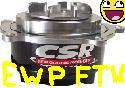
Nothing? Seriously? Are you really that angry that you are going to ignore simple physics? 5.8A additional load (that's what your EWP is BTW) on a battery will kill the battery sooner than without it. I don't know about you, but without an alternator or battery your car will not run. Simple conclusion, you are less likely to make it home on your own vehicle power with an EWP than a mechanical one. That must have been too much thought process for you.
The added complexity of the system was already explained earlier in this very thread, you just choose to ignore it. It doesn't matter if you accept it or not, it's a fact.
I'm not going to give you a list of all the threads (here and other forums) of the raised coolant temps on the highway. Just ******* google it and stop being intentionally ignorant or lazy (ignorant is not name calling BTW, it is a state of knowledge that you apparently want to have).
What name is this that I called you? Making things up again, are you?
This doesn't even make sense. Like a lot of your other posts before this, your anger has led to a garbled mess of WTF. Care to elaborate your findings on this?
You should probably know what you're talking about before calling the OP a troll when it's you trolling HIS thread.....
I'll just leave this here.
Definition: Troll (Internet)
Internet Troll
An Internet troll, or simply troll in Internet slang, is someone who posts controversial, inflammatory, irrelevant or off-topic messages in an online community, such as an online discussion forum or chat room, with the primary intent of provoking other users into an emotional response or to generally disrupt normal on-topic discussion.
Unless, of course, you already knew the definition. In which case, who's calling who "grammar school names"?
Hmmm, who made this radical claim?
What radical claims? Nothing I stated was radical, only you made radical claims.
Here's a better idea, come here to Southern Arizona, let's go do a few laps around any road course........
100+°F and road racing, yeah your 85W of pumping capacity has got it! No problem! Nothing will go wrong at all. It's perfect!
The added complexity of the system was already explained earlier in this very thread, you just choose to ignore it. It doesn't matter if you accept it or not, it's a fact.
I'm not going to give you a list of all the threads (here and other forums) of the raised coolant temps on the highway. Just ******* google it and stop being intentionally ignorant or lazy (ignorant is not name calling BTW, it is a state of knowledge that you apparently want to have).
What name is this that I called you? Making things up again, are you?
This doesn't even make sense. Like a lot of your other posts before this, your anger has led to a garbled mess of WTF. Care to elaborate your findings on this?
You should probably know what you're talking about before calling the OP a troll when it's you trolling HIS thread.....
I'll just leave this here.
Definition: Troll (Internet)
Internet Troll
An Internet troll, or simply troll in Internet slang, is someone who posts controversial, inflammatory, irrelevant or off-topic messages in an online community, such as an online discussion forum or chat room, with the primary intent of provoking other users into an emotional response or to generally disrupt normal on-topic discussion.
Unless, of course, you already knew the definition. In which case, who's calling who "grammar school names"?
Hmmm, who made this radical claim?
What radical claims? Nothing I stated was radical, only you made radical claims.
Here's a better idea, come here to Southern Arizona, let's go do a few laps around any road course........
100+°F and road racing, yeah your 85W of pumping capacity has got it! No problem! Nothing will go wrong at all. It's perfect!
To those like Roger who can't get past the dash gauge and actually understand physics.
Most LT1s use the head mounted temp sender for the dash and the dash is pretty damned low resolution.
My experience is that a b-body with a 30gpm electric pump and 4.10s A4 tranny runs hotter at 70mph than at 35mph when viewed through data logging software even in 40f weather. The 35mph even came at the end of the 2 hour drive at 70mph so heat soak was thorough. The Meziere had spun off the impeller hence the 30gpm backup pump being on.
As hrcslam is trying to say this is about comprehension, people should understand things and too few put forth the effort.
You want an extra .1 drag racing and want to be able to cool in the pits an electric can do that BUT understand it comes at a cost of ultimate capacity and increased complexity of the system. They are sufficient in cooling capacity for most cars, but that is NOT the argument many pose as those who ignore physics often pretend they are an upgrade in capacity.
Far as the puller/pusher seeing as the system is pretty much a closed loop I suspect this has little application to this particular discussion, much like the temps of vehicles with different thermostat ratings in different engines.
Most LT1s use the head mounted temp sender for the dash and the dash is pretty damned low resolution.
My experience is that a b-body with a 30gpm electric pump and 4.10s A4 tranny runs hotter at 70mph than at 35mph when viewed through data logging software even in 40f weather. The 35mph even came at the end of the 2 hour drive at 70mph so heat soak was thorough. The Meziere had spun off the impeller hence the 30gpm backup pump being on.
As hrcslam is trying to say this is about comprehension, people should understand things and too few put forth the effort.
You want an extra .1 drag racing and want to be able to cool in the pits an electric can do that BUT understand it comes at a cost of ultimate capacity and increased complexity of the system. They are sufficient in cooling capacity for most cars, but that is NOT the argument many pose as those who ignore physics often pretend they are an upgrade in capacity.
Far as the puller/pusher seeing as the system is pretty much a closed loop I suspect this has little application to this particular discussion, much like the temps of vehicles with different thermostat ratings in different engines.
Can we please go over this increased complexity syndrome?
Mechanical has an impeller mounted on a drive shaft passing through a bearing with a seal that connects to a greased drive sleeve with seals on either side that connects to a drive shaft that passes through a timing cover with seal that is mounted to a bearing assembly that has a gear driven off of the camshaft timing gear.
Electric has an impeller that is mounted to an electric motor with a seal that has a two wire hook up.
What am I missing?