changing color on hood




okay couple more questions... what should I use to get the rest of the entire surface sanded? what I mean is I already used the shortest hard block I have. There's so many different contours and shapes here how do I get them all? I assume inside those small areas I'll have to just do it by hand but what about the larger surfaces?
And once I figure out how to sand the entire surface, do I want to go on to 400, then 600 before applying any primers or sealer?
And once I figure out how to sand the entire surface, do I want to go on to 400, then 600 before applying any primers or sealer?




Looking good. Don't sand anything finer than 400 grit. Honestly, 320 wet is fine for this stage. You aren't really perfecting anything, you're just creating some nice "tooth" to the surface so that the paint will stick. Once all the shiny stuff is gone, you're set. Make sure to wash it like I said in my previous post and dry before you shoot the next coat.
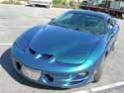
I don't know about needing another sealer coat, I'll let the experts weigh in, but since you are painting over an existing job that should have its own sealer, I'd think you can skip straight to primer. The underside of the hood looked a little light though, so maybe you'll need to create a base there. Once you lay the high-build sanding primer down, then you can start to perfect things and get surfaces blocked out. If you wish to hold creases in your hood, like the center spline or the faux intakes, you can use vinyl tape like they use to mask off flames. Get a few widths, as fatter will make straighter edges for you, but thinner can take tighter turns. Any automotive paint store will carry this tape.
I don't know about needing another sealer coat, I'll let the experts weigh in, but since you are painting over an existing job that should have its own sealer, I'd think you can skip straight to primer. The underside of the hood looked a little light though, so maybe you'll need to create a base there. Once you lay the high-build sanding primer down, then you can start to perfect things and get surfaces blocked out. If you wish to hold creases in your hood, like the center spline or the faux intakes, you can use vinyl tape like they use to mask off flames. Get a few widths, as fatter will make straighter edges for you, but thinner can take tighter turns. Any automotive paint store will carry this tape.
Looking good. Don't sand anything finer than 400 grit. Honestly, 320 wet is fine for this stage. You aren't really perfecting anything, you're just creating some nice "tooth" to the surface so that the paint will stick. Once all the shiny stuff is gone, you're set. Make sure to wash it like I said in my previous post and dry before you shoot the next coat.
I don't know about needing another sealer coat, I'll let the experts weigh in, but since you are painting over an existing job that should have its own sealer, I'd think you can skip straight to primer. The underside of the hood looked a little light though, so maybe you'll need to create a base there. Once you lay the high-build sanding primer down, then you can start to perfect things and get surfaces blocked out. If you wish to hold creases in your hood, like the center spline or the faux intakes, you can use vinyl tape like they use to mask off flames. Get a few widths, as fatter will make straighter edges for you, but thinner can take tighter turns. Any automotive paint store will carry this tape.
I don't know about needing another sealer coat, I'll let the experts weigh in, but since you are painting over an existing job that should have its own sealer, I'd think you can skip straight to primer. The underside of the hood looked a little light though, so maybe you'll need to create a base there. Once you lay the high-build sanding primer down, then you can start to perfect things and get surfaces blocked out. If you wish to hold creases in your hood, like the center spline or the faux intakes, you can use vinyl tape like they use to mask off flames. Get a few widths, as fatter will make straighter edges for you, but thinner can take tighter turns. Any automotive paint store will carry this tape.
Eastwood says there 2K urethane is a "sandable primer which allows for leveling out imperfections typically sprayed over epoxy or self etching primer."
Polyester primer they say "Think sprayable body filler"... The trick the pros use to get laser straight body panels and a killer paint job in the end.
Sooo, I'm still confused on which to use.
Like I said in the beginning, this VFN hood looked really nice before, unfortunately it was red instead of maroon already. Which brings up another concern ... its fiberglass. Anything special or different procedure for that?