





Eoit help
 Eoit help
 hey guys,
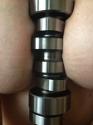
I just put a sns stage 3 cam (his new version by cam motion) in, some messaged 243 heads, ported ls2 intake and tb and I have the tune dialed in pretty good but my idle feels like its fighting itself and the gas smell is pretty crazy. My wot and cruise is pretty on point as i can cruise around in 5th gear at under 1500 rpm without any real bucking which is pretty good for such a big cam I think. I have been reading a bit about EOIT and there are a whole bunch of different theories and spreadsheets out there and it seems like something I really need to get dialed in on my car. Can somebody help me with this or have a spreadsheet that they know works I can use? Our pcms use a boundary, normal and makeup tables and im not exactly sure what to do with them anymore lol. Thanks for your help.
I attached a copy of my tune.
I just put a sns stage 3 cam (his new version by cam motion) in, some messaged 243 heads, ported ls2 intake and tb and I have the tune dialed in pretty good but my idle feels like its fighting itself and the gas smell is pretty crazy. My wot and cruise is pretty on point as i can cruise around in 5th gear at under 1500 rpm without any real bucking which is pretty good for such a big cam I think. I have been reading a bit about EOIT and there are a whole bunch of different theories and spreadsheets out there and it seems like something I really need to get dialed in on my car. Can somebody help me with this or have a spreadsheet that they know works I can use? Our pcms use a boundary, normal and makeup tables and im not exactly sure what to do with them anymore lol. Thanks for your help.
I attached a copy of my tune.
Attached. I got this off a thread on HP Tuners. It isn't too hard to figure out, but you'll also need a valve events calculator to work with. The basic equation for EOIT is as follows:
EOIT = [(boundary + normal) x 90] - 784
A factor of '1' in the boundary and normal tables equals 90 degrees of crank rotation. The "-784" comes from a 720 degree total crankshaft rotation being subtracted out, and the cam or crank sensor (not sure which is referenced) is 64 degrees off from center. The equation was derived empirically by someone using a scan tool and a bunch of settings
360 degrees - or half the four stroke cycle - is TDC on the intake stroke, for the purpose of this equation.
So, stock, the boundary of 6.5 is added to the Normal of 5.55, for 12.05, times 90, minus 784, gives 300.5 for the EOIT. This means the injector will finish spraying at 60 degrees before TDC on the exhaust stroke, which means it is spraying the back of the intake valve before it opens. Fine for stock, but a high overlap cam, not so much. The theory is that by spraying the back of the intake valve, the fuel can evaporate a bit before going into the cylinder. On a cold engine, I would think this is a must. Which is why the Normal table is set by coolant temperature.
So, how to use the spreadsheet:
The sheet was developed when the guys were still guessing as to what meant what on various valve events. Somebody made the observation that this coincides perfectly with the 0.006" intake valve open timing on the stock LS1 cam, and others proposed that the exhaust valve timing would be more important during overlap - spray ends with EVC to minimize exhaust short-cutting fuel. Others still proposed that the 050 valve events would be more critical. So, you get four different numbers to work with.
1. Cell B7, set your cam's EVC. use .050 or .006, up to you
2. Cell B8, set your cam's IVO. use .050 or .006, up to you
3. Cells A10-D12 are stock LS1 cam events converted to 720 degree notation. Calculated values for your convenience.
4. Cells A14-D17 are your cam's valve events converted to 720 degree notation. Calculated values for your convenience.
5. Cell B21 takes your old EOIT, adds difference in rotation for the EVC [Cell B17] event to it, and calculates a new normal value.
6. Cell C21 does the same thing, but uses the IVO difference [Cell C17] as a reference.
7. B23 uses the EVC event and instead of calculating a shift in timing, simply calculates the Normal value directly from the rotation position.
8. C23 uses the IVO event directly to calculate the Normal.
For reference, my tuner ended up exactly halfway between the EVC New Normal and EVC True Normal - cells B21 and B23. I can't remember the full table perfectly, but basically, mine starts around 2.5 on the cold end and then from about 80 degrees to about 130 degrees, increases, finally settling at 5.95 at the hot end.
Many others have reported best results using the EVC true normal. Earlier, and the fuel smell increases. Later, and the fuel does not evaporate well enough. I've seen Normal values as high as 6.55 in others' tunes, but I have never tried that myself.
The attached file shows how it works on my cam's .050" valve events. If I use my .006 events, just for a reference, the true normal changes from 6.24 to 6.49, and the New Normal changes from 5.75 to 5.99.
I would consider these to be starting points, and not "end-all-be-all here's how to set EOIT"
I can absolutely tell you that going from the factory 5.55 to the tuners choice of 5.95 reduced the fuel smell substantially. Did not eliminate, but greatly reduced.
EOIT = [(boundary + normal) x 90] - 784
A factor of '1' in the boundary and normal tables equals 90 degrees of crank rotation. The "-784" comes from a 720 degree total crankshaft rotation being subtracted out, and the cam or crank sensor (not sure which is referenced) is 64 degrees off from center. The equation was derived empirically by someone using a scan tool and a bunch of settings
360 degrees - or half the four stroke cycle - is TDC on the intake stroke, for the purpose of this equation.
So, stock, the boundary of 6.5 is added to the Normal of 5.55, for 12.05, times 90, minus 784, gives 300.5 for the EOIT. This means the injector will finish spraying at 60 degrees before TDC on the exhaust stroke, which means it is spraying the back of the intake valve before it opens. Fine for stock, but a high overlap cam, not so much. The theory is that by spraying the back of the intake valve, the fuel can evaporate a bit before going into the cylinder. On a cold engine, I would think this is a must. Which is why the Normal table is set by coolant temperature.
So, how to use the spreadsheet:
The sheet was developed when the guys were still guessing as to what meant what on various valve events. Somebody made the observation that this coincides perfectly with the 0.006" intake valve open timing on the stock LS1 cam, and others proposed that the exhaust valve timing would be more important during overlap - spray ends with EVC to minimize exhaust short-cutting fuel. Others still proposed that the 050 valve events would be more critical. So, you get four different numbers to work with.
1. Cell B7, set your cam's EVC. use .050 or .006, up to you
2. Cell B8, set your cam's IVO. use .050 or .006, up to you
3. Cells A10-D12 are stock LS1 cam events converted to 720 degree notation. Calculated values for your convenience.
4. Cells A14-D17 are your cam's valve events converted to 720 degree notation. Calculated values for your convenience.
5. Cell B21 takes your old EOIT, adds difference in rotation for the EVC [Cell B17] event to it, and calculates a new normal value.
6. Cell C21 does the same thing, but uses the IVO difference [Cell C17] as a reference.
7. B23 uses the EVC event and instead of calculating a shift in timing, simply calculates the Normal value directly from the rotation position.
8. C23 uses the IVO event directly to calculate the Normal.
For reference, my tuner ended up exactly halfway between the EVC New Normal and EVC True Normal - cells B21 and B23. I can't remember the full table perfectly, but basically, mine starts around 2.5 on the cold end and then from about 80 degrees to about 130 degrees, increases, finally settling at 5.95 at the hot end.
Many others have reported best results using the EVC true normal. Earlier, and the fuel smell increases. Later, and the fuel does not evaporate well enough. I've seen Normal values as high as 6.55 in others' tunes, but I have never tried that myself.
The attached file shows how it works on my cam's .050" valve events. If I use my .006 events, just for a reference, the true normal changes from 6.24 to 6.49, and the New Normal changes from 5.75 to 5.99.
I would consider these to be starting points, and not "end-all-be-all here's how to set EOIT"
I can absolutely tell you that going from the factory 5.55 to the tuners choice of 5.95 reduced the fuel smell substantially. Did not eliminate, but greatly reduced.
thanks.
I got the cam card today and plugged the numbers into the spreadsheet but im confused on what numbers to use and where to put them. There is a new normal evc and ivo and a true normal evc and ivo. Which goes where?


I got the cam card today and plugged the numbers into the spreadsheet but im confused on what numbers to use and where to put them. There is a new normal evc and ivo and a true normal evc and ivo. Which goes where?


Last edited by hodge9386; Oct 21, 2015 at 03:23 PM.
so i went in the middle of the two and got 6.04 and put that in my normal at 154* and up and changed the whole makeup table to 6.04 and i didnt really seem to change much.. maybe a little less smell, its hard to tell.
You basically figured it out. Pick a value and set the normal table accordingly. I compared my make up table to a stock tune, and my tuner never touched it. I would bet that if you delayed normal all the way to 6.29, your true EVC EOIT calculation, that will be about right. Because at this point, the exhaust valve is closed, so far less fuel would short circuit to the exhaust. I've seen people post they set it to 6.55 as a rule, but I saw no back up information for that decision.
I don't think it will help you make any more power, but it might clean up the smell some more. There should be a point at which your car tries to trim it leaner, and then start to go the other way again. Once you get to that point, you're at your best setting.
A big cam will have some smell no matter what you do. Some have reported better low end torque from changing this setting, but I have never seen a dyno chart to prove this.
It won't make a difference on the high RPM end, because at 80% duty cycle, it's spraying on the back of the injector during the exhaust stroke.
I'm the last person who should tell you what to set it to. I was just trying to answer your question as to what it is, how the calculations work, and give you a spreadsheet to help you calculate it.
I don't think it will help you make any more power, but it might clean up the smell some more. There should be a point at which your car tries to trim it leaner, and then start to go the other way again. Once you get to that point, you're at your best setting.
A big cam will have some smell no matter what you do. Some have reported better low end torque from changing this setting, but I have never seen a dyno chart to prove this.
It won't make a difference on the high RPM end, because at 80% duty cycle, it's spraying on the back of the injector during the exhaust stroke.
I'm the last person who should tell you what to set it to. I was just trying to answer your question as to what it is, how the calculations work, and give you a spreadsheet to help you calculate it.
With a cam and no cats I have never seen anything really help on smell. Every time I have seen a car and the owner "thought" it was better I couldn't tell a difference. Nothing wrong with trying to make it better, I just wouldnt expect anything drastic. Thats assuming the timing and fuel are correct. I have seen the timing so high before I couldnt even get the car on the dyno because the fumes were burning my eyes.
Trending Topics
yea im not trying to re invent the wheel here. what do you suggest the idle timing be at? it jumps from 15 to 20* right now. I have my fueling set at 14.68 and that is what it idles at on my wideband but i did notice then i was tuning the fuel it did seem so smooth out a bit when it was a little lean. Could i set it to idlle around 16 or so and it be ok? how would i adjust it to command 16 at idle? I not really concerned with the smell, im just trying go get it to idle a little smoother but still have a good chop if that makes sense. sometimes it sounds like its fighting itself and shakes the whole car.
I am also having a issue with a cold idle. When I first started the tuning and finally got it to idle without touching the gas it was around 80* outside and i did the russ k idle config to set the raf and that is fine but now that it is colder i can not get it to idle by itself until the ECT reaches 110* then it is like a switch and will idle without the pedal.
Overall the car runs good its just these little things that bug me. Thanks for the help guys
I am also having a issue with a cold idle. When I first started the tuning and finally got it to idle without touching the gas it was around 80* outside and i did the russ k idle config to set the raf and that is fine but now that it is colder i can not get it to idle by itself until the ECT reaches 110* then it is like a switch and will idle without the pedal.
Overall the car runs good its just these little things that bug me. Thanks for the help guys
LS1 Tech Stories
The Best V8 Stories One Small Block at Time

6 Common C5 Corvette Failures and What's Involved In Repairing Them
Pouria Savadkouei
Retro Modern Bandit Pontiac Trans AM Comes With Burt Reynolds' Autograph
Verdad Gallardo
Top 10 Greatest Cadillac V Series Performance Models Ever, Ranked
Pouria Savadkouei
Top 10 Most Powerful Chevy Trucks Ever Made!

Hennessey's New Supercharged Silverado ZR2 Has 700 HP
Verdad Gallardo
Coachbuilt N2A Anteros Is an LS2-Powered C6 Corvette In Italian Clothes
Verdad Gallardo
Awesome K5 Blazer Restomod Comes With C7 Corvette Power
Verdad Gallardo
10 Camaros You Should Never Buy

10 LS Engine Myths That Refuse to Die
Verdad Gallardo
I've not tried this bit of science & probably will not get to it as I'm approaching winter & the moth ***** are calling.
I'm told if you are watching the WB you will see the mixture richen @ idle when you get it right. I'm idling CL so I would expect to see increased negative trims.
Tx's for the detail Darth, nice explanation.
hodge, that's a big *** cam & you are probably going have to idle OL with a leaner indicated mixture as you are finding. Possibly you might get enough range in the 02 rich/lean switch points to idle in CL, don't try that until you have it idling nicely. Your timing under/over speed tables may help you as well. The cam is going to have natural lope & rpm swing, if you want to smooth it out, don't have timing correction in those windows. Then slowly ramp in the correction getting more aggressive as the rpm error increases. Your under speed table drops to 2* @ -200rpm, no idea why GM did that maybe that hadn't planned for 17* of overlap.
I'm told if you are watching the WB you will see the mixture richen @ idle when you get it right. I'm idling CL so I would expect to see increased negative trims.
Tx's for the detail Darth, nice explanation.
hodge, that's a big *** cam & you are probably going have to idle OL with a leaner indicated mixture as you are finding. Possibly you might get enough range in the 02 rich/lean switch points to idle in CL, don't try that until you have it idling nicely. Your timing under/over speed tables may help you as well. The cam is going to have natural lope & rpm swing, if you want to smooth it out, don't have timing correction in those windows. Then slowly ramp in the correction getting more aggressive as the rpm error increases. Your under speed table drops to 2* @ -200rpm, no idea why GM did that maybe that hadn't planned for 17* of overlap.
how do i make it idle in open loop? what table do i adjust to lean the idle out? my o2 sensores oscilate great when driving around but are all out of wack. my car idles around 70 kpa and i tried to adjust the ep ratio table to .9 which should have gave me 16.3 afr but it didnt seem to do anything.
I don't have my tuning computer/software @ work so I cannot give you specific instruction. The jest of it is your are going into PE @ idle, if I remember the table it will be 1200rpm & below.

