


Inexpensive Opensource Flashing(Read is 100% working)

TECH Senior Member


Joined: Jun 2016
Posts: 22,298
Likes: 3,619
From: Central Cal.

Teching In
Joined: May 2018
Posts: 4
Likes: 0

Thank you for your responses. This was done in the car. I put an LS4 into my MGB so I'm using a stand alone harness. I'm using a 0411 which I believe I got out of an 01 Chevy Blazer 4.3 V6. It isn't factory, I had it flashed by a well known tuner in my area and it was based on a manual transmission 12202088 OS. It runs really well but I've had some weirdness with my OBDII port that I will need to troubleshoot. I'm going to a bench setup in the next few weeks, i think I have almost everything I need including a spare 0411. Just missing an OBDII port for it.
Thanks again for your help.
Thanks again for your help.
I have an extra obd2 port connector. Send me a PM with your address and it's yours.
The odds of getting a genuine VxDiag on Ebay is virtually non-existent right now unless you know something I don't. As we get closer to a beta release I will likely try and track down a seller either on Ebay or Amazon that we can work with to make sure they have the 100% real deal so we can have confidence when we point someone at a device that they will be getting something we know for a fact will work.
I have no issue buying cloned hardware out of my own pocket and testing it..... and I have been over the last 6 months or so......however unless your dealing with the actual manufacturer of the clone'd product there is no way of knowing if the next batch they get will be the same quality. I have sent back more devices that didn't work correctly than I have kept.......I've had to take a break since Paypal sent me a warning for excessive return claims near the end of last year and is the reason I turned to Amazon.
We are supporting a number of inexpensive devices that will likely be superior to most if not all poor quality knock off devices like the worldobd2.com Mdi or most Ebay VxDiag nano's.
I have no issue buying cloned hardware out of my own pocket and testing it..... and I have been over the last 6 months or so......however unless your dealing with the actual manufacturer of the clone'd product there is no way of knowing if the next batch they get will be the same quality. I have sent back more devices that didn't work correctly than I have kept.......I've had to take a break since Paypal sent me a warning for excessive return claims near the end of last year and is the reason I turned to Amazon.
We are supporting a number of inexpensive devices that will likely be superior to most if not all poor quality knock off devices like the worldobd2.com Mdi or most Ebay VxDiag nano's.
I had issues using my vx nano but I guess that was the software bug. Any surefire way though to know if it's the real deal or a cloned one? Got it from amazon and so far everything has worked, including tis2000 flashing, so it's probably the real deal or at least really good clone?

Thread Starter
TECH Enthusiast
Joined: Oct 2017
Posts: 567
Likes: 159
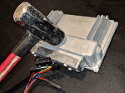
After three long nights of torment....The counsel of pcm gods have agreed that after many years of torment and being imprisoned it was time to begin the purge .......and a mighty hammer was called down from the heavens that would bring justice to the tuning world for anyone willing to spend at least $29.99 on a flash tool! ! ! !
While the hero is still young and in training.....the Hammer is quickly proving to be a worthy adversary in battle that should not to be taken lightly.
While the hero is still young and in training.....the Hammer is quickly proving to be a worthy adversary in battle that should not to be taken lightly.
Spoiler!
TECH Fanatic
Joined: Jan 2018
Posts: 1,060
Likes: 198
I'm pretty stoked about this too.
A couple weeks ago I erased the calibration from the PCM that I've been using for testing. I was trying to write new calibration but ran into some surprises, so that failed. Thanks to PeteS160 and our new kernel-dev teammate (not sure he wants his named shared or not?) my bench PCM is back to normal as of a few minutes ago.
We still have issues to work on, for example, after successfully updating my calibration, the app just started spewing error messages because it didn't recognize the "done" message from the kernel code. And this stuff isn't solid enough that I'd try it in a car just yet. But it's coming along.
A couple weeks ago I erased the calibration from the PCM that I've been using for testing. I was trying to write new calibration but ran into some surprises, so that failed. Thanks to PeteS160 and our new kernel-dev teammate (not sure he wants his named shared or not?) my bench PCM is back to normal as of a few minutes ago.
We still have issues to work on, for example, after successfully updating my calibration, the app just started spewing error messages because it didn't recognize the "done" message from the kernel code. And this stuff isn't solid enough that I'd try it in a car just yet. But it's coming along.
LS1 Tech Stories
The Best V8 Stories One Small Block at Time

Gas Monkey Built a 6-Wheel Ferrari Testarossa With a Corvette LT4 Engine
Verdad Gallardo
7 Most Reliable High-Performance Engines GM Has Ever Built
Verdad Gallardo
Amazing '71 Camaro Restomod Is Modern Muscle Car Under the Skin
Verdad Gallardo
6 Common C5 Corvette Failures and What's Involved In Repairing Them
Pouria Savadkouei
Retro Modern Bandit Pontiac Trans AM Comes With Burt Reynolds' Autograph
Verdad Gallardo
Top 10 Greatest Cadillac V Series Performance Models Ever, Ranked
Pouria Savadkouei
Top 10 Most Powerful Chevy Trucks Ever Made!

Hennessey's New Supercharged Silverado ZR2 Has 700 HP
Verdad Gallardo
Coachbuilt N2A Anteros Is an LS2-Powered C6 Corvette In Italian Clothes
Verdad Gallardo


After three long nights of torment....The counsel of pcm gods have agreed that after many years of torment and being imprisoned it was time to begin the purge .......and a mighty hammer was called down from the heavens that would bring justice to the tuning world for anyone willing to spend at least $29.99 on a flash tool! ! ! !
While the hero is still young and in training.....the Hammer is quickly proving to be a worthy adversary in battle that should not to be taken lightly.
While the hero is still young and in training.....the Hammer is quickly proving to be a worthy adversary in battle that should not to be taken lightly.
Spoiler!

Registered User
Joined: Dec 2018
Posts: 3
Likes: 0
Hi all! My brother and dad are both into flashing ecu's and showed me this thread as I am a software engineer. I can say that I am intrigued. I write daily in C++ and Python and have experience with other languages as well. I own multiple raspberry pis and arduino and my brother has a pcm and can make the bench cable setup. How can I start to help with this? I'm sure I'll have to familiarize myself with the terminology, but I don't think that will take long.

Registered User
Joined: Dec 2018
Posts: 3
Likes: 0
Sounds great. I read through the thread and I think I have a decent understanding of what's going on. I'll gather all of that stuff, build the solution from source, and play around a bit. Thanks!
TECH Fanatic
Joined: Jan 2018
Posts: 1,060
Likes: 198
Hi all! My brother and dad are both into flashing ecu's and showed me this thread as I am a software engineer. I can say that I am intrigued. I write daily in C++ and Python and have experience with other languages as well. I own multiple raspberry pis and arduino and my brother has a pcm and can make the bench cable setup. How can I start to help with this? I'm sure I'll have to familiarize myself with the terminology, but I don't think that will take long.
https://github.com/LegacyNsfw/PcmHacks
You'll need Visual Studio (the "Community" edition is free) and make sure you include C# when you install it.
There's also a little bit of plain-C code in there, but that's just experimental at this point. It can send messages over the OBD2 connection, but not reliably, and it can't read messages at all. But I like the idea of doing kernel development in C (with a little inline asm where necessary) so I'm tinkering with it. The installer for the cross-compiler is checked in as well, just for convenience.
The real kernel development is being done in 68332 assembly and isn't on github yet. It's probably going to stay closed-source for a while, so we don't end up with knockoff projects hitting the market until after we've got a head start in the popularity contest.

I'll PM you some contact information, stay tuned.
Thread Starter
TECH Enthusiast
Joined: Oct 2017
Posts: 567
Likes: 159
Hi all! My brother and dad are both into flashing ecu's and showed me this thread as I am a software engineer. I can say that I am intrigued. I write daily in C++ and Python and have experience with other languages as well. I own multiple raspberry pis and arduino and my brother has a pcm and can make the bench cable setup. How can I start to help with this? I'm sure I'll have to familiarize myself with the terminology, but I don't think that will take long.
Either way we'd be glad to get you on board with what we are working on. In this case the more hands and eyes we have the faster and smoother things will go.

Teching In
Joined: Aug 2018
Posts: 6
Likes: 0
From: Manitoba, Canada

TECH Fanatic
Joined: Jan 2018
Posts: 1,060
Likes: 198
We have successfully flashed, yes. It's a really cool milestone.
I'm pretty sure the number of successful flashes is still much smaller than the number of failed flashes, though... We still have work ahead of us, to make it reliable enough to use in a car that anyone cares about.
I'm pretty sure the number of successful flashes is still much smaller than the number of failed flashes, though... We still have work ahead of us, to make it reliable enough to use in a car that anyone cares about.
Registered User
Joined: Dec 2018
Posts: 3
Likes: 0
If you are interested in working with C++ the Arduino project that I started this thread with hasn't seen any love in quite some time. It's very capable of being integrated with the Pcm hammer or could be extended a bit more to run stand alone reading/writing to an SD card as well. You can shoot me a PM if that's something your interested in or you can coordinate with NSFW if you'd like to work in C#.
Either way we'd be glad to get you on board with what we are working on. In this case the more hands and eyes we have the faster and smoother things will go.
Either way we'd be glad to get you on board with what we are working on. In this case the more hands and eyes we have the faster and smoother things will go.