






Is Motor Ready For WOT?
 Is Motor Ready For WOT?
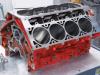
 These last few days Ive been breaking in my new motor. Its a LS6 with a stock crank and forged rods and pistons. It also has a FAST 92mm and TFS 215 heads 59cc for 12:1cr (with a little help from taller pistons). The cam is a 236/243 112lsa 4degrees advanced and comes alive north of 4000rpms. This thing was put together really nice and tight since I need it to last. I just put 600mi on it and have changed the oil twice, to be safe, and have somewhat babied it. Ive taken it up to 4000 and then 5000rpm on nice steady strong acceleration to make sure the piston rings seal well, just not wot. She sounds great, no blowby or oil consumption and I can tell its gonna be fast. This is my first built motor I break in from new and Im wondering if it should be safe to give her a wot to see what she has. My tech also told me once the motor is broken in he'll add around 3-4degrees more of timing for a little more power. Cars at 18 degrees of timing and seems to like it with no detonation. So, what do you guys say? Time to punch it?
Well I did a couple wot pulls and man does thing thing go. Felt like my tires were made of butter. Just a minor shift point adjustment now and she'll be ready to terrorize the streets again. Thnx guys.

Teching In
Joined: Nov 2009
Posts: 4
Likes: 0
From: Neptune Beach, FL
that is a factory motor. when you break in a performance motor you always do it with non synthetic. they actually make special brake in oil with added zinc for that purpose.
Teching In
Joined: Nov 2009
Posts: 4
Likes: 0
From: Neptune Beach, FL
I've built plenty of "performance" engines and use synthetic for the initial fill. I have two 467 solid roller big blocks I'm assembly now for my 34' Scarab. They should be pushing 600 HP @ ~6000 RPM and they'll get synthetic from the beginning...I'll have no problems with break-in just like all of the others. Once in the boat, I'll warm them up, idle out of the marina and then stand on the throttles just like I've always done. There's a lot less to engine break-in today than there use to be in the '50s/'60s because of better materials, processes, and oil but there are a lot of old wives tales that refuse to die. With moly rings and plateau hones, ring seating is almost completed on the engine stand with a couple of turns of the engine. Give the engine a few hundred revolutions after the initial start and you're done...none of this repeated accelerate/decelerate like in the old days for the first so many miles.
The "special break-in oil" with added zinc (actually it's zinc and phosphorus or ZDDP) is actually for breaking in flat tappet camshafts and is not needed for roller cammed engines.

Trending Topics
LS1 Tech Stories
The Best V8 Stories One Small Block at Time

Topdon ONE vs. Artidiag 800 BT2: Which is the Diagnostic Tablet For You?
Pouria Savadkouei
Gas Monkey Built a 6-Wheel Ferrari Testarossa With a Corvette LT4 Engine
Verdad Gallardo
7 Most Reliable High-Performance Engines GM Has Ever Built
Verdad Gallardo
Amazing '71 Camaro Restomod Is Modern Muscle Car Under the Skin
Verdad Gallardo
6 Common C5 Corvette Failures and What's Involved In Repairing Them
Pouria Savadkouei
Retro Modern Bandit Pontiac Trans AM Comes With Burt Reynolds' Autograph
Verdad Gallardo
Top 10 Greatest Cadillac V Series Performance Models Ever, Ranked
Pouria Savadkouei
Top 10 Most Powerful Chevy Trucks Ever Made!

Hennessey's New Supercharged Silverado ZR2 Has 700 HP
Verdad Gallardo Interesting, so you don't consider the 638 HP LS9, 556 HP LSA, or the 505 HP LS7 performance engines??? What exactly fits the definition of a "performance" engine to you? What are the differences between a "performance" and "factory" engine that require the use of a non synthetic oil for the initial fill in the "performance" engine? Do you know most synthetic oil is just highly refined petroleum oil?
I've built plenty of "performance" engines and use synthetic for the initial fill. I have two 467 solid roller big blocks I'm assembly now for my 34' Scarab. They should be pushing 600 HP @ ~6000 RPM and they'll get synthetic from the beginning...I'll have no problems with break-in just like all of the others. Once in the boat, I'll warm them up, idle out of the marina and then stand on the throttles just like I've always done. There's a lot less to engine break-in today than there use to be in the '50s/'60s because of better materials, processes, and oil but there are a lot of old wives tales that refuse to die. With moly rings and plateau hones, ring seating is almost completed on the engine stand with a couple of turns of the engine. Give the engine a few hundred revolutions after the initial start and you're done...none of this repeated accelerate/decelerate like in the old days for the first so many miles.
The "special break-in oil" with added zinc (actually it's zinc and phosphorus or ZDDP) is actually for breaking in flat tappet camshafts and is not needed for roller cammed engines.
I've built plenty of "performance" engines and use synthetic for the initial fill. I have two 467 solid roller big blocks I'm assembly now for my 34' Scarab. They should be pushing 600 HP @ ~6000 RPM and they'll get synthetic from the beginning...I'll have no problems with break-in just like all of the others. Once in the boat, I'll warm them up, idle out of the marina and then stand on the throttles just like I've always done. There's a lot less to engine break-in today than there use to be in the '50s/'60s because of better materials, processes, and oil but there are a lot of old wives tales that refuse to die. With moly rings and plateau hones, ring seating is almost completed on the engine stand with a couple of turns of the engine. Give the engine a few hundred revolutions after the initial start and you're done...none of this repeated accelerate/decelerate like in the old days for the first so many miles.
The "special break-in oil" with added zinc (actually it's zinc and phosphorus or ZDDP) is actually for breaking in flat tappet camshafts and is not needed for roller cammed engines.
also synthetic oil is expensive, i would rather drain the oil and replace the filter every 500 miles in the break in period with non synthetic the go with synthetic oil and run it to 1000miles.
i broke in my motor like that and after a little over 1000miles it stopped burning oil. and then i switched to synthetic.

Also synthetic oil is expensive, i would rather drain the oil and replace the filter every 500 miles in the break in period with non synthetic the go with synthetic oil and run it to 1000miles.
I like to change the oil and filter after 20 miles, then again at like 200, 1000 then at 2K I figure the motor is pretty flushed out and ready for synthetic which will be in there for ~7500 miles per change.
Jim
Jim



These last few days Ive been breaking in my new motor. Its a LS6 with a stock crank and forged rods and pistons. It also has a FAST 92mm and TFS 215 heads 59cc for 12:1cr (with a little help from taller pistons). The cam is a 236/243 112lsa 4degrees advanced and comes alive north of 4000rpms. This thing was put together really nice and tight since I need it to last. I just put 600mi on it and have changed the oil twice, to be safe, and have somewhat babied it. Ive taken it up to 4000 and then 5000rpm on nice steady strong acceleration to make sure the piston rings seal well, just not wot. She sounds great, no blowby or oil consumption and I can tell its gonna be fast. This is my first built motor I break in from new and Im wondering if it should be safe to give her a wot to see what she has. My tech also told me once the motor is broken in he'll add around 3-4degrees more of timing for a little more power. Cars at 18 degrees of timing and seems to like it with no detonation. So, what do you guys say? Time to punch it?


by performance motor i mean a hand build motor. i know the ls9 is probably hand built, but the rings that they use are not the same rings most of the hand build motors have. i personally do not care if you break your motor in with ****, but i have seen first hand on a friends sr20det when he has tried to break in his motor with synthetic oil and it just kept burning it out, as soon as he switched to non synthetic and drove a couple of thousand miles it stopped burning oil. call up any performance engine builder and ask them what kind of oil they would recommend to break in a motor.
also synthetic oil is expensive, i would rather drain the oil and replace the filter every 500 miles in the break in period with non synthetic the go with synthetic oil and run it to 1000miles.
i broke in my motor like that and after a little over 1000miles it stopped burning oil. and then i switched to synthetic.
also synthetic oil is expensive, i would rather drain the oil and replace the filter every 500 miles in the break in period with non synthetic the go with synthetic oil and run it to 1000miles.
i broke in my motor like that and after a little over 1000miles it stopped burning oil. and then i switched to synthetic.
The LS7 and the LS9's I know for a fact are actually hand built as well...I saw A "How its made-Corvette" on TV and they showed them hand building each one... And your friends mistake was having an sr20det!!! Lesson learned lol
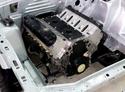
Joe Gibbs on our engines, fire them up on the engine dyno to 160* coolant and oil temp and let it eat! Then repeat a couple of times for a good baseline. Aluminum headed engines get a cool down and re torque of the heads and then its time for final tuning.





Anyways back to the OP, good to see you let her rip, lets get some videos now
TECH Enthusiast
Joined: Apr 2007
Posts: 709
Likes: 2
From: 336 NC
Break in period should be over in under 50 miles with todays engines, machining, and oils. Just drive it normally for those 50 miles, then drive it however you want to. In my DD Civic I had 7500 miles on the break in oil, tho it is Amsoil, it was still clean and gold. If your break in oil is getting dirty quickly that just means something is wearing in the motor quickly.