


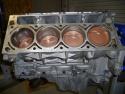





Long Term Effects of Mileage on Forged Motor
 Long Term Effects of Mileage on Forged Motor
 I am curious what the effects of long term usage of a Forged motor are, if any. I know some motors are factory forged units, so I assume that its not of grave concern, however I am curious nonetheless of any differences in long term reliability of say a Factory motor, and then that of a Fully Built Forged Unit if both were run 100k miles and then torn down… would one be significantly worn more than the other? (I understand there are many variables to a built motor, valvesprings, rings etc..... so assume the typical items used on a build with rings for n20, boost, forged rods, studs etc)
My assumptions are that where much of the wear differences are would come during warm up, with the greater clearances of the Forged pistons vs cast. But in terms of metallurgy (which I know not much), would there be significant deterioration differences between cast, pm, or forged rods?
All of this of course helps weigh the pros or cons to a Forged motor for a vehicle to see many many miles as well as serious use.
Thanks for any thoughts….
My assumptions are that where much of the wear differences are would come during warm up, with the greater clearances of the Forged pistons vs cast. But in terms of metallurgy (which I know not much), would there be significant deterioration differences between cast, pm, or forged rods?
All of this of course helps weigh the pros or cons to a Forged motor for a vehicle to see many many miles as well as serious use.
Thanks for any thoughts….

TECH Resident


Joined: Apr 2008
Posts: 838
Likes: 12
From: Right here, right now!
Have been running forged motors on and off for 30 years.
Depends what the usage is and what alloy the pistons are.
There is generally i.e. 2618 and 4032 alloy. 2618 is a stronger alloy but has a higher thermal coefficient of expansion.
The LS9's run 4032 pistons. Forged, low thermal coefficient, less clearance, quieter at cold start.
2618's generally require more clearance and are noisier (depending on the pin position, on center or offset) at cold start.
A lot of cold starts will see the 2618's wear faster and see the clearance open up more quickly.
2618 will last the longest in a high power app.
Regular cast pistons will last the longest for a regular car. Quiet cold starts.
4032 in the middle somewhere. Give or take.
Even with 2618's have seen something like 30 hours race use quoted, so it really depends on the application. Depends on use and power level and what durability is targetted.
Depends what the usage is and what alloy the pistons are.
There is generally i.e. 2618 and 4032 alloy. 2618 is a stronger alloy but has a higher thermal coefficient of expansion.
The LS9's run 4032 pistons. Forged, low thermal coefficient, less clearance, quieter at cold start.
2618's generally require more clearance and are noisier (depending on the pin position, on center or offset) at cold start.
A lot of cold starts will see the 2618's wear faster and see the clearance open up more quickly.
2618 will last the longest in a high power app.
Regular cast pistons will last the longest for a regular car. Quiet cold starts.
4032 in the middle somewhere. Give or take.
Even with 2618's have seen something like 30 hours race use quoted, so it really depends on the application. Depends on use and power level and what durability is targetted.
what you ask or the way i initially interpret it is a forged motor and high mileage are two mutually exclusive things. My impression of a forged motor at least in the context I think you are asking about is a motor built for power. And a motor built for power you don't necessarily drive to work every day and rack up a lot of miles.
But regarding wear I would look at what parts are forged and what is specifically wearing.
There's the crankshaft, I don't believe the journals on that wear any different versus a cast crank. And for the rods I don't see anything wearing on them, the wear would be the rod bearing. So in these cases i don't think the build method of parts (forged vs cast) has any affect on wear.
I think by far the greatest wear among parts would happen with the pistons compared to other forged parts like rods or crank, but that wear would be minimal to insignificant if cold clearances are not excessive. Noise is not always indicitive of wear, and i don't see piston rings wearing more with a forged piston vs a cast piston when cold as long as it's not blasted wot when cold. Other factors such as build clearances and how the motor is used I think would have more affect on wear than whether the parts are forged or not, assuming the premise of wear is because of greater thermal expansions of forged parts.
with forged pistons in a motor built for power, the forged pistons while stronger I believe are also more ductile and can tolerate detonation and less than ideal tuning which are common, and survive. whereas cast or hypereutectic pistons are less forgiving and will crack.
But regarding wear I would look at what parts are forged and what is specifically wearing.
There's the crankshaft, I don't believe the journals on that wear any different versus a cast crank. And for the rods I don't see anything wearing on them, the wear would be the rod bearing. So in these cases i don't think the build method of parts (forged vs cast) has any affect on wear.
I think by far the greatest wear among parts would happen with the pistons compared to other forged parts like rods or crank, but that wear would be minimal to insignificant if cold clearances are not excessive. Noise is not always indicitive of wear, and i don't see piston rings wearing more with a forged piston vs a cast piston when cold as long as it's not blasted wot when cold. Other factors such as build clearances and how the motor is used I think would have more affect on wear than whether the parts are forged or not, assuming the premise of wear is because of greater thermal expansions of forged parts.
with forged pistons in a motor built for power, the forged pistons while stronger I believe are also more ductile and can tolerate detonation and less than ideal tuning which are common, and survive. whereas cast or hypereutectic pistons are less forgiving and will crack.
Several yrs of HO 5.0 sbf came stock with forged pistons.
Guys buy 100k jy motor, add rings and bearings and boost.......
clearance and useage are the big factors.
detonation will take out hyper pistons, forged will survive it but take out the piston pin bores or the bearings or both......
short warm up time or low rpm light throttle for first few miles are the best thing you can do to minimize wear.
Guys buy 100k jy motor, add rings and bearings and boost.......
clearance and useage are the big factors.
detonation will take out hyper pistons, forged will survive it but take out the piston pin bores or the bearings or both......
short warm up time or low rpm light throttle for first few miles are the best thing you can do to minimize wear.
Trending Topics
the theory im hearing from an old drag racer is its not necessarily the piston that causes excess wear. its the rings they use. apparently, a moly ring will push against the walls harder than a factory ring. over time, this will cause the motor to need bigger pistons sooner.
any truth to this?
any truth to this?
LS1 Tech Stories
The Best V8 Stories One Small Block at Time

Topdon ONE vs. Artidiag 800 BT2: Which is the Diagnostic Tablet For You?
Pouria Savadkouei
Gas Monkey Built a 6-Wheel Ferrari Testarossa With a Corvette LT4 Engine
Verdad Gallardo
7 Most Reliable High-Performance Engines GM Has Ever Built
Verdad Gallardo
Amazing '71 Camaro Restomod Is Modern Muscle Car Under the Skin
Verdad Gallardo
6 Common C5 Corvette Failures and What's Involved In Repairing Them
Pouria Savadkouei
Retro Modern Bandit Pontiac Trans AM Comes With Burt Reynolds' Autograph
Verdad Gallardo
Top 10 Greatest Cadillac V Series Performance Models Ever, Ranked
Pouria Savadkouei
Top 10 Most Powerful Chevy Trucks Ever Made!

Hennessey's New Supercharged Silverado ZR2 Has 700 HP
Verdad Gallardo the theory im hearing from an old drag racer is its not necessarily the piston that causes excess wear. its the rings they use. apparently, a moly ring will push against the walls harder than a factory ring. over time, this will cause the motor to need bigger pistons sooner.
any truth to this?
any truth to this?
first, the piston rings have nothing to do with the original topic of forged parts and wear, in this case the forged part being the piston.
piston rings however can be of a few different materials. the cheapest is gray iron, which is the weakest but probably the most friendly to cylinder walls. And the way the piston ring works, taking the top compression ring as being the most relevant to wear, is the pressure in the cylinder from compression and during the power stroke get in behind the ring and push it against the cylinder wall causing the seal. It is not ring tension that does the sealing, which is a very minimal force and is constantly being reduced in order to reduce friction (as in low tension piston rings). Now where you would get into a problem obviously is if you don't have enough piston ring end gap clearance and run the cylinder too hot- the ring expands, butts into itself then causes massive friction against the cylinder wall destroying the ring and galling the wall. This will happen with any type of ring.
Another type of ring material is ductile iron, which is hard on cast iron cylinder walls and which is why they are either moly coated or chrome coated. It is just a coating. The other ring material is steel. And either will have various coatings. So when you say moly ring, is it a moly coated iron ring or moly coated steel?
And for a ductile iron or steel ring that sees high loads and poor lubrication, then the coating would wear off and the iron or steel which is then incompatible would start galling and wearing away the cast iron cylinder wall, where as a cheap gray iron ring may just wear itself away and save the cylinder wall but a gray iron ring would never last in a performance or high output motor to begin with.
http://www.aa1car.com/library/ar293.htm

TECH Regular
Joined: Jan 2005
Posts: 475
Likes: 0
From: Orlaanndoooo
 Been there done that myself a handful of times with great results.
FormerVendor
Joined: Jan 2011
Posts: 88
Likes: 0
He is right, there are various metallurgy present in forged pistons. The 4032 stuff will wear like a cast piston but isn't as strong and wont handle detonation very well.
2618 has to have larger piston to wall clearances, so it will rattle more at lower temperatures and so it will wear itself, cyl wall and rings faster.
If you build a motor to say.. last a standing mile with 1600hp, it will have VERY loose clearances. It won't last nearly as long as say a motor built for 1600hp and street and drag racing (1/4mi).
Actual numbers? dunno. Most people blow up before they need a rebuild, lol.
2618 has to have larger piston to wall clearances, so it will rattle more at lower temperatures and so it will wear itself, cyl wall and rings faster.
If you build a motor to say.. last a standing mile with 1600hp, it will have VERY loose clearances. It won't last nearly as long as say a motor built for 1600hp and street and drag racing (1/4mi).
Actual numbers? dunno. Most people blow up before they need a rebuild, lol.
Have been running forged motors on and off for 30 years.
Depends what the usage is and what alloy the pistons are.
There is generally i.e. 2618 and 4032 alloy. 2618 is a stronger alloy but has a higher thermal coefficient of expansion.
The LS9's run 4032 pistons. Forged, low thermal coefficient, less clearance, quieter at cold start.
2618's generally require more clearance and are noisier (depending on the pin position, on center or offset) at cold start.
A lot of cold starts will see the 2618's wear faster and see the clearance open up more quickly.
2618 will last the longest in a high power app.
Regular cast pistons will last the longest for a regular car. Quiet cold starts.
4032 in the middle somewhere. Give or take.
Even with 2618's have seen something like 30 hours race use quoted, so it really depends on the application. Depends on use and power level and what durability is targetted.
Depends what the usage is and what alloy the pistons are.
There is generally i.e. 2618 and 4032 alloy. 2618 is a stronger alloy but has a higher thermal coefficient of expansion.
The LS9's run 4032 pistons. Forged, low thermal coefficient, less clearance, quieter at cold start.
2618's generally require more clearance and are noisier (depending on the pin position, on center or offset) at cold start.
A lot of cold starts will see the 2618's wear faster and see the clearance open up more quickly.
2618 will last the longest in a high power app.
Regular cast pistons will last the longest for a regular car. Quiet cold starts.
4032 in the middle somewhere. Give or take.
Even with 2618's have seen something like 30 hours race use quoted, so it really depends on the application. Depends on use and power level and what durability is targetted.
