





Internal engine stresses

Thread Starter
Teching In
Joined: Jun 2016
Posts: 18
Likes: 0
 Internal engine stresses
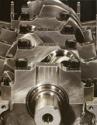
 Ive been thinking and thats dangerous lol torque is what makes a car fast its also what bends rods in 4.8s 5.3s and 6.0s instent torque does more damage then progressive torque so my thought is a rpm based boost controller that only hits max boost right before redline would keep the engine together longer then you could slowley turn your boost up to ramp up to a higher amount right before redline when it goes boom you have found the tensile strength of the rods lets say in a perfect world your lucky as heck you make 830whp for a month now you take the engine apart and inspect it lf rods are very slightly bent you know okay in this setup in this car i need to keep it around 775whp at the wheel and not a bit more because at 830whp you didn't have a failure but were vary slightly bending rods so the tensile strengths for this car and this setup for the rods will be lets say 775whp we have tensile strength done now low end torque makes cars fly if set up right so if we had it set up to build off the line at low rpm say 2500 making little power and building up to 775whp right before redline and flattening out the last like 500-800rpms so it would make stupid low power off the like like 400-450 and going to 775whp slow as possible to make the car faster make it make that power at like 500rpms lower now set the boost ramp to ramp even after 5-10 good passes do it again when rods bend bring it up to 1000 or whatever you thank is right now your car is pushing the rods to just under the max tensile strength and just under tha max instent torque the rods can handle with means lets say its a 5.3 after you set everything else up perfect you have the fastest or one of the fastes stock bottom end 5.3s tell me what you thank and thanks for your time
Last edited by Wesleydaisy97; Jun 21, 2016 at 11:09 PM.
Not to be a dick, but if you use punctuation, break up that huge blob into a couple paragraphs, maybe some smart people will bother to read it and have some good info for you.
Thread Starter
Teching In
Joined: Jun 2016
Posts: 18
Likes: 0
If they cant read it then there pretty stupid anyway and i would rather not talk to them but im not being a Dick and im not the best at spelling
Trending Topics
LS1 Tech Stories
The Best V8 Stories One Small Block at Time

6 Common C5 Corvette Failures and What's Involved In Repairing Them
Pouria Savadkouei
Retro Modern Bandit Pontiac Trans AM Comes With Burt Reynolds' Autograph
Verdad Gallardo
Top 10 Greatest Cadillac V Series Performance Models Ever, Ranked
Pouria Savadkouei
Top 10 Most Powerful Chevy Trucks Ever Made!

Hennessey's New Supercharged Silverado ZR2 Has 700 HP
Verdad Gallardo
Coachbuilt N2A Anteros Is an LS2-Powered C6 Corvette In Italian Clothes
Verdad Gallardo
Awesome K5 Blazer Restomod Comes With C7 Corvette Power
Verdad Gallardo
10 Camaros You Should Never Buy

10 LS Engine Myths That Refuse to Die
Verdad Gallardo I don't think that's the case. Most just won't bother trying if you can't even try to write like someone who graduated high school. Best of luck to ya though.
Thread Starter
Teching In
Joined: Jun 2016
Posts: 18
Likes: 0
True because obviously if i cant spell perfect im not worth the effort of teaching anything or passing some knowledge but thanks

On The Tree
Joined: Jun 2015
Posts: 182
Likes: 3
From: Portland OR
Controlling peak cylinder pressure is critical to not folding up rods. Not so much boost pressure although it is part of the equation.
There are many contributing factors, cam (dynamic CR), compression ratio (static), fuel quality, ignition, and even intake and exhaust airflow parameters can influence peak cylinder pressure. And dont forget water/methanol injection and intake charge cooling solutions.
The biggest contributor is the tune, the higher the boost the narrower the tuning window is for safe operation. Gasoline forces a tune closer to the edge as it make the best power just before meltdown, gasoline makes significantly less power at "safer" tune levels than alky. Conversely alky will make good power in a significantly overfueled "safe" tune.
Water injection helps control peak pressures by cooling and slowing down the burn.
Another area is spark control, it is too easy to dial up the spark advance for more power, which is fine and is a natural tuning tool. However the quality of the spark timing control becomes paramount when you get close to the edge. ANY timing scatter can cause significant damage to a random cylinder, while the overall tune might be safe. That single event can cause that one firing cylinder to fold up the rod or collapse a piston.
There are many contributing factors, cam (dynamic CR), compression ratio (static), fuel quality, ignition, and even intake and exhaust airflow parameters can influence peak cylinder pressure. And dont forget water/methanol injection and intake charge cooling solutions.
The biggest contributor is the tune, the higher the boost the narrower the tuning window is for safe operation. Gasoline forces a tune closer to the edge as it make the best power just before meltdown, gasoline makes significantly less power at "safer" tune levels than alky. Conversely alky will make good power in a significantly overfueled "safe" tune.
Water injection helps control peak pressures by cooling and slowing down the burn.
Another area is spark control, it is too easy to dial up the spark advance for more power, which is fine and is a natural tuning tool. However the quality of the spark timing control becomes paramount when you get close to the edge. ANY timing scatter can cause significant damage to a random cylinder, while the overall tune might be safe. That single event can cause that one firing cylinder to fold up the rod or collapse a piston.
Thread Starter
Teching In
Joined: Jun 2016
Posts: 18
Likes: 0
Controlling peak cylinder pressure is critical to not folding up rods. Not so much boost pressure although it is part of the equation.
There are many contributing factors, cam (dynamic CR), compression ratio (static), fuel quality, ignition, and even intake and exhaust airflow parameters can influence peak cylinder pressure. And dont forget water/methanol injection and intake charge cooling solutions.
The biggest contributor is the tune, the higher the boost the narrower the tuning window is for safe operation. Gasoline forces a tune closer to the edge as it make the best power just before meltdown, gasoline makes significantly less power at "safer" tune levels than alky. Conversely alky will make good power in a significantly overfueled "safe" tune.
Water injection helps control peak pressures by cooling and slowing down the burn.
Another area is spark control, it is too easy to dial up the spark advance for more power, which is fine and is a natural tuning tool. However the quality of the spark timing control becomes paramount when you get close to the edge. ANY timing scatter can cause significant damage to a random cylinder, while the overall tune might be safe. That single event can cause that one firing cylinder to fold up the rod or collapse a piston.
There are many contributing factors, cam (dynamic CR), compression ratio (static), fuel quality, ignition, and even intake and exhaust airflow parameters can influence peak cylinder pressure. And dont forget water/methanol injection and intake charge cooling solutions.
The biggest contributor is the tune, the higher the boost the narrower the tuning window is for safe operation. Gasoline forces a tune closer to the edge as it make the best power just before meltdown, gasoline makes significantly less power at "safer" tune levels than alky. Conversely alky will make good power in a significantly overfueled "safe" tune.
Water injection helps control peak pressures by cooling and slowing down the burn.
Another area is spark control, it is too easy to dial up the spark advance for more power, which is fine and is a natural tuning tool. However the quality of the spark timing control becomes paramount when you get close to the edge. ANY timing scatter can cause significant damage to a random cylinder, while the overall tune might be safe. That single event can cause that one firing cylinder to fold up the rod or collapse a piston.
On The Tree
Joined: Jun 2015
Posts: 182
Likes: 3
From: Portland OR
I think what you may be seeing is guys boosting a motor without proper tuning, using canned tunes or "chipped" ECU's or worse no tune on a stock ECU.
You need proper tuning tools, like HP Tuner or an aftermarket ECU that you can get inside with a laptop and twiddle the settings.
In addition to the tools your hardware needs to be complementary to the setup. You need adequate fuel supply volume and pressure, ideally you need a return type fuel system and a boost referenced fuel pressure regulator (so your fuel pressure maintains a 3 bar difference above the manifold pressure). In other words with a non return system you have a regulated 43.5psi (3bar) and then have 20psi boost, you injectors now see only a 23.5psi difference and have to open twice as long to spray the same amount of fuel. For 20# of boost you need 63.5# fuel pressure to maintain the 43.5# difference.
Injector sizing is important as well to be able to provide enough fuel for max power without being oversized and causing idle problems, a manifold referenced fuel pressure regulator helps here too, by reducing the fuel pressure at idle and increasing it under boost.
A return system also helps by cooling the fuel rail and purging any air bubbles that may be present. Air bubbles in the fuel are really bad on a single line system as there is no way for them to escape other than through the injector (which displaces fuel and causes random lean misfires)(in a boosted motor tuned on the edge this means random intermittent detonation).
Fuel delivery is problematic for a car that is driven with sustained high G forces or more so with high G forces in all directions, you can somewhat combat this by keeping the fuel tank as full as possible, sometimes that is not practical especially on a street driven car. For the popular cars there are manufactured solutions replacement fuel tanks (cells) with trap doors, foam, and moving pickups, multiple pumps, and more expensive trickery. The simplest solution here is a swirl pot where the intank pump supplies fuel to a narrow and tall 1 to 2 quart sealed pot. That pot is vented (fuel is returned) back to the tank, this purges any air bubbles and provides a constant reliable supply to the EFI pump which is mounted inside the pot or is gravity fed from the bottom of the pot. This way there is a constant air bubble free, 1 to 2 quart supply of fuel to the EFI pump, and because of the tall & narrow orientation will not be affected by varying G forces.
You need proper tuning tools, like HP Tuner or an aftermarket ECU that you can get inside with a laptop and twiddle the settings.
In addition to the tools your hardware needs to be complementary to the setup. You need adequate fuel supply volume and pressure, ideally you need a return type fuel system and a boost referenced fuel pressure regulator (so your fuel pressure maintains a 3 bar difference above the manifold pressure). In other words with a non return system you have a regulated 43.5psi (3bar) and then have 20psi boost, you injectors now see only a 23.5psi difference and have to open twice as long to spray the same amount of fuel. For 20# of boost you need 63.5# fuel pressure to maintain the 43.5# difference.
Injector sizing is important as well to be able to provide enough fuel for max power without being oversized and causing idle problems, a manifold referenced fuel pressure regulator helps here too, by reducing the fuel pressure at idle and increasing it under boost.
A return system also helps by cooling the fuel rail and purging any air bubbles that may be present. Air bubbles in the fuel are really bad on a single line system as there is no way for them to escape other than through the injector (which displaces fuel and causes random lean misfires)(in a boosted motor tuned on the edge this means random intermittent detonation).
Fuel delivery is problematic for a car that is driven with sustained high G forces or more so with high G forces in all directions, you can somewhat combat this by keeping the fuel tank as full as possible, sometimes that is not practical especially on a street driven car. For the popular cars there are manufactured solutions replacement fuel tanks (cells) with trap doors, foam, and moving pickups, multiple pumps, and more expensive trickery. The simplest solution here is a swirl pot where the intank pump supplies fuel to a narrow and tall 1 to 2 quart sealed pot. That pot is vented (fuel is returned) back to the tank, this purges any air bubbles and provides a constant reliable supply to the EFI pump which is mounted inside the pot or is gravity fed from the bottom of the pot. This way there is a constant air bubble free, 1 to 2 quart supply of fuel to the EFI pump, and because of the tall & narrow orientation will not be affected by varying G forces.
Last edited by RixTrix; Jun 26, 2016 at 04:43 PM.
Thread Starter
Teching In
Joined: Jun 2016
Posts: 18
Likes: 0
I think what you may be seeing is guys boosting a motor without proper tuning, using canned tunes or "chipped" ECU's or worse no tune on a stock ECU.
You need proper tuning tools, like HP Tuner or an aftermarket ECU that you can get inside with a laptop and twiddle the settings.
In addition to the tools your hardware needs to be complementary to the setup. You need adequate fuel supply volume and pressure, ideally you need a return type fuel system and a boost referenced fuel pressure regulator (so your fuel pressure maintains a 3 bar difference above the manifold pressure). In other words with a non return system you have a regulated 43.5psi (3bar) and then have 20psi boost, you injectors now see only a 23.5psi difference and have to open twice as long to spray the same amount of fuel. For 20# of boost you need 63.5# fuel pressure to maintain the 43.5# difference.
Injector sizing is important as well to be able to provide enough fuel for max power without being oversized and causing idle problems, a manifold referenced fuel pressure regulator helps here too, by reducing the fuel pressure at idle and increasing it under boost.
A return system also helps by cooling the fuel rail and purging any air bubbles that may be present. Air bubbles in the fuel are really bad on a single line system as there is no way for them to escape other than through the injector (which displaces fuel and causes random lean misfires)(in a boosted motor tuned on the edge this means random intermittent detonation).
You need proper tuning tools, like HP Tuner or an aftermarket ECU that you can get inside with a laptop and twiddle the settings.
In addition to the tools your hardware needs to be complementary to the setup. You need adequate fuel supply volume and pressure, ideally you need a return type fuel system and a boost referenced fuel pressure regulator (so your fuel pressure maintains a 3 bar difference above the manifold pressure). In other words with a non return system you have a regulated 43.5psi (3bar) and then have 20psi boost, you injectors now see only a 23.5psi difference and have to open twice as long to spray the same amount of fuel. For 20# of boost you need 63.5# fuel pressure to maintain the 43.5# difference.
Injector sizing is important as well to be able to provide enough fuel for max power without being oversized and causing idle problems, a manifold referenced fuel pressure regulator helps here too, by reducing the fuel pressure at idle and increasing it under boost.
A return system also helps by cooling the fuel rail and purging any air bubbles that may be present. Air bubbles in the fuel are really bad on a single line system as there is no way for them to escape other than through the injector (which displaces fuel and causes random lean misfires)(in a boosted motor tuned on the edge this means random intermittent detonation).
Thread Starter
Teching In
Joined: Jun 2016
Posts: 18
Likes: 0

Restricted User
Joined: Mar 2014
Posts: 7,192
Likes: 109
From: Ohio
*think, not thank.
If you want to slowly ramp in the boost, get a Centrifugal blower. They behave that way by design. Using multi-stage controllers and stand-alones that can do boost by speed/RPM/gear is only complicating it.
Thread Starter
Teching In
Joined: Jun 2016
Posts: 18
Likes: 0
[QUOTE=JoeNova;19310142]*think, not thank.
If you want to slowly ramp in the boost, get a Centrifugal blower. They behave that way by design. Using multi-stage controllers and stand-alones that can do boost by speed/RPM/gear is only complicating it.[/QUOT
It would get it done but i like being precise and boost by rpm gives me the chance to tune however i want the boost ramp to be
If you want to slowly ramp in the boost, get a Centrifugal blower. They behave that way by design. Using multi-stage controllers and stand-alones that can do boost by speed/RPM/gear is only complicating it.[/QUOT
It would get it done but i like being precise and boost by rpm gives me the chance to tune however i want the boost ramp to be
Thread Starter
Teching In
Joined: Jun 2016
Posts: 18
Likes: 0
Well you obviously know what your talking about more then i and now that i thank about it that should do a simple job at raming in boost And i imagine tuning it would basically be like changing the pully and picking the right charger ratio

