When you click on links to various merchants on this site and make a purchase, this can result in this site earning a commission. Affiliate programs and affiliations include, but are not limited to, the eBay Partner Network.
The sleeve helps some. You can also machine a groove in the input shaft and add a high temp O'ring. Make a small chamfer on the drum and use locktite and press the input shaft. This makes it leak free 100%. The sleeve was not invented by Sonnax but it was made available to the masses by them at a good price.
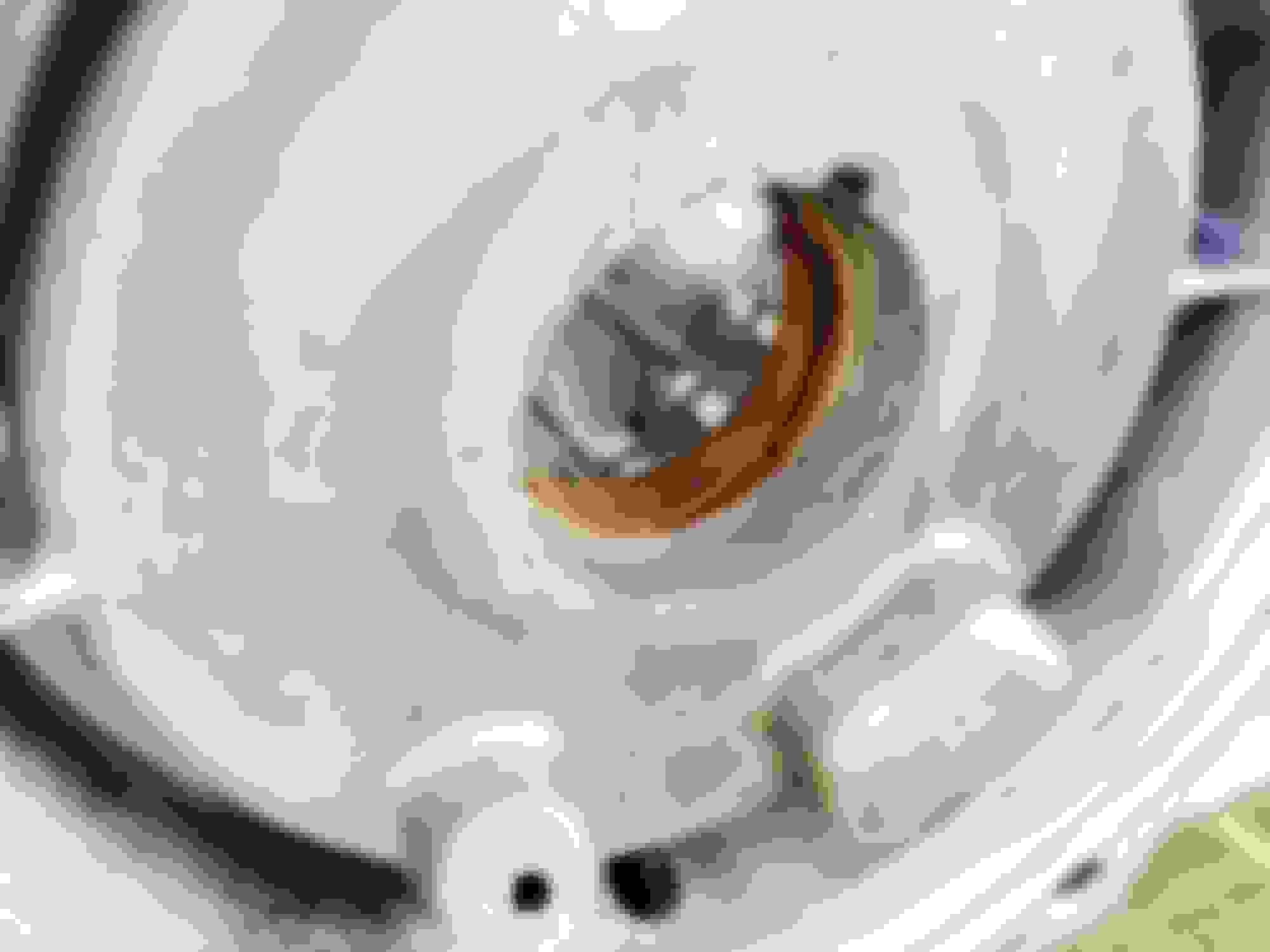
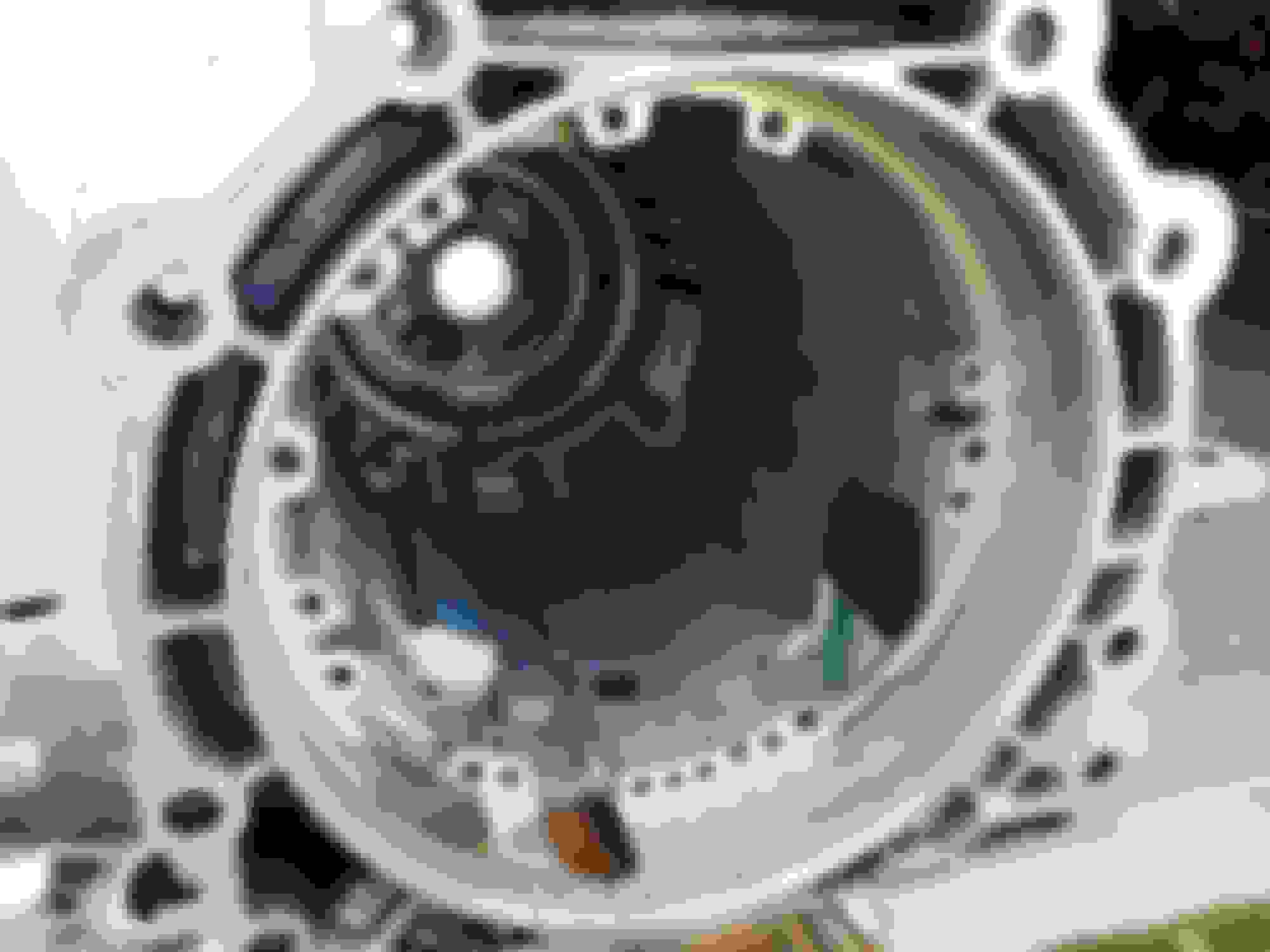
I just got around to doing some cleaning and wanted to try something new. I have always used a traditional case washing cabinet when I can get to my buddies shop. If that was not an option, I use a small pressure washer at my house with good ole EZ off oven cleaner. Well, I had heard about some other methods such as soda blasting so today I made a trip to the store and purchased a small outside media blasting tank. I got it at tractor supply and purchased some soda blast media at another store. I got the tank setup and filled with soda and had hell with the cheap tank feeding worth a crap and had a helper shake it about every 30 seconds to keep the media flowing. The results looked pretty good to me, what do you guys think? I wish I had take pics of this case before I started but it is no good and had been sitting in my junk pile. It was dirty but not caked up like some. It had several coats of what looked like dupli color "cast coat gray" paint on it.
I love the look of the bead blasting but I am always nervous about getting that stuff out of all the nooks and such. This finish is not quite as nice but requires no taping or other prep work, just set it down and blast away. Once your finished, give it a quick rinse to dissolve and was away the soda.
I spent about 20 minutes blasting it and another 5 minutes washing it off with a pressure washer and was amazed at the results. The case bushing is unharmed, the accumulator pocket in the case is still shiny and slick but the grime and paint came right off.....I intentionally held it on the bushing just to see what would happen, it never phased it.
I think I will be doing this on every one I do from now on whether I paint them or not,
I never realized this had the potential to leak as bad as it does until about 3 months ago, I stopped by one of my buddies shop to pick up a couple of parts. When I walked up to his build table to talk to him, he was basically in very sprited agrument with his local GM parts dealer. He had 4 brand new GM input drums sitting on his bench. After he got off the phone, I asked him what was going on and he showed me. When the drum was loaded and setup, turn it over where the input drum is pointing up. take the selective washer and bearing out of the drum. place a small amount of ATF in the pocket where the bearing sits. Now apply your regulated air to the input feed holes to apply the clutch pack. I can't remember exactly how much he was using, I want to say 90 pounds but i may be wrong...
Anyway, when he would apply the air to check the clutch packs, "air bubbles" immediately started coming between the shaft and aluminum drum. 2 of the 4 new drums were horribly bad and the other two had small bubbles. According to him, he has had many issues with the new drums and was arguing with his parts rep. about how horrible they were. So we started talking and I thought the air leaks on two were "tolerable" but two of them should have never been used. I think......in my humble opinion, it has a lot to do with how the shafts are pressed into the drums that causes the leaks. Not necessarily the press fit but the quality of the press process read "hencho in Mexico" on the box.
We decided to do a test and pulled about 6 used drums of various years of 4L60,65 and 70E's that he had laying around and did the same test. Some held perfectly, some were VERY loose and some just had a small leak, just like the brand new ones. This started me thinking about the "Sleeve" sonnax started making. I had already liked the bolt on apply plate but the sleeve would help reinforce this area and keep the splined area from getting any worse. My friend had started pressing the new shafts out and using a sealer between the two areas on the units that had small leaks but this seamed to be a band aid to me but has worked well for him.
This is when I started doing some research and made my own sleeve out of some stainless tube I had to experiment with. I have a mill and Lathe so i just cut a sleeve with a .001 interference fit I could press on it to see if it would stop a leak in addition to reinforcing the area. I took the sleeve over to my buddies shop and we took one of his junk drums that had a fair leak but not horrible. We did nothing more than press the sleeve onto the drum around the splined area and blocked the hole to feed the piston and re tested, The leak was gone....
Keep in mind that these test were no very scientific and we did not document anything, just trying to come up with a solution to a problem we were experiencing so i hope this info helps someone else down the road. We have all known that the 3-4 burnup has been one of the achiles heels on any of these transmissions since inception.
I really think that with the splines reinforced and the apply plate bolted on, Sonnax has hit on a good product. That is when I decided to build a 4L60E for my 2000 Camaro project, just to see if it would hold up. I had been out of the performance mod side of these units for a while and needed some input hence the thread.
This has turned into a great thread, Thanks for the write up GNGUY!
Your friend is correct to use a GOOD retainer compound, The profit margins on stock builds are too thin to buy a new input drum & sleeve kit.
I use Loctite 638 Retainer Compound, Shear Strength of 4500 psi. (Steel to Aluminum is a little less).
I did a test once with an old 700R4 drum that had a loose shaft, When I pulled the drum out of the hot washer & checked the shaft...It pulled right out of the drum, Put some 638 on it & let it sit overnight. Tried to press the shaft out with my big 5 ton Arbor press, It wouldn't budge. Tried the (Break ****) hydraulic press. The drum split...Sounded like a gun went off, Yes, I jumped a little! The press & shaft drum were square to each other & using a support under the drum. My 2 ton Arbor will press a shaft out of a new GM drum like butter.
I performed this experiment for a different reason, I build a ton of 700R4's for street rod/car show guys with mild engines. New 298mm drums are not available from GM, So I buy a new 300mm drums, Press the 300mm shaft out, Press the 298mm shaft back in with a liberal amount of 638. Have a 99% success rate using this method while running a stock late 4L60E 6 count Hi-Energy 3-4 stack, I believe the retainer compound reinforces the drum to a degree (Pure conjecture on my part) & NOT a replacement for a reinforcement sleeve in a high torque/heavy/high stall vehicle!
The sleeve goes over the Overrun feed hole area, Not the Forward or 3-4 feed holes, The sleeve "fixing" a 3-4 leak is highly unlikely. It just braces/collars the thinnest part of the drum.
Great thread-I have built a few 80E's, but my current ride I would have to do major floor surgery to install an 80E-i was thinking 200R or 60E, that battle will prob go on longer than the civil war, lol
I am interested in the 60E, have 400 now that I was going to add 2.75 gears and keep the 3.25 rear (poor mans OD, lol)
I would consider the 60E, based on reliability, and cost, then I could shift to 3.70 gears
Gonna follow this, see how it comes out
After installing a Sonnax sleeve my input shaft was still leaking at the drum. I pressed the shaft out and applied some green Loctite and pressed it back in. I let it set overnight, retested and no leaks. Trans is still going strong after 11 months and around 10K miles. I know the only way to know for sure if the Loctite stopped the leaks after some torque has been put on it is to tear it down and test, but at face value if appears to have worked. I feel like a good locking compound is an essential to stopping this leak.
I do have a question,
What is the general consensus on clutch count? 8 with the thicker steels or 9 with the thinner ones? I got the 9 pack stuff sitting here but would like to get some input on what you guys think is a better option? It will get some pretty serious abuse and heat is something we have plenty of. I am really leaning on the 8 count with Raybestos GPZ's or BW HE but would like to hear your thoughts.
Also,
I purchased the billet forward piston from Sonnax and the instructions say to use a bonded piston. Evidently the updated drum is not compatible with the aluminum piston in either stock or billet form......there went a 90 bucks for nothing...go figure.
I am currently using 9 GPZ frictions in my Sonnax input drum and set it with .045" clearance (i.e. .005 per friction). I previously/originally used 9 Blue frictions, but when I did a quick overhaul this spring, the clearance had gone up a lot and I switched to GPZ. On the advice of a respected builder, I also removed the Transgo replacement bleed cartridge in the input drum and replaced it with the stock check-ball cartridge.
Repeating what I wrote in #16...
Sonnax changed their reinforcement ring (part number changed too). The 1st one (#77733-01) came with a modified aluminum overrun piston which used the old-style aluminum forward piston; Sonnax sold a billet aluminum forward piston for a crazy $95. The 2nd reinforcement ring version (#77733-51) comes with a billet overrun piston, but now uses the newer-style steel bonded forward piston. Hopefully that answers your question.
After installing a Sonnax sleeve my input shaft was still leaking at the drum. I pressed the shaft out and applied some green Loctite and pressed it back in. I let it set overnight, retested and no leaks. Trans is still going strong after 11 months and around 10K miles. I know the only way to know for sure if the Loctite stopped the leaks after some torque has been put on it is to tear it down and test, but at face value if appears to have worked. I feel like a good locking compound is an essential to stopping this leak.
I think you observation is correct and GNGUY seems to imply that Loctite is needed to ensure no leak.
The Sonnax Smart Tech Input Housing instructions under "Input Shaft Installation" specify:
"Apply Loctite sleeve retainer or similar product to the spline and bore of housing as well as to the splines and outer diameter of shaft."
I feel like if all of the 3rd apply leaks are addressed this clutch pack does not need a lot of clutches and the thicker the steels the better. IIRC, (really need to keep better notes), I went with 8 BW HD clutches and somewhere around .092 steels.
This is going to take awhile.... I have been in the automatic transmission part of this business going on 38 years. One of the things we learned early on was that when GM sells parts "to us" the aftermarket it is almost always "seconds" we are getting. I and others that I know have made comparisons between "original" and the "new seconds" and many times it is obvious just looking at the part. How many times have you seen a used GM sunshell without balance holes, not often and it would be that way that some did not need balancing. Buy the GM aftermarket sunshell and many do not have balance holes. Same thing with 3-4 apply pressure plates. The originals are flat and the surface is not wavy or warped. The seconds are all over the board in terms of quality. I have had to flat sand them to make them useable.
The Sonnax input drum is not new, I saw this on a Australian website in the early 2000's. The flexing is not stopped by this drum, but the pressure plate that they made is slowing the flex to a great degree. Coning is not the problem people make it out to be. GM tried eliminating it in the mid 1980's. They had a pressure plate that had an inner step that sat on the .055" five finger flat apply ring and this sat on top, a flat steel sat on it then a clutch, steel, clutch, steel, etc. This was supposed to stop the coning, it didn't. GM gave up on that and started making the "one piece" pressure plate that is still in use today. The reason it will not be fixed, is that the 3-4 apply ring applies at the "outside" of the pressure plate and not in the middle as in TH350, TH400, 2004R, etc. Heat and pressure will cause the flexing or coning. If coning were as bad as it is made out to be, then you could not get 250,000 to 300,000 miles on these units. I have seen a few over the years with that many miles and the 3-4 clutches were still in fair shape and they were all coned. To me the only advantage of the Sonnax input drum is the 3-4 snap ring area cannot fail. I have built and have helped build or they had built using my kits many hundreds of units that have run in the nines, tens, elevens, etc. with very little problems in the 3-4 clutch area and this is using the stock input drum and with mostly a 9 clutch BW Hi-E 3-4 setup. I recommend (since the mid 1990's) using the steel re-enforcement sleeve and "always" on a 4WD. Have not had one failure with the steel sleeve installed. I have to hand pick the TransGo .500" boost valve as the tolerances vary somewhat. As for the billet output shaft, I always recommend "cryoing" the stock ones. It is 1/10th the cost and I have never had a failure since I started doing this in 1997 or recommend a customer to do this instead of buying the billet output shaft. One of the reasons that I have been successful at making things last with mostly stock hard parts, is I work with the accumulation on the 1-2 shift. As for the thickness in the 3-4 steels, the thin steels were not the problem, the clutch material was the problem from the beginning. This started this railing against the thin steels instead of the clutches. If the clutch material does not hold enough oil to dissipate the heat, then the clutch will glaze (sealing the surface so that no oil enters or leaves) the heat will buildup to the point of clutch failure and will overheat the steel causing heat spots and eventually it will warp. Naturally the thinner steel will warp easier, but the clutch is already gone so it warping or not warping is irrelevant here. It is not the steel that causes the clutch to fail, the over heating and failure of the clutch causes the steel to warp. The Alto Reds did not hold much oil as compared the Borg Warner Hi-Energy clutch material and other good clutch materials. It is the oil that leaves the clutch on the 2-3 shift that is taking away the heat. The clutch material itself has to be of a good design to hold torque, but the release of the heat is the function of the oil to a large degree. The more clutch (surface) area you have, less heat is produced. Adding more clutches is always a good idea when torque input increases.
For Performance buildups. I start with the TransGo HD2 Shift kit. First, throw away the 2nd accumulator spacers. Second, do not install the restrictors in the reverse/input piston, the piston is fine "as is". I have seen and heard of reverse/input clutches glazing and clutch failures with these restrictors installed in anything that will go over 5,000 rpm. Add Torlon .250" checkballs to replace the steel ***** that ruin the separator plate, add the "hardened" corner plate to keep the 2nd accumulator spring from tearing up the separator plate, install the hardened 2nd accumulator pin, modify the aftermarket 2nd accumulator piston making it flat by removing the 12 nubs, use the 937 accumulator housing, (you cannot use the 2nd accumulator pinless setup with the HD2 Shift kit) use the Sonnax pinless forward accumulator piston in the valve body, or a hardened pin and new aluminum piston, a new accumulator piston and oem pin for 4th or the Sonnax pinless setup, Corvette servo in most cases or the Sonnax 2nd apply servo (depends on horsepower, weight of the vehicle and how aggressive the driver is). If you want the smoothest 1-2 part throttle shift and still a have firm WOT shift, locate an "A" accumulator valve and bushing setup out of a 1982-1987 type one 700R4 valve body. The next best is a "B" out of a 1988-1992 700R4 valve body or a 1993-1994 4L60E valve body. You do not need or want a firm 1-2 part throttle shift as it is very hard on the splines of everything in the driveline. If you do not add the "A" or "B" accumulator valve and bushing, make sure you use the white spring or "no spring" at all, just make sure that the accumulator valve moves freely in the bushing. Add the Sonnax reverse abuse valve assembly on vehicles with more than 35,000 miles. Remove the spring from the 3-2 control valve and block the valve inboard. This last modification is necessary on higher horsepower and the more aggressive the driver is. These last two modifications help seal up the major leaks in the 2-3 circuit. 700R4's never had these problems. As I said I hand pick the .500" boost valve so make sure it is a good one. I have not seen too many bad ones. The separator plate feed hole sizes depend on what torque converter diameter, stall, how you drive, 2nd servo being used, and the 3-4 clutch setup you are using, etc. If you want to use "D" drive and not "OD" overdrive when racing add the Sonnax HD 2-3 shift valve, as this will keep the overrun clutches on when in 1, 2, or 3 (D) just like in a 700R4. This will stop 3rd gear apply oil from going to the overrun clutches on the 2-3 shift, as they will already be on, thereby making the 3-4 clutches last longer. The 29 element sprag that has wider elements is PN A74658D (Transtar number). The elements are 12.7% wider than the normal BW sprag. It is a "dual cage" and one of the cages is nylon, and has bronze guides instead of the steel ones. It must be used with a 4L60E overrun hub. You should grind in 6 oil slots on the bronze guide that faces the overrun hub for better oiling like the steel guides have. Use the steel guide as a "template" for adding the oil slots. Rarely does the 3rd accumulator checkball capsule present a problem. Never install a solid plug here. Always use the capsule. I hope this helps everybody here, and should save you money on what works and what is not really necessary.
Nope, sleeve was fine. It happened on a 2-3 shift on a roll race, at 600whp. Not sure what to think of it. Trans history was unknown when built, so who knows if it was angry before or just a freak incident. We replaced it with a new drum and input shaft and we'll roll the dice with it.
As Dana (PBA) implies, too many people aim for rock hard 1-2 shifts and then wonder why parts fail, driveshaft u-joint, trans input drums and other parts, etc.
That is why he strongly suggests using ZERO washers in the Transgo 2nd accumulator setup.
.086"-.093" is the biggest I go for the 2nd feed hole, With the Sonnax 2nd piston it will hit pretty hard!
I like the 3rd feed hole around .100"-.116".
4th....Like you said....Does it really matter? Though the 4th super hold works well & gives a noticeable 3-4 shift. My 3-4 shift in my Camaro is real nice with a super hold & a .093" 4th feed hold, Though I am running a stock truck (TMBX) converter, With a high stall..... .125" would be fine.
When drilling bigger feed orifices, It is easy to get carried away. As an example lets say the stock 2nd feed hole is .075", Drilling it to .093" gives a 50% increase in area..... That is a huge increase!
Borg Warner Hi-Energy 3-4's all the way! Though I have good luck with Raybestos GPZ frictions also, (Not the Z-pack), GPZ is just their line of performance Hi-Energy frictions.
I would run the 8 stack in the Smart Drum, .067" frictions & .095" steels.. It will take heat/cycling better than .062" frictions & .077" steels.
I like about .025"-.030" clearance.
Sonnax has their rear end-play recommendation in the Smart Shell instructions, Use factory specs for the front.
I have great luck with stock 10 vane rotors with Trans Go (High Rev) pump rings.
I am not very fond of the TG HD-2 shift kit, Mostly the Boost Valve, The machining is downright sloppy! The steel sleeve will eat the Pump Bore over time, The Boost valve will not pass a simple vacuum test, Dip the Boost Valve in ATF, Place it in the Sleeve, Hold your finger over the EPC reaction hole (Bottom hole), Hold the Boost Valve assembly upside down, The Valve should not fall out.
The TCC PWM delete valve they use puts Line Pressure to the Converter Clutch. (No regulation) which is about double what it needs. Converter failures have happened because of this, Most people assume its the converter at fault, Most times it is not. This also the case with the orange box SK you have been using. But will not destroy a converter as easily with a stock .470" boost valve, Installing a .500 boost valve changes things.
If you don't have to hold gears manually, I would avoid the HD-2 & buy a Sonnax Performance Pack. You could just use the "Gear Command" parts out of the HD-2 & Use the entire Sonnax shift kit.
***These are just my opinions, I have quite a few years building transmissions for a living, If someone has other opinions fine! I am all for learning new things & discussion....Even a friendly debate. Please No name calling, Pissing matches, Chest thumping....I am to old for that stuff***
In regard to drilling the separator plate. I have my 2nd, 3rd, and 4th drilled out. PBA has mentioned in an older thread, that the "band release" hole should also be addressed. Where is this hole located, and are there any others that should get attention, such as the AFL?
Gas Monkey Built a 6-Wheel Ferrari Testarossa With a Corvette LT4 Engine
Slideshow: The controversial Ferrari F6 swaps its original flat-12 for a Corvette Z06-derived LT4 V8 and sends power to four rear wheels through a custom-built drivetrain.
7 Most Reliable High-Performance Engines GM Has Ever Built
Slideshow:These GM engines didn't just make huge power, they survived abuse, boost, track days, and six-digit mileage with a reputation for refusing to quit.
6 Common C5 Corvette Failures and What's Involved In Repairing Them
Slideshow: From wobbling harmonic balancers to failed EBCMs, these are the issues that define long-term C5 ownership and what repairs typically involve.
Retro Modern Bandit Pontiac Trans AM Comes With Burt Reynolds' Autograph
Slideshow: A modern Camaro transformed into a retro icon, this limited-run "Bandit" build blends nostalgia with brute force in a way few revivals manage.
Top 10 Greatest Cadillac V Series Performance Models Ever, Ranked
Slideshow: Cadillac didn't just crash the high-performance luxury vehicle party, it showed up loud, supercharged, and occasionally a little unhinged...