






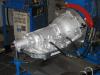


4L60E Transmission problems

Thread Starter
Teching In
Joined: Jan 2007
Posts: 5
Likes: 0
 4L60E Transmission problems
 I Did my first 4L60e trans rebuild and i am got some problems now. this tranny is out of a 1997 Chevy Tahoe. I have great reverse. but slips in drive and third. It will move the truck in second gear, but is still slipping. First gear will pull with more power, but will slip if you take of hard. Does this sound like something in the Foward Clutch assembly.

sounds like a combination of slipping in the forward assembly and limp mode combined. You going to be going back into it of that Im sure , If we can be of any help you know to just yell
__________________
well first when you are in drive will it change gears if you drive down the road , And does it feel like when you start in drive its pulling a load of bricks?
__________________

FormerVendor
Joined: Oct 2006
Posts: 3,123
Likes: 3
From: D-F/W
Sounds to me like there is a low pressure or loss of pressure condition. Low pressure can be caused by things like sticking valves, damaged or worn pump, improperly mounted valve body, leaking accumulators, leaking servos... these are a few examples. Verify fluid level and then get your thinking cap on. I would recommend you not run it more than you have to until you figure it out.
You need to get a pressure gauge on that thing asap. After that tell us the pressure readings in reverse, neutral and in drive. Look for pressures anywhere from 75 psi to 175 psi depending on throttle pressure. Snap the throttle to WOT in neutral or park you should see a rapid increase in pressure. Pressure will read higher in reverse depending on throttle position. You will need a gauge that is capable of reading up to 250 PSI. There is only one pressure tap on the unit... drivers side a few inches above the linkage.
Also, do not drive the car on the street. If it is slipping you will be damaging soft parts and can be losing lube pressure to hard parts which will cause them to fail prematurely. Pick the rear wheels up onto jackstands and then run it... take the load off of the tranny while running it until you figure out the problem.
The sealing rings on the input shaft can be tricky to install if you do not have the correct tools. Did you remove and replace all of the pistons / piston seals and shaft seals in the input assy?
Don't be discouraged, building automatics is not easy.
g
You need to get a pressure gauge on that thing asap. After that tell us the pressure readings in reverse, neutral and in drive. Look for pressures anywhere from 75 psi to 175 psi depending on throttle pressure. Snap the throttle to WOT in neutral or park you should see a rapid increase in pressure. Pressure will read higher in reverse depending on throttle position. You will need a gauge that is capable of reading up to 250 PSI. There is only one pressure tap on the unit... drivers side a few inches above the linkage.
Also, do not drive the car on the street. If it is slipping you will be damaging soft parts and can be losing lube pressure to hard parts which will cause them to fail prematurely. Pick the rear wheels up onto jackstands and then run it... take the load off of the tranny while running it until you figure out the problem.
The sealing rings on the input shaft can be tricky to install if you do not have the correct tools. Did you remove and replace all of the pistons / piston seals and shaft seals in the input assy?
Don't be discouraged, building automatics is not easy.
g
Trending Topics
Originally Posted by sledtread
I Did my first 4L60e trans rebuild and i am got some problems now. this tranny is out of a 1997 Chevy Tahoe. I have great reverse. but slips in drive and third. It will move the truck in second gear, but is still slipping. First gear will pull with more power, but will slip if you take of hard. Does this sound like something in the Foward Clutch assembly.
Mec
LS1 Tech Stories
The Best V8 Stories One Small Block at Time

6 Common C5 Corvette Failures and What's Involved In Repairing Them
Pouria Savadkouei
Retro Modern Bandit Pontiac Trans AM Comes With Burt Reynolds' Autograph
Verdad Gallardo
Top 10 Greatest Cadillac V Series Performance Models Ever, Ranked
Pouria Savadkouei
Top 10 Most Powerful Chevy Trucks Ever Made!

Hennessey's New Supercharged Silverado ZR2 Has 700 HP
Verdad Gallardo
Coachbuilt N2A Anteros Is an LS2-Powered C6 Corvette In Italian Clothes
Verdad Gallardo
Awesome K5 Blazer Restomod Comes With C7 Corvette Power
Verdad Gallardo
10 Camaros You Should Never Buy

10 LS Engine Myths That Refuse to Die
Verdad Gallardo Yes everyone will help and if your not sure what you find post up some pictures of everything that helps loads
__________________



Thread Starter
Teching In
Joined: Jan 2007
Posts: 5
Likes: 0
 Thanks for all the great response that i got. I was alittle brief on my first post i was not sure what kind of repsonce that i would get. I did some checking and will explain more. I have 70+ psi in park and goes up 200+ on rev up of motor. 80+ in reverse. When the truck is put in drive you can feel what i believe is the piston engaging, but when you hit the gas the clutch just slips it will not move the truck. It does the same in 3rd, Now 2nd will move the truck some but barely. When pulled all the way down to first gear it will move the truck aroud. When you gas it hard it will slip. So if it half *** locks up when you pull it down in 1st. Why dosent it do the same when you put it in Drive, because it still starts out in first gear.
I did air check all the pistons and they seemed fine at assembly. clearence on clutch plates all checked ok Too.
well if your sure you are starting in first which im still not with your description then there may be and issue with the low sprag since it moves in low one and manual second , Thats assuming it wont move in d or overdrive ,
__________________
FormerVendor
Joined: Oct 2006
Posts: 3,123
Likes: 3
From: D-F/W
Sounds like you do have plenty of pressure. Unfortunately all we can check is line pressure, so your tests rule out the pumps ability to produce pressure and the pressure regulator system including the PCS and PCM. But it does not rule out a pressure loss down the line so to speak.
Here are some basics...
In order to achieve reverse... L/R clutch and Reverse Input are applied. That rules out those clutches and related seals as you stated that R is good.
In order to achieve manual 1st... the overrun clutch, forward clutch, L/R clutch, low sprag and forward or input sprag are applied.
In 2nd all that happens is L/R clutch is released and the band is applied holding the reverse input drum.
And for 3rd the band is released and the 3/4 clutch is applied.
We can say that the L/R clutch is good, the Reverse Input is good and it appears to have gear changes.
Based on that info it seems to me the suspect components would be the forward clutch and the Low Sprag. The easiest place to start would be the accumulators, a pressure loss there will cause all sorts of similar symptoms.
What was the original failure that led to the overhaul in the 1st place? There might be a clue for you there.
g
Here are some basics...
In order to achieve reverse... L/R clutch and Reverse Input are applied. That rules out those clutches and related seals as you stated that R is good.
In order to achieve manual 1st... the overrun clutch, forward clutch, L/R clutch, low sprag and forward or input sprag are applied.
In 2nd all that happens is L/R clutch is released and the band is applied holding the reverse input drum.
And for 3rd the band is released and the 3/4 clutch is applied.
We can say that the L/R clutch is good, the Reverse Input is good and it appears to have gear changes.
Based on that info it seems to me the suspect components would be the forward clutch and the Low Sprag. The easiest place to start would be the accumulators, a pressure loss there will cause all sorts of similar symptoms.
What was the original failure that led to the overhaul in the 1st place? There might be a clue for you there.
g
Last edited by Gilbert@Ace Racing; Jan 19, 2007 at 09:34 PM.

hey man. i did my 4l60e . and let me say they arent the easiest but they are self explanatory after you do this enough. first one i did on my car did the same thing. it sounds like your input drum wasnt assembled right and there is a lip seal that rolled over or somthing. if you can. pull the pump out and the input drum. make sure you get all seels out. there is i believe 6 lip seals in there. if you need help you can email me and i will give you a number to call and whatnot.
Thread Starter
Teching In
Joined: Jan 2007
Posts: 5
Likes: 0
Well first off i rebuilt the tranny because, It has 190,000 miles and it would not go in third gear when you were driving it. It would just slip totally as soon as it hit third gear. When i tore it apart i found that the valve body plate was messed up. The holes for the check ***** were worn and the one was stuck in the middle of the plate. I replaced the plate with a TransGO plate. Are they any good or are they junk? I replaced all the clutches and Plates with Borg & Werner. And TransTec Seal kit. I replaced all of the pistons / piston seals I did not replace the Shaft seals they looked good and i did not have the tools to install them. I had NO pressure problems before i tore it apart. Can i use the split seals that come with the seall kit or are they junk? I read the ATSG Update book and those split seals they don't use anymore. I did not replace the Ball Capsule either. How do i tell if the the orificed cup plug or the Ball Capsule is good or not?
No the truck would not move in Drive or Overdrive when i had it together. I am thinking that it is the imput drive, so i have pulled it back out to recheck everything.
I pulled the pump and ready to start the recheck. Mark C
No the truck would not move in Drive or Overdrive when i had it together. I am thinking that it is the imput drive, so i have pulled it back out to recheck everything.
I pulled the pump and ready to start the recheck. Mark C
i didnt use the lip seals on mine becuase i ordered a race kit that uses o-rings. but i rebuilt many times a 700. but my car sliped like that the first time eacuse a lip seal on the input drum was rolled over. the shaft that sticks outa the tranny by the pump is the input drum shaft. just incase you thought i was talking about the first drum. please lemme know. catch me on aim. pyronotic138
FormerVendor
Joined: Oct 2006
Posts: 3,123
Likes: 3
From: D-F/W
Finding check ***** stuck in plates is not abnormal for high mileage units. Many manufacturers use plastic or teflon ***** in order to prevent this condition... the opposite occurs though, the ball becomes beat up instead. The Trans-Go plate is a good one.
The shaft seals could easily have been the reason you lost 3rd to begin with. Take the time to find the correct installation tool, especially if you plan on doing another one in the future, when you get the tool install the sealing rings... takng shortcuts inside automatic transmissions is not smart. Regardless of how those seal looked! Trust me when I say the car gods do not reward shorcuts with good performance.
Using the scarf cut seals is not a good idea.It can be done of it is the last resort. But why do it if you can take the input assembly to a tranny shop or dealership and for a few bucks they can install the seals?
Before you completely dissasemble the input assy... support the pump with a coffee can or something similar.... then install the input assy inscluding the reverse input drum... then use a rubber tipped air nozzle to check the engagement of the pistons by applying air pressure to the pump pressure ports. Do this to each and every unit you have a part in order to build good habits and in order to check your work prior to final assembly.
Keep us posted! Feel free to pm me for tips or advice.
g
The shaft seals could easily have been the reason you lost 3rd to begin with. Take the time to find the correct installation tool, especially if you plan on doing another one in the future, when you get the tool install the sealing rings... takng shortcuts inside automatic transmissions is not smart. Regardless of how those seal looked! Trust me when I say the car gods do not reward shorcuts with good performance.
Using the scarf cut seals is not a good idea.It can be done of it is the last resort. But why do it if you can take the input assembly to a tranny shop or dealership and for a few bucks they can install the seals?
Before you completely dissasemble the input assy... support the pump with a coffee can or something similar.... then install the input assy inscluding the reverse input drum... then use a rubber tipped air nozzle to check the engagement of the pistons by applying air pressure to the pump pressure ports. Do this to each and every unit you have a part in order to build good habits and in order to check your work prior to final assembly.
Keep us posted! Feel free to pm me for tips or advice.
g
Thread Starter
Teching In
Joined: Jan 2007
Posts: 5
Likes: 0
Finally got back to working on my tranny again. When i got inside I found that the Reverse input clutch is notched out where the belleville plate is and the first clutch plate. There is very small marks on the rest of the plates.I will be have to get new Reverse input clutch Housing. I Thought i looked at that very good, but the condition that it is in, it would hang up on the notches at the botton plates.
The input housing looks good, i have gone over it again too. Thats it for now i will post more when i get more work done on it been busy. Mark C
The input housing looks good, i have gone over it again too. Thats it for now i will post more when i get more work done on it been busy. Mark C

Registered User
Joined: Mar 2011
Posts: 3
Likes: 0
I Did my first 4L60e trans rebuild and i am got some problems now. this tranny is out of a 1997 Chevy Tahoe. I have great reverse. but slips in drive and third. It will move the truck in second gear, but is still slipping. First gear will pull with more power, but will slip if you take of hard. Does this sound like something in the Foward Clutch assembly.
Last edited by RPM WS6; Mar 10, 2011 at 11:43 AM. Reason: Non-sponsor link removed.