When you click on links to various merchants on this site and make a purchase, this can result in this site earning a commission. Affiliate programs and affiliations include, but are not limited to, the eBay Partner Network.
How many of you guys are having issues seeing the pics? I resized them the usual amount, to 1150px wide and about 100kb in size... hopefully that isn't too large for some of you...
Pics come through fine for me, both mobile and desktop.
You know what is unfortunate? Your table of contents post is useless: every link goes to the first post, even though they have the post number in the hyperlink. I'm sure it's a "feature" of the new UI, which conveniently scrolls to another thread whenever I page down.
That's true.. I should really remove the ToC.. I spent so much time organizing that, and yet I still ran out of characters in that post to shortcut to everything applicable.... and then soon after that the UI was changed. Really annoying with that auto-scroll-next-thread feature... anyone know how to disable that feature?
Really annoying with that auto-scroll-next-thread feature... anyone know how to disable that feature?
I agree! Also if there's a big fat ad at the top of the page it loads slow and messes with clicking on the correct thread. The page jumps down a few lines right when I'm going to click and the wrong thread gets chosen. Whoever thought of these changes had his head where the sun don't shine. Change it all back, and get rid of non-automotive ads!
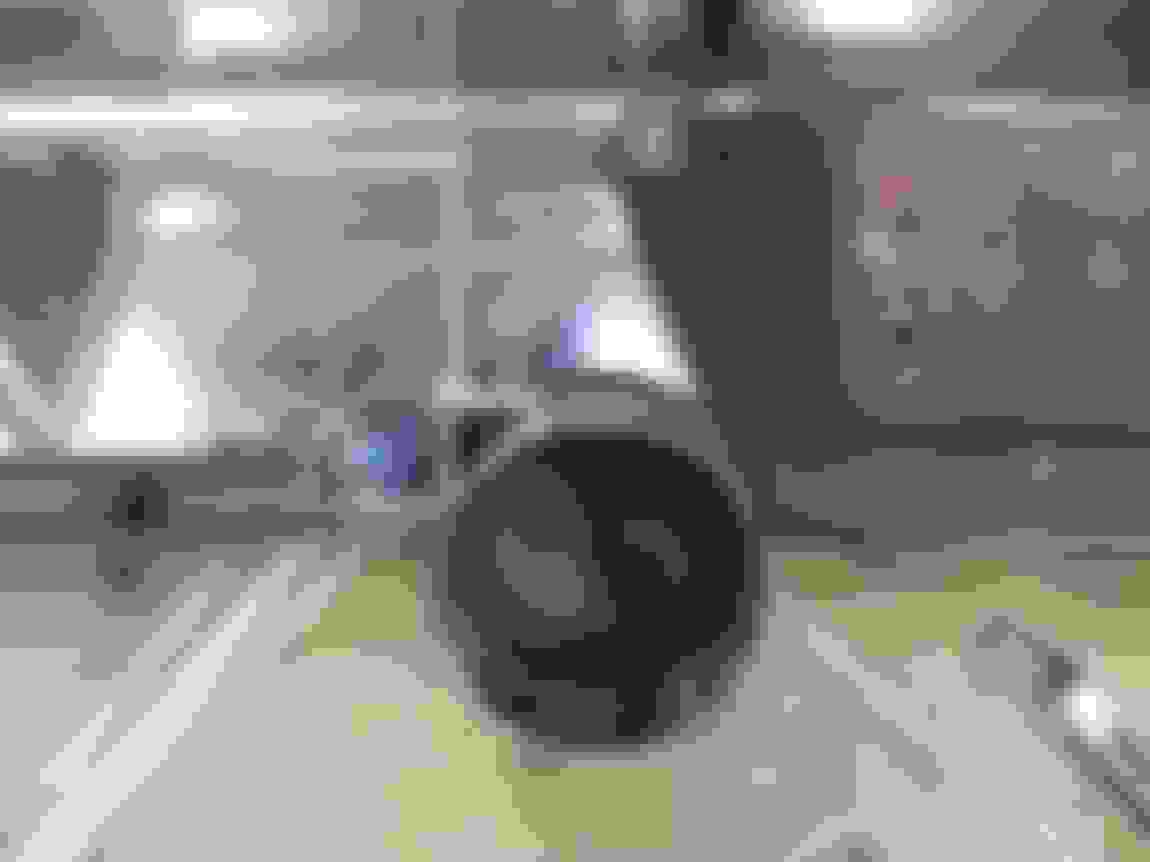
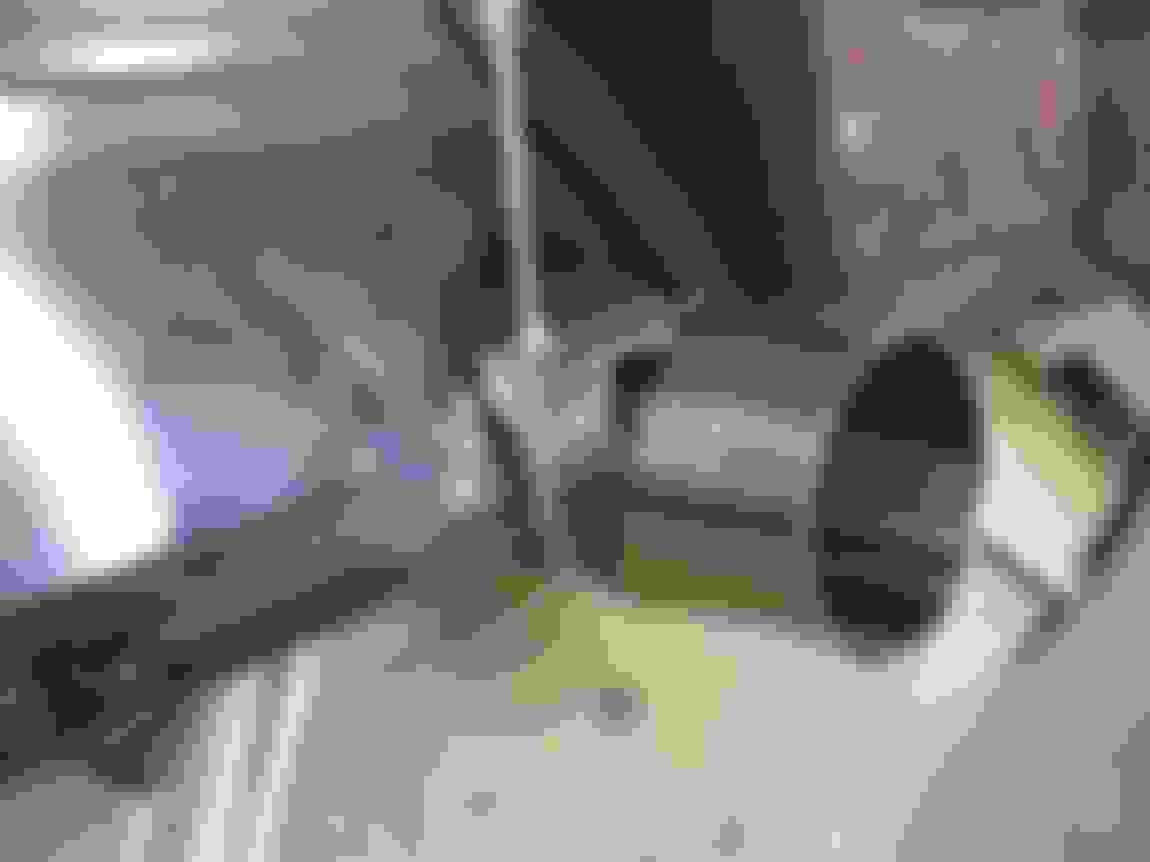
I took a break from fabricating car parts at work in my off time.. I could've finished the intercooler this past weekend but decided to do some noisy work on the car which I otherwise wouldn't do at night during the week. Exhaust tip things!
Earlier this week I quickly made some tips so I could start mocking things up this weekend and get to cutting...
That's true.. I should really remove the ToC.. I spent so much time organizing that, and yet I still ran out of characters in that post to shortcut to everything applicable.... and then soon after that the UI was changed. Really annoying with that auto-scroll-next-thread feature... anyone know how to disable that feature?
I did not put any links in my TOC because of how finicky the linking is. Instead I put post # ranges. Please don't delete your TOC - it's very helpful.
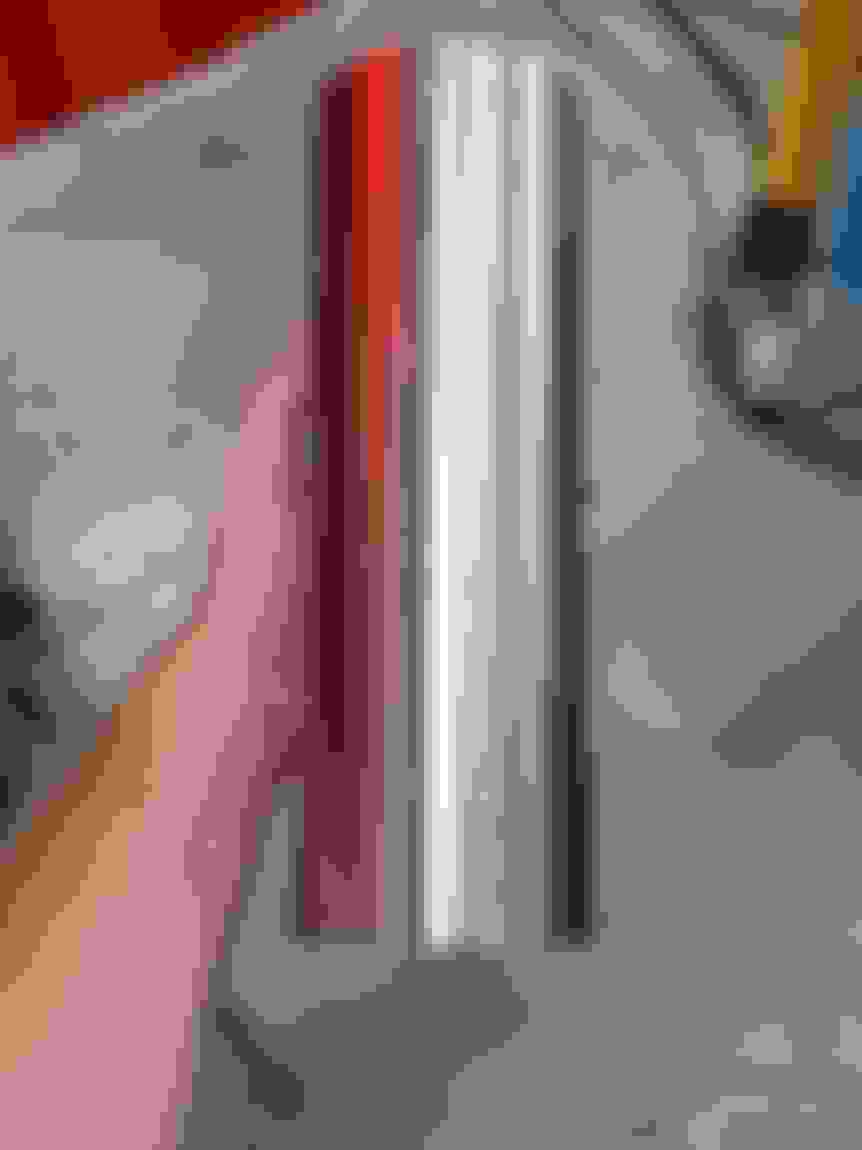
Just eyeballing the tips after measurement, to see what it's like in person proportions-wise...
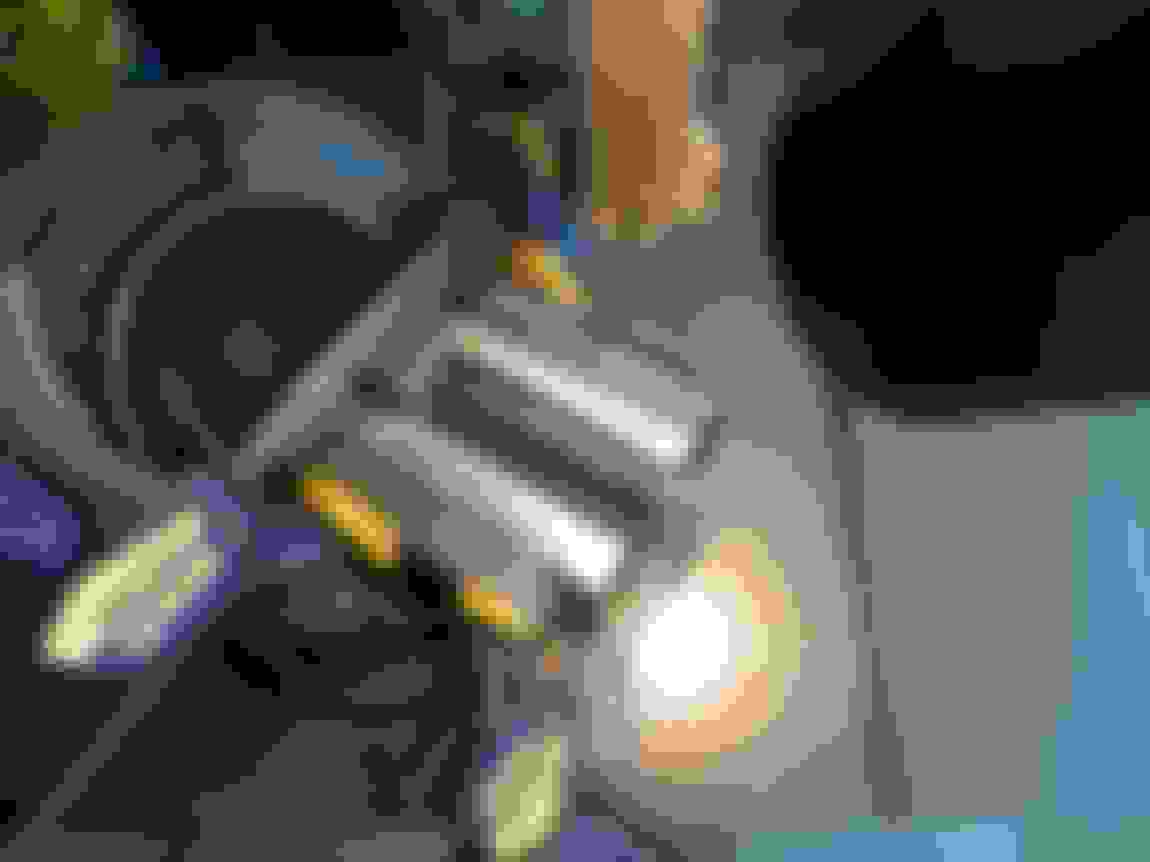
Getting the location the same on both L+R sides, lasers are the best....
I didn't take any progress pics of the cutting because it was so laboursome and hot outside.. I used a jigsaw and trimmed slightly inside the marked line, then used a fine rounded file to trim the last 1/16" by hand/eye while referencing a 4.5" round slug I found at work. Surprisingly there wasn't any chipping/flaking or other issues, and I painted the cut edge with rust inhibitor clearcoat...
I'm in love. I wish I'd had the foresight to notch my fuel tank in order to run my exhaust out the back.
Also don't delete your ToC. I was at least able to use the post # to get a general idea where to look, and bookmark in my browser. For example, the first page with details on your 275mm front tires.
More progress on the exhaust tailpipes/tips. I didn't get much exhaust work done this weekend as I spent far more time rewiring and pinning the Holley ECU than I anticipated, but in preperation for this weekend during this past week I made a mockup support to hold the tips in place while I connect the dots between the mufflers and the bumper.
Because the tips are notched up into the bumper more than halfway (2.75" upwards on a 4.5" round notch), I needed to trim back some of the bumper bracket support sheetmetal on the trunk floor. It was pretty thin and easy to deal with...
I'm still not sure exactly how I'll semi-rigidly affix the tips to the trunk or bumper, but when I was winging this mockup bracket I figure this won't be too far from what I end up doing.. likely eventually mounting the tips to the bumper, and isolated by some stiff rubber or silicone bushings...
Cut some angle iron to ziptie the tips to, to make sure they're in the same spot while I make the connecting tubing from the rear axle area. There is a 1/4" gap all round the tips which I aim to maintain....
Tack welded some square tube to keep the angle iron in the right place...
And bingo, rear bumper re-attached to the car with the tips mockup-ziptied in place! I'm suuuuuper happy with how it's shaping up... the proportions are exactly how I was envisioning in my head....
Here's an update a while in the making... the trans pump. I got a Tilton unit just because.. I could spend time attempting external fuel pumps and other stuff for half the price or just get the right thing the first time.
I made a little test fixture when I first got it, to see what the transfer rate was like. HOLY CRAP.. this thing hauls ***. I originally thought the restriction of a -4AN line would be enough to load it up a bit.. nope not at all. Then tried -3AN hose.. still crazy flow. Just cycled some engine oil into a pan and thought I'd measure the distance the fluid would shoot out of a 1/4" hose with a adapter restriction on the end...
Here's the pump flow with a -4AN fitting on the end...
I ended up using the front gear cluster inspection port (??) plug as my fitting, into which I drilled I believe a 0.070" hole.. about the smallest hole I was comfortable drilling and not snapping the drill bit. I test fired it on the pump fixture and it finally had enough restriction to slow the pump flow down some, so should work well enough...
I then blind threaded the plug with 1/8" NPT, to accept a -3AN adapter fitting in it...
And here it is installed....
Next up was where to put the pump? Things are pretty tight under the floor with the exhaust placement and my low ride height, so I knew I'd have to slam the pump as close to the trans as I could. I came up with a mild steel bracket that mounts to the two thru-hole machined tabs on the trans case (I tapped the holes to M10x1.5); the bracket is oriented at 45* to slam the pump as close as possible to the casing.
For mockup I used M8 thru-bolts on my old T56 for since the tabs on it weren't threaded....
The fabricated steel plate is 1/4", and has M6x1.0 threads on it to mount the pump's stamped steel baseplate to...
This is the original orientation I was thinking of. With the floorpan and trans tunnel constraints it was pretty difficult to raise the pump up at all.. obviously the -8AN feed fitting was far from ideal in how low it was...
Here is the pump in the above configuration, showing how tightly it fits once assembled under the car...
Here is the -8AN 90* adapter fitting as a pickup that threads into the trans drain plug NPT threads. The 90* adapter was helpful in quickly kicking the feed hose up and over the trans x-member....
There is about a 1.5" gap between the pump and the exhaust tube. I'll be adding a formed metal heatshield to the pump to heat protect from the heat...
This is arrangement 2.0.... I rotated the pump around 180* to get the lower-profile -3AN fitting on the bottom, but in order to fit the -8AN feed fitting up top I had to flip the pump again front-to-back. I'm not sure why this orientation hadn't come to mind when looking at the trans on the bench, but I think this will work much better overall...
Significantly better clearance, not to mention it's a steel fitting on the bottom and not an aluminum one.
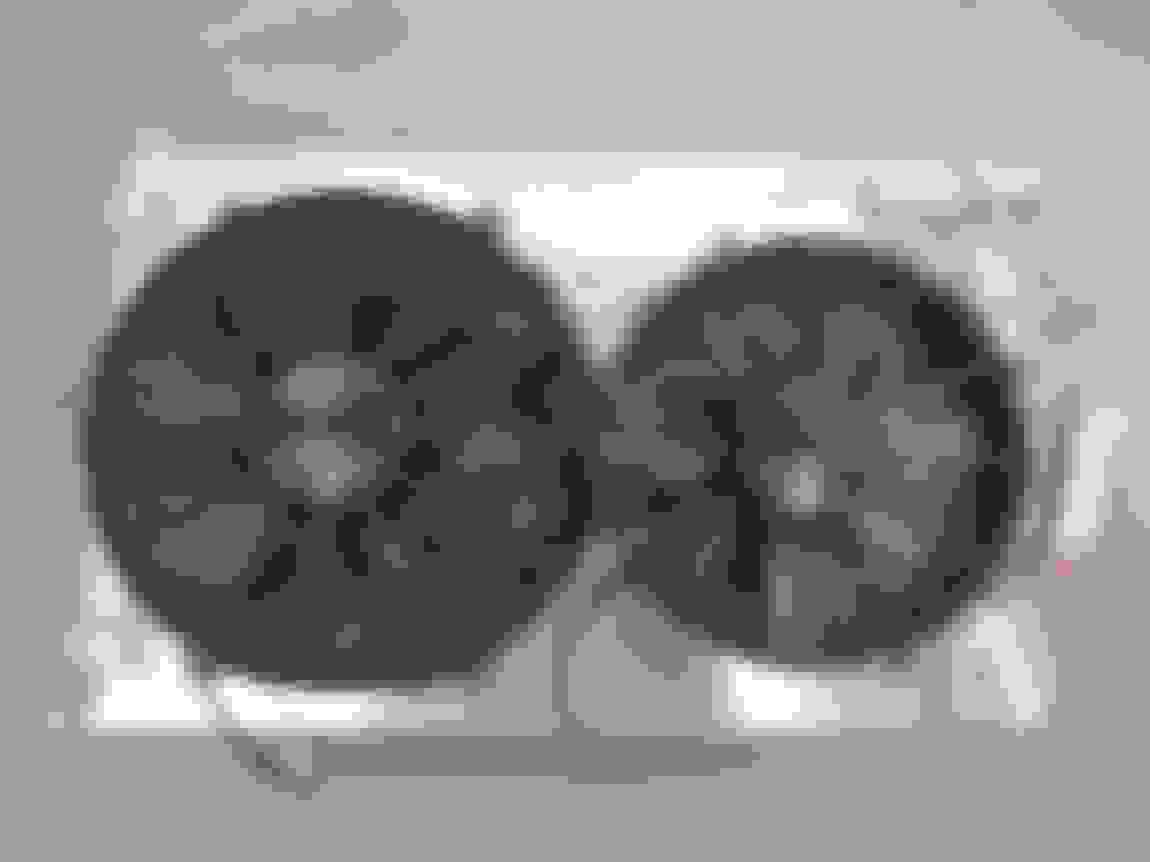
Some more mundane stuff from the weekend like radiator hose routing. Got the radiator and shroud final-welded which is nice... I think I lugged the pair to-from work a good dozen times as I was making the fan shroud and checking fitment in the car...
The hole in the middle-upper part of the fan shroud is a 1/8" NPT threaded port, to install...... a pressure sensor. I'm curious to see at speed how much pressure buildup is present underneath the shroud. I plan to measure the under-shroud pressure it at a handful of points (and measure corresponding coolant temps if any change is present):
1) fans on, at idle
2) fans on, at various speeds, core support holes not filled
3) core support holes filled
4) core support holes filled, chin spoiler added under bumper
5) no inner fenders
6) yes inner fenders
7) vent holes cut into the hood (eventually)
8) rubber flaps added (if necessary)
The bottom outlet is a hard mandrel bend as it gives better subframe clearance than a straight outlet with a rubber rad hose 90* bend attached...
I added two 1/8" NPT ports to the top inlet port to allow a place to attach the front and rear head vents independently. I looked at joining the front+rear vents together and going into a single fitting on the rad, but this was just easier to route two 1/4" hoses.
And here is the routing in the car... spaces are getting filled up pretty quickly!!
I have a magnehelic gauge that I used to check delta-P in front of the radiator (NOT between rad and fans). For reference, my Volvo fan statically pulled ~.15 inH2O on low and .25 on high. You'll want to check with the high pressure just aft of the fans at speed, to see if there's any pressure build-up inside the engine compartment. It would also be beneficial to check deltaP across the radiator, as not all of the air the fans pull will be through the core (though you'll still get some good data where you plan to put it). You'll obviously get the best results with inner fenders, core support holes filled, hood scoops, and chin spoiler; but I'd venture that inner fenders have less effect than we think.
When you get around to the hood vents, you can place the low pressure tube along the hood to optimize placement. I did a highway run with a tube in the entrance of my cowl: it was nearly 1.5 inH2O relative to cabin (~ambient) pressure, which is a big reason I sealed it off.
That's all good info for sure! Eventually when the car is driveable, I was going to plot yarn on like a 6"x6" grid pattern on one half of the hood and maybe the fenders, then GoPro it at various speeds to see how the wind flows, and use that as a starting guide on which key areas to place a manometer setup, just like you suggest, to measure the delta-P across the hood.
Since you have the Holley Dominator now, do you plan to implement PWM control for the fans? It's pretty awesome.
Andrew
Yup. I just got the PWM fan control running in my set up. Like Andrew said, it's pretty trick. I'm still playing with my settings, but really liking it so far.
Been following your thread. Love the fab work, and the attention to details.
This is very interesting.. I honestly hadn't even considered it. I know that my fans will more or less be on constantly, and that there's some power to be conserved if they're controlled via PWM instead of relay'd constant voltage... however I never really looked further into it. Maybe I'll do some reading on the Holley forums today...
This is very interesting.. I honestly hadn't even considered it. I know that my fans will more or less be on constantly, and that there's some power to be conserved if they're controlled via PWM instead of relay'd constant voltage... however I never really looked further into it. Maybe I'll do some reading on the Holley forums today...
Shameless plug to my YouTube channel...please like and subscribe.
Does the Dominator ECU offer PWM control for the fuel pump, too? That would be wicked.
People have done this using a solid state relay instead of a regular relay.
The Dominator ECU can be configured to output either a PWM+ or PWM- signal and that signal can be configured how you see fit (the possibilities are limited by your imagination). However, what is more important is "the box in the middle" between the Dominator and the electric motor. For fan control various people have figured out that using a C6 Corvette (Ford Fusion uses same unit) fan controller works very well. It is designed to handle up to about a 32 amp load at max output (the C6 fan is rated for 400watts...do the math). The problem with using the C6 fan controller for fuel is that the controller is very slow to react. If you watch my video, you will see that once a certain duty cycle for the fan is commanded, it takes about 5 seconds for the fan to adjust to that speed. This would be unacceptable for fuel delivery, since it must react very quickly to changing fuel demand conditions. So far the solution has been to use the solid state relay.
Holley does make some fuel pump controllers for their line of brushless fuel pumps, but those are not universal, and as of now the firmware only supports 100% duty cycle or 50%. This is good for drag cars, but not optimal for street.
VaperWerks has PWM fuel pump control, but it is a stand alone system that incorporates its own MAP sensor and has the "logic" built into the controller. What would be awesome is if VaperWerks made a box that handled the motor control and simply had a PWM input. This way a Holley EFI user can program the speed of the fuel pump to meet their demands.
Gas Monkey Built a 6-Wheel Ferrari Testarossa With a Corvette LT4 Engine
Slideshow: The controversial Ferrari F6 swaps its original flat-12 for a Corvette Z06-derived LT4 V8 and sends power to four rear wheels through a custom-built drivetrain.
7 Most Reliable High-Performance Engines GM Has Ever Built
Slideshow:These GM engines didn't just make huge power, they survived abuse, boost, track days, and six-digit mileage with a reputation for refusing to quit.
6 Common C5 Corvette Failures and What's Involved In Repairing Them
Slideshow: From wobbling harmonic balancers to failed EBCMs, these are the issues that define long-term C5 ownership and what repairs typically involve.
Retro Modern Bandit Pontiac Trans AM Comes With Burt Reynolds' Autograph
Slideshow: A modern Camaro transformed into a retro icon, this limited-run "Bandit" build blends nostalgia with brute force in a way few revivals manage.
Top 10 Greatest Cadillac V Series Performance Models Ever, Ranked
Slideshow: Cadillac didn't just crash the high-performance luxury vehicle party, it showed up loud, supercharged, and occasionally a little unhinged...
Coachbuilt N2A Anteros Is an LS2-Powered C6 Corvette In Italian Clothes
Slideshow: A one-off sports car that looks like a vintage Italian exotic-but hides a C6 Corvette underneath-just sold for the price of a new mid-engine Corvette.