When you click on links to various merchants on this site and make a purchase, this can result in this site earning a commission. Affiliate programs and affiliations include, but are not limited to, the eBay Partner Network.
Am I adding too many pics for you guys? I'm noticing the pages are longgggg. Hoping to have some real turbo progress over the holidays, but I may post fewer in-between steps/pics.
Am I adding too many pics for you guys? I'm noticing the pages are longgggg. Hoping to have some real turbo progress over the holidays, but I may post fewer in-between steps/pics.
Well, now that a new page has started, looking will go a LOT faster! lol
You have excellent belt wrap around all of your pulleys, something that is usually overlooked. If you get some squeal from the alternator you could always try a larger pulley on the alternator. That was the only solution I came up with on my V-belt driven alternator on my Nova.
That's what I'm kind of thinking, Ken. I've always been curious how much pulley torque an alternator actually requires at higher current production from the electric field produced inside it.. and is it enough to really overcome the spring tensioner that much and make the belt flap a bit? I'm happy that at least the P/S pump is on the "pull" side of the crank pulley, as that's kind of a tangible load on the belt from the pulley due to the parasitic loss from the hydraulic pumping. I'm really not sure at all how bad or even existent the squealing might end up being, as it's a modern 6-rib serpentine setup which is intended for pulley grip by design. I guess this is all stuff that I'll just have to wait and test in the real world.
Man as just a hobbyist myself, I am in awe of your skills. With all the new power are you considering a cage for this? I am considering one to cert to 10.0 myself for safety for sure....
Warning: I am about to have an engineering mind vomit.
Let's say the alternator is putting out 14v 30amp at idle to run fans, fuel pump, headlights, etc. That would be 14v x 30a = 420watts. If the alternator pulley is 2.25in dia and the crank is 7.5in dia and the engine idles at 800rpm, the alternator is spinning at 800rpm x 7.5/2.25 = 2667rpm. To figure out how much torque is on the pulley, divide power by speed (throwing in some unit conversions): 420 N-m/s ÷ (2667rpm *2pi/60 rad/s/rpm) = 1.5N-m or 1.1ft-lb. To get the belt load, divide the torque by the pulley radius: 1.1 ft-lb * 12in/ft ÷ 1.125in = 11.7lb. These calcs ignore the actual efficiency of the alternator and friction which could increase that number by a measurable percentage. The actual load is probably somewhere between 12 and 17lb.
Now the question is if you put 12-17lb of belt tension across the tensioner, what is the resultant tensioner movement? Whatever movement you get in the tensioner will end up showing as belt slack between the bottom of the crank and the alternator. If that is a lot of slack, it might reduce the effective alternator or crank belt wrap or in extreme case cause it to throw a belt. Thinking about how much force it takes to move that tensioner, I’m thinking this amount of tension is probably not going to cause much movement and you are probably fine.
Check my calcs and assumptions though.
Last edited by -TheBandit-; Dec 13, 2017 at 10:50 AM.
There we go, that's internetgineering at its finest. Clint that all sounds good to me, especially since I wasn't terribly inclined to look that far into it haha.. but thanks! Obviously for a rough approximation, power produced by the alternator can be equal to power taken to drive it, with no losses. You know what I'm going to do, is borrow a digital scale from work and attached it to a 15mm wrench to see the torque required to overcome the spring tensioner... it's a tight **** for sure.
Suncc49.. thanks for the compliment. Sigh.. trust me, more and more I keep hearing in the back of my head how I at least need a bar, but should probably do a 6pt mini cage. I'd really like to integrate it into the A/B pillars (like literally gusset the bars to Nova metal) to integrate it smoothly and stealthily. Hell I don't even have decent condition usable A & B pillar trim panels.
Sounds good Jimbo. Maybe I'll try to break the pics up into more, smaller posts, so the pages don't become gigantic like they apparently have been recently.
I just like to overthink stuff Joe - you know how I am. I'm pretty sure it's a psychiatric condition. Apparently you're afflicted by the same disease if you're thinking about taking force measurements. Don't let me infect you with my analysis paralysis.
I just like to overthink stuff Joe - you know how I am. I'm pretty sure it's a psychiatric condition. Apparently you're afflicted by the same disease if you're thinking about taking force measurements. Don't let me infect you with my analysis paralysis.
You mean....... paranalysis? I have a legitimate issue that I can't fall asleep for at least an hour each night because I'm reviewing and iterating car/truck/bike/woodwork project plans and designs in my head. Man would it be nice to just be able to shut my brain off completely every so often.
I think we need a mainswitch for the brain, w/ autoshutoff at a preset time to reset at a preset AM time.... CRAP now I'M overthinking things!! It IS contagious.....
So thanks to Clint, I just had to enginerd out and measure some stuff.
Wrench length to the pulley bolt = 9.25", spring tensioner pivot arm (pulley bolt to arm pivot) = 1.875", so total lever arm for pull tests on the tensioner torsional spring = 11.125".
First numbers are the measured forces at the 11.125" distance from the tensioner pivot, and the second numbers are the equivalent belt pull forces (at 1.875" for tensioner arm + ~1.0" radius of the pulley itself).
The four test measurements are:
1) force to unseat tensioner from static
2) force to move tensioner to 1st "replace belt" mark
3) force to move tensioner to 2nd "belt sweetspot" mark
4) force to move tensioner to 3rd "tightest new belt" mark
1) 8.0 lbs test pull = 30.9 lbs belt pull
2) 12.3 lbs test pull = 47.4 lbs belt pull
3) 16.5 lbs test pull = 63.9 lbs belt pull
4) 17.8 lbs test pull = 69.7 lbs belt pull
You have to factor in what side of the crank pulley the tensioner is on. Clint is right that everything on the driver side of the crank pulley is being spun by a belt that is being driven directly by the crank, so the tensioner is after the crank pulley (passenger side) to take up any slack or flapping around that might happen on the "loose" side if the belt stretches.
My routing (in hindsight, should've taken tensioner location into more consideration) now puts the tensioner between the P/S pump and the alternator. So if there is resistance in the belt "down the line" from the tensioner, which the tensioner has to overcome, the tensioner could comply instead of that belt force resulting in torque on the alternator. That could happen in two cases.. 1) parasitic drag of the alternator pulley (from current generation) is too high and belt force required to turn the alternator overcomes the belt force required to activate the tensioner. Or 2) the engine is revving up faster than the inertia of the alternator wants to react, and the acceleration of the belt translates into activating the tensioner instead of turning the alternator pulley faster.
I think 2) is less likely than 1), but from my force measurements last night I'm thinking 1) might not be as big of a deal in real life... hopefully.
I don't think your numbers from wrench lb to belt lb is accurate. Remember that the belt wraps around the tensioner pulley and the belt tension (F1 in my image attached) acts in the two different directions. The resultant force (F2) is significantly higher and this is what you need to consider if you're trying to estimate movement of the tensioner under belt load. You need to determine what part of the resultant force is perpendicular to the lever arm of the tensioner to understand torque on the tensioner spring.
Clint, have you factored in all the loads on the accesory drive, EG PS pump ?. The single tensioner has to deal with the total load.
The belt tension is different along the path because only the "pull" side of the belt from each component to the crank sees that component's load. For example, the tension required to pull the water pump pulley exists only in the belt section between the water pump and the crank. The tension required to pull the PS pulley is experienced along the belt around the waterpump and back to the crank. The tensioner does not see either of those loads - normally it only sees the load required to apply an initial tension in the belt and it moves to take up slack from any stretching of the belt that occurs under load or over time. But with Joe's arrangment the belt tension required to pull the alternator goes across the belt tensioner because that tension runs from the alternator, across the tensioner, and all the way back to the crank.
You're right, but that's also more in-depth than I was aiming. The belt forces I was mentioning are simply belt tension required to overcome/move the tensioner to the marked positions I listed. It's true that as the tensioner moves, the belt tension direction (on driver side of tensioner) goes acute then normal to the tesnioner pivot arm, then obtuse. I didn't go as far as to say what the required alternator pulley torque would need to be or calculate the force vectors on of the belt between the tensioner and the alternator.. as that's going way too deep into this. The measurements I took are "worst case" scenario when the belt's tension force has the highest leverage on the tensioner arm (right angles). When you translate that torque required to overcome the tensioner's torsion spring into the actual belt direction, it's very acute to the angle of the pulley arm so the belt tension force between the tensioner and the alternator would have to be quite high I would think to compress the tensioner via alternator drag.
The first rule of analysis paralysis is that you do not stop at the depth of an initial rough estimate. You must continue to iterate on the solution until full paralysis has set in. If you are not yet the world's foremost Internet expert on belt tensioners, you still have work to do!
I am going to leave you alone and stop clogging your thread with this nonsense. It's going to work just fine and if it doesn't, it's not hard to modify.
Last edited by -TheBandit-; Dec 15, 2017 at 04:55 PM.
Haha! You're also not wrong about that too, Clint.
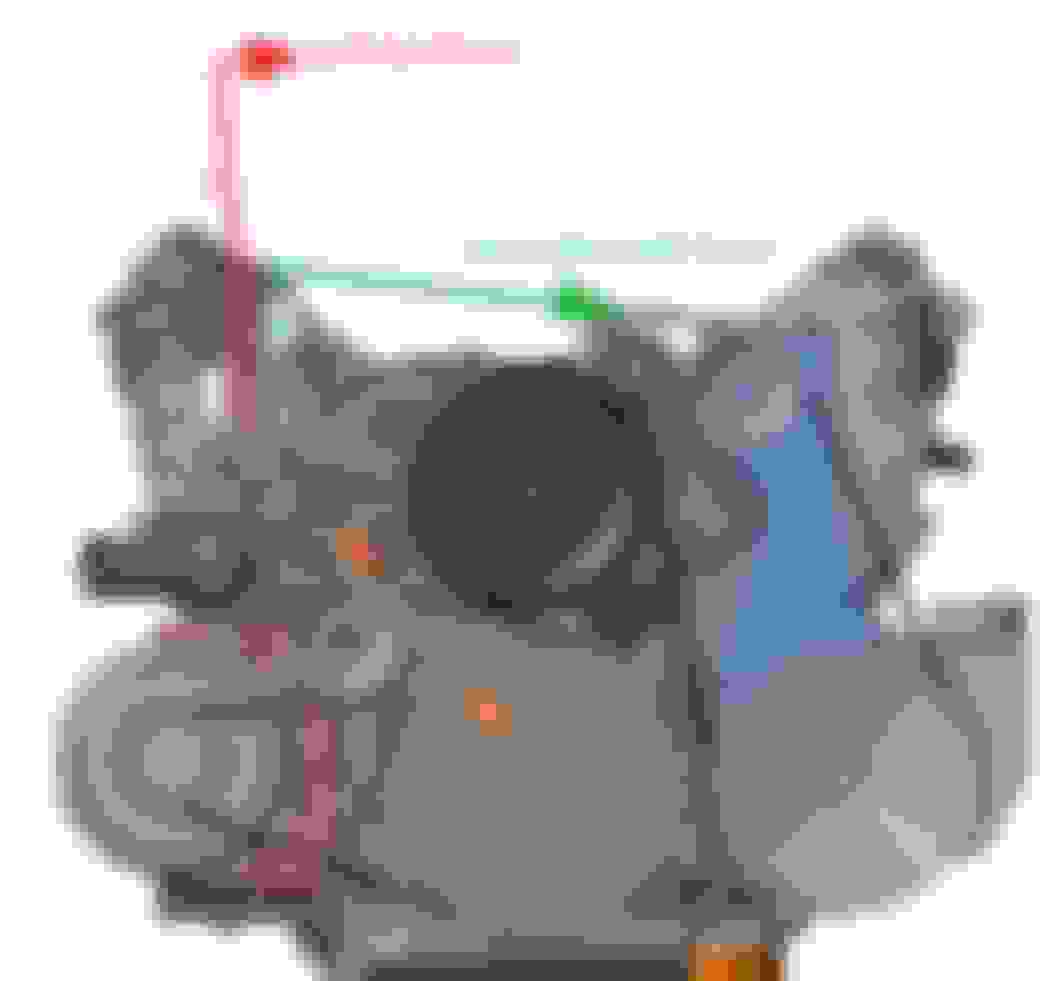
Don't worry about clogging the thread.. this is a discussion forum. If I wanted to just post pics with no feedback I'd make a blog! I don't think we're that off.. I just think we're evaluating it from different directions. See below pic to show what I mean.
Your F1 force is totally correct, but F1 is also the equilibrium state of the belt tension. I'm isolating my evaluation to the case where there is an additional load on the tensioner (which it wouldn't otherwise see on a factory setup) on top of the F1 load, when the alternator is now introducing a load behind the tensioner. For evaluation, I'm viewing the belt as static, with the belt fixed on the driver side of the tensioner somewhere around the throttlebody, and as the new alternator load is introduced it's "pulling" the belt down and thus activating the tensioner beyond its equilibrium state, and thus the alternator load would roll the tensioner deeper into its travel and might make it bounce back and oscillate, causing belt flap. I'm considering the regular load F1 and its combined resultant vector F2 to be proven fine on my existing setup with no squeal, belt flap, rub, or hop as far as I could tell, so the specifics of the F2 vector in my mind don't really matter as they're a proven baseline.
Red line has the shortest arrow (force) and longest lever arm, and those were my fish scale test pulls. Green would be the equivalent belt tension force to create the movements I measured with the fish scale, note the shorter lever arm and thus longer force vector. The way my mind is seeing it (and how I described in previous paragraph) the orange arrow has the shortest lever arm from the smaller offset of the pulley OD to the tension arm pivot, which results in a higher belt pull force than the green line. Therefor my "equivalent" force-at-belt calcs in my previous post were actually generous, as the belt force from the alternator load would need to be even higher than these values to activate the tensioner, since it is such an acute angle of the belt entering the tensioner from the alternator, and thus a small lever arm and thus large force needed.
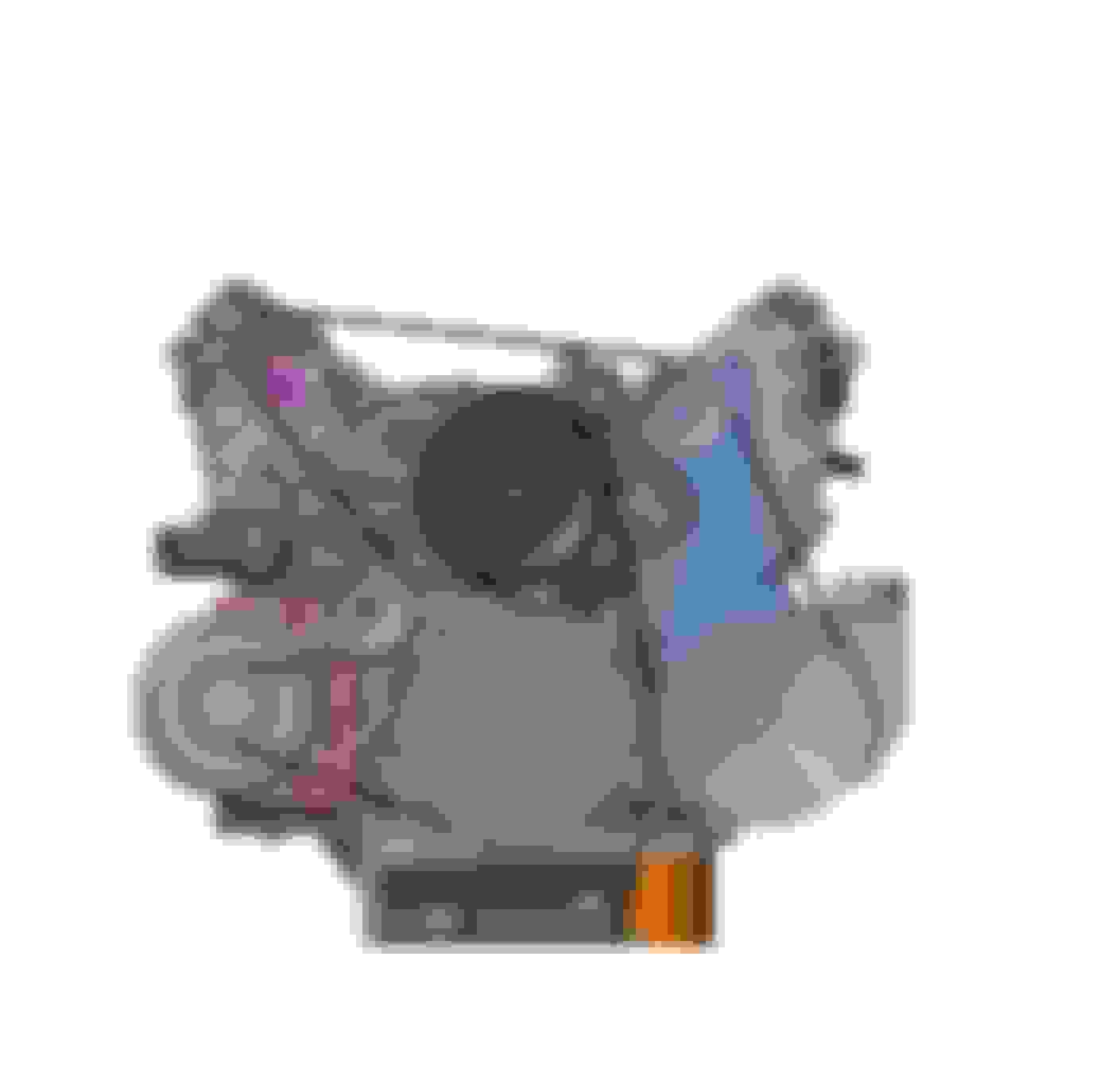
I've also attached a blank pic of the accessory drive so you can mark it up to your heart's content
Gas Monkey Built a 6-Wheel Ferrari Testarossa With a Corvette LT4 Engine
Slideshow: The controversial Ferrari F6 swaps its original flat-12 for a Corvette Z06-derived LT4 V8 and sends power to four rear wheels through a custom-built drivetrain.
7 Most Reliable High-Performance Engines GM Has Ever Built
Slideshow:These GM engines didn't just make huge power, they survived abuse, boost, track days, and six-digit mileage with a reputation for refusing to quit.
6 Common C5 Corvette Failures and What's Involved In Repairing Them
Slideshow: From wobbling harmonic balancers to failed EBCMs, these are the issues that define long-term C5 ownership and what repairs typically involve.
Retro Modern Bandit Pontiac Trans AM Comes With Burt Reynolds' Autograph
Slideshow: A modern Camaro transformed into a retro icon, this limited-run "Bandit" build blends nostalgia with brute force in a way few revivals manage.
Top 10 Greatest Cadillac V Series Performance Models Ever, Ranked
Slideshow: Cadillac didn't just crash the high-performance luxury vehicle party, it showed up loud, supercharged, and occasionally a little unhinged...
Coachbuilt N2A Anteros Is an LS2-Powered C6 Corvette In Italian Clothes
Slideshow: A one-off sports car that looks like a vintage Italian exotic-but hides a C6 Corvette underneath-just sold for the price of a new mid-engine Corvette.