


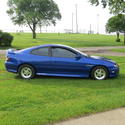





My first single turbo build

TECH Junkie
Joined: Jul 2015
Posts: 3,012
Likes: 48

One thing about GTO’s is I get a lot of comments about it. More often bad then good, but it gets noticed. I’ve never seen a car have more people go out of their way to tell me something negative about it. I see plenty of things I don’t like and don’t feel the need to tell the owner I don’t like your car...lol.
For now my car is about perfect for a street car around 650 rwhp, full weight with all the comforts of a 31,000 mile car. I do want a forged motor and a lot more boost to eventually run mid 9’s in a couple years though. I’d like to do it full weight driven to and from the track as well.
Im thinking some of the newer Camaro’s weigh as much as us with IRS and run good times. Again a more popular car with aftermarket support and guys spending big bucks to do it.
A clean gto can be had for 10-15 grand easily then another 25 to run 9’s while keeping it nice. So you’re still under 40g which is way cheaper than some of these late model cars. Sure they need less mods, but the $$$ are still there.
For now my car is about perfect for a street car around 650 rwhp, full weight with all the comforts of a 31,000 mile car. I do want a forged motor and a lot more boost to eventually run mid 9’s in a couple years though. I’d like to do it full weight driven to and from the track as well.
Im thinking some of the newer Camaro’s weigh as much as us with IRS and run good times. Again a more popular car with aftermarket support and guys spending big bucks to do it.
A clean gto can be had for 10-15 grand easily then another 25 to run 9’s while keeping it nice. So you’re still under 40g which is way cheaper than some of these late model cars. Sure they need less mods, but the $$$ are still there.
If you were referring to my comment as being negative, I can see why one would see it that way. To be clear, I don't hate the car, as they actually look fairly good, if done up right and in good shape. But was just giving my honest opinion, I'd even say the same thing about my own car, for the power it makes, as it stands it underperforms at the track. I just like to give straight up assessments, be it my own, or someone else's car
I just wanted to add to add to your comments about the 1/4 times GTOs run that for the most part they have a different type of owner with different goals that adds to the equation of their already disadvantaged chassis.

11 Second Club
Joined: Dec 2016
Posts: 665
Likes: 5
LS1 Tech Stories
The Best V8 Stories One Small Block at Time

Gas Monkey Built a 6-Wheel Ferrari Testarossa With a Corvette LT4 Engine
Verdad Gallardo
7 Most Reliable High-Performance Engines GM Has Ever Built
Verdad Gallardo
Amazing '71 Camaro Restomod Is Modern Muscle Car Under the Skin
Verdad Gallardo
6 Common C5 Corvette Failures and What's Involved In Repairing Them
Pouria Savadkouei
Retro Modern Bandit Pontiac Trans AM Comes With Burt Reynolds' Autograph
Verdad Gallardo
Top 10 Greatest Cadillac V Series Performance Models Ever, Ranked
Pouria Savadkouei
Top 10 Most Powerful Chevy Trucks Ever Made!

Hennessey's New Supercharged Silverado ZR2 Has 700 HP
Verdad Gallardo
Coachbuilt N2A Anteros Is an LS2-Powered C6 Corvette In Italian Clothes
Verdad Gallardo It’s running good. Been driving it everyday. Rain or shine. I’ve been having alternator issues. I’m not sure if it’s the heat eating them (manifold is not wrapped and about 4” away) or if it’s because I’m using reman units. Last one was a reman delco. The one I have for it now is a new one. My grandma passed away Tuesday so I’ve not touched the car, it’s sitting at my work and I’ve been driving my truck for the past few days.
Im now on 12lbs boost and I’ve been fooling with maps getting good street and track tunes. Pretty amazing how I can limit things right at first and ramp them in aggressively but soft enough to keep regular street tires from being blistered off.
Ive been fighting heat problems on really hot days. I say problems, it’s not over heating but not running as cool as I’d like. The engine would run 213-215 and the trans would run 200-210. I got the trans down to 180-190 with a better cooler and I made some cooling changes (180 thermo, water wetter) and it’s around 205-210 on a hot day in traffic.
Im now on 12lbs boost and I’ve been fooling with maps getting good street and track tunes. Pretty amazing how I can limit things right at first and ramp them in aggressively but soft enough to keep regular street tires from being blistered off.
Ive been fighting heat problems on really hot days. I say problems, it’s not over heating but not running as cool as I’d like. The engine would run 213-215 and the trans would run 200-210. I got the trans down to 180-190 with a better cooler and I made some cooling changes (180 thermo, water wetter) and it’s around 205-210 on a hot day in traffic.

nice read
thoughts
1. use torque management and regular tires to keep the trans alive longer
2. try to keep the 4l60e platform, many people ditch it for the 4l80e and rightly so, but few have the potential to keep the 4l60e in the first place. I think you have what it takes. And its worth the benefits of improved economy and a slightly more rwhp. The 4l80e weighs something like 250lbs wet and it will eat up about 2-3 A/C compressors worth of fuel while cruising over the 60e size transmissions (personal experience/measurements show that 4l80e eats from 3-5mpg additional over 700R4 style). Good for cost vs potential and performance... not so good for a daily driver when fuel economy matters (does it matter?)
3. I wouldn't worry about flow sensors or gimmicks for water injection. Use a basic on/off pump system with a well known nozzle, inject the liquid state near the engine intake manifold so that it can enter the combustion chamber before it turns to gas state. This minimizes its footprint (volume) and allows the engine to make the most power. If it evaporates before it hits the chamber it will take up a LOT more room and displace the atmospheric contents. Also don't 'tune' for the system, use like a pyro-control (EGT controller) and have it handy for when EGT is going high (e.g. specification for SXE BW turbocharger is 1380*F, keep below that) as additional protection. But don't take any fuel out of the main tune for the system which can fail at any moment.
4. Always use 50/50 (or less meth) and simple push-plastic connectors for street cars with water/meth injection for safety.
5. The idea behind water component is the cooling effect inside the chamber, the 1600*F piston surface for example. Metal expands based on it's temperature; piston ring ends don't seize because of boost pressure, they butt when the temperature rises high enough to expand the materials enough for it to happen. This is why water is indispensable to factory ring-gap, tight fragile cast piston-wall engines. And the methanol content is there to simply raise octane which, when using low boost (< 18psi) and A2A intercooling (110-125*F typical) is rarely a concern at typical low compression ratio 9.5:1 in modern engines. Some small engines (2.0L) with 8.5:1 compression can see 36psi of boost on 93 octane without any methanol addl (with enough piston-ring gap) So the fuel quality of 93 is actually not that bad when intake temperature is low, and compression is reasonable.
6. Temperature thresholds and boost tests:
-Watch the IAT, try to keep it under 130*F when using gasoline if possible
-Always perform boost pressure test from the compressor to the engine intake manifold using an air compressor before attempting to run a turbocharged vehicle under boost
Air that leaks from intake plumbing causes additional turbine backpressure (another component of engine detonation/damage) and causes higher IAT. It cannot be ignored and cannot be understated as a priority #1 should have done this first, if there is no compressor wheel speed sensor to alarm directly.
7. Insulation is half the puzzle. now you need reflective surfaces in some places. I see the need for some reflection between the master cylinder area (looks to be easily done) do this before the brake master melts and catches fire (used to see this happen alot in the 2000-2010's when turbo got 'big')
Also in the crossover tube that goes from left to right side, that tube can hit 1500*F so it needs some kind of shielding, god knows what it can melt down there.
keep in mind insulation slows the progress of temperature raise but only slightly reduces it (if at all), and also comes with the potentially negative effect of trapping heat inside for longer during a cooldown. So you don't want insulation on items where you are trying to shed heat, such as intercooler plumbing or radiator hoses.
Exhaust pipes on the other hand we want to contain all the heat properly. So coat, wrap, and shield them up. Use water to bring the temperatures down.
Literally you can run water lines into the engine bay if necessary to cool it down. Either open or closed loop systems will work fine.
High quality wastegates also use water lines directly.
The highest level of auto-craft for turbocharger exhaust tubes IMO is a manifold/downpipe heat reflective system (heat shields) which incorporate a water-cooling flow-through design.
8. Leaner isn't meaner. The number of fuel molecules available during specific positions of the piston/rod lever is a factor which influences cylinder pressure. Having richer air fuel ratios allow more fuel molecules to find partners during the critical moments and higher pressure integrals can be generated.
In other words, don't be worried if you have 11.0:1 or 10.8:1 it won't be down on power significantly from say 11.5:1 , that isn't going to hold power back at all.
9. Keep the timing low. 11-12* is fine on pump at 12psi of boost for 9.5:1 compression with 93 octane. Pushing timing will always seem to give 'more' (dyno testing) but it isn't relevant to street cars, nor is it safe for cast pistons for a variety of reasons. This isn't a competition so the missing 20-30 ft*lbs of torque won't lose you any races worth winning. The headroom in the timing curve is for when the fuel gets hot, for when the chamber gets hot, for when heat soak and daily driving uphill in high gears; Temperature directly affects fuel reaction rate, which directly impacts whether the cylinder pressure is going to spike or not. A spike in cylinder pressure (without detonation or knock) happens when the timing is too advanced, or when it is set perfectly absolutely right on the money and then the engine/fuel gets a couple degrees warmer... See what I am saying.
its turning into a book though so I guess thats it for the minute, like what you've done so far.
thoughts
1. use torque management and regular tires to keep the trans alive longer
2. try to keep the 4l60e platform, many people ditch it for the 4l80e and rightly so, but few have the potential to keep the 4l60e in the first place. I think you have what it takes. And its worth the benefits of improved economy and a slightly more rwhp. The 4l80e weighs something like 250lbs wet and it will eat up about 2-3 A/C compressors worth of fuel while cruising over the 60e size transmissions (personal experience/measurements show that 4l80e eats from 3-5mpg additional over 700R4 style). Good for cost vs potential and performance... not so good for a daily driver when fuel economy matters (does it matter?)
3. I wouldn't worry about flow sensors or gimmicks for water injection. Use a basic on/off pump system with a well known nozzle, inject the liquid state near the engine intake manifold so that it can enter the combustion chamber before it turns to gas state. This minimizes its footprint (volume) and allows the engine to make the most power. If it evaporates before it hits the chamber it will take up a LOT more room and displace the atmospheric contents. Also don't 'tune' for the system, use like a pyro-control (EGT controller) and have it handy for when EGT is going high (e.g. specification for SXE BW turbocharger is 1380*F, keep below that) as additional protection. But don't take any fuel out of the main tune for the system which can fail at any moment.
4. Always use 50/50 (or less meth) and simple push-plastic connectors for street cars with water/meth injection for safety.
5. The idea behind water component is the cooling effect inside the chamber, the 1600*F piston surface for example. Metal expands based on it's temperature; piston ring ends don't seize because of boost pressure, they butt when the temperature rises high enough to expand the materials enough for it to happen. This is why water is indispensable to factory ring-gap, tight fragile cast piston-wall engines. And the methanol content is there to simply raise octane which, when using low boost (< 18psi) and A2A intercooling (110-125*F typical) is rarely a concern at typical low compression ratio 9.5:1 in modern engines. Some small engines (2.0L) with 8.5:1 compression can see 36psi of boost on 93 octane without any methanol addl (with enough piston-ring gap) So the fuel quality of 93 is actually not that bad when intake temperature is low, and compression is reasonable.
6. Temperature thresholds and boost tests:
-Watch the IAT, try to keep it under 130*F when using gasoline if possible
-Always perform boost pressure test from the compressor to the engine intake manifold using an air compressor before attempting to run a turbocharged vehicle under boost
Air that leaks from intake plumbing causes additional turbine backpressure (another component of engine detonation/damage) and causes higher IAT. It cannot be ignored and cannot be understated as a priority #1 should have done this first, if there is no compressor wheel speed sensor to alarm directly.
7. Insulation is half the puzzle. now you need reflective surfaces in some places. I see the need for some reflection between the master cylinder area (looks to be easily done) do this before the brake master melts and catches fire (used to see this happen alot in the 2000-2010's when turbo got 'big')
Also in the crossover tube that goes from left to right side, that tube can hit 1500*F so it needs some kind of shielding, god knows what it can melt down there.
keep in mind insulation slows the progress of temperature raise but only slightly reduces it (if at all), and also comes with the potentially negative effect of trapping heat inside for longer during a cooldown. So you don't want insulation on items where you are trying to shed heat, such as intercooler plumbing or radiator hoses.
Exhaust pipes on the other hand we want to contain all the heat properly. So coat, wrap, and shield them up. Use water to bring the temperatures down.
Literally you can run water lines into the engine bay if necessary to cool it down. Either open or closed loop systems will work fine.
High quality wastegates also use water lines directly.
The highest level of auto-craft for turbocharger exhaust tubes IMO is a manifold/downpipe heat reflective system (heat shields) which incorporate a water-cooling flow-through design.
8. Leaner isn't meaner. The number of fuel molecules available during specific positions of the piston/rod lever is a factor which influences cylinder pressure. Having richer air fuel ratios allow more fuel molecules to find partners during the critical moments and higher pressure integrals can be generated.
In other words, don't be worried if you have 11.0:1 or 10.8:1 it won't be down on power significantly from say 11.5:1 , that isn't going to hold power back at all.
9. Keep the timing low. 11-12* is fine on pump at 12psi of boost for 9.5:1 compression with 93 octane. Pushing timing will always seem to give 'more' (dyno testing) but it isn't relevant to street cars, nor is it safe for cast pistons for a variety of reasons. This isn't a competition so the missing 20-30 ft*lbs of torque won't lose you any races worth winning. The headroom in the timing curve is for when the fuel gets hot, for when the chamber gets hot, for when heat soak and daily driving uphill in high gears; Temperature directly affects fuel reaction rate, which directly impacts whether the cylinder pressure is going to spike or not. A spike in cylinder pressure (without detonation or knock) happens when the timing is too advanced, or when it is set perfectly absolutely right on the money and then the engine/fuel gets a couple degrees warmer... See what I am saying.
its turning into a book though so I guess thats it for the minute, like what you've done so far.
Oh I remember this. The ten useless follow up troll posts attempting to fill the forum spaces with.... more words.
It's like people can't handle reading on this forum
I missed you too
I know, I changed it to this end, I appreciate your posts and no disrespect intended, just trigger happy after coffee and up 30hours
and I have this thing about predictions, premonitions, I can basically tell the future on the internet with very little effort. Sort of like, setting up the stage for a play that you wrote. The actors need to show up though...
It's like people can't handle reading on this forum
I missed you too
I know, I changed it to this end, I appreciate your posts and no disrespect intended, just trigger happy after coffee and up 30hours
and I have this thing about predictions, premonitions, I can basically tell the future on the internet with very little effort. Sort of like, setting up the stage for a play that you wrote. The actors need to show up though...
Last edited by kingtal0n; Jul 3, 2019 at 08:08 AM.
TECH Junkie
Joined: Jul 2015
Posts: 3,012
Likes: 48
No hate man, was said with the utmost of endearment.

nice read
thoughts
1. use torque management and regular tires to keep the trans alive longer I am using some tq management
2. try to keep the 4l60e platform, many people ditch it for the 4l80e and rightly so, but few have the potential to keep the 4l60e in the first place. I think you have what it takes. And its worth the benefits of improved economy and a slightly more rwhp. The 4l80e weighs something like 250lbs wet and it will eat up about 2-3 A/C compressors worth of fuel while cruising over the 60e size transmissions (personal experience/measurements show that 4l80e eats from 3-5mpg additional over 700R4 style). Good for cost vs potential and performance... not so good for a daily driver when fuel economy matters (does it matter?) Fuel mileage does matter. I drive the car alot.
3. I wouldn't worry about flow sensors or gimmicks for water injection. Use a basic on/off pump system with a well known nozzle, inject the liquid state near the engine intake manifold so that it can enter the combustion chamber before it turns to gas state. This minimizes its footprint (volume) and allows the engine to make the most power. If it evaporates before it hits the chamber it will take up a LOT more room and displace the atmospheric contents. Also don't 'tune' for the system, use like a pyro-control (EGT controller) and have it handy for when EGT is going high (e.g. specification for SXE BW turbocharger is 1380*F, keep below that) as additional protection. But don't take any fuel out of the main tune for the system which can fail at any moment. I dont plan on tuning for the system. I'm adding it for the safety factor.
4. Always use 50/50 (or less meth) and simple push-plastic connectors for street cars with water/meth injection for safety. I'm going to use simple washer fluid
5. The idea behind water component is the cooling effect inside the chamber, the 1600*F piston surface for example. Metal expands based on it's temperature; piston ring ends don't seize because of boost pressure, they butt when the temperature rises high enough to expand the materials enough for it to happen. This is why water is indispensable to factory ring-gap, tight fragile cast piston-wall engines. And the methanol content is there to simply raise octane which, when using low boost (< 18psi) and A2A intercooling (110-125*F typical) is rarely a concern at typical low compression ratio 9.5:1 in modern engines. Some small engines (2.0L) with 8.5:1 compression can see 36psi of boost on 93 octane without any methanol addl (with enough piston-ring gap) So the fuel quality of 93 is actually not that bad when intake temperature is low, and compression is reasonable. I run lower boost in 1st and second gears, usually not over 10psi in second and on kill I have it at 12-12.5psi in third. I rarely run out third gear, so the higher boost pressures arent seen for very long.
6. Temperature thresholds and boost tests:
-Watch the IAT, try to keep it under 130*F when using gasoline if possible
-Always perform boost pressure test from the compressor to the engine intake manifold using an air compressor before attempting to run a turbocharged vehicle under boost
Air that leaks from intake plumbing causes additional turbine backpressure (another component of engine detonation/damage) and causes higher IAT. It cannot be ignored and cannot be understated as a priority #1 should have done this first, if there is no compressor wheel speed sensor to alarm directly
my IAT's are usually 98-110 on a hot day unless i'm stuck in traffic or idling for a long time. I bough two small cooling fans for the intercooler to help with that.
7. Insulation is half the puzzle. now you need reflective surfaces in some places. I see the need for some reflection between the master cylinder area (looks to be easily done) do this before the brake master melts and catches fire (used to see this happen alot in the 2000-2010's when turbo got 'big')
Also in the crossover tube that goes from left to right side, that tube can hit 1500*F so it needs some kind of shielding, god knows what it can melt down there.
keep in mind insulation slows the progress of temperature raise but only slightly reduces it (if at all), and also comes with the potentially negative effect of trapping heat inside for longer during a cooldown. So you don't want insulation on items where you are trying to shed heat, such as intercooler plumbing or radiator hoses.
Exhaust pipes on the other hand we want to contain all the heat properly. So coat, wrap, and shield them up. Use water to bring the temperatures down.
Literally you can run water lines into the engine bay if necessary to cool it down. Either open or closed loop systems will work fine.
High quality wastegates also use water lines directly.
The highest level of auto-craft for turbocharger exhaust tubes IMO is a manifold/downpipe heat reflective system (heat shields) which incorporate a water-cooling flow-through design.
my pipes are wrapped in the master cylinder area. This system has been on the car for close to a year, I daily drive the car pretty often, Ive driven out of town, stuck in traffic for long periods...let the car idle while i take a nap with the ac on...If it were going to melt...it would have long ago. I have a water cooled Tial waste gate....no water is run to it yet though.
8. Leaner isn't meaner. The number of fuel molecules available during specific positions of the piston/rod lever is a factor which influences cylinder pressure. Having richer air fuel ratios allow more fuel molecules to find partners during the critical moments and higher pressure integrals can be generated.
In other words, don't be worried if you have 11.0:1 or 10.8:1 it won't be down on power significantly from say 11.5:1 , that isn't going to hold power back at all. I shoot for 11.2-11.5...I start getting nervous at 11.8.....
9. Keep the timing low. 11-12* is fine on pump at 12psi of boost for 9.5:1 compression with 93 octane. Pushing timing will always seem to give 'more' (dyno testing) but it isn't relevant to street cars, nor is it safe for cast pistons for a variety of reasons. This isn't a competition so the missing 20-30 ft*lbs of torque won't lose you any races worth winning. The headroom in the timing curve is for when the fuel gets hot, for when the chamber gets hot, for when heat soak and daily driving uphill in high gears; Temperature directly affects fuel reaction rate, which directly impacts whether the cylinder pressure is going to spike or not. A spike in cylinder pressure (without detonation or knock) happens when the timing is too advanced, or when it is set perfectly absolutely right on the money and then the engine/fuel gets a couple degrees warmer... See what I am saying.
timing is low, I drop a gree or so at peak tq and go up to 13 degrees after peak tq at higher rpms. no knock ever detected in my logs.
its turning into a book though so I guess thats it for the minute, like what you've done so far.
thoughts
1. use torque management and regular tires to keep the trans alive longer I am using some tq management
2. try to keep the 4l60e platform, many people ditch it for the 4l80e and rightly so, but few have the potential to keep the 4l60e in the first place. I think you have what it takes. And its worth the benefits of improved economy and a slightly more rwhp. The 4l80e weighs something like 250lbs wet and it will eat up about 2-3 A/C compressors worth of fuel while cruising over the 60e size transmissions (personal experience/measurements show that 4l80e eats from 3-5mpg additional over 700R4 style). Good for cost vs potential and performance... not so good for a daily driver when fuel economy matters (does it matter?) Fuel mileage does matter. I drive the car alot.
3. I wouldn't worry about flow sensors or gimmicks for water injection. Use a basic on/off pump system with a well known nozzle, inject the liquid state near the engine intake manifold so that it can enter the combustion chamber before it turns to gas state. This minimizes its footprint (volume) and allows the engine to make the most power. If it evaporates before it hits the chamber it will take up a LOT more room and displace the atmospheric contents. Also don't 'tune' for the system, use like a pyro-control (EGT controller) and have it handy for when EGT is going high (e.g. specification for SXE BW turbocharger is 1380*F, keep below that) as additional protection. But don't take any fuel out of the main tune for the system which can fail at any moment. I dont plan on tuning for the system. I'm adding it for the safety factor.
4. Always use 50/50 (or less meth) and simple push-plastic connectors for street cars with water/meth injection for safety. I'm going to use simple washer fluid
5. The idea behind water component is the cooling effect inside the chamber, the 1600*F piston surface for example. Metal expands based on it's temperature; piston ring ends don't seize because of boost pressure, they butt when the temperature rises high enough to expand the materials enough for it to happen. This is why water is indispensable to factory ring-gap, tight fragile cast piston-wall engines. And the methanol content is there to simply raise octane which, when using low boost (< 18psi) and A2A intercooling (110-125*F typical) is rarely a concern at typical low compression ratio 9.5:1 in modern engines. Some small engines (2.0L) with 8.5:1 compression can see 36psi of boost on 93 octane without any methanol addl (with enough piston-ring gap) So the fuel quality of 93 is actually not that bad when intake temperature is low, and compression is reasonable. I run lower boost in 1st and second gears, usually not over 10psi in second and on kill I have it at 12-12.5psi in third. I rarely run out third gear, so the higher boost pressures arent seen for very long.
6. Temperature thresholds and boost tests:
-Watch the IAT, try to keep it under 130*F when using gasoline if possible
-Always perform boost pressure test from the compressor to the engine intake manifold using an air compressor before attempting to run a turbocharged vehicle under boost
Air that leaks from intake plumbing causes additional turbine backpressure (another component of engine detonation/damage) and causes higher IAT. It cannot be ignored and cannot be understated as a priority #1 should have done this first, if there is no compressor wheel speed sensor to alarm directly
my IAT's are usually 98-110 on a hot day unless i'm stuck in traffic or idling for a long time. I bough two small cooling fans for the intercooler to help with that.
7. Insulation is half the puzzle. now you need reflective surfaces in some places. I see the need for some reflection between the master cylinder area (looks to be easily done) do this before the brake master melts and catches fire (used to see this happen alot in the 2000-2010's when turbo got 'big')
Also in the crossover tube that goes from left to right side, that tube can hit 1500*F so it needs some kind of shielding, god knows what it can melt down there.
keep in mind insulation slows the progress of temperature raise but only slightly reduces it (if at all), and also comes with the potentially negative effect of trapping heat inside for longer during a cooldown. So you don't want insulation on items where you are trying to shed heat, such as intercooler plumbing or radiator hoses.
Exhaust pipes on the other hand we want to contain all the heat properly. So coat, wrap, and shield them up. Use water to bring the temperatures down.
Literally you can run water lines into the engine bay if necessary to cool it down. Either open or closed loop systems will work fine.
High quality wastegates also use water lines directly.
The highest level of auto-craft for turbocharger exhaust tubes IMO is a manifold/downpipe heat reflective system (heat shields) which incorporate a water-cooling flow-through design.
my pipes are wrapped in the master cylinder area. This system has been on the car for close to a year, I daily drive the car pretty often, Ive driven out of town, stuck in traffic for long periods...let the car idle while i take a nap with the ac on...If it were going to melt...it would have long ago. I have a water cooled Tial waste gate....no water is run to it yet though.
8. Leaner isn't meaner. The number of fuel molecules available during specific positions of the piston/rod lever is a factor which influences cylinder pressure. Having richer air fuel ratios allow more fuel molecules to find partners during the critical moments and higher pressure integrals can be generated.
In other words, don't be worried if you have 11.0:1 or 10.8:1 it won't be down on power significantly from say 11.5:1 , that isn't going to hold power back at all. I shoot for 11.2-11.5...I start getting nervous at 11.8.....
9. Keep the timing low. 11-12* is fine on pump at 12psi of boost for 9.5:1 compression with 93 octane. Pushing timing will always seem to give 'more' (dyno testing) but it isn't relevant to street cars, nor is it safe for cast pistons for a variety of reasons. This isn't a competition so the missing 20-30 ft*lbs of torque won't lose you any races worth winning. The headroom in the timing curve is for when the fuel gets hot, for when the chamber gets hot, for when heat soak and daily driving uphill in high gears; Temperature directly affects fuel reaction rate, which directly impacts whether the cylinder pressure is going to spike or not. A spike in cylinder pressure (without detonation or knock) happens when the timing is too advanced, or when it is set perfectly absolutely right on the money and then the engine/fuel gets a couple degrees warmer... See what I am saying.
timing is low, I drop a gree or so at peak tq and go up to 13 degrees after peak tq at higher rpms. no knock ever detected in my logs.
its turning into a book though so I guess thats it for the minute, like what you've done so far.


If mileage matters try to keep the lighter transmission with better overdrive ratios (4l60e or T56). With careful torque strategy and any qty of transmission diagnostic/builder skill/ability it can be made to live reasonably well in street applications. I think the robustness of the 80e really starts to pay off when you get into trans-brake/slicks, or if you don't really have a way to deal with the transmission internals and just need something reliable without putting a bunch of modifications in it.
I think you are the first I've seen get it all right
I think you are the first I've seen get it all right

