







Any Superchargers W/boost controllers?
 catching up
 Man, this is getting interesting... I think we need to have a cage match on this one! 
So Robert - What did Mr. Summers say about this exactly? From what I remember you relayed that he just said that it was a bad idea, which is not very helpful. How would he solve the two problems of reducing top-end boost and/or gear selectable boost control? In the racing world they have so many other tools to solve problems like aftermarket ECUs and electronic clutches that are out of reach for street/strip guys like us.
My car is not nearly as powerful as Mr Big's with only 540 rwhp, but as soon as it drops below 75 degrees I've got no traction in 2nd and would like to see a solution to those problems that doesn't lower my reliability too much. Obviously we are all willing to live with less reliability or we would all be driving Honda Accords instead of hopped up V8s.
Was the unit ever spun over the Max Impeller RPM? How many miles between failures? Was this a race truck or street/strip? I still don't see how bleeding off boost could cause a s/c failure. Please tell us more about this.
Aside from the variable drive that Bob brought up, everything I've read so far points to restricting the air intake as the best solution, but it is not easily accomplished with off the shelf parts to make it programmable like the turbo guys have with their wastegate controllers.
Dan
So Robert - What did Mr. Summers say about this exactly? From what I remember you relayed that he just said that it was a bad idea, which is not very helpful. How would he solve the two problems of reducing top-end boost and/or gear selectable boost control? In the racing world they have so many other tools to solve problems like aftermarket ECUs and electronic clutches that are out of reach for street/strip guys like us.
My car is not nearly as powerful as Mr Big's with only 540 rwhp, but as soon as it drops below 75 degrees I've got no traction in 2nd and would like to see a solution to those problems that doesn't lower my reliability too much. Obviously we are all willing to live with less reliability or we would all be driving Honda Accords instead of hopped up V8s.
Dan
Man, this is getting interesting... I think we need to have a cage match on this one!
So Robert - What did Mr. Summers say about this exactly? From what I remember you relayed that he just said that it was a bad idea, which is not very helpful. How would he solve the two problems of reducing top-end boost and/or gear selectable boost control? In the racing world they have so many other tools to solve problems like aftermarket ECUs and electronic clutches that are out of reach for street/strip guys like us.
So Robert - What did Mr. Summers say about this exactly? From what I remember you relayed that he just said that it was a bad idea, which is not very helpful. How would he solve the two problems of reducing top-end boost and/or gear selectable boost control? In the racing world they have so many other tools to solve problems like aftermarket ECUs and electronic clutches that are out of reach for street/strip guys like us.
For instance: ATI runs-in all of their F-series blowers before they get shipped. What this means is that they bolt it to a stand and a belt and pulleys are hooked up. The blower is then 'spun up' using a 454 BBC that has a F2 feeding it. The motor makes about 1000 hp on pump gas.
The blower being 'run-in' is left to vent to atmosphere. If there were nothing hooked up to the outlet, the engine has a fairly tough time running all the way up to the desired rpm (usually about 5000 engine rpm), even with a small F1 blower on it. Take the very same blower and add a reducer to the outlet (going from 3" to 2", and causing a slight restriction), the motor then revs up much easier.
Granted this is not a scientific test, but I have seen it with my own eyes many times and it is very real. As you can see, there is a line to where bleeding off a little bit of boost may not make that big of a difference (in drive power losses), but if you start to bleed off too much (get closer to free-flow) the law of deminishing returns sets in.
My car is not nearly as powerful as Mr Big's with only 540 rwhp, but as soon as it drops below 75 degrees I've got no traction in 2nd and would like to see a solution to those problems that doesn't lower my reliability too much. Obviously we are all willing to live with less reliability or we would all be driving Honda Accords instead of hopped up V8s.
Was the unit ever spun over the Max Impeller RPM? How many miles between failures? Was this a race truck or street/strip? I still don't see how bleeding off boost could cause a s/c failure. Please tell us more about this.
Was the unit ever spun over the Max Impeller RPM? How many miles between failures? Was this a race truck or street/strip? I still don't see how bleeding off boost could cause a s/c failure. Please tell us more about this.
Drive system capability- can a 6-, 8-, or 12- rib (or even cog) belt hold up to the incresed speeds and loads on the blower?
Is the intercooler of adequate size to handle the higher blower outlet temps and keep the engine inlet temps close to the same as before?
How close to the blower's redline will you be and do you want to sacrifice reliability to achieve your goals?
What it all boils down to is what are your goals, how much testing do you want to do, and if you need to make a change, will your budget allow it?
I'm not saying it won't or doesn't work. I'm saying it may not work in certain circumstances. The only way to find out is to test, test, test!
TECH Enthusiast
Joined: Dec 2005
Posts: 590
Likes: 0
From: Scottsdale, AZ
If I jump from a D1 to an F1-C and slap on a wastegate do you think I'm going to notice or care about possible increased power to spin it? I'll be to busy enjoying my selectable boost! If we're talking the difference of 12# to 18# I doubt the diminishing returns would be enough to notice.
My goals would be a 91 octane level of boost and a 109 octane level of boost. Once the tune is in, I can fill up with my choice of fuel, hit the proper button and go.
My goals would be a 91 octane level of boost and a 109 octane level of boost. Once the tune is in, I can fill up with my choice of fuel, hit the proper button and go.
Man, this is getting interesting... I think we need to have a cage match on this one!
So Robert - What did Mr. Summers say about this exactly? From what I remember you relayed that he just said that it was a bad idea, which is not very helpful. How would he solve the two problems of reducing top-end boost and/or gear selectable boost control? In the racing world they have so many other tools to solve problems like aftermarket ECUs and electronic clutches that are out of reach for street/strip guys like us.
My car is not nearly as powerful as Mr Big's with only 540 rwhp, but as soon as it drops below 75 degrees I've got no traction in 2nd and would like to see a solution to those problems that doesn't lower my reliability too much. Obviously we are all willing to live with less reliability or we would all be driving Honda Accords instead of hopped up V8s.
Was the unit ever spun over the Max Impeller RPM? How many miles between failures? Was this a race truck or street/strip? I still don't see how bleeding off boost could cause a s/c failure. Please tell us more about this.
Aside from the variable drive that Bob brought up, everything I've read so far points to restricting the air intake as the best solution, but it is not easily accomplished with off the shelf parts to make it programmable like the turbo guys have with their wastegate controllers.
Dan
So Robert - What did Mr. Summers say about this exactly? From what I remember you relayed that he just said that it was a bad idea, which is not very helpful. How would he solve the two problems of reducing top-end boost and/or gear selectable boost control? In the racing world they have so many other tools to solve problems like aftermarket ECUs and electronic clutches that are out of reach for street/strip guys like us.
My car is not nearly as powerful as Mr Big's with only 540 rwhp, but as soon as it drops below 75 degrees I've got no traction in 2nd and would like to see a solution to those problems that doesn't lower my reliability too much. Obviously we are all willing to live with less reliability or we would all be driving Honda Accords instead of hopped up V8s.
Was the unit ever spun over the Max Impeller RPM? How many miles between failures? Was this a race truck or street/strip? I still don't see how bleeding off boost could cause a s/c failure. Please tell us more about this.
Aside from the variable drive that Bob brought up, everything I've read so far points to restricting the air intake as the best solution, but it is not easily accomplished with off the shelf parts to make it programmable like the turbo guys have with their wastegate controllers.
Dan
Under 3000 miles on each unit.
Line 5 in a H3, just adding power for a seriously underpowered truck.
As you open the supercharger outlet, the supercharger starts pumping more air. More air takes more power to drive. When superchargers are built, they spec them based on boost you would expect to see in a common application. The durability testing will be done with a restrictor to simulate the boost. We always just used a wedge that would cut off the flow on a charge pipe, simple pivot bolt/pinch bolt type adjustment and adjust outlet at different rpm to check different boost levels. The way they explain ATI doing it with the BB chevy engine is fairly normal inexpensive way to test. In our case we would run a 402 na engine to map the power at say 5000 rpm. If your power at 5000 was 550hp at the flywheel, then you add the blower belt with a restriction to cause a given boost level. Once that is done you stabilize the engine at 5000, whatever power is missing is the power it takes to drive the blower. As you lower the boost on a centrifical supercharger, the power to drive it goes up, it will show you this everytime. Once you know that, the engineer that designed the drive will usually have a safe hp that can go through the drive before it will break or fall to a durability point where the life will be shortened to unacceptable levels. I was using a small supercharger that was in a heavy truck, so it was working hard all the time when the bleed was open. Testing showed we were loading the drive with about 50hp of load, but it was validated at 40hp and below. If we closed the leak the power consumption would drop into a safe level, but the boost was to much for the engine on pump fuel. The fix was a throttlebody on the inlet of the blower, or a two speed drive. Both had to high a cost to make sense, so it died in the testing stage.
Kurt
Thanks for this info. Very, very informative.
Kurt - this was a Rotrex, right? Would you expect the same behavior out of the gear drive s/c's like Procharger, Vortech, and Paxton?
Anybody know what the rated max load for a Procharger is? I wonder if the gear drive can take a higher load than the Rotrex which would allow the wastegate solution to be done safely.
... If your power at 5000 was 550hp at the flywheel, then you add the blower belt with a restriction to cause a given boost level. Once that is done you stabilize the engine at 5000, whatever power is missing is the power it takes to drive the blower. As you lower the boost on a centrifical supercharger, the power to drive it goes up, it will show you this everytime. ...
Anybody know what the rated max load for a Procharger is? I wonder if the gear drive can take a higher load than the Rotrex which would allow the wastegate solution to be done safely.
I have tested with Rotrex and ATI superchargers. The Rotrex guys said it would be ok and it was not, the ATI guys said it would be to hard on the transmission to try. I think for short duration runs the bleed off method would work, but the warranty on the head unit would probably be void if you start shelling gears. They will know you are doing something wrong if the gears keep failing. If you monitor the oil temp, you may be able to see the additional load create heat. This could be done with a thermocouple in the drain plug running to a fluke meter, the voltage conversion will come with the thermocouple when you buy them. It will convert voltage to a temperature reading so you know if your going to damage the head unit.
Kurt
Kurt
Thanks for this info. Very, very informative.
Kurt - this was a Rotrex, right? Would you expect the same behavior out of the gear drive s/c's like Procharger, Vortech, and Paxton?
Anybody know what the rated max load for a Procharger is? I wonder if the gear drive can take a higher load than the Rotrex which would allow the wastegate solution to be done safely.
Kurt - this was a Rotrex, right? Would you expect the same behavior out of the gear drive s/c's like Procharger, Vortech, and Paxton?
Anybody know what the rated max load for a Procharger is? I wonder if the gear drive can take a higher load than the Rotrex which would allow the wastegate solution to be done safely.
LS1 Tech Stories
The Best V8 Stories One Small Block at Time

Gas Monkey Built a 6-Wheel Ferrari Testarossa With a Corvette LT4 Engine
Verdad Gallardo
7 Most Reliable High-Performance Engines GM Has Ever Built
Verdad Gallardo
Amazing '71 Camaro Restomod Is Modern Muscle Car Under the Skin
Verdad Gallardo
6 Common C5 Corvette Failures and What's Involved In Repairing Them
Pouria Savadkouei
Retro Modern Bandit Pontiac Trans AM Comes With Burt Reynolds' Autograph
Verdad Gallardo
Top 10 Greatest Cadillac V Series Performance Models Ever, Ranked
Pouria Savadkouei
Top 10 Most Powerful Chevy Trucks Ever Made!

Hennessey's New Supercharged Silverado ZR2 Has 700 HP
Verdad Gallardo
Coachbuilt N2A Anteros Is an LS2-Powered C6 Corvette In Italian Clothes
Verdad Gallardo
Originally Posted by Ponyhntr
There is a little known/understood fact outside of the centri supercharger manufacturer world. That fact is that free-flowing the blower actually causes the drive power to go UP, not down.

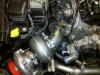

Have about 5000 miles on this over the past 2 years as the car is just a weekend car. Low boost is actually about 13.5psi and high boost depends on the outside temps. 74 degs = 17-18psi, 65 degs is 19-20psi and 55 degs = 22psi or so..Last dyno was 76degs and 75% humidity, I'm going back on a cooler, drier day to see what it will do..
Sweet, im strongly leaning the procharger route next spring, doind the cam and headers now, in prep for the big dog next spring, I wonder if there is much to be with a setup like this for low boost applications. not looking to do more then a good 550 for the street, but would love to have the power under the curve, thats for sure 
if your just looking for power under the curve and not a high boots setting, a restrictor plate before the supercharger is the way to go..More boost down low and limits the upper rpm boost..
huh... i guess ill have to give it a shot when i get things rolling in the spring. just trying to get all my ducks in a row for when it happens. its weird, i read about the restrictor plate thing in this thread, but still dont understand how it helps down low, does it still need to have a larger pulley like it would with the boost controller?

huh... i guess ill have to give it a shot when i get things rolling in the spring. just trying to get all my ducks in a row for when it happens. its weird, i read about the restrictor plate thing in this thread, but still dont understand how it helps down low, does it still need to have a larger pulley like it would with the boost controller?
don't know, all the ECS Paxton supercharger kits come with the restrictor plate for a stock bottom end cars. They use a 3.5" pulley on all their stock kits which will make 13psi and have you run the restrictor plate to drop the boost down to 9-10psi...