When you click on links to various merchants on this site and make a purchase, this can result in this site earning a commission. Affiliate programs and affiliations include, but are not limited to, the eBay Partner Network.
I ordered the OTC 7448A cleaning tool and a 12 pack of the the OTC 7000A cleaning product.
These are very good prices for these products and I bought a case because each can was only $7.50 each.
I have four vehicles in my family and plan to perform this service every 30k-40k miles.
This service usually costs somewhere between $89-$149 per vehicle at a shop.
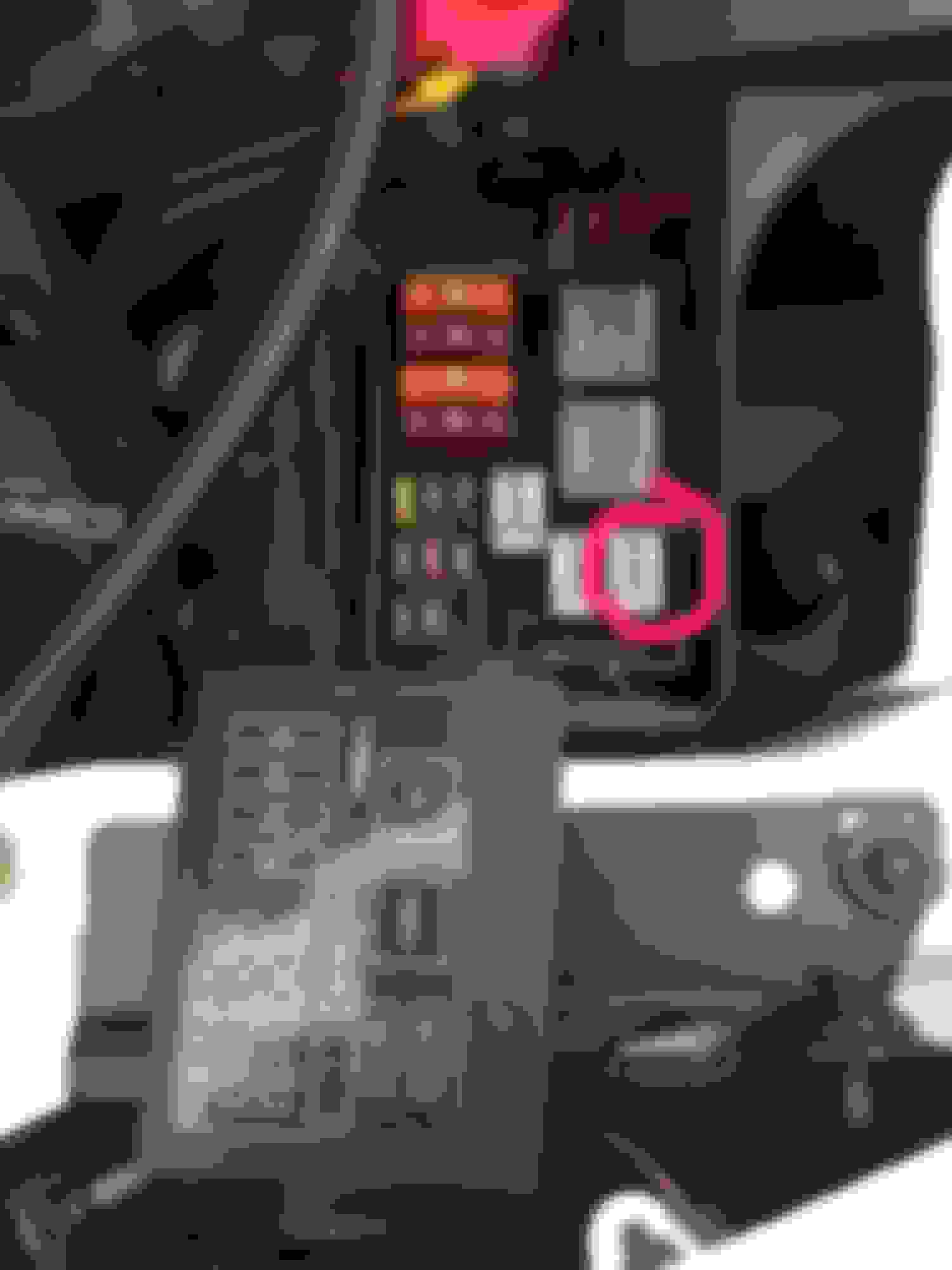
I picked up some connectors at Harbor Freight and did my first fuel injector cleaning today. My 2000 5.7L Trans Am was the first victim ;-). I did it first because GM made it very easy, the fuel rail has a schrader valve and the fuel pump relay is right there next to the radiator. All of this means, no tools required.
Anyway, I filled the container with cleaner, connected my air compressor to the tool, adjusted the pressure 5psi below the normal fuel rail pressure and started the car. It ran for about 10-15min, then stopped running when it ran out of cleaner.
BTW, I did not see any smoke coming out of the exhaust.
I ordered the OTC 7448A cleaning tool and a 12 pack of the the OTC 7000A cleaning product.
I was getting excited about this (not having to spring for GM top end tools) but looked up the OTC MSDS for the cleaning solvent and found that it's just kerosene.
Do the cans say anything about the chemicals inside?
Kerosene should do a good job and cleaning up soft deposits, but I understand that it isn't very effective on the hard carbon deposits. (If it does make a dent, it would probably need to be used over and over and over to match one shot of Naptha for this type of deposit.)
Incidentally... Seafoam's MSDS now says that their ingredients are "proprietary hydrocarbons," or something like that - but I'll bet they are using mostly Naptha and Isopropyl, like they were before in their earlier documents...
Thanks for me letting know! I never checked the MSDS but will certainly look for alternatives.
I also never realized a gasoline combustion engine would run on kerosene. I knew jets and diesels will run kerosene.
I also never realized a gasoline combustion engine would run on kerosene.
It shouldn't. You just hooked the tool up the schrader valve, right? In that situation, it should be metered in (by the tool and its valve) with a good bit of regular fuel. In this application, the kerosene (and other small amounts of magic stuff in the can) should be acting like concentrated detergents. The compression in the engine is probably not enough to light the kerosene, but I imagine it will burn after-the-fact in the combustion chamber (if the engine is slightly lean) or when it exits the tail pipe. I would expect that if one sent this in to the fuel stream too quickly, (or any carbon cleaner, for that matter) the engine would knock like crazy or the car would backfire like a machine gun.
When using this tool, you must pull the fuel pump relay. The engine is running on this alone.
I too looked at the MSDS and it shows >98% kerosene.
Polymer/Amine/Solvent Blend 2%
That additional 2% of stuff must be an octane booster. I would definitely expect that if we took the car out for a drive (and put it under load) burning kerosene, it would knock like crazy.
Do the instructions also tell you to get the engine up to operating temperature before doing the treatment? I understand that elevating the temperature of the engine should also help burn the lower octane fuels, since we don't have the compression to do that for us. (Like in a diesel engine.)
Guess I could increase the frequency to every 10k miles to use it up faster! ;-)
That makes sense to me - use it more like a traditional injector cleaner that you'd pour in your tank. I would think that stuff would do an excellent job in that department.
I cleaned my fuel injectors again today and I am pretty sure my injectors were leaking but not anymore.
Before I started, I measured the key on engine off and the initial fuel pressure would jump to 60psi then quickly bleed off to 15psi.
I then started the engine and the fuel pressure stayed at 60psi.
Turned engine off and repeated, same thing.
Then I ran the injector cleaner at about 55psi. Disconnected everything, turned the key on engine off again, fuel pressure jumped to 60psi, then went to 45psi and stopped. I let it set for about five minutes and no further bleed down!
I am very impressed with this fuel injector cleaner!
I used to drag race RX3, in about 1980, since the rotary without a turbo runs better on lower octane we tried K1. It ran really really well other than being a pain to start(Had to tow it until it warmed up). since our exhaust came through the hood and the engine was a old school bridgeport it blew a lot of flame.. Was very impressive when you got it up on revs though... And let off the gas at the end...
I used to drag race RX3, in about 1980, since the rotary without a turbo runs better on lower octane we tried K1. It ran really really well other than being a pain to start(Had to tow it until it warmed up). since our exhaust came through the hood and the engine was a old school bridgeport it blew a lot of flame.. Was very impressive when you got it up on revs though... And let off the gas at the end...
Had a 1986 RX7, nice car and the 1.3L wankel sure put out some HP for its size!
Mine was a second gen body style...looked like the Porsche 944, I think!
Imagine an LS1 in that car! Wow, that would be badazz!
Okay, back to reality! ;-)
I was getting excited about this (not having to spring for GM top end tools) but looked up the OTC MSDS for the cleaning solvent and found that it's just kerosene.
Do the cans say anything about the chemicals inside?
Kerosene should do a good job and cleaning up soft deposits, but I understand that it isn't very effective on the hard carbon deposits. (If it does make a dent, it would probably need to be used over and over and over to match one shot of Naptha for this type of deposit.)
Incidentally... Seafoam's MSDS now says that their ingredients are "proprietary hydrocarbons," or something like that - but I'll bet they are using mostly Naptha and Isopropyl, like they were before in their earlier documents...
I looked up a newer MSDS for this product and it says the main ingredient is Xylene, which I think is not kerosene. I don't know if it's better or worse.
I looked up a newer MSDS for this product and it says the main ingredient is Xylene, which I think is not kerosene. I don't know if it's better or worse.
It should be much better, but I'm not an expert in the finer points of the more complex hydrocarbons. Is there an Organic Chemist in the House???
The first ingredient should be the greatest component. I saw a page where it's a by-product of the splitting of Naptha, so I would think it to be a close cousin.
6 Common C5 Corvette Failures and What's Involved In Repairing Them
Slideshow: From wobbling harmonic balancers to failed EBCMs, these are the issues that define long-term C5 ownership and what repairs typically involve.
Retro Modern Bandit Pontiac Trans AM Comes With Burt Reynolds' Autograph
Slideshow: A modern Camaro transformed into a retro icon, this limited-run "Bandit" build blends nostalgia with brute force in a way few revivals manage.
Top 10 Greatest Cadillac V Series Performance Models Ever, Ranked
Slideshow: Cadillac didn't just crash the high-performance luxury vehicle party, it showed up loud, supercharged, and occasionally a little unhinged...
Coachbuilt N2A Anteros Is an LS2-Powered C6 Corvette In Italian Clothes
Slideshow: A one-off sports car that looks like a vintage Italian exotic-but hides a C6 Corvette underneath-just sold for the price of a new mid-engine Corvette.








 Fuel Injector Cleaning




















 And let off the gas at the end...