





Found the ultimate "Old Man Cam".

TECH Resident
Joined: Nov 2001
Posts: 958
Likes: 0
From: Aurora Il
 Re: Found the ultimate "Old Man Cam".
 I have a 212/216 .567/.567 116 cam... pretty small, makes power midrange, with idle stock at 650rpms shakes the car just perfect. It`s exactly what I wanted, guess I~m an old man now (30 next month <img border="0" title="" alt="[Smile]" src="gr_stretch.gif" /> ) Haven`t dynoed, but it`s so powerful that it took out my Vig. 3200 a couple of weeks after I put it in.. <img border="0" alt="[bullshit]" title="" src="graemlins/gr_bs.gif" /> lol
That other cam would need a damn good valvetrain.. not for this 'old man'
<small>[ October 16, 2002, 08:57 AM: Message edited by: Dan99Hawk ]</small>
That other cam would need a damn good valvetrain.. not for this 'old man'
<small>[ October 16, 2002, 08:57 AM: Message edited by: Dan99Hawk ]</small>

On The Tree
Joined: Sep 2002
Posts: 140
Likes: 0
From: Lakewood, OH and Grand Marais, MI
Re: Found the ultimate "Old Man Cam". My "old man" setup below. 218 cam provides good low/midrange punch and pulls well to 6400 shift.
New cam does look interesting, but a little hard on the valvetrain for my tastes. I will post dyno numbers after I see Speed Inc. for tuning later this month.
New cam does look interesting, but a little hard on the valvetrain for my tastes. I will post dyno numbers after I see Speed Inc. for tuning later this month.
Re: Found the ultimate "Old Man Cam". Sounds cool Patrick! I like the other version of "old man" setups myself = BIG cubes, small cam. All of the power you want, smooth idle, excellent drivability.
My old 382ci with the T1 was an awesome "old man" setup. Stock idle, 455 rwhp. Probably the best daily-drivable setup I've ever owned.
When are you going to get a bigger motah?
Also, could you just use some 1.8 ratio rocker arms to help out this quest for "old man" power?
-Tony
My old 382ci with the T1 was an awesome "old man" setup. Stock idle, 455 rwhp. Probably the best daily-drivable setup I've ever owned.
When are you going to get a bigger motah?
Also, could you just use some 1.8 ratio rocker arms to help out this quest for "old man" power?
-Tony
Thread Starter
Joined: Nov 2001
Posts: 8,246
Likes: 34
From: Victoria, TX
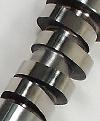
Re: Found the ultimate "Old Man Cam". The reasons why this cam is so awesome:
1. The wide LSA flattens the torque curve, makes power down low very smooth and strong, plus cleans up the idle and emissions.
2. The short intake duration with lots of lift gives as much "open area" under the curve as most 224 cams with.560 lift. The short duration cleans up the idle and keeps the torque down low nice and high.
3. The lazy ramp on the exhaust is easier on the valvetrain, reducing under hood noise, plus the longer duration helps with overlap. The reduced area under the curve (compared to the intake) makes this cam more like a "reverse split" duration cam. The cam would be more like a 214/208 cam if the exhaust had fast ramps too, but the added duration of the slower ramps help with overlap (which is a benefit when running headers).
4. The intake closing point of 44 degrees ABDC allows the motor to make peak hp much higher than most comparable cams with 214 intake duration. This is key in making the big rwhp numbers. Most 214 cams have 114 LSA and are ground with 4 degrees of advance. This makes the intake closing point 37 degrees ABDC which will only allow the engine to pull to 5700-5800 rpms before the power peak starts to drop. The extra 7 degrees of intake opening make this cam 7-10 hp stronger than a normal 214 cam.
FWIW, we ran with the converter locked and unlocked. The Yank PT4000 converter only lost 9 rwhp unlocked...pretty awesome if you ask me. The dyno curves locked up showed outstanding low and mid-range torque and power compared to the 230/224 cam.
1. The wide LSA flattens the torque curve, makes power down low very smooth and strong, plus cleans up the idle and emissions.
2. The short intake duration with lots of lift gives as much "open area" under the curve as most 224 cams with.560 lift. The short duration cleans up the idle and keeps the torque down low nice and high.
3. The lazy ramp on the exhaust is easier on the valvetrain, reducing under hood noise, plus the longer duration helps with overlap. The reduced area under the curve (compared to the intake) makes this cam more like a "reverse split" duration cam. The cam would be more like a 214/208 cam if the exhaust had fast ramps too, but the added duration of the slower ramps help with overlap (which is a benefit when running headers).
4. The intake closing point of 44 degrees ABDC allows the motor to make peak hp much higher than most comparable cams with 214 intake duration. This is key in making the big rwhp numbers. Most 214 cams have 114 LSA and are ground with 4 degrees of advance. This makes the intake closing point 37 degrees ABDC which will only allow the engine to pull to 5700-5800 rpms before the power peak starts to drop. The extra 7 degrees of intake opening make this cam 7-10 hp stronger than a normal 214 cam.
FWIW, we ran with the converter locked and unlocked. The Yank PT4000 converter only lost 9 rwhp unlocked...pretty awesome if you ask me. The dyno curves locked up showed outstanding low and mid-range torque and power compared to the 230/224 cam.
__________________

2013 Corvette Grand Sport A6 LME forged 416, Greg Good ported TFS 255 LS3 heads, 222/242 .629"/.604" 121LSA Pat G blower cam, ARH 1 7/8" headers, ESC Novi 1500 Supercharger w/8 rib direct drive conversion, 747rwhp/709rwtq on 93 octane, 801rwhp/735rwtq on race fuel, 10.1 @ 147.25mph 1/4 mile, 174.7mph Half Mile.
2016 Corvette Z51 M7 Magnuson Heartbeat 2300 supercharger, TSP LT headers, Pat G tuned, 667rwhp, 662rwtq, 191mph TX Mile.
2009.5 Pontiac G8 GT 6.0L, A6, AFR 230v2 heads. 506rwhp/442rwtq. 11.413 @ 121.29mph 1/4 mile, 168.7mph TX Mile
2000 Pewter Ram Air Trans Am M6 heads/cam 508 rwhp/445 rwtq SAE, 183.092 TX Mile
2022 Cadillac Escalade 6.2L A10 S&B CAI, Corsa catback.
2023 Corvette 3LT Z51 soon to be modified.
Custom LSX tuning in person or via email press here.
2013 Corvette Grand Sport A6 LME forged 416, Greg Good ported TFS 255 LS3 heads, 222/242 .629"/.604" 121LSA Pat G blower cam, ARH 1 7/8" headers, ESC Novi 1500 Supercharger w/8 rib direct drive conversion, 747rwhp/709rwtq on 93 octane, 801rwhp/735rwtq on race fuel, 10.1 @ 147.25mph 1/4 mile, 174.7mph Half Mile.
2016 Corvette Z51 M7 Magnuson Heartbeat 2300 supercharger, TSP LT headers, Pat G tuned, 667rwhp, 662rwtq, 191mph TX Mile.
2009.5 Pontiac G8 GT 6.0L, A6, AFR 230v2 heads. 506rwhp/442rwtq. 11.413 @ 121.29mph 1/4 mile, 168.7mph TX Mile
2000 Pewter Ram Air Trans Am M6 heads/cam 508 rwhp/445 rwtq SAE, 183.092 TX Mile
2022 Cadillac Escalade 6.2L A10 S&B CAI, Corsa catback.
2023 Corvette 3LT Z51 soon to be modified.
Custom LSX tuning in person or via email press here.
Thread Starter
Joined: Nov 2001
Posts: 8,246
Likes: 34
From: Victoria, TX
Re: Found the ultimate "Old Man Cam". Haha Tony,
Yes, the big motor with small cam truly IS a better old man set-up. As you're probably aware, my motor is getting pretty tired these days. I've been looking into my next step. Fresh 346 with built internals (to spray the **** out of) or a larger motor with a small cam. The almighty dollar will decide. Ultimately, I'd love a 400+ ci motor with awesome heads, streetable cam, fairly tight converter and something stupid like 2.73 gears. Of course, I could always ditch the automatic for a T-56 and keep some real gears in back, but they probably wouldn't last long behind a 6 speed.
Patrick
Yes, the big motor with small cam truly IS a better old man set-up. As you're probably aware, my motor is getting pretty tired these days. I've been looking into my next step. Fresh 346 with built internals (to spray the **** out of) or a larger motor with a small cam. The almighty dollar will decide. Ultimately, I'd love a 400+ ci motor with awesome heads, streetable cam, fairly tight converter and something stupid like 2.73 gears. Of course, I could always ditch the automatic for a T-56 and keep some real gears in back, but they probably wouldn't last long behind a 6 speed.
Patrick
__________________
2013 Corvette Grand Sport A6 LME forged 416, Greg Good ported TFS 255 LS3 heads, 222/242 .629"/.604" 121LSA Pat G blower cam, ARH 1 7/8" headers, ESC Novi 1500 Supercharger w/8 rib direct drive conversion, 747rwhp/709rwtq on 93 octane, 801rwhp/735rwtq on race fuel, 10.1 @ 147.25mph 1/4 mile, 174.7mph Half Mile.
2016 Corvette Z51 M7 Magnuson Heartbeat 2300 supercharger, TSP LT headers, Pat G tuned, 667rwhp, 662rwtq, 191mph TX Mile.
2009.5 Pontiac G8 GT 6.0L, A6, AFR 230v2 heads. 506rwhp/442rwtq. 11.413 @ 121.29mph 1/4 mile, 168.7mph TX Mile
2000 Pewter Ram Air Trans Am M6 heads/cam 508 rwhp/445 rwtq SAE, 183.092 TX Mile
2022 Cadillac Escalade 6.2L A10 S&B CAI, Corsa catback.
2023 Corvette 3LT Z51 soon to be modified.
Custom LSX tuning in person or via email press here.
2013 Corvette Grand Sport A6 LME forged 416, Greg Good ported TFS 255 LS3 heads, 222/242 .629"/.604" 121LSA Pat G blower cam, ARH 1 7/8" headers, ESC Novi 1500 Supercharger w/8 rib direct drive conversion, 747rwhp/709rwtq on 93 octane, 801rwhp/735rwtq on race fuel, 10.1 @ 147.25mph 1/4 mile, 174.7mph Half Mile.
2016 Corvette Z51 M7 Magnuson Heartbeat 2300 supercharger, TSP LT headers, Pat G tuned, 667rwhp, 662rwtq, 191mph TX Mile.
2009.5 Pontiac G8 GT 6.0L, A6, AFR 230v2 heads. 506rwhp/442rwtq. 11.413 @ 121.29mph 1/4 mile, 168.7mph TX Mile
2000 Pewter Ram Air Trans Am M6 heads/cam 508 rwhp/445 rwtq SAE, 183.092 TX Mile
2022 Cadillac Escalade 6.2L A10 S&B CAI, Corsa catback.
2023 Corvette 3LT Z51 soon to be modified.
Custom LSX tuning in person or via email press here.

TECH Fanatic
Joined: Nov 2001
Posts: 1,055
Likes: 0
From: Baton Rouge, LA
Re: Found the ultimate "Old Man Cam". Nice to see ongoing cam research! Good job guys <img border="0" title="" alt="[Smile]" src="gr_stretch.gif" />
Patrick, did you get any track times out of your 230 cam, and will you then get some out of this little cam??
Patrick, did you get any track times out of your 230 cam, and will you then get some out of this little cam??
Re: Found the ultimate "Old Man Cam". So Patrick how do think this cam would perform in a "stock" 02 Z06? I'm pretty sure my heads are done by.550 lift, would it still matter. I don't think it's worth porting my stock heads as all I've seen is low lift #'s suffer after a port job. I'm just looking for cam that drives nice, passes emissions and gives a nice boost in power(10-15) with a just a cam and spring change. Add some headers and hopefully pick up some more. For a tiny cam that the Z has I have found that 6200 rpm as a shift point gives best performance-I don't really want to spin it too much more-how much can the stock valevtrain take before it floats?

TECH Fanatic
Joined: Nov 2001
Posts: 1,055
Likes: 0
From: Chi-Town
Re: Found the ultimate "Old Man Cam". </font><blockquote><font size="1" face="Verdana, Helvetica, sans-serif">quote:</font><hr /><font size="2" face="Verdana, Helvetica, sans-serif">Originally posted by Vortech:
<strong>So Patrick how do think this cam would perform in a "stock" 02 Z06? I'm pretty sure my heads are done by.550 lift, would it still matter. I don't think it's worth porting my stock heads as all I've seen is low lift #'s suffer after a port job. </strong></font><hr /></blockquote><font size="2" face="Verdana, Helvetica, sans-serif">Not if your porter knows what he is doing....only when you "hog" out a set of heads to you really lose those low/mid flow numbers and no good porter is going to "hog" a set of heads out
<strong>So Patrick how do think this cam would perform in a "stock" 02 Z06? I'm pretty sure my heads are done by.550 lift, would it still matter. I don't think it's worth porting my stock heads as all I've seen is low lift #'s suffer after a port job. </strong></font><hr /></blockquote><font size="2" face="Verdana, Helvetica, sans-serif">Not if your porter knows what he is doing....only when you "hog" out a set of heads to you really lose those low/mid flow numbers and no good porter is going to "hog" a set of heads out
LS1 Tech Stories
The Best V8 Stories One Small Block at Time

6 Common C5 Corvette Failures and What's Involved In Repairing Them
Pouria Savadkouei
Retro Modern Bandit Pontiac Trans AM Comes With Burt Reynolds' Autograph
Verdad Gallardo
Top 10 Greatest Cadillac V Series Performance Models Ever, Ranked
Pouria Savadkouei
Top 10 Most Powerful Chevy Trucks Ever Made!

Hennessey's New Supercharged Silverado ZR2 Has 700 HP
Verdad Gallardo
Coachbuilt N2A Anteros Is an LS2-Powered C6 Corvette In Italian Clothes
Verdad Gallardo
Awesome K5 Blazer Restomod Comes With C7 Corvette Power
Verdad Gallardo
10 Camaros You Should Never Buy

10 LS Engine Myths That Refuse to Die
Verdad Gallardo
TECH Fanatic
Joined: Aug 2002
Posts: 1,566
Likes: 0
From: Objects in mirror no longer matter.
Re: Found the ultimate "Old Man Cam". </font><blockquote><font size="1" face="Verdana, Helvetica, sans-serif">quote:</font><hr /><font size="2" face="Verdana, Helvetica, sans-serif">Originally posted by jmX:
<strong> </font><blockquote><font size="1" face="Verdana, Helvetica, sans-serif">quote:</font><hr /><font size="2" face="Verdana, Helvetica, sans-serif">Originally posted by Fenris Ulf:
<strong>Colonel: I really don't think you can differentiate a difference in grinding techniques with hydraulic cams in respect to either LS1 or LS6 heads. The LS6 would want the highest lift you can give it, but the limitations of a hydraulic valvetrain mean the final cam specs will be almost if not identical to the ~.600 lift fast-ramp cams available right now.</strong></font><hr /></blockquote><font size="2" face="Verdana, Helvetica, sans-serif">LS1 heads normally will start to have some issues flowing well up at very high lift, whereas the LS6 heads wont normally have those issues. Do a search for GTP flow sheets and you'll see there's a big dip in flow at .580 lift+. Supposedly a few other vendors have the same dip in their LS1 heads. So...for instance, my GTP heads wouldnt really want a 600 lift cam since they flow more at 570.</strong></font><hr /></blockquote><font size="2" face="Verdana, Helvetica, sans-serif">Thats a good point jmX, but remember, the higher lift cams also have faster ramps so they also have more encapsulated area in the lower lifts as well where the valve spends most of its time anyways. In other words even if the heads stopped flowing at .575, you would want about .600 max lift or so to maximize cylinder filling.
<strong> </font><blockquote><font size="1" face="Verdana, Helvetica, sans-serif">quote:</font><hr /><font size="2" face="Verdana, Helvetica, sans-serif">Originally posted by Fenris Ulf:
<strong>Colonel: I really don't think you can differentiate a difference in grinding techniques with hydraulic cams in respect to either LS1 or LS6 heads. The LS6 would want the highest lift you can give it, but the limitations of a hydraulic valvetrain mean the final cam specs will be almost if not identical to the ~.600 lift fast-ramp cams available right now.</strong></font><hr /></blockquote><font size="2" face="Verdana, Helvetica, sans-serif">LS1 heads normally will start to have some issues flowing well up at very high lift, whereas the LS6 heads wont normally have those issues. Do a search for GTP flow sheets and you'll see there's a big dip in flow at .580 lift+. Supposedly a few other vendors have the same dip in their LS1 heads. So...for instance, my GTP heads wouldnt really want a 600 lift cam since they flow more at 570.</strong></font><hr /></blockquote><font size="2" face="Verdana, Helvetica, sans-serif">Thats a good point jmX, but remember, the higher lift cams also have faster ramps so they also have more encapsulated area in the lower lifts as well where the valve spends most of its time anyways. In other words even if the heads stopped flowing at .575, you would want about .600 max lift or so to maximize cylinder filling.

On The Tree
Joined: Nov 2001
Posts: 139
Likes: 0
Re: Found the ultimate "Old Man Cam". So with this OMC you would need heads also.
What would be the optimum head/valve setup for this combo?
About what would it cost and how many years of dependability might it have???
What would be the optimum head/valve setup for this combo?
About what would it cost and how many years of dependability might it have???
 Re: Found the ultimate "Old Man Cam".
 Would this cam require PCM tuning with a A4 car? Also, what springs are recommended?
<small>[ October 21, 2002, 07:43 AM: Message edited by: BLKTA ]</small>
<small>[ October 21, 2002, 07:43 AM: Message edited by: BLKTA ]</small>
Thread Starter
Joined: Nov 2001
Posts: 8,246
Likes: 34
From: Victoria, TX
Re: Found the ultimate "Old Man Cam". The optimum heads for THIS particular old man cam would be ones that flow well up to .600 lift. Stock heads would work, but ported heads would be better. No need for big valves. Stock valves or 2.02s will work just fine.
Springs are another matter. To get long life, you will need double springs like my Crane 99893 1.46" units. They will last a lot longer than 918 springs in my opinion. Programming will be required only to raise idle speed to 750 in drive/neutral (up from 550/650 stock) and raise shift points and rev limiter to take advantage of the abundant power up high.
Patrick
Springs are another matter. To get long life, you will need double springs like my Crane 99893 1.46" units. They will last a lot longer than 918 springs in my opinion. Programming will be required only to raise idle speed to 750 in drive/neutral (up from 550/650 stock) and raise shift points and rev limiter to take advantage of the abundant power up high.
Patrick
__________________
2013 Corvette Grand Sport A6 LME forged 416, Greg Good ported TFS 255 LS3 heads, 222/242 .629"/.604" 121LSA Pat G blower cam, ARH 1 7/8" headers, ESC Novi 1500 Supercharger w/8 rib direct drive conversion, 747rwhp/709rwtq on 93 octane, 801rwhp/735rwtq on race fuel, 10.1 @ 147.25mph 1/4 mile, 174.7mph Half Mile.
2016 Corvette Z51 M7 Magnuson Heartbeat 2300 supercharger, TSP LT headers, Pat G tuned, 667rwhp, 662rwtq, 191mph TX Mile.
2009.5 Pontiac G8 GT 6.0L, A6, AFR 230v2 heads. 506rwhp/442rwtq. 11.413 @ 121.29mph 1/4 mile, 168.7mph TX Mile
2000 Pewter Ram Air Trans Am M6 heads/cam 508 rwhp/445 rwtq SAE, 183.092 TX Mile
2022 Cadillac Escalade 6.2L A10 S&B CAI, Corsa catback.
2023 Corvette 3LT Z51 soon to be modified.
Custom LSX tuning in person or via email press here.
2013 Corvette Grand Sport A6 LME forged 416, Greg Good ported TFS 255 LS3 heads, 222/242 .629"/.604" 121LSA Pat G blower cam, ARH 1 7/8" headers, ESC Novi 1500 Supercharger w/8 rib direct drive conversion, 747rwhp/709rwtq on 93 octane, 801rwhp/735rwtq on race fuel, 10.1 @ 147.25mph 1/4 mile, 174.7mph Half Mile.
2016 Corvette Z51 M7 Magnuson Heartbeat 2300 supercharger, TSP LT headers, Pat G tuned, 667rwhp, 662rwtq, 191mph TX Mile.
2009.5 Pontiac G8 GT 6.0L, A6, AFR 230v2 heads. 506rwhp/442rwtq. 11.413 @ 121.29mph 1/4 mile, 168.7mph TX Mile
2000 Pewter Ram Air Trans Am M6 heads/cam 508 rwhp/445 rwtq SAE, 183.092 TX Mile
2022 Cadillac Escalade 6.2L A10 S&B CAI, Corsa catback.
2023 Corvette 3LT Z51 soon to be modified.
Custom LSX tuning in person or via email press here.
Re: Found the ultimate "Old Man Cam". Patrick, do the big motor. That way you have the power and drivability 100% of the time. The least expensive route would be an iron block with an offset ground crank. Or get the forged internals and go 400+ ci
SS 396?
SS 409?
SS 427?
SS 454?
SS 346 just doesn't sound right.
-Tony
SS 396?
SS 409?
SS 427?
SS 454?
SS 346 just doesn't sound right.
-Tony

On The Tree
Joined: Jul 2002
Posts: 160
Likes: 0
From: Sterling, VA
Re: Found the ultimate "Old Man Cam". Patrick,
What cam would you recomend for a stock 2001 Firebird LS1 A4. I need to stay emissions legal and idle well. I am willing to do springs, etc. However, heads will remain stock.
I can not put headers on the car due to clearcnce issues, but I will free the exhause with high flow cats and muff.
The car is a daily driver and will not see the track. I just do not want to have to worry about stock mustangs, f-bodys, and ricers.
Any advice you can offer would be greatly appreciated.
What cam would you recomend for a stock 2001 Firebird LS1 A4. I need to stay emissions legal and idle well. I am willing to do springs, etc. However, heads will remain stock.
I can not put headers on the car due to clearcnce issues, but I will free the exhause with high flow cats and muff.
The car is a daily driver and will not see the track. I just do not want to have to worry about stock mustangs, f-bodys, and ricers.
Any advice you can offer would be greatly appreciated.

6600 rpm clutch dump of death Administrator


Joined: Dec 2001
Posts: 4,983
Likes: 13
From: Texas
Re: Found the ultimate "Old Man Cam". Any more word on this cam?
I was specificially lookig for a dyno comparison of old cam vs new cam, and what the new cam's dyno sheet might look like?
I was specificially lookig for a dyno comparison of old cam vs new cam, and what the new cam's dyno sheet might look like?

 Re: Found the ultimate "Old Man Cam".
 </font><blockquote><font size="1" face="Verdana, Helvetica, sans-serif">quote:</font><hr /><font size="2" face="Verdana, Helvetica, sans-serif">Originally posted by Fenris Ulf:
<strong> And does that lobe profile work with stock lifters?</strong></font><hr /></blockquote><font size="2" face="Verdana, Helvetica, sans-serif">214 with .600 lift? yeah right, not for very long.
<strong> And does that lobe profile work with stock lifters?</strong></font><hr /></blockquote><font size="2" face="Verdana, Helvetica, sans-serif">214 with .600 lift? yeah right, not for very long.
6600 rpm clutch dump of death Administrator
Joined: Dec 2001
Posts: 4,983
Likes: 13
From: Texas
Re: Found the ultimate "Old Man Cam". This sounds as if it might be a good upgrade for a z06. Simply replace the stock springs, throw in this cam, and I think you might see close to 400RWHP on an otherwise stock car...