






Found the ultimate "Old Man Cam".
Thread Starter
Joined: Nov 2001
Posts: 8,246
Likes: 34
From: Victoria, TX
 Found the ultimate "Old Man Cam".
 Call me fickle.
I love going fast like the next guy. That's why I've been running the awesome Thunder Racing reverse split 230/224 111LSA cam for quite some time. It's tops for max power. But I gotta admit something, I sure love the way a stock ZO6 idles and runs. Super smooth idle, no shake, no stinky exhaust, but BIG power. My SS convertible is so nice, I figured I could try to find my own cam that would idle like stock, but still pull over 400 rwhp. Back in the old days on another board, we used to have discussions on what would make for an ideal "old man" car.
Here's what we were trying to achieve:
1 Quiet exhaust, but free flowing
2 Smooth shake free idle, but not wimpy
3 Gobs of torque down low plus great power up high
4 Emissions legal
5 Low underhood noise (stealthy)
6 Wife, girlfriend, police approved
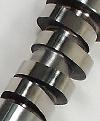
I got a call a few weeks ago from Geoff at Thunder Racing. He said he felt like he had come up with the ultimate "sleeper" cam (or Old Man Cam as I like to call it). The key elements to making power everywhere while keeping a super smooth idle would require using all the latest technology and experience Thunder Racing has developed for the LS1. Here's the cam:
214/220, .600/.527, 115 LSA, -2 degrees ground in
Now look at the specs for a little bit. At first glance, it looks like a conventional "split duration" cam. It is and it isn't. The ramps on the intake are super, super fast. The total area on the intake is quite a bit bigger than the exhaust. In essense, this is really a "reverse split" cam in execution (just like the ones Thunder Racing has had so much success with). The big lift on the intake side allows my SAM ported heads to breathe, but the short duration and wide LSA keeps the idle smooth. Most people make the mistake of running a short duration cam (like a 214-218 cam) with several degrees of advance ground in. This is wrong. When you're running too small a cam, you want to close the intake valve later (to keep peak power up high). We accomplished this by having the cam ground 2 degrees retarded. This allowed the intake valve to close at the same exact time as my 230/224 111LSA cam. Guess what? I still was able to make peak power at 6200-6300, just like my 230/224 cam. Most 214 cams make peak power at 5700-5800 rpms. Not this one. The rwhp numbers stayed with the 230 cam all the way to 6400 rpms (where the 230 kept on pulling). By extending power to 6300, I make at least 10 rwhp over a 214 cam ground +4 degrees advanced. The 214 cam was done by 6500 rpms, but the low and mid range torque and hp matched or exceeded the 230/224 cam. It's like having your cake and eating it too. No small cam I've seen ever made this kind of power everywhere. It flat kicks ***. Idle is smooth. Torque down low is abundant. Pull to 6400 is incredible. I now shift at 6400 vs. 6700 with the 230 cam. Under hood noise is noticably less (since only half the valves have super fast ramps).
Thunder Racing is encouraged by the results. Next they want to install it in a 6 speed car. Keep in mind, this cam was made for MY combination. My heads flow well to .600 lift, so I could use this kind of lift to my benefit. Also, I run double springs. I'm afraid 918 springs aren't up to the task on these super fast intake lobes. Gas mileage has improved, no more stinky exhaust, got to lower idle speed from 900 to 800. Sounds completely stock. Can't ask for much more than that. Call it a 2002 ZO6 cam on steroids, haha.
I love going fast like the next guy. That's why I've been running the awesome Thunder Racing reverse split 230/224 111LSA cam for quite some time. It's tops for max power. But I gotta admit something, I sure love the way a stock ZO6 idles and runs. Super smooth idle, no shake, no stinky exhaust, but BIG power. My SS convertible is so nice, I figured I could try to find my own cam that would idle like stock, but still pull over 400 rwhp. Back in the old days on another board, we used to have discussions on what would make for an ideal "old man" car.
Here's what we were trying to achieve:
1 Quiet exhaust, but free flowing
2 Smooth shake free idle, but not wimpy
3 Gobs of torque down low plus great power up high
4 Emissions legal
5 Low underhood noise (stealthy)
6 Wife, girlfriend, police approved
I got a call a few weeks ago from Geoff at Thunder Racing. He said he felt like he had come up with the ultimate "sleeper" cam (or Old Man Cam as I like to call it). The key elements to making power everywhere while keeping a super smooth idle would require using all the latest technology and experience Thunder Racing has developed for the LS1. Here's the cam:
214/220, .600/.527, 115 LSA, -2 degrees ground in
Now look at the specs for a little bit. At first glance, it looks like a conventional "split duration" cam. It is and it isn't. The ramps on the intake are super, super fast. The total area on the intake is quite a bit bigger than the exhaust. In essense, this is really a "reverse split" cam in execution (just like the ones Thunder Racing has had so much success with). The big lift on the intake side allows my SAM ported heads to breathe, but the short duration and wide LSA keeps the idle smooth. Most people make the mistake of running a short duration cam (like a 214-218 cam) with several degrees of advance ground in. This is wrong. When you're running too small a cam, you want to close the intake valve later (to keep peak power up high). We accomplished this by having the cam ground 2 degrees retarded. This allowed the intake valve to close at the same exact time as my 230/224 111LSA cam. Guess what? I still was able to make peak power at 6200-6300, just like my 230/224 cam. Most 214 cams make peak power at 5700-5800 rpms. Not this one. The rwhp numbers stayed with the 230 cam all the way to 6400 rpms (where the 230 kept on pulling). By extending power to 6300, I make at least 10 rwhp over a 214 cam ground +4 degrees advanced. The 214 cam was done by 6500 rpms, but the low and mid range torque and hp matched or exceeded the 230/224 cam. It's like having your cake and eating it too. No small cam I've seen ever made this kind of power everywhere. It flat kicks ***. Idle is smooth. Torque down low is abundant. Pull to 6400 is incredible. I now shift at 6400 vs. 6700 with the 230 cam. Under hood noise is noticably less (since only half the valves have super fast ramps).
Thunder Racing is encouraged by the results. Next they want to install it in a 6 speed car. Keep in mind, this cam was made for MY combination. My heads flow well to .600 lift, so I could use this kind of lift to my benefit. Also, I run double springs. I'm afraid 918 springs aren't up to the task on these super fast intake lobes. Gas mileage has improved, no more stinky exhaust, got to lower idle speed from 900 to 800. Sounds completely stock. Can't ask for much more than that. Call it a 2002 ZO6 cam on steroids, haha.
__________________

2013 Corvette Grand Sport A6 LME forged 416, Greg Good ported TFS 255 LS3 heads, 222/242 .629"/.604" 121LSA Pat G blower cam, ARH 1 7/8" headers, ESC Novi 1500 Supercharger w/8 rib direct drive conversion, 747rwhp/709rwtq on 93 octane, 801rwhp/735rwtq on race fuel, 10.1 @ 147.25mph 1/4 mile, 174.7mph Half Mile.
2016 Corvette Z51 M7 Magnuson Heartbeat 2300 supercharger, TSP LT headers, Pat G tuned, 667rwhp, 662rwtq, 191mph TX Mile.
2009.5 Pontiac G8 GT 6.0L, A6, AFR 230v2 heads. 506rwhp/442rwtq. 11.413 @ 121.29mph 1/4 mile, 168.7mph TX Mile
2000 Pewter Ram Air Trans Am M6 heads/cam 508 rwhp/445 rwtq SAE, 183.092 TX Mile
2022 Cadillac Escalade 6.2L A10 S&B CAI, Corsa catback.
2023 Corvette 3LT Z51 soon to be modified.
Custom LSX tuning in person or via email press here.
2013 Corvette Grand Sport A6 LME forged 416, Greg Good ported TFS 255 LS3 heads, 222/242 .629"/.604" 121LSA Pat G blower cam, ARH 1 7/8" headers, ESC Novi 1500 Supercharger w/8 rib direct drive conversion, 747rwhp/709rwtq on 93 octane, 801rwhp/735rwtq on race fuel, 10.1 @ 147.25mph 1/4 mile, 174.7mph Half Mile.
2016 Corvette Z51 M7 Magnuson Heartbeat 2300 supercharger, TSP LT headers, Pat G tuned, 667rwhp, 662rwtq, 191mph TX Mile.
2009.5 Pontiac G8 GT 6.0L, A6, AFR 230v2 heads. 506rwhp/442rwtq. 11.413 @ 121.29mph 1/4 mile, 168.7mph TX Mile
2000 Pewter Ram Air Trans Am M6 heads/cam 508 rwhp/445 rwtq SAE, 183.092 TX Mile
2022 Cadillac Escalade 6.2L A10 S&B CAI, Corsa catback.
2023 Corvette 3LT Z51 soon to be modified.
Custom LSX tuning in person or via email press here.
Re: Found the ultimate "Old Man Cam". Patrick:
That sounds great. Are you going to post a comparison graph?
600 lift on just 214 duration sounds almost like a solid roller cam. <img border="0" title="" alt="[Eek!]" src="gr_eek2.gif" />
That sounds great. Are you going to post a comparison graph?
600 lift on just 214 duration sounds almost like a solid roller cam. <img border="0" title="" alt="[Eek!]" src="gr_eek2.gif" />

TECH Senior Member
Joined: Nov 2001
Posts: 9,246
Likes: 3
From: Troy, AL
Re: Found the ultimate "Old Man Cam". Man, I LOVE the sound of this cam for my new project! I'm planning on running a 471 CI MTI engine with an X1 cam on a 116 LSA eventually for some major TQ and a super smooth idle BUT...I'm not going to do that for probably another year and I'd like to have some fun with the car now. I have a set of MTI Stage II LS6 heads on order for the car and plan to run the stock cam with these heads just for a little while to satify my curiosity. Then I'd like to run a cam something like what you describe. <img border="0" title="" alt="[Cool]" src="gr_images/icons/cool.gif" />
Wonder this...? If I wanted to lower the shift point a bit to accomodate 3.23-3.42 gears a little better (I'd never get close to 6400 across the line with these gears and I only want to run a stock rear for noise reasons), what changes would we make to this cam? 4 degrees of advance and leave everything else alone? Or maybe less duration, a slightly tighter LSA, and keep the 2 degrees?
That cam is designed for your heads (LS1s, right?) What difference would it make in the design by running LS6 heads?
Wonder this...? If I wanted to lower the shift point a bit to accomodate 3.23-3.42 gears a little better (I'd never get close to 6400 across the line with these gears and I only want to run a stock rear for noise reasons), what changes would we make to this cam? 4 degrees of advance and leave everything else alone? Or maybe less duration, a slightly tighter LSA, and keep the 2 degrees?
That cam is designed for your heads (LS1s, right?) What difference would it make in the design by running LS6 heads?

TECH Fanatic
Joined: Aug 2002
Posts: 1,566
Likes: 0
From: Objects in mirror no longer matter.
Re: Found the ultimate "Old Man Cam". Interesting cam specs. Where did Geoff come up with the ramp profile for that intake? I would assume its an even faster ramp than an XE-R, and if that is true, just how much faster? I think for it to be a perfect old man cam, it should be able to go at least 18 months without a peep from your springs, so it will be interesting to see how that new ramp handles in the long run. I would also be very interested in a dyno comparison between the two. Did you gain any midrange/lowend over the TR230? Just for fun, my choice for a an old man cam would be a 222/218 XE-R on a 109 LSA straight up, should have good power everywhere without too bad of an idle.
Colonel: I really don't think you can differentiate a difference in grinding techniques with hydraulic cams in respect to either LS1 or LS6 heads. The LS6 would want the highest lift you can give it, but the limitations of a hydraulic valvetrain mean the final cam specs will be almost if not identical to the ~.600 lift fast-ramp cams available right now.
Colonel: I really don't think you can differentiate a difference in grinding techniques with hydraulic cams in respect to either LS1 or LS6 heads. The LS6 would want the highest lift you can give it, but the limitations of a hydraulic valvetrain mean the final cam specs will be almost if not identical to the ~.600 lift fast-ramp cams available right now.
Trending Topics

TECH Junkie
Joined: Nov 2001
Posts: 3,604
Likes: 0
From: Los Angeles
Re: Found the ultimate "Old Man Cam". </font><blockquote><font size="1" face="Verdana, Helvetica, sans-serif">quote:</font><hr /><font size="2" face="Verdana, Helvetica, sans-serif">Originally posted by Fenris Ulf:
<strong>Colonel: I really don't think you can differentiate a difference in grinding techniques with hydraulic cams in respect to either LS1 or LS6 heads. The LS6 would want the highest lift you can give it, but the limitations of a hydraulic valvetrain mean the final cam specs will be almost if not identical to the ~.600 lift fast-ramp cams available right now.</strong></font><hr /></blockquote><font size="2" face="Verdana, Helvetica, sans-serif">LS1 heads normally will start to have some issues flowing well up at very high lift, whereas the LS6 heads wont normally have those issues. Do a search for GTP flow sheets and you'll see there's a big dip in flow at .580 lift+. Supposedly a few other vendors have the same dip in their LS1 heads. So...for instance, my GTP heads wouldnt really want a 600 lift cam since they flow more at 570.
<strong>Colonel: I really don't think you can differentiate a difference in grinding techniques with hydraulic cams in respect to either LS1 or LS6 heads. The LS6 would want the highest lift you can give it, but the limitations of a hydraulic valvetrain mean the final cam specs will be almost if not identical to the ~.600 lift fast-ramp cams available right now.</strong></font><hr /></blockquote><font size="2" face="Verdana, Helvetica, sans-serif">LS1 heads normally will start to have some issues flowing well up at very high lift, whereas the LS6 heads wont normally have those issues. Do a search for GTP flow sheets and you'll see there's a big dip in flow at .580 lift+. Supposedly a few other vendors have the same dip in their LS1 heads. So...for instance, my GTP heads wouldnt really want a 600 lift cam since they flow more at 570.
LS1 Tech Stories
The Best V8 Stories One Small Block at Time

Gas Monkey Built a 6-Wheel Ferrari Testarossa With a Corvette LT4 Engine
Verdad Gallardo
7 Most Reliable High-Performance Engines GM Has Ever Built
Verdad Gallardo
Amazing '71 Camaro Restomod Is Modern Muscle Car Under the Skin
Verdad Gallardo
6 Common C5 Corvette Failures and What's Involved In Repairing Them
Pouria Savadkouei
Retro Modern Bandit Pontiac Trans AM Comes With Burt Reynolds' Autograph
Verdad Gallardo
Top 10 Greatest Cadillac V Series Performance Models Ever, Ranked
Pouria Savadkouei
Top 10 Most Powerful Chevy Trucks Ever Made!

Hennessey's New Supercharged Silverado ZR2 Has 700 HP
Verdad Gallardo
Coachbuilt N2A Anteros Is an LS2-Powered C6 Corvette In Italian Clothes
Verdad Gallardo TECH Junkie
Joined: Nov 2001
Posts: 3,604
Likes: 0
From: Los Angeles
Re: Found the ultimate "Old Man Cam". Oh, and patrick, why not just get the TR227/224 on a 114lsa? Less steep ramps, same "reverse split" effect, and this cam is a sleeper cam if I've ever seen one.
I already have the exact setup you specified....quiet exhaust (z06 mufflers), drives like my grandma could drive it, the wife/gf/police wouldnt even know it was modified if they sat in it and I didn't tell em, emissions legal (at least it smells clean to me, with oem cats), and the underhood noise is quiet....all with that TR227/224.
I posted a video of the exhuast sound on here a while back.
I already have the exact setup you specified....quiet exhaust (z06 mufflers), drives like my grandma could drive it, the wife/gf/police wouldnt even know it was modified if they sat in it and I didn't tell em, emissions legal (at least it smells clean to me, with oem cats), and the underhood noise is quiet....all with that TR227/224.
I posted a video of the exhuast sound on here a while back.
Thread Starter
Joined: Nov 2001
Posts: 8,246
Likes: 34
From: Victoria, TX
Re: Found the ultimate "Old Man Cam". Colonel:
If you were wanting to lower the peak torque and hp points you could easily do that by advancing the cam 4 degrees, but that would give you less total hp and torque under the curve. Here's the thought process. A 214 cam is too small for a 346 with great heads. A 236 cam is too big. A 224 cam is just right. If a 224 is just right, it would run best with 0 advance. A 214 cam, being too small benefits by retarding the timing a few degrees. A 236 cam would benefit by running a few degrees advanced. The key is placing the intake closing point exactly where you want to make power. Close the intake later, you make peak power later and vice versa. I chose to mimic the intake closing point of the Thunder 230/224 111LSA cam, which is 45 degrees ABDC. The 2002 LS6 cam is 204/218 117.5 LSA with 2.5 degrees of retard ground in. It has an intake closing point of 42 degrees ABDC which is really late for a 204 @.050 cam, but that is why this little cam pulls to 6500. The Thunder Racing "Sleeper" cam makes more torque and hp at low and mid ranges than the TR230/224 cam, so I think that it would work incredibly well even with no gear!
Fenris:
Geoff cooked up some really fast ramps for the intake side of this cam. Yes, the rate of lift is quite a bit faster than even the Comp XE-R lobes. <img border="0" title="" alt="[Eek!]" src="gr_eek2.gif" /> A 222/218 would make for an interesting old man cam. At 109 LSA with 0 advance, your intake closing point would be 40 degrees ABDC, making your peak hp around 5900-6000 rpms. That's a little lower than I like personally, but it may be alright for you. Not sure how clean the idle would be with 109 LSA but it would probably be torquey. Mine sounds just like stock. That's what I was looking for.
John:
Going to a TR 227/224 on a 114 would be OK if I was looking for more high rpm power, but I was looking more to mimic the LS6 cam, but on major steroids, haha. Honestly, I was floored with how well this cam runs in my car. I wasn't too worried about running .600 lift because my heads continue to pick up 12 cfm from .500 lift to .700 lift. They don't stall 'til after .700 lift. The Crane double springs can take lots of lift and really fast ramps since SAM uses these springs on solid roller motors too.
If you were wanting to lower the peak torque and hp points you could easily do that by advancing the cam 4 degrees, but that would give you less total hp and torque under the curve. Here's the thought process. A 214 cam is too small for a 346 with great heads. A 236 cam is too big. A 224 cam is just right. If a 224 is just right, it would run best with 0 advance. A 214 cam, being too small benefits by retarding the timing a few degrees. A 236 cam would benefit by running a few degrees advanced. The key is placing the intake closing point exactly where you want to make power. Close the intake later, you make peak power later and vice versa. I chose to mimic the intake closing point of the Thunder 230/224 111LSA cam, which is 45 degrees ABDC. The 2002 LS6 cam is 204/218 117.5 LSA with 2.5 degrees of retard ground in. It has an intake closing point of 42 degrees ABDC which is really late for a 204 @.050 cam, but that is why this little cam pulls to 6500. The Thunder Racing "Sleeper" cam makes more torque and hp at low and mid ranges than the TR230/224 cam, so I think that it would work incredibly well even with no gear!
Fenris:
Geoff cooked up some really fast ramps for the intake side of this cam. Yes, the rate of lift is quite a bit faster than even the Comp XE-R lobes. <img border="0" title="" alt="[Eek!]" src="gr_eek2.gif" /> A 222/218 would make for an interesting old man cam. At 109 LSA with 0 advance, your intake closing point would be 40 degrees ABDC, making your peak hp around 5900-6000 rpms. That's a little lower than I like personally, but it may be alright for you. Not sure how clean the idle would be with 109 LSA but it would probably be torquey. Mine sounds just like stock. That's what I was looking for.
John:
Going to a TR 227/224 on a 114 would be OK if I was looking for more high rpm power, but I was looking more to mimic the LS6 cam, but on major steroids, haha. Honestly, I was floored with how well this cam runs in my car. I wasn't too worried about running .600 lift because my heads continue to pick up 12 cfm from .500 lift to .700 lift. They don't stall 'til after .700 lift. The Crane double springs can take lots of lift and really fast ramps since SAM uses these springs on solid roller motors too.
__________________
2013 Corvette Grand Sport A6 LME forged 416, Greg Good ported TFS 255 LS3 heads, 222/242 .629"/.604" 121LSA Pat G blower cam, ARH 1 7/8" headers, ESC Novi 1500 Supercharger w/8 rib direct drive conversion, 747rwhp/709rwtq on 93 octane, 801rwhp/735rwtq on race fuel, 10.1 @ 147.25mph 1/4 mile, 174.7mph Half Mile.
2016 Corvette Z51 M7 Magnuson Heartbeat 2300 supercharger, TSP LT headers, Pat G tuned, 667rwhp, 662rwtq, 191mph TX Mile.
2009.5 Pontiac G8 GT 6.0L, A6, AFR 230v2 heads. 506rwhp/442rwtq. 11.413 @ 121.29mph 1/4 mile, 168.7mph TX Mile
2000 Pewter Ram Air Trans Am M6 heads/cam 508 rwhp/445 rwtq SAE, 183.092 TX Mile
2022 Cadillac Escalade 6.2L A10 S&B CAI, Corsa catback.
2023 Corvette 3LT Z51 soon to be modified.
Custom LSX tuning in person or via email press here.
2013 Corvette Grand Sport A6 LME forged 416, Greg Good ported TFS 255 LS3 heads, 222/242 .629"/.604" 121LSA Pat G blower cam, ARH 1 7/8" headers, ESC Novi 1500 Supercharger w/8 rib direct drive conversion, 747rwhp/709rwtq on 93 octane, 801rwhp/735rwtq on race fuel, 10.1 @ 147.25mph 1/4 mile, 174.7mph Half Mile.
2016 Corvette Z51 M7 Magnuson Heartbeat 2300 supercharger, TSP LT headers, Pat G tuned, 667rwhp, 662rwtq, 191mph TX Mile.
2009.5 Pontiac G8 GT 6.0L, A6, AFR 230v2 heads. 506rwhp/442rwtq. 11.413 @ 121.29mph 1/4 mile, 168.7mph TX Mile
2000 Pewter Ram Air Trans Am M6 heads/cam 508 rwhp/445 rwtq SAE, 183.092 TX Mile
2022 Cadillac Escalade 6.2L A10 S&B CAI, Corsa catback.
2023 Corvette 3LT Z51 soon to be modified.
Custom LSX tuning in person or via email press here.
 Re: Found the ultimate "Old Man Cam".
 Patrick this is very interesting... Like you said. That is the ultimate cam. Idles smooth and has crazy power.. If I get froggy post putting my stock heads on I might think about it.. <img border="0" title="" alt="[Big Grin]" src="gr_grin.gif" />

TECH Fanatic
Joined: Nov 2001
Posts: 1,055
Likes: 0
From: Chi-Town
Re: Found the ultimate "Old Man Cam". This is why the LS1 rules....
only on a LS1 with a large cam diameter could you be able to run .600 lift on 214 duration
<----shakeshead and <img border="0" alt="[whiner]" title="" src="graemlins/gr_cry.gif" />
only on a LS1 with a large cam diameter could you be able to run .600 lift on 214 duration
<----shakeshead and <img border="0" alt="[whiner]" title="" src="graemlins/gr_cry.gif" />

 Re: Found the ultimate "Old Man Cam".
 One of BradWS6's earlier cams was a 216/220/115 cam and you pretty much could not hear it at all.
I've often thought that a cam like this would be fun especially if you wanted to be stealthy... It sounded just like a 01 Z06 cam... Which BTW is different sounding than a stock cam but you have to listen for it.
I've often thought that a cam like this would be fun especially if you wanted to be stealthy... It sounded just like a 01 Z06 cam... Which BTW is different sounding than a stock cam but you have to listen for it.
 Re: Found the ultimate "Old Man Cam".
 Please post the dyno graph. How would this thing compare to a traditional split like a 218/224 .563/.569 114+4??? Which I'm going to install in my ride....It also is VERY hard to tell from stock. You may give an old man a heart attack running .600 lift.... <img border="0" title="" alt="[Wink]" src="gr_images/icons/wink.gif" /> P.S. the ABDC intake close is listed at 39 degrees which would peak at about 5900rpms according to your post on intake centerline. If this is true I'll be happy.
<small>[ October 15, 2002, 08:33 PM: Message edited by: cantdrv65 ]</small>
<small>[ October 15, 2002, 08:33 PM: Message edited by: cantdrv65 ]</small>
 Re: Found the ultimate "Old Man Cam".
 Right now we are a little hesitant to post dyno graphs on Patrick's car. The problem is that with an unlocked converter you really can't get a good picture of the torque of the motor because of the torque converter coloring the torque band. If we post dyno graphs I am sure the uninitiated will pick them apart without understanding the affects of an automatic transmission and an unlocked converter on a Dyno Jet dyno. We are looking for a 6-speed car to test this cam on to give everyone a better picture of what the power and torque band's look like.
What I will tell everyone is that on Patrick's car the new cam made slightly better power up to it's peak than the 230 cam. However it fell off about 300 RPM sooner and much harder. Bottom line is that it should pull VERY hard to 6400 RPM and then it is done. By comparison the 230 cam won't pull quite as hard but will go to 7000 RPM with ease. The trade-off is the small cam idle is like stock vs. the rough idle of the 230 cam. If you want to go racing the 230 cam is the best choice but for a nice quick street car the new cam should be a winner.
What I will tell everyone is that on Patrick's car the new cam made slightly better power up to it's peak than the 230 cam. However it fell off about 300 RPM sooner and much harder. Bottom line is that it should pull VERY hard to 6400 RPM and then it is done. By comparison the 230 cam won't pull quite as hard but will go to 7000 RPM with ease. The trade-off is the small cam idle is like stock vs. the rough idle of the 230 cam. If you want to go racing the 230 cam is the best choice but for a nice quick street car the new cam should be a winner.
 Re: Found the ultimate "Old Man Cam".
 a comp 212/218 114lsa is a good sleeper cam along with their 216/220 114lsa Both make good power throughout the powerband <img border="0" alt="[cheers]" title="" src="graemlins/gr_cheers.gif" />
 Re: Found the ultimate "Old Man Cam".
 Geoff you guys always come out with something new after I purchase a cam.. <img border="0" title="" alt="[Sad]" src="gr_sad.gif" />

TECH Fanatic
Joined: May 2002
Posts: 1,449
Likes: 0
From: jacksonville FL
Re: Found the ultimate "Old Man Cam". I gotta 6-speed!! <img border="0" title="" alt="[Big Grin]" src="gr_grin.gif" /> I would gladly be willing to scraface and let you hold the car for a few days if you wantted to put that cam in it and see what it will do. As long as you leave it in of course.... <img border="0" alt="[jester]" title="" src="graemlins/gr_jest.gif" /> Cam looks great!
justin
justin
Re: Found the ultimate "Old Man Cam". I guess we'll have to wait for the six speed, because Geoff is right, Patrick's UNLOCKED dyno is worthless except for evaluating peak HP as his converter holds 5500 rpm. Any figures below that rpm are erroneous and figures above that have a skewed rpm unless Geoff manually calculated them. <img border="0" alt="[judgement]" title="" src="graemlins/gr_judge.gif" />
SOTP report sounds promissing. <img border="0" title="" alt="[Smile]" src="gr_stretch.gif" />
I realize that the new cam's intake ramps are faster than the 230, but I'm struggling to understand how 16* of duration can be removed w/o hurting HP below 6400. I'm surprised that the 230 cam wouldn't come into its own by around 5000 or 5500. I'd like to hear some more theory on why this design is so awesome. Is it the wide LSA?
SOTP report sounds promissing. <img border="0" title="" alt="[Smile]" src="gr_stretch.gif" />
I realize that the new cam's intake ramps are faster than the 230, but I'm struggling to understand how 16* of duration can be removed w/o hurting HP below 6400. I'm surprised that the 230 cam wouldn't come into its own by around 5000 or 5500. I'd like to hear some more theory on why this design is so awesome. Is it the wide LSA?