








max compression for na e85 motor??

Thread Starter
Teching In
Joined: Oct 2009
Posts: 6
Likes: 0
From: Toledo
 max compression for na e85 motor??
 I have a 346 ls1 car, with ls6 ported heads flowing 306 cfm at .600 lift, 224/230 cam as well. I want to use the same heads, and a bigger 240's duration at .05 cam with e85 and higher compression pistons. What is the max compression i can run with e85 with a 240's cam???
Thanks,
Aaron
Thanks,
Aaron
Since E85 is what 105 octane, you should be okay going 12:1, or even higher. There's a sponsor on the corvette forum who's doing that for z06s and making really good power. FYI, you probably already know that E85 requires a good amount more fuel, so that's a bigger pump, bigger injectors etc.
12:1 on E85 is safe thats about what i am shooting for on my current build
Since E85 is what 105 octane, you should be okay going 12:1, or even higher. There's a sponsor on the corvette forum who's doing that for z06s and making really good power. FYI, you probably already know that E85 requires a good amount more fuel, so that's a bigger pump, bigger injectors etc.
Thread Starter
Teching In
Joined: Oct 2009
Posts: 6
Likes: 0
From: Toledo
I have heard with a big enough cam you could get away with 14.1, has anyone heard of this? I know with carbed motors you see cams in the 250/260 at .05. but for a fuel injected cam, i dont know if 240 at .05 will be enough to bleed of dcr. What have you guys heard of?
yes i do understand that there is less energy in e85, so you do have to use bigger injectors, and fuel pump.
Thanks,
Aaron
yes i do understand that there is less energy in e85, so you do have to use bigger injectors, and fuel pump.
Thanks,
Aaron
Thread Starter
Teching In
Joined: Oct 2009
Posts: 6
Likes: 0
From: Toledo
What makes you say you could get away with more compression??? What data makes you say that. What is your dynamic compression ratio, or cylinder pressure are you running? What Duration and lift is your cam?
Thanks,
Aaron
Thanks,
Aaron
A properly sized cam isn't really going to much affect on the fuel you can run. I know, you do the DCR calc, however, you're getting close to 100% ve in a well done engine, especially when compression goes up. You're trapping more air in a smaller space, and DCR doesn't mean anything in a running engine. It just lets you know your cam is sized pretty good.
Anyways, 12 - 13 should be just fine with e-85, however past that I'd start looking into straight ethanol, or methanol. Also, the higher you go, the less gains. Most engines stop gaining power after 14:1 unless its a really gone over combo.
Alcohol engines like bigger ports past the injection point. Theres a lot more fuel taking up space in the port.
Anyways, 12 - 13 should be just fine with e-85, however past that I'd start looking into straight ethanol, or methanol. Also, the higher you go, the less gains. Most engines stop gaining power after 14:1 unless its a really gone over combo.
Alcohol engines like bigger ports past the injection point. Theres a lot more fuel taking up space in the port.
Trending Topics
LS1 Tech Stories
The Best V8 Stories One Small Block at Time

Topdon ONE vs. Artidiag 800 BT2: Which is the Diagnostic Tablet For You?
Pouria Savadkouei
Gas Monkey Built a 6-Wheel Ferrari Testarossa With a Corvette LT4 Engine
Verdad Gallardo
7 Most Reliable High-Performance Engines GM Has Ever Built
Verdad Gallardo
Amazing '71 Camaro Restomod Is Modern Muscle Car Under the Skin
Verdad Gallardo
6 Common C5 Corvette Failures and What's Involved In Repairing Them
Pouria Savadkouei
Retro Modern Bandit Pontiac Trans AM Comes With Burt Reynolds' Autograph
Verdad Gallardo
Top 10 Greatest Cadillac V Series Performance Models Ever, Ranked
Pouria Savadkouei
Top 10 Most Powerful Chevy Trucks Ever Made!

Hennessey's New Supercharged Silverado ZR2 Has 700 HP
Verdad Gallardo
They say 1 point of compression is 3-5% in power, then you've got the ability to run, if I had to guess a general figure, probably 6* more timing and the fact it'll never knock and retard. I don't see why 40hp and equal or more tq can be had. Compression and timing is all cylinder pressure. That added cylinder pressure will also make whatever cam you have drive smaller, if you will.

TECH Fanatic


Joined: Aug 2009
Posts: 1,845
Likes: 255
From: Coast of San Mateo County Between Pacifica & HMB
12.5:1 with E85 is still safe & conservative with a good tune and properly
Specced cam and fuel system. Almost a waste not to go at least 12.5:1
when converting to E85.
Specced cam and fuel system. Almost a waste not to go at least 12.5:1
when converting to E85.


I'd imagine the power would start to peter out around 16:1. I built a 15:1 430 inch LS that ran great on e85 (28*). Eventually compression limits timing due to cylinder pressure.
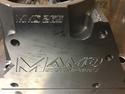


Agreed. I finished putting my short block together this evening on my 434" RED sleeved Mamo top end project. Tony has me running 12.5:1 on 93 octane pump gas. Camshaft selection does play a role in cylinder pressure dynamics. I see a lot of guys going 14:1 on corn...

I am pretty sure it is 16:1. I know of someone who runs 15.8:1 on Corn and he said he is pretty much at the limit.
There is probably so many factors that contribute to running that high of compression with E85 safely.
I have also seen people running 10.5:1 with 10+ PSI on Corn.
E85 is what...105ish Octane? VP Racing Fuels Rates their VP100 Unleaded 100-Octane up to 14:1 with Aluminum Heads.
There is probably so many factors that contribute to running that high of compression with E85 safely.
I have also seen people running 10.5:1 with 10+ PSI on Corn.
E85 is what...105ish Octane? VP Racing Fuels Rates their VP100 Unleaded 100-Octane up to 14:1 with Aluminum Heads.
Last edited by 07NBSChevy; Jul 28, 2017 at 09:30 AM.

Restricted User
Joined: Mar 2014
Posts: 7,192
Likes: 109
From: Ohio
There are guys with 12.5:1 running LOTS of boost on top of it with E85.
You don't start running into problems until 13.8:1 or above with E85 all motor, and those problems typically depend on cam selection.
You don't start running into problems until 13.8:1 or above with E85 all motor, and those problems typically depend on cam selection.

Even if E85 swings from E80 - E90 it does not change much.
Scott Clark from realtuners has proven from E70- E90 the power output is almost the same and the knock resistance is almost un changed.
E85 is well proven, and you dont need to drain the carb every weekend like Methanol. Not to mention driving up to the pump is a real plus.
Scott Clark from realtuners has proven from E70- E90 the power output is almost the same and the knock resistance is almost un changed.
E85 is well proven, and you dont need to drain the carb every weekend like Methanol. Not to mention driving up to the pump is a real plus.

As said above, it's usually pretty constant in the summer time. In the winter it can drop a bit. Learn how to check the content, and keep an eye on it. Keep some denatured alcohol around so you can add some if the content gets a little low.
But, the stuff you get out of the pump isn't always the best quality. For the 15% gasoline they often use the dregs out of the bottom of the tank, with a very low octane rating. That stuff can get up under the first ring land and detonate something awful, and then you get pistons that look like this. This engine had a dynamic compression ratio of about 9.

This was an all forged 427W stroker, NA, running pump E85, with hand filed ring gaps on the wide side.
But, the stuff you get out of the pump isn't always the best quality. For the 15% gasoline they often use the dregs out of the bottom of the tank, with a very low octane rating. That stuff can get up under the first ring land and detonate something awful, and then you get pistons that look like this. This engine had a dynamic compression ratio of about 9.
This was an all forged 427W stroker, NA, running pump E85, with hand filed ring gaps on the wide side.
