









EGR vs Non-EGR Internal Differences?

Thread Starter
On The Tree
Joined: Jul 2014
Posts: 143
Likes: 0
From: Lincoln, CA
 EGR vs Non-EGR Internal Differences?
 Hi Everyone,
I'm looking for some info on what the internal differences are in the Gen III engines with and without EGR. I've done a ton of reading on here and a couple of other forums and learned how the EGR works by adding exhaust gasses in the intake and in to the combustion chamber which improves fuel economy but dirties up the intake in the process. Most of the threads I've been finding are where people ask if they can get rid of it and pretty much everyone says yes and how GM started leaving them off in '02. I've also read quite a few threads where people have to (or at least highly recommend) running premium gas to prevent detonation. What I haven't been able to find out is what GM changed inside the engines to eliminate the EGR system without having the detonation issues or taking a hit in the fuel economy. Was it a different cam with more overlap, different tune on the PCM, or something different altogether?
The reason I'm asking is I have a 5.3 from a '00 Yukon XL that I'll be swapping in to my K5 and since I'm in CA I'll be visiting the smog ref once the swap is done to get my certification sticker. My engine is from a non-CA vehicle so it has the EGR but not the AIR crap. My options to make it smog legal would be to either add the AIR stuff or do what was recommended from a couple members on here and remove the EGR stuff and get a PCM from an '02 truck/SUV. That year PCM should have the same red blue connectors as my harness, same DBC throttle body, but no EGR or AIR stuff. so when the smog ref checks the VIN on the PCM to see what all smog stuff should be there the EGR and AIR stuff won't show up. Hopefully the newer PCM (which will be tuned as part of the swap) will be good enough but I wanted to make sure there weren't any internal changes from the EGR equipped '00 engine and the non-EGR equipped '02 engine I'll be getting the PCM from. I may also try to throw a mild camshaft (Comp Cams 206/212 .513/.520 115 LSA) in there with a set of LS6 springs if my budget holds out as well. Do you guys think I'll be ok or is there anything else that I need to worry about when ditching my EGR and swapping to the newer PCM?
Thanks in advance,
Anthony
I'm looking for some info on what the internal differences are in the Gen III engines with and without EGR. I've done a ton of reading on here and a couple of other forums and learned how the EGR works by adding exhaust gasses in the intake and in to the combustion chamber which improves fuel economy but dirties up the intake in the process. Most of the threads I've been finding are where people ask if they can get rid of it and pretty much everyone says yes and how GM started leaving them off in '02. I've also read quite a few threads where people have to (or at least highly recommend) running premium gas to prevent detonation. What I haven't been able to find out is what GM changed inside the engines to eliminate the EGR system without having the detonation issues or taking a hit in the fuel economy. Was it a different cam with more overlap, different tune on the PCM, or something different altogether?
The reason I'm asking is I have a 5.3 from a '00 Yukon XL that I'll be swapping in to my K5 and since I'm in CA I'll be visiting the smog ref once the swap is done to get my certification sticker. My engine is from a non-CA vehicle so it has the EGR but not the AIR crap. My options to make it smog legal would be to either add the AIR stuff or do what was recommended from a couple members on here and remove the EGR stuff and get a PCM from an '02 truck/SUV. That year PCM should have the same red blue connectors as my harness, same DBC throttle body, but no EGR or AIR stuff. so when the smog ref checks the VIN on the PCM to see what all smog stuff should be there the EGR and AIR stuff won't show up. Hopefully the newer PCM (which will be tuned as part of the swap) will be good enough but I wanted to make sure there weren't any internal changes from the EGR equipped '00 engine and the non-EGR equipped '02 engine I'll be getting the PCM from. I may also try to throw a mild camshaft (Comp Cams 206/212 .513/.520 115 LSA) in there with a set of LS6 springs if my budget holds out as well. Do you guys think I'll be ok or is there anything else that I need to worry about when ditching my EGR and swapping to the newer PCM?
Thanks in advance,
Anthony
Thread Starter
On The Tree
Joined: Jul 2014
Posts: 143
Likes: 0
From: Lincoln, CA
01-02 cam is slightly smaller than the 98-00 cam
https://ls1tech.com/forums/1740884-post6.html
https://ls1tech.com/forums/1740884-post6.html
My source is Personally working on them. If you want more proof read Will Handzel's book or some of the other books on LS engines.
Do you understand what the EGR and Air Injection do?
The air injection system only works on cold start up. fresh air is injected upstream of the catalytic converter which helps support combustion of unburned fuel in the exhaust manifold, which speeds catalyst warm up and reduces the amount of unburned hydrocarbons coming out of the tailpipe. It basically helps light the catalytic converters off faster on cold start up.
The EGR Recirculates inert exhaust gas back into the intake tract under certain cruise conditions and light throttle. This will explain it further. http://en.wikipedia.org/wiki/Exhaust_gas_recirculation
As far as the basic long block is concerned, There were only a few small changes.
Yes, there were some small changes to the Cam Shafts.
In 99-2000 they used a fiber material type head gasket.
In 2001 they went to an MLS gasket.
In 2003 they added anti-garfel coating to the piston skirts of the 4.8/5.3L
In mid to late 2003/early 2004 they went to equal length M11 head bolts. Prior year's used long and short M11 head bolts.
In 2005 they went to floating Pin rods over the Press pin style and started using the LS2 style timing chain and lifter trays.
Besides the cam shafts, none of those other things really affect the emissions output of the engine.
The difference in camshafts do affect valve timing. But it's so minor I bet you would hardly notice the difference if you measured them Via the tail pipe.
Do you understand what the EGR and Air Injection do?
The air injection system only works on cold start up. fresh air is injected upstream of the catalytic converter which helps support combustion of unburned fuel in the exhaust manifold, which speeds catalyst warm up and reduces the amount of unburned hydrocarbons coming out of the tailpipe. It basically helps light the catalytic converters off faster on cold start up.
The EGR Recirculates inert exhaust gas back into the intake tract under certain cruise conditions and light throttle. This will explain it further. http://en.wikipedia.org/wiki/Exhaust_gas_recirculation
As far as the basic long block is concerned, There were only a few small changes.
Yes, there were some small changes to the Cam Shafts.
In 99-2000 they used a fiber material type head gasket.
In 2001 they went to an MLS gasket.
In 2003 they added anti-garfel coating to the piston skirts of the 4.8/5.3L
In mid to late 2003/early 2004 they went to equal length M11 head bolts. Prior year's used long and short M11 head bolts.
In 2005 they went to floating Pin rods over the Press pin style and started using the LS2 style timing chain and lifter trays.
Besides the cam shafts, none of those other things really affect the emissions output of the engine.
The difference in camshafts do affect valve timing. But it's so minor I bet you would hardly notice the difference if you measured them Via the tail pipe.
The LR4 4.8L and LM7 5.3L cam specs should be as follows. Sited from these sources...
http://www.performancetrucks.net/for...6/#post4151875
http://books.google.com/books?id=kL8...ed=0CEcQ6AEwBg
http://www.carcraft.com/techarticles...n/viewall.html
1999 12560966 190/191 .466/.457 116
2000-2006 12560967 190/191 .466/.457 114
05-07 L33 193/193 0.479/0.479 116
I have read the L59 uses the same cam as the LM7
http://www.performancetrucks.net/for...6/#post4151875
http://books.google.com/books?id=kL8...ed=0CEcQ6AEwBg
http://www.carcraft.com/techarticles...n/viewall.html
1999 12560966 190/191 .466/.457 116
2000-2006 12560967 190/191 .466/.457 114
05-07 L33 193/193 0.479/0.479 116
I have read the L59 uses the same cam as the LM7
Last edited by 1FastBrick; Aug 6, 2014 at 11:42 PM. Reason: Edited based on car craft article.
Trending Topics
Just to add... the reason the 01+ cams were smaller is because they got the LS6 intake manifold. Now, my speculation is GM was able to decrease emissions and maintain power by making this trade-off.
LS1 Tech Stories
The Best V8 Stories One Small Block at Time

6 Common C5 Corvette Failures and What's Involved In Repairing Them
Pouria Savadkouei
Retro Modern Bandit Pontiac Trans AM Comes With Burt Reynolds' Autograph
Verdad Gallardo
Top 10 Greatest Cadillac V Series Performance Models Ever, Ranked
Pouria Savadkouei
Top 10 Most Powerful Chevy Trucks Ever Made!

Hennessey's New Supercharged Silverado ZR2 Has 700 HP
Verdad Gallardo
Coachbuilt N2A Anteros Is an LS2-Powered C6 Corvette In Italian Clothes
Verdad Gallardo
Awesome K5 Blazer Restomod Comes With C7 Corvette Power
Verdad Gallardo
10 Camaros You Should Never Buy

10 LS Engine Myths That Refuse to Die
Verdad Gallardo Thread Starter
On The Tree
Joined: Jul 2014
Posts: 143
Likes: 0
From: Lincoln, CA
Easy there bud lol. I wasn't questioning your competence or experience level I was only asking where the info came from that way if I or anyone else reading this has additional questions we can go read up on it ourselves instead of asking more questions. I personally prefer finding the source of the information and learning as much as I can from it instead of just repeatedly asking questions about a similar topic. In this case I wasn't able to find anything anywhere that answered this question so I figured I would start a thread and hopefully get pointed in the right direction and not just rely on what someone said. And yes, if you read the first paragraph in my original post you'll see that I have read up and the EGR and Air system and even gave a brief description of them. As I already said in that first post, there's a ton of info out there regarding these systems and how they work but next to no information (at least that I've been able to find) that explains what was done/changed to eliminate them. Like you said, the only mechanical changes that would have changed anything emissions-wise would've been the different chamshaft but even then they used the same one from 2000-2006 which spans across both EGR and non-EGR years so who knows...
What changed in the 4.8/5.3 was the ECU calibrations, and the catalyst.
I have disabled both on a 5.3 engine in a 2000 Truck and you can barely see the difference in the emissions testing.
I have disabled both on a 5.3 engine in a 2000 Truck and you can barely see the difference in the emissions testing.
Thread Starter
On The Tree
Joined: Jul 2014
Posts: 143
Likes: 0
From: Lincoln, CA
Thanks that's one of the big things that I was worried about since I'll be doing the swap on a smog required vehicle. Did you ever run in to any issues with detonation on those motors or does that only happen if you don't properly disable the EGR from the PCM? That was another concern of mine since some of the EGR removal threads that I had been reading said the people wound up having to run premium to avoid detonation (and maybe something else but I can't remember at the moment) after they removed their EGR stuff... That wouldn't be a problem except some of the more remote gas stations where I will be going hunting with my Blazer after the swap only carry regular and diesel and I don't want to start running in to issues out in the sticks. Thanks for posting up these responses BTW.
Thanks that's one of the big things that I was worried about since I'll be doing the swap on a smog required vehicle. Did you ever run in to any issues with detonation on those motors or does that only happen if you don't properly disable the EGR from the PCM? That was another concern of mine since some of the EGR removal threads that I had been reading said the people wound up having to run premium to avoid detonation (and maybe something else but I can't remember at the moment) after they removed their EGR stuff... That wouldn't be a problem except some of the more remote gas stations where I will be going hunting with my Blazer after the swap only carry regular and diesel and I don't want to start running in to issues out in the sticks. Thanks for posting up these responses BTW.
Do yourself a favor and build it to 2002 specs and Have the ECU reflashed to 2002 specs and be done with it.
Thread Starter
On The Tree
Joined: Jul 2014
Posts: 143
Likes: 0
From: Lincoln, CA
I'm cheap. I run 87 octane. But I don't buy the cheapest gas from no name stations as they tend to have higher ethanol and water content. I also run the **** out of it. All I did was disable it in the tune. No other compensation. I got tired of replacing the Air injection valves a $50 each X2 every year and the truck running shitty with excessive carbon build up. Seemed like I had to SeaFoam it every oil change.
Do yourself a favor and build it to 2002 specs and Have the ECU reflashed to 2002 specs and be done with it.
Do yourself a favor and build it to 2002 specs and Have the ECU reflashed to 2002 specs and be done with it.


Since we are talking about LS history I have a question about the 5.3. A friend of mine swears GM put forged pistons in some 5.3's. I told him I didn't think they did because I've never heard it mentioned in the thousands of threads I've read on here.
He's a Ford guy and is going to put a turbo 5.3 in his Mustang and wanted to know the best year of 5.3 to get which started the conversation.
He's a Ford guy and is going to put a turbo 5.3 in his Mustang and wanted to know the best year of 5.3 to get which started the conversation.
Since we are talking about LS history I have a question about the 5.3. A friend of mine swears GM put forged pistons in some 5.3's. I told him I didn't think they did because I've never heard it mentioned in the thousands of threads I've read on here.
He's a Ford guy and is going to put a turbo 5.3 in his Mustang and wanted to know the best year of 5.3 to get which started the conversation.
He's a Ford guy and is going to put a turbo 5.3 in his Mustang and wanted to know the best year of 5.3 to get which started the conversation.
Best would be 05 -07 classic had floating pin rods with 24X crank signal. or go with newer stuff with the correct electronics
 it happens.
FYI Gen3 engines got floating pin LS2 style rods in 05
The 07- up NNBS GMT 900's had the Gen4 blocks but It was 06 for the SUV's
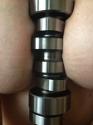

Gm closed up the LSA to try to take advantage of natural erg via overlap. So, they removed the intake manifold oil fill port , I mean EGR valve, and removed a bit of weight and a potential leak point. I'm sure that the lift was reduced for the better intake to make equal power, but uncertain on that count
