








Assembly lube and break in oil
 Assembly lube and break in oil
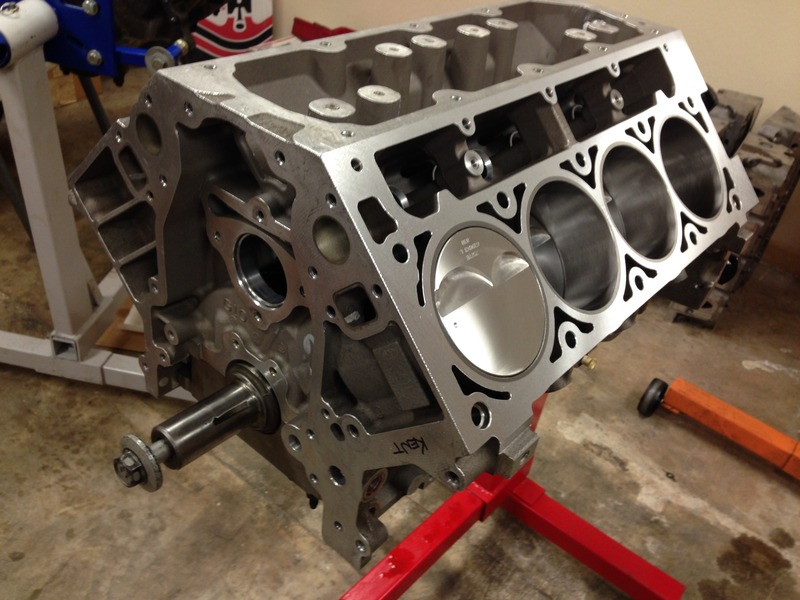
 What's a good assembly lube to use on the bottom end while assembling a new LS1? I've seen people just use motor oil on the main and rods, seems like they would require a little more protection at start up and break in... Thoughts?
And what type of oil do you guys recommend for initial break in? I've heard people using Rotella diesel oil but didn't know if this was standard practice or not. I will be switching to Mobil 1 synthetic after 5,000 miles, but not before.
And what type of oil do you guys recommend for initial break in? I've heard people using Rotella diesel oil but didn't know if this was standard practice or not. I will be switching to Mobil 1 synthetic after 5,000 miles, but not before.
I use oil on the bearings, Clevite Bearing Guard on the wrist pins, valve stems and oil pump gears, and CMD on the valve and pushrod tips. There isn't much load on an engine when you first fire it up so assembly lube isn't really necessary unless it may sit for a long time. I don't like assembly lube on the bearings because it doesn't let the crank spin as freely so it can hide something dragging that I could feel if oil was used.
Go to autozone and get the Lucas assembly lube
Oil I would use joe Gibbs br30 break in oil.. Expensive but good stuff and it's actually designed for engine break in vs other stuff that "will" work ok
Oil I would use joe Gibbs br30 break in oil.. Expensive but good stuff and it's actually designed for engine break in vs other stuff that "will" work ok

TECH Fanatic


Joined: Aug 2009
Posts: 1,845
Likes: 255
From: Coast of San Mateo County Between Pacifica & HMB
AMSOIL makes both Assembly Lube, and Break In Oil
(30 WT Mineral High ZDDP) the only Non-Synthetic in
Their complete line. Hadn't thought about assembly lube
Hiding drag in Crank/Bearings, worth consideration if there will
Be no storage/lag time between assembly and start up I suppose.
(30 WT Mineral High ZDDP) the only Non-Synthetic in
Their complete line. Hadn't thought about assembly lube
Hiding drag in Crank/Bearings, worth consideration if there will
Be no storage/lag time between assembly and start up I suppose.

Trending Topics

On The Tree
Joined: Jan 2014
Posts: 108
Likes: 1
From: Down under
Previously used Johnson assembly lube by sealed power, great stuff, it helped an engine live when I had trouble getting oil pressure on start up. I still had some but it was 20 years old so I didn't take a chance just in case, used Torco on the latest with BR30 currently in the oil pan.
Jason.
LS1 Tech Stories
The Best V8 Stories One Small Block at Time

6 Common C5 Corvette Failures and What's Involved In Repairing Them
Pouria Savadkouei
Retro Modern Bandit Pontiac Trans AM Comes With Burt Reynolds' Autograph
Verdad Gallardo
Top 10 Greatest Cadillac V Series Performance Models Ever, Ranked
Pouria Savadkouei
Top 10 Most Powerful Chevy Trucks Ever Made!

Hennessey's New Supercharged Silverado ZR2 Has 700 HP
Verdad Gallardo
Coachbuilt N2A Anteros Is an LS2-Powered C6 Corvette In Italian Clothes
Verdad Gallardo
Awesome K5 Blazer Restomod Comes With C7 Corvette Power
Verdad Gallardo
10 Camaros You Should Never Buy

10 LS Engine Myths That Refuse to Die
Verdad Gallardo If I read correctly the dyno pulls were with the BR30?
Previously used Johnson assembly lube by sealed power, great stuff, it helped an engine live when I had trouble getting oil pressure on start up. I still had some but it was 20 years old so I didn't take a chance just in case, used Torco on the latest with BR30 currently in the oil pan.
Jason.
Previously used Johnson assembly lube by sealed power, great stuff, it helped an engine live when I had trouble getting oil pressure on start up. I still had some but it was 20 years old so I didn't take a chance just in case, used Torco on the latest with BR30 currently in the oil pan.
Jason.

I used Redline Assembly Lube on valve stems, rocker tips, pushrods, lifter rollers and on the cam lobes, cam journals I used the Clevite bearing guard etc. Clevite bearing guard on the bearings, VR1 10w30 for breakin and the life of the motor.
I also like Redline assembly lube.
For break-in oil, I use Penzoil non synthetic. No need for high zinc oil, these engines don't have flat tappet lifters-the ONLY reason to use a high zinc.
For break-in oil, I use Penzoil non synthetic. No need for high zinc oil, these engines don't have flat tappet lifters-the ONLY reason to use a high zinc.

I use oil on the bearings, Clevite Bearing Guard on the wrist pins, valve stems and oil pump gears, and CMD on the valve and pushrod tips. There isn't much load on an engine when you first fire it up so assembly lube isn't really necessary unless it may sit for a long time. I don't like assembly lube on the bearings because it doesn't let the crank spin as freely so it can hide something dragging that I could feel if oil was used.
No...?
.
FWIW, the factory (GM, Ford, everybody) simply use a squirt of oil on any bearing surface. You can see this in the many "How It's Made" videos of engines being manufactured.
Last edited by KCS; Sep 27, 2015 at 09:50 AM.

If residual motor oil is fine for the thousands of starts the engine will see over it's life why is it some of you think it insufficient or consider that "dry" for initial startup?
Could it be you are so beaten down by a life exposed to MARKETING that you have lost all ability to REASON for yourself and instead must be TOLD what to BUY at every turn in life?
If one wants to use a dino oil for break in because synthetics are "too slippery" I can see that, or if one wants to use something thicker because they expect a long interval between assembly and startup and want a little more cling fine but the belief oil is insufficient and harmful on first start shows an inability to reason.
Back to the long interval between assembly and break in, how many of you leave the car sit for at least a few weeks at a time in winter? You better tear it down and get some assembly lube on that stuff or I am sure it will scatter moments after startup, right?
Now just thinking aloud, I wonder if some of the "break in oils" are low burn point so it burns off the bore letting the rings mate? Synthetics tend to be high burn point and as such wouldn't be cleaned off the cylinder for the rings to mate????? Maybe this is part of the "no synthetics during break in".
I find the topic interesting but as with so many other things the folks that tend to obsess on it can't see reality and experience past their theories.
Could it be you are so beaten down by a life exposed to MARKETING that you have lost all ability to REASON for yourself and instead must be TOLD what to BUY at every turn in life?
If one wants to use a dino oil for break in because synthetics are "too slippery" I can see that, or if one wants to use something thicker because they expect a long interval between assembly and startup and want a little more cling fine but the belief oil is insufficient and harmful on first start shows an inability to reason.
Back to the long interval between assembly and break in, how many of you leave the car sit for at least a few weeks at a time in winter? You better tear it down and get some assembly lube on that stuff or I am sure it will scatter moments after startup, right?
Now just thinking aloud, I wonder if some of the "break in oils" are low burn point so it burns off the bore letting the rings mate? Synthetics tend to be high burn point and as such wouldn't be cleaned off the cylinder for the rings to mate????? Maybe this is part of the "no synthetics during break in".
I find the topic interesting but as with so many other things the folks that tend to obsess on it can't see reality and experience past their theories.
If residual motor oil is fine for the thousands of starts the engine will see over it's life why is it some of you think it insufficient or consider that "dry" for initial startup?
Could it be you are so beaten down by a life exposed to MARKETING that you have lost all ability to REASON for yourself and instead must be TOLD what to BUY at every turn in life?
If one wants to use a dino oil for break in because synthetics are "too slippery" I can see that, or if one wants to use something thicker because they expect a long interval between assembly and startup and want a little more cling fine but the belief oil is insufficient and harmful on first start shows an inability to reason.
Back to the long interval between assembly and break in, how many of you leave the car sit for at least a few weeks at a time in winter? You better tear it down and get some assembly lube on that stuff or I am sure it will scatter moments after startup, right?
Now just thinking aloud, I wonder if some of the "break in oils" are low burn point so it burns off the bore letting the rings mate? Synthetics tend to be high burn point and as such wouldn't be cleaned off the cylinder for the rings to mate????? Maybe this is part of the "no synthetics during break in".
I find the topic interesting but as with so many other things the folks that tend to obsess on it can't see reality and experience past their theories.
Could it be you are so beaten down by a life exposed to MARKETING that you have lost all ability to REASON for yourself and instead must be TOLD what to BUY at every turn in life?
If one wants to use a dino oil for break in because synthetics are "too slippery" I can see that, or if one wants to use something thicker because they expect a long interval between assembly and startup and want a little more cling fine but the belief oil is insufficient and harmful on first start shows an inability to reason.
Back to the long interval between assembly and break in, how many of you leave the car sit for at least a few weeks at a time in winter? You better tear it down and get some assembly lube on that stuff or I am sure it will scatter moments after startup, right?
Now just thinking aloud, I wonder if some of the "break in oils" are low burn point so it burns off the bore letting the rings mate? Synthetics tend to be high burn point and as such wouldn't be cleaned off the cylinder for the rings to mate????? Maybe this is part of the "no synthetics during break in".
I find the topic interesting but as with so many other things the folks that tend to obsess on it can't see reality and experience past their theories.
I'm of the OPINION that a non synthetic oil should be used on first virgin start up to help the rings seat sooner. Yes, synthetic oil will still allow the rings to seat but it'll take more time.
NO, I do not have scientific proof or documentation of this but this has been the common way to do a first start up for many years now. I'll continue the tradition.
NO, I do not have scientific proof or documentation of this but this has been the common way to do a first start up for many years now. I'll continue the tradition.

I was gonna say the same thing but a little nicer, lol. I think all thats needed is a 5 gallon home made oil primer/luber and your good to go. If you dont have that, whip some oil and grease together t make a nice paste and you should be good to go.
If residual motor oil is fine for the thousands of starts the engine will see over it's life why is it some of you think it insufficient or consider that "dry" for initial startup?
Could it be you are so beaten down by a life exposed to MARKETING that you have lost all ability to REASON for yourself and instead must be TOLD what to BUY at every turn in life?
If one wants to use a dino oil for break in because synthetics are "too slippery" I can see that, or if one wants to use something thicker because they expect a long interval between assembly and startup and want a little more cling fine but the belief oil is insufficient and harmful on first start shows an inability to reason.
Back to the long interval between assembly and break in, how many of you leave the car sit for at least a few weeks at a time in winter? You better tear it down and get some assembly lube on that stuff or I am sure it will scatter moments after startup, right?
Now just thinking aloud, I wonder if some of the "break in oils" are low burn point so it burns off the bore letting the rings mate? Synthetics tend to be high burn point and as such wouldn't be cleaned off the cylinder for the rings to mate????? Maybe this is part of the "no synthetics during break in".
I find the topic interesting but as with so many other things the folks that tend to obsess on it can't see reality and experience past their theories.
Could it be you are so beaten down by a life exposed to MARKETING that you have lost all ability to REASON for yourself and instead must be TOLD what to BUY at every turn in life?
If one wants to use a dino oil for break in because synthetics are "too slippery" I can see that, or if one wants to use something thicker because they expect a long interval between assembly and startup and want a little more cling fine but the belief oil is insufficient and harmful on first start shows an inability to reason.
Back to the long interval between assembly and break in, how many of you leave the car sit for at least a few weeks at a time in winter? You better tear it down and get some assembly lube on that stuff or I am sure it will scatter moments after startup, right?
Now just thinking aloud, I wonder if some of the "break in oils" are low burn point so it burns off the bore letting the rings mate? Synthetics tend to be high burn point and as such wouldn't be cleaned off the cylinder for the rings to mate????? Maybe this is part of the "no synthetics during break in".
I find the topic interesting but as with so many other things the folks that tend to obsess on it can't see reality and experience past their theories.

Don't all Vettes come w/ initial fill of syn?
As for dry starts...That's what a pressure pot is for. As mentioned, some regular oil on assy. Hit it w/ the pressure pot, start it.
As for break in..We run them on the dyno for 20-30 min, 10% load, a few revs, shut down.
Cut the filter, check for leaks, and it's hammer time. No bs 5000 mi breakin periods.
As for dry starts...That's what a pressure pot is for. As mentioned, some regular oil on assy. Hit it w/ the pressure pot, start it.
As for break in..We run them on the dyno for 20-30 min, 10% load, a few revs, shut down.
Cut the filter, check for leaks, and it's hammer time. No bs 5000 mi breakin periods.
Old geezer!?!?!? Wow guy, good to see you!
I will add 2 things to a break in though. One is, take a look at the Hastings ring site. They have some good info on breaking in rings. In this case it is called seating them, doesn't take long and none of my backyard builds have had issues. With that said, Hastings DOES recommend a quick break in procedure to seat rings. Lastly, and, for sht n giggles, I would carefully heat cycle the engine 3 or 4 times by bringing it up to temps and letting it cool off. This should stabilize the metallurgy of the engine. Metal being metal, its hard enough nothing will happen to it even if you started it up for the first time, warmed it up and ran it down the 1/4 mile, but, its nice to do if your a nice guy .
I will add 2 things to a break in though. One is, take a look at the Hastings ring site. They have some good info on breaking in rings. In this case it is called seating them, doesn't take long and none of my backyard builds have had issues. With that said, Hastings DOES recommend a quick break in procedure to seat rings. Lastly, and, for sht n giggles, I would carefully heat cycle the engine 3 or 4 times by bringing it up to temps and letting it cool off. This should stabilize the metallurgy of the engine. Metal being metal, its hard enough nothing will happen to it even if you started it up for the first time, warmed it up and ran it down the 1/4 mile, but, its nice to do if your a nice guy
.