When you click on links to various merchants on this site and make a purchase, this can result in this site earning a commission. Affiliate programs and affiliations include, but are not limited to, the eBay Partner Network.
Trevor at Manton helped me this morning. Complete no brainer. I talked to him about shims and he said not to bother with them. He is doing three different lengths of 120 wall pushrods for me. Oiling hole will be smaller to matain stock metering of oil. Super awesome. I could get cheaper for interior strenth rods... I think for this price and build of rod it is a great deal. Cannot wait till they come in. Cannot recall what grade I ordered but he saod would habdle 500HP.
Different length PR's when using stock 317's and hydraulic lifters that call for 0.030 +/- 0.005? Why is this? I'd have ordered 7.5's and called it done.
All installed! Slowly but surely getting it put together. Now motor is in my truck and I'm slowly piecing things together. Wanted to document what I learned here for others...
Lesson 1: Read @Darth_V8r 's post HERE before you do anything! Great post, thanks again @Darth_V8r .
Lesson 2: INVEST IN QUALITY MEASURING DEVICES or at LEAST standards to calibrate / check those measuring devices. You can buy calibrated standards at certain lengths to check your measurement devices. Make a huge mistake, and bought harbor freight caliper. BAD news it said accurate to 1 thousandth, it's actual resolution was 10 thousands and I was lucky enough to only be off by 5 thousands on my pushrod measurements (likely due to my process). All the pushrods I ordered were 5 thousands LONGER than intended as a result. Super stupid mistake, and this is coming from guy who design manufacturing floors for rockets, implantable medical devices, and jet aircraft. The standard is EXTREMELY important especially if your communicating with machine shops to build parts for you!
Lesson 3: if you're a nube engine builder like me that builds a motor every 2 decades, you NEED to assemble head w/ old head gasket (or washers 51 thousands / or your desired head gasket height). Have heads built with checking valve springs on ALL the valves. You can soak / pump up your lifters before installing them as well. Then put a dial gauge on each valve, rig it to the valve cover bolts. Set your pushrod say 20 thousands longer than your desired preload. GLUE YOUR ADJUSTABLE PUSHROD TOGETHER or buy a decent adjustable pushrod. My pushrod had a couple thousands variance until I glued mine together with Loctite, superglue, then covered the glue up with duck tape. Measure how far the valve retainer is displaced and figure your pushrod length from there. I did much differently but believe this would be far more accurate than what I did. I got lots of variance in my measurements, around 2 to 5 thousands each trial but I had to hack a process because was stupid and installed heads already, didn't want to dismantle everything for checking valve springs. Just order those springs and washers with your parts for the build. You won't regret it.
Lesson 4: WRITE ALL YOUR MEASRUMENTS DOWN. Measure two, three, or even FOUR times. At different times, different days. Picture how things fit together and work. Question what happens if I'm off this way or that way. Ask questions don't assume anything. I kept measuring till I was getting more and more repeatable measurements then ordered. I measured things four times over two week period.
Lesson 5: thankfully after all my mistakes my pushrod lengths were LONGER as apposed to shorter. If you have to err on side of pushrod being too short or too long, err on too long so LONG as it's within the tolerance. The engine heats up and expands more than pushrods (or so I was told my Manton / Trevor). This means you get LESS preload as the engine warms up. This process is almost double with aluminum as I was told and is why they will spec a tighter tolerance on preload with aluminum. Johnson Lifters told me 5 thousands on aluminum and 10 thousands on steel blocks.
Lesson 6: You can shim but not completely necessary with custom length pushrods (Manton would build in 5 thousands increments). If you have aluminum block and heads maybe a different story. I built a steal block aluminum heads which is more forgiving lifter preload Here's cool post on shimming
Lesson 7:Know what you are buying, short travel and or solid lifters, versus factory spec lifters! Probably my biggest mistake, I'm building a low end torque / truck motor. I'll likely never rev past 5K RPM, yet I believe my lifters could handle MUCH higher than that. I SHOULD have bought regular travel hydraulic lifters from Johnson instead of the short travel. I got a screaming deal on the short travel so I jumped on it not knowing what they are. And I did research them through Johnson's website but didn't understand the specs / not as much information for a nubie there as I would have liked.
Lesson 8: I was enamored by single piece pushrods until I considered the stresses across the pushrod. The requirements at the ends (seats) are much different than the rod itself. You want to take this into consideration. The ends experience friction while the rod experiences compression but no friction (hopefully!). I think Manton has the right idea to make 3 piece pushrods. Just consider this in your build.
Lesson 9:buy American made! Dang I never would have dreamed it would have been comparable to buy custom made parts for my engine. It only took a little measuring knowhow and little extra time. Manton Pushrods HERE, and Vinci Performance HERE were AWESOME. Trevor helped me build the pushrods, and Roger my camshaft. They both took my specs / measurements and build goals. Then built me EXACTLY what I wanted! Turn time was short, customer service was out of this world. Roger spent a couple hours helping me, Trevor spent easily 40 minutes. The time helping is worth what they are paid. Never could have done this without their awesome help and everybody here. Thanks again!
THANKS EVERYBODY FOR THE AWESOME HELP!
Factory versus Manton pushrod
Don't forget to factor in oil metering. If you have the same size piston in your lifter than it maybe less important to consider. However, 2116LSR lifters are a shorter travel piston than factory spec Manton suggested going with a smaller inside diameter pushrod as a result to maintain oil flow.
All installed! Slowly but surely getting it put together. Now motor is in my truck and I'm slowly piecing things together. Wanted to document what I learned here for others...
Lesson 3: if you're a nube engine builder like me that builds a motor every 2 decades, you NEED to assemble head w/ old head gasket (or washers 51 thousands / or your desired head gasket height). Have heads built with checking valve springs on ALL the valves. You can soak / pump up your lifters before installing them as well. Then put a dial gauge on each valve, rig it to the valve cover bolts. Set your pushrod say 20 thousands longer than your desired preload. GLUE YOUR ADJUSTABLE PUSHROD TOGETHER or buy a decent adjustable pushrod. My pushrod had a couple thousands variance until I glued mine together with Loctite, superglue, then covered the glue up with duck tape. Measure how far the valve retainer is displaced and figure your pushrod length from there. I did much differently but believe this would be far more accurate than what I did. I got lots of variance in my measurements, around 2 to 5 thousands each trial but I had to hack a process because was stupid and installed heads already, didn't want to dismantle everything for checking valve springs. Just order those springs and washers with your parts for the build. You won't regret it.
Due to the rocker arm ratio between the pushrod side and the and the valve side, This will not work and be accurate. Ask me How I know...
I tried to do under sized at 7.300 length and measure the difference at the valve tip with a feeler gauge. Those measurements varied from actual pushrod length distance. In some cases by as much as .010
I found this sweet tool called the EZ Checker from MS Racing Components. Its not cheap, But Sure does speed things up!!! For me, It was worth Every penny I spent on it.
Different length PR's when using stock 317's and hydraulic lifters that call for 0.030 +/- 0.005? Why is this? I'd have ordered 7.5's and called it done.
Is about same price to get the variable length rods. The tolerance is because if you go to short you will exceed zero lash once motor wars up heads and block expand.
Too long and you don't get enough oil or bottom out the lifter's pump / piston.
That said I think I would have been within spec at 7.500 for all valves. But closer is a bit better since custom pushrods were reasonible price
Due to the rocker arm ratio between the pushrod side and the and the valve side, This will not work and be accurate. Ask me How I know...
I tried to do under sized at 7.300 length and measure the difference at the valve tip with a feeler gauge. Those measurements varied from actual pushrod length distance. In some cases by as much as .010
I found this sweet tool called the EZ Checker from MS Racing Components. Its not cheap, But Sure does speed things up!!! For me, It was worth Every penny I spent on it.
Dang! wish I had known about that tool before I ordered all the pusrods...
I did math on rocker arm ratio. Wouldn't simply dividing by 1.7 work? I shared this process with Manton rep as well when I ordered. He didnt mention issues with it although def way better with that tool. Just kind of makes me nerbous now haba
I had also soaked all the lifters in oil prior to installing and measuring. There didnt seem to be any play in any of them... during the process I kept oil going into hole for oil pressure sensor as well fearing sensors might bleed down otherwsie. This should have kept oil in lifter gallies.
I also rolled the motor over by hand checking every valve with pushrods installed. They all were preloaded / had no lash. Doesn't tell me exactly where in lifter but figured further validates I am at least in ballpark.
Will spin it with starter and valve covers off (no fuel / no spark) here in a few days after I get the intake on.
Last edited by weinerschizel; Apr 11, 2021 at 08:02 PM.
Dang! wish I had known about that tool before I ordered all the pusrods...
I did math on rocker arm ratio. Wouldn't simply dividing by 1.7 work? I shared this process with Manton rep as well when I ordered. He didnt mention issues with it although def way better with that tool. Just kind of makes me nerbous now haba
I had also soaked all the lifters in oil prior to installing and measuring. There didnt seem to be any play in any of them... during the process I kept oil going into hole for oil pressure sensor as well fearing sensors might bleed down otherwsie. This should have kept oil in lifter gallies.
I also rolled the motor over by hand checking every valve with pushrods installed. They all were preloaded / had no lash. Doesn't tell me exactly where in lifter but figured further validates I am at least in ballpark.
Will spin it with starter and valve covers off (no fuel / no spark) here in a few days after I get the intake on.
I guess it would get you close. I had to look at both sets of notes before and after measuring at the pushrod.
From the measurements I took, The largest 2 where +.020 so divide that by 1.7 and you get 0.0117647059 plus 7.300 Base length.
Those same 2 measured at the pushrod, one was 7.310 and the other was 7.311
I may have to snag the pushrod measuring tool. I'm up to about 5,000 miles on the engine and developed a tick that appears to be coming from cylinder #8.
Curious do those studs ever come loose that hold the rocker arms? I need to pull the covers and look at them.
Also what caliper do you guys use to measure the pushrod length? Last one I used was a harbor freight. I ordered all my pushrods to find out that the caliper was not correct. Thankfully I was still able to use the pushrods because I'd erred on longer rods.
Okay so I got the MS Racing components pushrod length tool. It's SUPER easy to use. However, I have what seems to be a $heeeet mess. I've not measured all the valves yet, figured I'd stop here. Not sure if I have some worn out parts. My preload seems to have disappeared. Spec I believe is 0.030" preload +/- 0.010" (for iron block & aluminum heads)
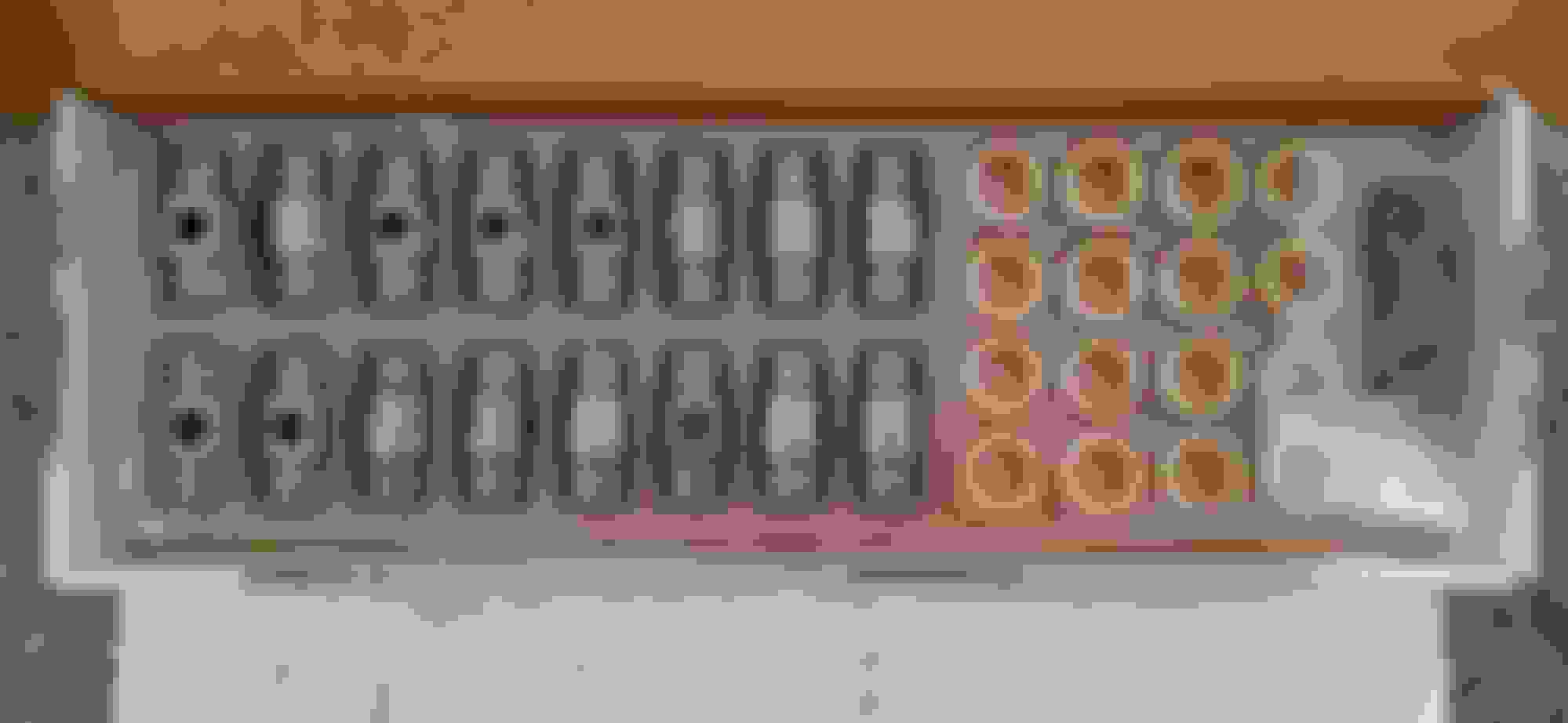
I used a Michigan motorsports trunnion rebuild kit with the solid brass bushing (pic at bottom). I noticed a couple things when removing rocker arms:
- Lots slop in trunnion. I did my best to measure and seems to be around 10 thousands play in each trunnion.
- One trunnion had a grove worn in the bushing. This would stop the rocker arm from moving. I think what happened is the bushing got SLIGHTLY pushed in too far. Looking back this is VERY easy to do. It wore a grove in the bushing.
Second lifter pump up
Last I started the engine was 24 hours ago. I can actuate the lifters with my hand by simply pressing down with my thumb on the pushrod. I'd expect they'd still be pumped up after 24 hours?? Or would some that sat with valve spring pressure on them loose their pressure?
Either way I'm confident I can get zero lash with that MS racing components pushrod tool. It has a valve checking spring on the adjustable pushrod as apposed to on the valve.
Okay so I got the MS Racing components pushrod length tool. It's SUPER easy to use. However, I have what seems to be a $heeeet mess. I've not measured all the valves yet, figured I'd stop here. Not sure if I have some worn out parts. My preload seems to have disappeared. Spec I believe is 0.030" preload +/- 0.010" (for iron block & aluminum heads)
I used a Michigan motorsports trunnion rebuild kit with the solid brass bushing (pic at bottom). I noticed a couple things when removing rocker arms:
- Lots slop in trunnion. I did my best to measure and seems to be around 10 thousands play in each trunnion.
- One trunnion had a grove worn in the bushing. This would stop the rocker arm from moving. I think what happened is the bushing got SLIGHTLY pushed in too far. Looking back this is VERY easy to do. It wore a grove in the bushing.
Second lifter pump up
Last I started the engine was 24 hours ago. I can actuate the lifters with my hand by simply pressing down with my thumb on the pushrod. I'd expect they'd still be pumped up after 24 hours?? Or would some that sat with valve spring pressure on them loose their pressure?
Either way I'm confident I can get zero lash with that MS racing components pushrod tool. It has a valve checking spring on the adjustable pushrod as apposed to on the valve.
If you have slop in your trunnions you better tear them down and inspect them. Side play is ok but up and down is not so they could be wearing.
If a lifter is under load, Yes the Spring pressure will bleed it down.
If you have slop in your trunnions you better tear them down and inspect them. Side play is ok but up and down is not so they could be wearing.
If a lifter is under load, Yes the Spring pressure will bleed it down.
Ah good, so I don't need to worry about lifters.
To be clear, I pulled the rocker arm off. Inspecting it off the head, I can move the trunnion up and down. I've written how far (using my crude dial caliper setup) in my spreadsheet.
The pushrods appear to be good so far still at original spec (except one is longer for some reason but that wouldn't lend to my issue).
By chance anybody have an idea of what tolerances these brass trunnion setups are manufactured too... as in clearance between the bushing and the trunnion?
To be clear, I pulled the rocker arm off. Inspecting it off the head, I can move the trunnion up and down. I've written how far (using my crude dial caliper setup) in my spreadsheet.
The pushrods appear to be good so far still at original spec (except one is longer for some reason but that wouldn't lend to my issue).
Anybody know what amount of vertical play is representative of a new brass trunnion setup?
@1FastBrick THANKS!!!!! That link showed the guy's link showed the bushing was warn out where the fulcrum sits on the bushing. I took one of my rocker arms and wiggled the trunnion vertically then horizontally. One way has play the other does not. The bushing material is wearing off quickly on these. Not sure I'd buy them again...
May purchase different rocker setup all together ~ Any suggestions? I'd hate to order another set of pushrods just for the rocker arm bushings to wear out... or to have to change the bushings every so many miles.
Curious if there's any other wear parts that could be checked in addition to existing push rod length and rocker arm play. Places that would reduce preload.
It's entirely possible I measured them completely wrong last time. My adjustable pushrod was junk, and after ordering I discovered the caliper was off as well by 10 thousands if memory serves me correctly. I don't recall if was too short or too long... but I seem to have forgot to write it down
@1FastBrick THANKS!!!!! That link showed the guy's link showed the bushing was warn out where the fulcrum sits on the bushing. I took one of my rocker arms and wiggled the trunnion vertically then horizontally. One way has play the other does not. The bushing material is wearing off quickly on these. Not sure I'd buy them again...
May purchase different rocker setup all together ~ Any suggestions? I'd hate to order another set of pushrods just for the rocker arm bushings to wear out... or to have to change the bushings every so many miles.
Curious if there's any other wear parts that could be checked in addition to existing push rod length and rocker arm play. Places that would reduce preload.
It's entirely possible I measured them completely wrong last time. My adjustable pushrod was junk, and after ordering I discovered the caliper was off as well by 10 thousands if memory serves me correctly. I don't recall if was too short or too long... but I seem to have forgot to write it down
So far the CHE's kits have served me well. But my daily is not to high of lift right now.
But I am also meticulous... I cleaned and then hand picked every core I used.
Some of the cores had wear issues in the push rod cup end so they were scrapped.
I'm revising my math. I'm thinking nearly all of what I'm observing could be due to that bronze bushing wearing down.
I have 12,000 miles on my engine. The miles went by QUICK. I should have been playing closer attention and checked this earlier. It reminded me when I heard ticking lifter from around 6 / 8 cylinder area.
I think I could possibly rotate these bushings 180 degrees and clean the issue up for a while. But would only mean I have to tear down again later.
I also hand picked from two (or three?) sets of rocker arms. Was going to also have the rocker arms tumbled / polished but machine shop got too busy to fit in the small project.
I'm thinking the needle bearing setups would hold their tolerances better in hindsight, but may just get a complete set of rocker arms... I'm asking Trevor Manton about it as well as sent a message to Johnson Lifters to see what they recommend.
I spoke with Trevor Manton on the phone. SUPER helpful. He said all the solid bushing trunnion kits wear like that. They make one that lasts a bit longer, I think may have a bit better bearing capture as well as tougher bronze. He spoke that they could make the bronze to a point before it starts to chip or flake... or make it harder yet but recommended keeping it soft enough so it doesn't flake when it wears down. Then they also have a bearing capture washer on either side of the bushing... to prevent the bushing side from wearing / binding on the trunnions like mine did.
I got 12,000 miles out of mine, it sounds as though they get more but they aren't one time install. They need to be swapped out every so often. However, from chatting with him, it sounds like theirs might last longer than 12,000 miles.
What's really cool but several thousand dollars is they make a rocker arm that provides oil pressure to the trunnion bushing surface! They take the oil from the lifter and plumb it to the trunnion. Unfortunately, I don't have the $$ for that in my budget.
Their Trunnion and bushing design is completely different HERE
Gas Monkey Built a 6-Wheel Ferrari Testarossa With a Corvette LT4 Engine
Slideshow: The controversial Ferrari F6 swaps its original flat-12 for a Corvette Z06-derived LT4 V8 and sends power to four rear wheels through a custom-built drivetrain.
7 Most Reliable High-Performance Engines GM Has Ever Built
Slideshow:These GM engines didn't just make huge power, they survived abuse, boost, track days, and six-digit mileage with a reputation for refusing to quit.
6 Common C5 Corvette Failures and What's Involved In Repairing Them
Slideshow: From wobbling harmonic balancers to failed EBCMs, these are the issues that define long-term C5 ownership and what repairs typically involve.
Retro Modern Bandit Pontiac Trans AM Comes With Burt Reynolds' Autograph
Slideshow: A modern Camaro transformed into a retro icon, this limited-run "Bandit" build blends nostalgia with brute force in a way few revivals manage.
Top 10 Greatest Cadillac V Series Performance Models Ever, Ranked
Slideshow: Cadillac didn't just crash the high-performance luxury vehicle party, it showed up loud, supercharged, and occasionally a little unhinged...
Coachbuilt N2A Anteros Is an LS2-Powered C6 Corvette In Italian Clothes
Slideshow: A one-off sports car that looks like a vintage Italian exotic-but hides a C6 Corvette underneath-just sold for the price of a new mid-engine Corvette.