





Let's talk torque......

Thread Starter
Launching!
Joined: Nov 2001
Posts: 228
Likes: 0
From: Warner Robins, GA
 Let's talk torque......
 Everybody talk's about how much RWHP they make but nobody ever seams to talk about RWTQ. I'm a beliver in that you need to boost your TQ as much as you boost your HP. TQ gets you off the line and moving while the HP will pull you through and across the line. Face it our cars are heavy and it takes TQ to get them moving so my question is what can you do to a stock bore LS1 to get more TQ out of them? I know that most of you are going to say a stroker but is there any way to do it beside stroking?
Here's what I'm planning for my car in the next few months. T1 cam, Stage II heads, LS6 intake, Long Tube Headers.
Here's what I'm planning for my car in the next few months. T1 cam, Stage II heads, LS6 intake, Long Tube Headers.

TECH Fanatic

Joined: Nov 2001
Posts: 1,355
Likes: 1
From: Chicago (Elgin), IL
Re: Let's talk torque...... Simple heads and cam will increase your torque too. Not as much as a stroker motor motor (both cost and power numbers) but definetly not shabby in any sense.
Mine is a Heads and Cam car and with Ed Wright's incorrect PCM tuning I was pulling 383rwhp and 380lbs-ft of torque at the rears.
Now that my PCM is fixed, I'm shooting for over 400 in both categories.
Mine is a Heads and Cam car and with Ed Wright's incorrect PCM tuning I was pulling 383rwhp and 380lbs-ft of torque at the rears.
Now that my PCM is fixed, I'm shooting for over 400 in both categories.
Re: Let's talk torque...... Torque and Horsepower are related by a simple mathematical formula:
Horsepower = (Torque x RPM)/5250
That is why the TQ and HP curves always intersect at 5250 rpm on a dyno graph.
So, one cannot exist without the other. But, there are two ways to increase HP by looking at that formula, by increasing Torque (adding cubic inches via stroke or cylinder size) or by increasing the effective RPM range. Thats the fun part, making a motor breathe well at higher rpm. Its easier to gain HP in larger amounts by increasing RPM, since cubes are typically factors of 10s and RPM is in the 100s or even 1000s
There are two ways we we can improve torque however, by using a multiplier. This is done with gearing (swapping the rear gears) or possibly swapping in a torque converter in an Automatic car. Haven't you noticed how steeply geared the import cars are that have no lower rpm torque? Example, the Honda S2000 coupe makes power out to around 9K rpm, but has no low end torque. It comes standard with a 4.10 rearend gear ratio to multiply the output. Mechanical torque is just as useful.
Tony
Horsepower = (Torque x RPM)/5250
That is why the TQ and HP curves always intersect at 5250 rpm on a dyno graph.
So, one cannot exist without the other. But, there are two ways to increase HP by looking at that formula, by increasing Torque (adding cubic inches via stroke or cylinder size) or by increasing the effective RPM range. Thats the fun part, making a motor breathe well at higher rpm. Its easier to gain HP in larger amounts by increasing RPM, since cubes are typically factors of 10s and RPM is in the 100s or even 1000s
There are two ways we we can improve torque however, by using a multiplier. This is done with gearing (swapping the rear gears) or possibly swapping in a torque converter in an Automatic car. Haven't you noticed how steeply geared the import cars are that have no lower rpm torque? Example, the Honda S2000 coupe makes power out to around 9K rpm, but has no low end torque. It comes standard with a 4.10 rearend gear ratio to multiply the output. Mechanical torque is just as useful.
Tony
Re: Let's talk torque...... If you were an A4, I'd recommend a nice aftermarket converter. <img src="images/icons/smile.gif" border="0"> They increase torque considerably. The majority of the mods out there are going to increase HP and TQ. I know that my average TQ #'s were up considerably after the FLP headers went on.
__________________

TECH Fanatic
Joined: Nov 2001
Posts: 1,355
Likes: 1
From: Chicago (Elgin), IL
Re: Let's talk torque...... Speaking of gearing (Thanks Nine Ball), changing your gear out back can make a noticable difference in E.T. and MPH as well as in your backside without actually increasing the power of the vehicle.

TECH Addict
Joined: Nov 2001
Posts: 2,207
Likes: 0
From: College Station, Tx
Re: Let's talk torque...... Torque is F dot d - the cross product of the force * the moment arm. Now force is obviously what pushes your car forward, and is the force you feel when you accelerate.
The real question is - which torque? It's not flywheel torque that actually moves your car, but rather "delivered torque", or torque * gear multiplication. This is why you accelerate faster in first gear than in third (ignoring wind resistance).
How does this work? Say at we have 300 ft-lbs of torque available at an rpm. Now in first let’s say a 4:1 tranny gear and 1:1 rear gear (to make math easier) - so a final drive ratio of 4:1. So in first gear we will have 300 * 4 = 1200 ft-lbs of torque pushing us forward. Say second gear is 2:1 - so we have 300 * 2 = 600 ft-lbs of torque pushing us forward. 1200 is obviously more than 600, and accounts for that difference.
Now let's look at this a little differently. Gearing is fixed for each gear, so velocity and rpm are related.
Say we have 300ft-lbs of torque @ 3500, and 300hp at 7000 rpm (only 225 ft-lbs).
Now lets say we are at a certain velocity where we could be in first gear (4:1 gear reduction) at 7000 rpm, or second gear (2:1 gear reduction) at 3000 rpm.
Now in second gear (most flywheel torque) we have 2:1 gear reduction * 300 ft-lbs of torque, or 600 ft-lbs delivered at the rear wheels.
In first gear we only have 300hp * 7000/5250 = 225 ft-lbs of flywheel torque, but it is multiplied by 4:1, so we have 900 ft-lbs of torque delivered.
Now it's obvious that 900ft-lbs at the rear wheel will accelerate you quicker than 600ft lbs, so first is better than second here.
So basically it's torque delivered, or the product of flywheel torque * gear multiplication that matters.
So what about horsepower?
We determined above that acceleration is determined by
Flywheel torque * gear multiplication.
Well what is flywheel torque - it is basically the rotational analogue of force.
What determines gear multiplication? Well, you have a fixed set of ratios in the tranny (not a CVT tranny) so what determines what gear you can be in? Velocity (road speed.
So in other words acceleration is proportional to
Force * velocity.
How convenient! There is an equation for power that says
Power = Force * Velocity!
So basically horsepower is telling us what the magnitude (proportionally) of the product of flywheel torque * gear multiplication will be - or at least when it will be maximized and minimized.
So if you maximize area under the hp curve, you are maximizing this product, and thus your acceleration. HP simply takes velocity into consideration (rate at which work can be applied), so you don't have to worry about gear ratio's, etc.
Chris
The real question is - which torque? It's not flywheel torque that actually moves your car, but rather "delivered torque", or torque * gear multiplication. This is why you accelerate faster in first gear than in third (ignoring wind resistance).
How does this work? Say at we have 300 ft-lbs of torque available at an rpm. Now in first let’s say a 4:1 tranny gear and 1:1 rear gear (to make math easier) - so a final drive ratio of 4:1. So in first gear we will have 300 * 4 = 1200 ft-lbs of torque pushing us forward. Say second gear is 2:1 - so we have 300 * 2 = 600 ft-lbs of torque pushing us forward. 1200 is obviously more than 600, and accounts for that difference.
Now let's look at this a little differently. Gearing is fixed for each gear, so velocity and rpm are related.
Say we have 300ft-lbs of torque @ 3500, and 300hp at 7000 rpm (only 225 ft-lbs).
Now lets say we are at a certain velocity where we could be in first gear (4:1 gear reduction) at 7000 rpm, or second gear (2:1 gear reduction) at 3000 rpm.
Now in second gear (most flywheel torque) we have 2:1 gear reduction * 300 ft-lbs of torque, or 600 ft-lbs delivered at the rear wheels.
In first gear we only have 300hp * 7000/5250 = 225 ft-lbs of flywheel torque, but it is multiplied by 4:1, so we have 900 ft-lbs of torque delivered.
Now it's obvious that 900ft-lbs at the rear wheel will accelerate you quicker than 600ft lbs, so first is better than second here.
So basically it's torque delivered, or the product of flywheel torque * gear multiplication that matters.
So what about horsepower?
We determined above that acceleration is determined by
Flywheel torque * gear multiplication.
Well what is flywheel torque - it is basically the rotational analogue of force.
What determines gear multiplication? Well, you have a fixed set of ratios in the tranny (not a CVT tranny) so what determines what gear you can be in? Velocity (road speed.
So in other words acceleration is proportional to
Force * velocity.
How convenient! There is an equation for power that says
Power = Force * Velocity!
So basically horsepower is telling us what the magnitude (proportionally) of the product of flywheel torque * gear multiplication will be - or at least when it will be maximized and minimized.
So if you maximize area under the hp curve, you are maximizing this product, and thus your acceleration. HP simply takes velocity into consideration (rate at which work can be applied), so you don't have to worry about gear ratio's, etc.
Chris
Re: Let's talk torque...... Just an observation, but in our lexicon, "torque" seems to be used to describe having lots of torque at low rpm, say below 2500 rpm, while "HP" is used to refer to having lots of HP avaiable above 5000 rpm.
Trending Topics

10 Second Club


Joined: May 2009
Posts: 3,427
Likes: 227
From: over dere
Torque and Horsepower are related by a simple mathematical formula:
Horsepower = (Torque x RPM)/5250
That is why the TQ and HP curves always intersect at 5250 rpm on a dyno graph.
So, one cannot exist without the other. But, there are two ways to increase HP by looking at that formula, by increasing Torque (adding cubic inches via stroke or cylinder size) or by increasing the effective RPM range. Thats the fun part, making a motor breathe well at higher rpm. Its easier to gain HP in larger amounts by increasing RPM, since cubes are typically factors of 10s and RPM is in the 100s or even 1000s
There are two ways we we can improve torque however, by using a multiplier. This is done with gearing (swapping the rear gears) or possibly swapping in a torque converter in an Automatic car. Haven't you noticed how steeply geared the import cars are that have no lower rpm torque? Example, the Honda S2000 coupe makes power out to around 9K rpm, but has no low end torque. It comes standard with a 4.10 rearend gear ratio to multiply the output. Mechanical torque is just as useful.
Tony
Horsepower = (Torque x RPM)/5250
That is why the TQ and HP curves always intersect at 5250 rpm on a dyno graph.
So, one cannot exist without the other. But, there are two ways to increase HP by looking at that formula, by increasing Torque (adding cubic inches via stroke or cylinder size) or by increasing the effective RPM range. Thats the fun part, making a motor breathe well at higher rpm. Its easier to gain HP in larger amounts by increasing RPM, since cubes are typically factors of 10s and RPM is in the 100s or even 1000s
There are two ways we we can improve torque however, by using a multiplier. This is done with gearing (swapping the rear gears) or possibly swapping in a torque converter in an Automatic car. Haven't you noticed how steeply geared the import cars are that have no lower rpm torque? Example, the Honda S2000 coupe makes power out to around 9K rpm, but has no low end torque. It comes standard with a 4.10 rearend gear ratio to multiply the output. Mechanical torque is just as useful.
Tony
however any movement is HP (work accomplished)
you’ll never even do the 1/4 mile with 1000 ft\lbs TQ but zero HP.
LS1 Tech Stories
The Best V8 Stories One Small Block at Time

Topdon ONE vs. Artidiag 800 BT2: Which is the Diagnostic Tablet For You?
Pouria Savadkouei
Gas Monkey Built a 6-Wheel Ferrari Testarossa With a Corvette LT4 Engine
Verdad Gallardo
7 Most Reliable High-Performance Engines GM Has Ever Built
Verdad Gallardo
Amazing '71 Camaro Restomod Is Modern Muscle Car Under the Skin
Verdad Gallardo
6 Common C5 Corvette Failures and What's Involved In Repairing Them
Pouria Savadkouei
Retro Modern Bandit Pontiac Trans AM Comes With Burt Reynolds' Autograph
Verdad Gallardo
Top 10 Greatest Cadillac V Series Performance Models Ever, Ranked
Pouria Savadkouei
Top 10 Most Powerful Chevy Trucks Ever Made!

Hennessey's New Supercharged Silverado ZR2 Has 700 HP
Verdad Gallardo
TECH Fanatic


Joined: May 2016
Posts: 1,292
Likes: 436
From: St. Louis
My otherwise stock 5.7 had a very wide torque band and exelent low end response when I was running a 218/224-113+3, there's a dyno of it posted in my 11sec thread. My 60ft time improved over the stock cam with that grind and I still had a stock tq converter at the time.



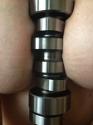
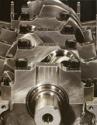

LOL!!!
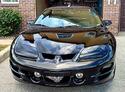
Oh that brings back memories of good discussion!!!
Unwritten rule from 19 years ago:
We don't talk about the T1 221/221 .551/.551 lift 112 LSA cam unless we also talk about the B1 221/221 .551/.551 114 LSA cam
Then we have to talk about the C1 aka the Hammer Cam 222/222 .566/.566 on a 112lsa
Question of the day 2001: Is a C1 too much cam for my 6.0 or as a T1 or B1 a better choice for an all out build?

Unwritten rule from 19 years ago:
We don't talk about the T1 221/221 .551/.551 lift 112 LSA cam unless we also talk about the B1 221/221 .551/.551 114 LSA cam
Then we have to talk about the C1 aka the Hammer Cam 222/222 .566/.566 on a 112lsa
Question of the day 2001: Is a C1 too much cam for my 6.0 or as a T1 or B1 a better choice for an all out build?
TECH Fanatic
Joined: May 2016
Posts: 1,292
Likes: 436
From: St. Louis
Oh man oh man I love those old school little single pattern guys! everyone was trying to keep the overlap in check because the tuning was so bad lol. These where the glory days before all the big cam bullshit imo lol. I had a 97 z28 Lt1 M6 at the time (2001) I was just so jealous of the LS1 cars. GM was basically selling rocket ships. All I had was an underdrive pulley and a cutout and I was going 13.70's @101 with 1.9 short times on street tires and these damned new Ls cars where just so much faster!

TECH Fanatic
Joined: May 2016
Posts: 1,292
Likes: 436
From: St. Louis
For me this is where it started to suck. The cam spec arms race lol, I left the stock cam in my LS1 until 2015 and I've had it since 2004 haha
The tuning on those days? 
A good LS1 Edit mail order tune was $400 plus shipping your PCM off for a week or two. That's like $580 in todays dollars for a mail order tune!
Jayson the owner of MTI which was one of the top shops did an excellent mail order tune. Pat G had an excellent reputation. As did Geoff at Thunder Racing and Mike Norris.
The early days were LS1derful
A good LS1 Edit mail order tune was $400 plus shipping your PCM off for a week or two. That's like $580 in todays dollars for a mail order tune!
Jayson the owner of MTI which was one of the top shops did an excellent mail order tune. Pat G had an excellent reputation. As did Geoff at Thunder Racing and Mike Norris.
The early days were LS1derful
Spoiler!
Last edited by 99 Black Bird T/A; May 8, 2020 at 04:21 PM.

Tq is all that matters. Tq is power.
There can be tq w/o hp but there can not be hp w/o tq.
Really you don't even need to know hp. It's only a calculation. All force a engine produces is tq.
There can be tq w/o hp but there can not be hp w/o tq.
Really you don't even need to know hp. It's only a calculation. All force a engine produces is tq.
TECH Fanatic
Joined: May 2016
Posts: 1,292
Likes: 436
From: St. Louis
The tuning on those days?
A good LS1 Edit mail order tune was $400 plus shipping your PCM off for a week or two. That's like $580 in todays dollars for a mail order tune!
Jayson the owner of MTI which was one of the top shops did an excellent mail order tune. Pat G had an excellent reputation. As did Geoff at Thunder Racing and Mike Norris.
The early days were LS1derful
A good LS1 Edit mail order tune was $400 plus shipping your PCM off for a week or two. That's like $580 in todays dollars for a mail order tune!
Jayson the owner of MTI which was one of the top shops did an excellent mail order tune. Pat G had an excellent reputation. As did Geoff at Thunder Racing and Mike Norris.
The early days were LS1derful
Spoiler!
