





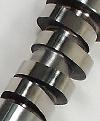


Where is the proof that big cams are better?

Thread Starter
Texas Director
iTrader: (1)
Joined: Nov 2001
Posts: 4,044
Likes: 0
From: Deer Park, Texas
 Where is the proof that big cams are better?
 I see medium sized cam cars tearing up the track ranging from 221 to 224 duration, and a a few 226 cammed cars that seem to be dominating. The quickest of the 346's seem to be single patterns too. But that is not the question.
Where is the proof that the big cams put down the power? I'm not talking about a dyno number. I'm talking about an impressive E.T. at the track!
I am well aware that cams are not the end-all indicator of E.T., but somewhere there must a BIG cammed car laying the smack down. If so where is it at? I would consider anything at 229 duration or larger to be a BIG cam.
For example the 232/232 GTP cam.....why so freaking big? Where are the track times to support using such a big assed cam. What about the ARE 226/234? Or the ARE 240/240? MMS 229/229?
So where is the beef? Does anyone who has one of the BIG BAD boys lay down any more impressive of a number at the track than the "smaller" cams out there?
A bigger cam will have driveability problems that a smaller cam wouldn't. Also, require higher idle, produce worse gas milage, have rougher idle, and MUST HAVE PCM programming, since surging and other problems are sometimes evident.
I know that these symptoms are not going to occur in every car. Why use these monsters if there is no track data that would back up their stature?
I constantly see people posting on here asking about cams, and one of the first thing asked is, "how does it sound or lope at idle"? WHO FREAKING CARES??!! The point of installing an aftermarket cam is to get the most E.T. out of it AT THE TRACK IMO, not some "impressive" dyno number!!
For the record, I still have the stock cam in my car and I am contemplating cam choices right now. Can anyone convince me WITH TRACK E.T. PROOF that something larger than a 222-224 duration is superior?
<img src="graemlins/camaro.gif" border="0" alt="[Chevrolet]" />
Where is the proof that the big cams put down the power? I'm not talking about a dyno number. I'm talking about an impressive E.T. at the track!
I am well aware that cams are not the end-all indicator of E.T., but somewhere there must a BIG cammed car laying the smack down. If so where is it at? I would consider anything at 229 duration or larger to be a BIG cam.
For example the 232/232 GTP cam.....why so freaking big? Where are the track times to support using such a big assed cam. What about the ARE 226/234? Or the ARE 240/240? MMS 229/229?
So where is the beef? Does anyone who has one of the BIG BAD boys lay down any more impressive of a number at the track than the "smaller" cams out there?
A bigger cam will have driveability problems that a smaller cam wouldn't. Also, require higher idle, produce worse gas milage, have rougher idle, and MUST HAVE PCM programming, since surging and other problems are sometimes evident.
I know that these symptoms are not going to occur in every car. Why use these monsters if there is no track data that would back up their stature?
I constantly see people posting on here asking about cams, and one of the first thing asked is, "how does it sound or lope at idle"? WHO FREAKING CARES??!! The point of installing an aftermarket cam is to get the most E.T. out of it AT THE TRACK IMO, not some "impressive" dyno number!!
For the record, I still have the stock cam in my car and I am contemplating cam choices right now. Can anyone convince me WITH TRACK E.T. PROOF that something larger than a 222-224 duration is superior?
<img src="graemlins/camaro.gif" border="0" alt="[Chevrolet]" />
Re: Where is the proof that big cams are better? Well, I started this site because I am sooo into this stuff.
Let's roll this back a bit. Frankly most of the folks out there have 218-224 duration camshafts. Why is that... Well, the early stuff was all over the place. I myself owned what a GTP #4 cam back in 98-99. It was 232/232//116. My car did not perform with that cam. It was too radical at that time in a few ways... We didn't know what the goods and bads were for the LS1, we didn't know where these cars made peak hp etc...
A few years later, and big cams are becoming more accepted.
In general, a big cam changes everything.
Moderate cam performs well with a moderate converter, factory gears, and can work with basic programming.
Big cams needs BIG rpms, big converters, beefy clutches for 5500 clutch dumps, and big gears... All of those things help the motor get to the sweet spot, we call it the powerband. From peak torque to peak horsepower, that's the sweet spot. Heck, you might have a big cam that needs that 4500 stall and 4.10 gear. If you don't get that big converter in there, the car might be a turd out of the hole since it will take too long to hit peak tq.
There have been some MMS 229 cars that have run good, there have been other cams and project cars out there too. Not everyone needs a 232/232//112 camshaft in their car.
IMO 218-226 is a nice range to be in for duration.
I like the 218 stuff for mild applications. Won't lope like crazy, might be able to avoid programming, nice SOTP increase. Will totally pass emissions without any drama on a 114 LSA.
Now, the 229 stuff? Need gears, converter etc., to make it work.
Here are the cams I have run since 1998...
232/232/116 GTP
222/224//113 Comp
236/240//111 Comp XE
228/228//111 Comp XE
242/242//114 Lunati
Any of the stuff over 224 duration is gonna need some gears (for the most part). If you move peak HP from 6000 to 6450 there needs to be commensurate increase in stall speed and gearing.
Combination is everything. This is not just an LS1 thing.
I think that we are intake restricted to a point where the gains from the really big cams are not as dramatic as they should be... I think that will change as we help the motor get more air in on the intake side.
[ March 06, 2002: Message edited by: Pro Stock John ]</p>
Let's roll this back a bit. Frankly most of the folks out there have 218-224 duration camshafts. Why is that... Well, the early stuff was all over the place. I myself owned what a GTP #4 cam back in 98-99. It was 232/232//116. My car did not perform with that cam. It was too radical at that time in a few ways... We didn't know what the goods and bads were for the LS1, we didn't know where these cars made peak hp etc...
A few years later, and big cams are becoming more accepted.
In general, a big cam changes everything.
Moderate cam performs well with a moderate converter, factory gears, and can work with basic programming.
Big cams needs BIG rpms, big converters, beefy clutches for 5500 clutch dumps, and big gears... All of those things help the motor get to the sweet spot, we call it the powerband. From peak torque to peak horsepower, that's the sweet spot. Heck, you might have a big cam that needs that 4500 stall and 4.10 gear. If you don't get that big converter in there, the car might be a turd out of the hole since it will take too long to hit peak tq.
There have been some MMS 229 cars that have run good, there have been other cams and project cars out there too. Not everyone needs a 232/232//112 camshaft in their car.
IMO 218-226 is a nice range to be in for duration.
I like the 218 stuff for mild applications. Won't lope like crazy, might be able to avoid programming, nice SOTP increase. Will totally pass emissions without any drama on a 114 LSA.
Now, the 229 stuff? Need gears, converter etc., to make it work.
Here are the cams I have run since 1998...
232/232/116 GTP
222/224//113 Comp
236/240//111 Comp XE
228/228//111 Comp XE
242/242//114 Lunati
Any of the stuff over 224 duration is gonna need some gears (for the most part). If you move peak HP from 6000 to 6450 there needs to be commensurate increase in stall speed and gearing.
Combination is everything. This is not just an LS1 thing.
I think that we are intake restricted to a point where the gains from the really big cams are not as dramatic as they should be... I think that will change as we help the motor get more air in on the intake side.
[ March 06, 2002: Message edited by: Pro Stock John ]</p>

TECH Addict
Joined: Dec 2001
Posts: 2,298
Likes: 2
From: new england
Re: Where is the proof that big cams are better? I think this is a great question and i agree with everything PSJ stated, with that said i want to add big cam will easily put most Ls1 owners in a situation where there in over there head, as far as giving up driveability and street manners, but for some this big cam can open lots of doors,like forget slicks and their performance, how about hooking a legit street tire and not braking rearend, than applying extra Hp where its best used, off the starting line. This would close the gap between street performance and track only hardware and performance. I plan on installing MMS 229 cam and ill cross any compromise bridges as i get there, if i end up pioneering a new way to go fast with Ls1, that would be fine. <img src="gr_stretch.gif" border="0">
TECH Addict
Joined: Dec 2001
Posts: 2,298
Likes: 2
From: new england
Re: Where is the proof that big cams are better? Pro Stock John, you should get a lifetime achievement award for starting this Site! Thanks isnt good enough. As far as me, i see ive ended what should be a thriving post, i jump in and the subject just dies! <img src="images/icons/rolleyes.gif" border="0">

TECH Senior Member
Joined: Nov 2001
Posts: 10,341
Likes: 1
Re: Where is the proof that big cams are better? I have seen good results from both, it depends on combination and tuning.
My cam is going to be 226/234 112LSA and 557/575 lift. That is considered a big cam by some but it isnt really that big when you think about it.
I also have a 4400 stall and 4.11 gears with spool. I am not as concerned about street manners as the normal person. If I can get it to idle decent and make great power from 4500-6600rpm I will be very happy.
Compression of your heads, head flow numbers intake and exhaust and at what lift, vehicle weight, plus gearing and converter selection all play a large factor in your cam choice.
Hope this helps,
Chris
My cam is going to be 226/234 112LSA and 557/575 lift. That is considered a big cam by some but it isnt really that big when you think about it.
I also have a 4400 stall and 4.11 gears with spool. I am not as concerned about street manners as the normal person. If I can get it to idle decent and make great power from 4500-6600rpm I will be very happy.
Compression of your heads, head flow numbers intake and exhaust and at what lift, vehicle weight, plus gearing and converter selection all play a large factor in your cam choice.
Hope this helps,
Chris
Re: Where is the proof that big cams are better? Want proof that bigger cams are better? Just look under the hood of any LS1 powered Stock Eliminator (like Al Corda's). These cars are stock displacement LS1s, with stock compression, unported heads (except for trick valve job), stock intake manifold, and stock lift camshaft. The cams run a lot of duration though. Al Corda runs as much duration as he can before he gets into piston to valve clearance. Yeah, stock lift, but duration probably in the 230-240 @.050" range.
If you stuck one of these stocker cams in a street driven LS1, it would be a handfull...but, it will make MUCH more power than any of the mild cams we're running in our street cars and with enough converter and gear, the ETs would be much quicker. Al Corda runs 10.0s with the same race weight as the Pepper. Just think if he had Raughammer's awesome Stage II MTI heads? He's go even quicker.
Now if that desn't seem very impressive, consider Judson Massingill's 418 ci LS1. He runs a 260/264 duration cam...now that's what I'd call big. I'd also call his 138 mph ON MOTOR big too. Yes, bigger can be better...you just know how to use it.
If you stuck one of these stocker cams in a street driven LS1, it would be a handfull...but, it will make MUCH more power than any of the mild cams we're running in our street cars and with enough converter and gear, the ETs would be much quicker. Al Corda runs 10.0s with the same race weight as the Pepper. Just think if he had Raughammer's awesome Stage II MTI heads? He's go even quicker.
Now if that desn't seem very impressive, consider Judson Massingill's 418 ci LS1. He runs a 260/264 duration cam...now that's what I'd call big. I'd also call his 138 mph ON MOTOR big too. Yes, bigger can be better...you just know how to use it.
__________________

2013 Corvette Grand Sport A6 LME forged 416, Greg Good ported TFS 255 LS3 heads, 222/242 .629"/.604" 121LSA Pat G blower cam, ARH 1 7/8" headers, ESC Novi 1500 Supercharger w/8 rib direct drive conversion, 747rwhp/709rwtq on 93 octane, 801rwhp/735rwtq on race fuel, 10.1 @ 147.25mph 1/4 mile, 174.7mph Half Mile.
2016 Corvette Z51 M7 Magnuson Heartbeat 2300 supercharger, TSP LT headers, Pat G tuned, 667rwhp, 662rwtq, 191mph TX Mile.
2009.5 Pontiac G8 GT 6.0L, A6, AFR 230v2 heads. 506rwhp/442rwtq. 11.413 @ 121.29mph 1/4 mile, 168.7mph TX Mile
2000 Pewter Ram Air Trans Am M6 heads/cam 508 rwhp/445 rwtq SAE, 183.092 TX Mile
2022 Cadillac Escalade 6.2L A10 S&B CAI, Corsa catback.
2023 Corvette 3LT Z51 soon to be modified.
Custom LSX tuning in person or via email press here.
2013 Corvette Grand Sport A6 LME forged 416, Greg Good ported TFS 255 LS3 heads, 222/242 .629"/.604" 121LSA Pat G blower cam, ARH 1 7/8" headers, ESC Novi 1500 Supercharger w/8 rib direct drive conversion, 747rwhp/709rwtq on 93 octane, 801rwhp/735rwtq on race fuel, 10.1 @ 147.25mph 1/4 mile, 174.7mph Half Mile.
2016 Corvette Z51 M7 Magnuson Heartbeat 2300 supercharger, TSP LT headers, Pat G tuned, 667rwhp, 662rwtq, 191mph TX Mile.
2009.5 Pontiac G8 GT 6.0L, A6, AFR 230v2 heads. 506rwhp/442rwtq. 11.413 @ 121.29mph 1/4 mile, 168.7mph TX Mile
2000 Pewter Ram Air Trans Am M6 heads/cam 508 rwhp/445 rwtq SAE, 183.092 TX Mile
2022 Cadillac Escalade 6.2L A10 S&B CAI, Corsa catback.
2023 Corvette 3LT Z51 soon to be modified.
Custom LSX tuning in person or via email press here.
Trending Topics
Re: Where is the proof that big cams are better? Last I checked.. There are no Stock Eliminators using their race cars as daily drivers.. Lets not get crazy with the examples.. If I did not care about street manners then I would go crazy on the cam and other things, but most of us do.. Lets keep it real.. I am still waiting on your update Patrick.. Whats the story with your cam swap?
LS1 Tech Stories
The Best V8 Stories One Small Block at Time

6 Common C5 Corvette Failures and What's Involved In Repairing Them
Pouria Savadkouei
Retro Modern Bandit Pontiac Trans AM Comes With Burt Reynolds' Autograph
Verdad Gallardo
Top 10 Greatest Cadillac V Series Performance Models Ever, Ranked
Pouria Savadkouei
Top 10 Most Powerful Chevy Trucks Ever Made!

Hennessey's New Supercharged Silverado ZR2 Has 700 HP
Verdad Gallardo
Coachbuilt N2A Anteros Is an LS2-Powered C6 Corvette In Italian Clothes
Verdad Gallardo
Awesome K5 Blazer Restomod Comes With C7 Corvette Power
Verdad Gallardo
10 Camaros You Should Never Buy

10 LS Engine Myths That Refuse to Die
Verdad Gallardo
TECH Addict
Joined: Dec 2001
Posts: 2,298
Likes: 2
From: new england
Re: Where is the proof that big cams are better? Well you cant really argue with that! Any way stock eliminators need extra cam duration to take advantage of wild rear gear ratios and still have enough rpm from motor at end of 1/4. <img src="gr_images/icons/wink.gif" border="0">
 Re: Where is the proof that big cams are better?
 An old Racer told me, Ya gotta build your motor around the cam. Works for me. <img src="gr_grin.gif" border="0"> and had some 'you can't do that' motors that screamed. <img src="graemlins/fluffy.gif" border="0" alt="[Fluffy]" /> Bigger is not alwats better. The way it pumps air IS! A motor is basicly an air pump. RPM range is a facter. IMHO, if you stay with that, you'll do fine. <img src="graemlins/gr_cheers.gif" border="0" alt="[cheers]" />
Re: Where is the proof that big cams are better? vmoore,
Come on buddy, you guys asked for proof...I gave it to you...now you want to throw the streetability angle into it...see, that's the rub. You can go faster with a bigger cam if you're prepared to turn it tighter and live with the driveability issues, but there's no such thing as a free lunch...cams are all about compromises. A 222/222 single pattern cam has a lot fewer compromises than a 238/238 cam in the same motor (all other things being equal). It's the law of diminishing returns. Once you get past a certain point, the gains become less and less. It seems, once you go past 224 in duration at .050, the gains, while there, start to diminish fairly rapidly (we're talking stock displacement, hydraulic roller cammed applications).
As far as my car's concerned...I've got some changes being done to the car right now and then there's some tuning to do. Once it's all sorted out I will report back to you...and yes, I will have an answer to you valve float problem by then.
Patrick
Come on buddy, you guys asked for proof...I gave it to you...now you want to throw the streetability angle into it...see, that's the rub. You can go faster with a bigger cam if you're prepared to turn it tighter and live with the driveability issues, but there's no such thing as a free lunch...cams are all about compromises. A 222/222 single pattern cam has a lot fewer compromises than a 238/238 cam in the same motor (all other things being equal). It's the law of diminishing returns. Once you get past a certain point, the gains become less and less. It seems, once you go past 224 in duration at .050, the gains, while there, start to diminish fairly rapidly (we're talking stock displacement, hydraulic roller cammed applications).
As far as my car's concerned...I've got some changes being done to the car right now and then there's some tuning to do. Once it's all sorted out I will report back to you...and yes, I will have an answer to you valve float problem by then.
Patrick
__________________
2013 Corvette Grand Sport A6 LME forged 416, Greg Good ported TFS 255 LS3 heads, 222/242 .629"/.604" 121LSA Pat G blower cam, ARH 1 7/8" headers, ESC Novi 1500 Supercharger w/8 rib direct drive conversion, 747rwhp/709rwtq on 93 octane, 801rwhp/735rwtq on race fuel, 10.1 @ 147.25mph 1/4 mile, 174.7mph Half Mile.
2016 Corvette Z51 M7 Magnuson Heartbeat 2300 supercharger, TSP LT headers, Pat G tuned, 667rwhp, 662rwtq, 191mph TX Mile.
2009.5 Pontiac G8 GT 6.0L, A6, AFR 230v2 heads. 506rwhp/442rwtq. 11.413 @ 121.29mph 1/4 mile, 168.7mph TX Mile
2000 Pewter Ram Air Trans Am M6 heads/cam 508 rwhp/445 rwtq SAE, 183.092 TX Mile
2022 Cadillac Escalade 6.2L A10 S&B CAI, Corsa catback.
2023 Corvette 3LT Z51 soon to be modified.
Custom LSX tuning in person or via email press here.
2013 Corvette Grand Sport A6 LME forged 416, Greg Good ported TFS 255 LS3 heads, 222/242 .629"/.604" 121LSA Pat G blower cam, ARH 1 7/8" headers, ESC Novi 1500 Supercharger w/8 rib direct drive conversion, 747rwhp/709rwtq on 93 octane, 801rwhp/735rwtq on race fuel, 10.1 @ 147.25mph 1/4 mile, 174.7mph Half Mile.
2016 Corvette Z51 M7 Magnuson Heartbeat 2300 supercharger, TSP LT headers, Pat G tuned, 667rwhp, 662rwtq, 191mph TX Mile.
2009.5 Pontiac G8 GT 6.0L, A6, AFR 230v2 heads. 506rwhp/442rwtq. 11.413 @ 121.29mph 1/4 mile, 168.7mph TX Mile
2000 Pewter Ram Air Trans Am M6 heads/cam 508 rwhp/445 rwtq SAE, 183.092 TX Mile
2022 Cadillac Escalade 6.2L A10 S&B CAI, Corsa catback.
2023 Corvette 3LT Z51 soon to be modified.
Custom LSX tuning in person or via email press here.
Re: Where is the proof that big cams are better? Stock Eliminators have to run unported heads because that's what the rules state. Unported heads, unported intake manifolds, stock valves, stock pistons, stock displacement, stock compression...not very much latitude (at least on the surface).
__________________
2013 Corvette Grand Sport A6 LME forged 416, Greg Good ported TFS 255 LS3 heads, 222/242 .629"/.604" 121LSA Pat G blower cam, ARH 1 7/8" headers, ESC Novi 1500 Supercharger w/8 rib direct drive conversion, 747rwhp/709rwtq on 93 octane, 801rwhp/735rwtq on race fuel, 10.1 @ 147.25mph 1/4 mile, 174.7mph Half Mile.
2016 Corvette Z51 M7 Magnuson Heartbeat 2300 supercharger, TSP LT headers, Pat G tuned, 667rwhp, 662rwtq, 191mph TX Mile.
2009.5 Pontiac G8 GT 6.0L, A6, AFR 230v2 heads. 506rwhp/442rwtq. 11.413 @ 121.29mph 1/4 mile, 168.7mph TX Mile
2000 Pewter Ram Air Trans Am M6 heads/cam 508 rwhp/445 rwtq SAE, 183.092 TX Mile
2022 Cadillac Escalade 6.2L A10 S&B CAI, Corsa catback.
2023 Corvette 3LT Z51 soon to be modified.
Custom LSX tuning in person or via email press here.
2013 Corvette Grand Sport A6 LME forged 416, Greg Good ported TFS 255 LS3 heads, 222/242 .629"/.604" 121LSA Pat G blower cam, ARH 1 7/8" headers, ESC Novi 1500 Supercharger w/8 rib direct drive conversion, 747rwhp/709rwtq on 93 octane, 801rwhp/735rwtq on race fuel, 10.1 @ 147.25mph 1/4 mile, 174.7mph Half Mile.
2016 Corvette Z51 M7 Magnuson Heartbeat 2300 supercharger, TSP LT headers, Pat G tuned, 667rwhp, 662rwtq, 191mph TX Mile.
2009.5 Pontiac G8 GT 6.0L, A6, AFR 230v2 heads. 506rwhp/442rwtq. 11.413 @ 121.29mph 1/4 mile, 168.7mph TX Mile
2000 Pewter Ram Air Trans Am M6 heads/cam 508 rwhp/445 rwtq SAE, 183.092 TX Mile
2022 Cadillac Escalade 6.2L A10 S&B CAI, Corsa catback.
2023 Corvette 3LT Z51 soon to be modified.
Custom LSX tuning in person or via email press here.
Re: Where is the proof that big cams are better? Stock Elim guys have to follow some rules.. So many variables to make the car go fast... Patrick I found out what my problem was.. I did not know that you had to clearance the stock rocker arms with the Crane 99893 secondary to the 1.46inch diameter. My retainers were taking a beating and my valves were not opening and closing all the way.. All of that has been resolved. Heads just need to go back on the car.. Post messing around with autotap and making sure my levels are where they need to be I will dyno her again..
Thread Starter
Texas Director
iTrader: (1)
Joined: Nov 2001
Posts: 4,044
Likes: 0
From: Deer Park, Texas
Re: Where is the proof that big cams are better? Do the stock eliminator guys run a factory GM computer? Do they have driveability issues on the street? (Obviously not)
I hear what you are saying Patrick, but my point is comparing a stock eliminator to a street/strip car is comparing apples and oranges. Lets talk about factory computer, stock displacement, heads/cam cars with large cams vs. small cams.
Where's the beef??
I hear what you are saying Patrick, but my point is comparing a stock eliminator to a street/strip car is comparing apples and oranges. Lets talk about factory computer, stock displacement, heads/cam cars with large cams vs. small cams.
Where's the beef??
 Re: Where is the proof that big cams are better?
 I guess this would be a good thread to throw these questions in.
What is the main purpose for split duration cams? Is it just to help out the exhaust flow? If someone has awesome flowing exhaust port would he still benefit from more duration on exhaust. Would the benefit be less compared to someone with bad flowing exhaust port?
Let's say you had a good cam. 222/222 .550 .550 114LSA You wanted more out of it, but not that much. What would you change? Would 226/226 .550 .550 114LSA be better then 222/226 .550 .550 114LSA? Let's say heads flow good both intake and exhaust. You don't want too much overlap right? So isn't adding just exhaust duration better then adding both intake and exhaust?
What is the main purpose for split duration cams? Is it just to help out the exhaust flow? If someone has awesome flowing exhaust port would he still benefit from more duration on exhaust. Would the benefit be less compared to someone with bad flowing exhaust port?
Let's say you had a good cam. 222/222 .550 .550 114LSA You wanted more out of it, but not that much. What would you change? Would 226/226 .550 .550 114LSA be better then 222/226 .550 .550 114LSA? Let's say heads flow good both intake and exhaust. You don't want too much overlap right? So isn't adding just exhaust duration better then adding both intake and exhaust?

Joined: Nov 2001
Posts: 8,484
Likes: 0
From: Cecil County Raceway!!!
Re: Where is the proof that big cams are better? Its all about the combination really. As whats been said above....you can't put in a big cam with 3.73 gears and expect it to perform...it'll probably be slower.
Now put in a big cam with say...4.71 gears...and it may very well tear up the track...(hint hint) <img src="gr_grin.gif" border="0">
[ March 07, 2002: Message edited by: Fireball ]</p>
Now put in a big cam with say...4.71 gears...and it may very well tear up the track...(hint hint) <img src="gr_grin.gif" border="0">
[ March 07, 2002: Message edited by: Fireball ]</p>

TECH Regular
Joined: Jan 2002
Posts: 400
Likes: 0
From: Lincoln Park Mi
Re: Where is the proof that big cams are better? [quote]Originally posted by mmiller:
<strong>
I constantly see people posting on here asking about cams, and one of the first thing asked is, "how does it sound or lope at idle"? WHO FREAKING CARES??!! The point of installing an aftermarket cam is to get the most E.T. out of it AT THE TRACK IMO, not some "impressive" dyno number!!
</strong><hr></blockquote>
God I hate when people try to tell ME what the point of putting a cam in MY car is. Some of us DO care about what a cam sounds like. some want it nice and quite for a sleeper, some (like me) want it at least slightly obnoxious, some want it to sound like the world is coming to an end. But if there are people asking OBVIOUSLY it matters to them right? Are peopel not allowed to mod there car for any reason other than stricly making it the fastest it can be at the racetrack? why do you care what reasons other people put cams in their own cars for. are you now the self appointed rule maker for cam swaps? and what exactly does sound have to do with track numbers vs dyno numbers?
<strong>
I constantly see people posting on here asking about cams, and one of the first thing asked is, "how does it sound or lope at idle"? WHO FREAKING CARES??!! The point of installing an aftermarket cam is to get the most E.T. out of it AT THE TRACK IMO, not some "impressive" dyno number!!
</strong><hr></blockquote>
God I hate when people try to tell ME what the point of putting a cam in MY car is. Some of us DO care about what a cam sounds like. some want it nice and quite for a sleeper, some (like me) want it at least slightly obnoxious, some want it to sound like the world is coming to an end. But if there are people asking OBVIOUSLY it matters to them right? Are peopel not allowed to mod there car for any reason other than stricly making it the fastest it can be at the racetrack? why do you care what reasons other people put cams in their own cars for. are you now the self appointed rule maker for cam swaps? and what exactly does sound have to do with track numbers vs dyno numbers?

TECH Fanatic
Joined: Nov 2001
Posts: 1,413
Likes: 0
From: PURDUE
Re: Where is the proof that big cams are better? I somwhat agree with Freak, I have many soundclips on my PC with different cam/exhaust sounds. It's important to me too. I.E: Sure, the B1 cam makes some good track times, but just sounds to wimpy though a catback. I need something that sounds and preforms well. <img src="gr_stretch.gif" border="0">